REVIEW · HUANGSHAN
1-Day Mt. Huangshan Tour with Optional Hongcun & Xidi Village
Book on Viator →Operated by Trippest Travel · Bookable on Viator
Mt. Huangshan hits hard fast: steep granite peaks, twisty pines, and that famous sea of clouds mood. I like this tour because it hands you a clear plan from Tunxi, and you don’t waste half a day guessing routes. I also like the small group feel—on some runs it can be tiny, which means it’s easier to ask questions when you’re standing in the cold wind at a viewpoint. One thing to consider: the day is packed, and you’ll still do real walking on mountain paths (even if cable car options can cut the grind).
You’re not paying extra just to be herded through a “shopping stop.” This is a no-shopping style day focused on the scenery. The tour is also built around smart timing: cable car up early, viewpoints slotted in sequence, then a descent before late afternoon.
In This Review
- Key highlights worth your attention
- Entering Huangshan fast: how the day is paced
- Meeting in Tunxi: the pickup setup that reduces morning stress
- The Yungu cable car choice: save steps, control your cost
- White Goose Peak to Shixin Peak: the ridge stops that match the classics
- Yungu Temple and the cable car upper
- White Goose Peak: East Sea of clouds views
- Shixin Peak (Begin to Believe Peak)
- Bi Sheng Hua and Lion Peak: the “rocks with attitude” section
- Dreamed Pen of Fine Essays (Bi Sheng Hua)
- Lion Peak and the classic stone monkey view
- Descending via Yungu Temple: finish strong without melting
- Optional Hongcun and Xidi: when to add the villages
- Price and value: what $127 really buys
- The guide factor: why Megan keeps showing up in the feedback
- Who should book this 1-day Huangshan tour
- Should you book it?
- FAQ
- What time does the tour start and where do I meet?
- How long is the tour on the ground?
- Is lunch included?
- Are cable cars included?
- Are admission tickets included?
- Is there pickup and drop-off?
- What group size should I expect?
- What happens if the weather is bad?
Key highlights worth your attention
- Small-group pacing (max 15) so you’re not fighting crowds for good angles
- English-speaking guide who can explain what you’re seeing while you ride between stops
- Guided route across classic viewpoints like White Goose Peak, Shixin Peak, Bi Sheng Hua, and Lion Peak
- Yungu cable car option so you can save time and energy (cost not included)
- Optional Hongcun & Xidi add-on with one-stop drop-off service so you don’t stitch the trip yourself
- Air-conditioned transport and an organized shuttle to the scenic area
Entering Huangshan fast: how the day is paced
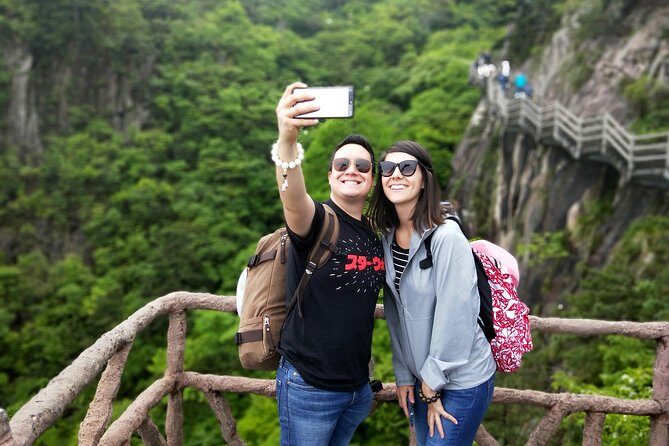
This is a true one-day “get up there and see the classics” plan. The schedule targets the high-value viewpoints in a logical order, so you’re not zigzagging back and forth across the mountain like you’re solving a puzzle.
A quick reality check: the tour is about 8 hours total, but only part of that is mountain time. You can expect roughly 5 hours on the mountain, about 2.5 hours for traffic/transfer, and around 30 minutes for lunch on your own. That math matters. If you hate being on a timeline, you’ll feel it here. If you want maximum scenery with minimal planning, this fits.
The good news is that the tour structure handles the hard parts for you: getting from Tunxi to the scenic area, using the scenic shuttle up to Yungu, and keeping your day moving with a guide.
A few more Huangshan tours and experiences worth a look
Meeting in Tunxi: the pickup setup that reduces morning stress
You meet at Huangshan International Hotel in Tunxi (Tunxi District), with an assembly window around 7:30–8:00am. Your guide waits in the lobby, and you’re asked to arrange your own transport to that hotel beforehand.
Why this matters: Tunxi is the main jumping-off point for Huangshan days. If you try to wing it without a pickup plan, you can burn time figuring out where to go next. Here, you get a clear starting point and a guide who keeps the group aligned.
Also, the tour uses a shared-coach between Huangshan city and the scenic area, but you’re still with your English-speaking guide the whole time. For me, that’s the sweet spot: you get organized logistics without feeling like you’re traveling alone in a local bus system.
The Yungu cable car choice: save steps, control your cost
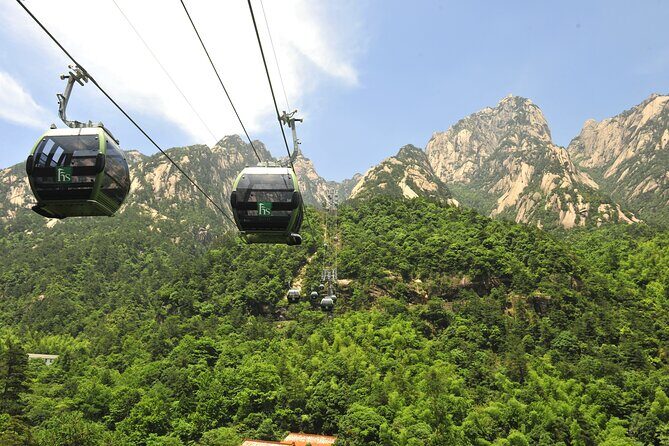
One of the biggest “make or break” decisions is the Yungu cable car. The tour includes the scenic-area transfer and shuttle to reach the Yungu cable area, but the cable car ride itself is optional and at your own expense.
The itinerary notes a cable car price of about $12 per person one-way. That means if you take it both up and down, you’re budgeting for roughly two rides.
Should you pay? Here’s a practical way to think about it:
- If you want to spend your energy on viewpoints (not staircases), the cable car is a time-saver.
- If you’re comfortable with uphill walking and you enjoy slower travel, you can skip one direction.
- If the weather is poor and visibility is low, saving energy can help because you’re more likely to stay flexible and move to the best-visible spots.
I like that the tour doesn’t force the cable car. You’re allowed to choose based on your legs and the conditions.
White Goose Peak to Shixin Peak: the ridge stops that match the classics
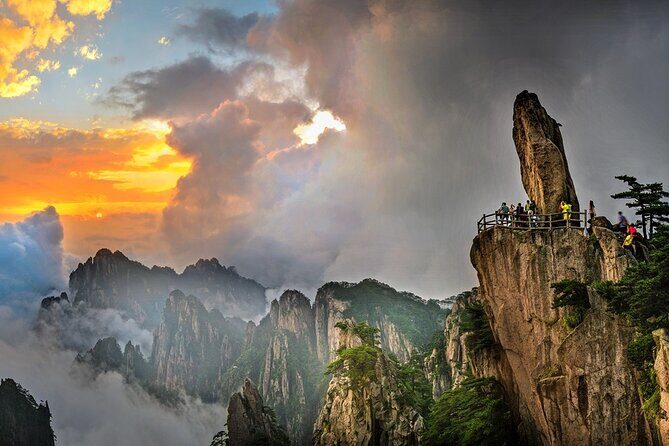
Once you’re in the mountain zone, the day becomes a sequence of recognizable sights. The tour starts with the cable car up to the area near White Goose Ridge, then moves you along classic viewpoints.
Yungu Temple and the cable car upper
After a morning rise, you’ll reach the ridge area via Yungu cable car. The tour lists Yungu Temple as the start point for that ride.
This is one of those “setup” moments. Your goal isn’t the temple building itself so much as getting you to the vantage network faster.
White Goose Peak: East Sea of clouds views
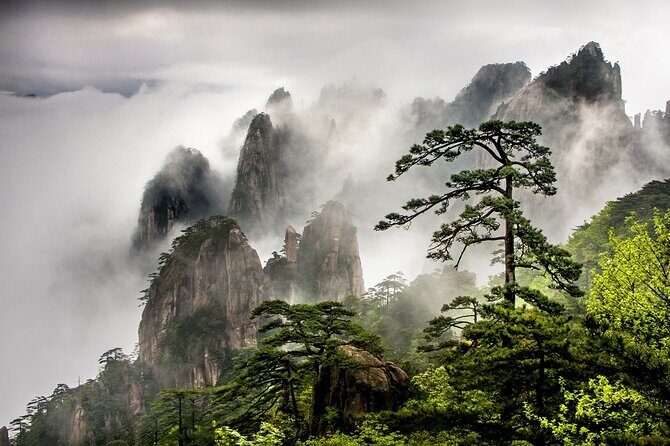
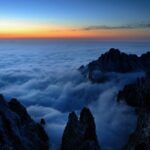
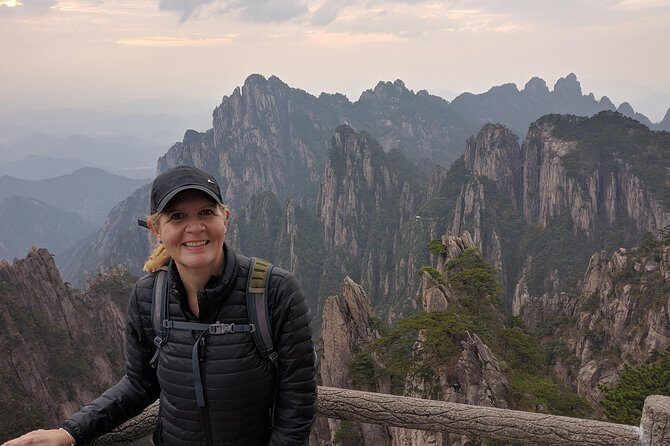
At White Goose Peak, you get a very good view toward the East Sea of clouds. This is one of the moments where the mountain can either look dreamy or look like… rocks and fog. Either way, it’s still classic Huangshan.
Tip: if clouds are rolling in, don’t rush past the viewpoint. Sea-of-cloud moments can change fast.
Shixin Peak (Begin to Believe Peak)
Next is Shixin Peak in the Beihai Scenic Area. The focus here is granite peaks and that strong, jagged Huangshan silhouette.
This stop is shorter in the itinerary, around 15 minutes. If you like photography or you’re watching for pine silhouettes, give yourself permission to linger a little. Just don’t turn it into a half-hour detour and throw off the route.
Bi Sheng Hua and Lion Peak: the “rocks with attitude” section
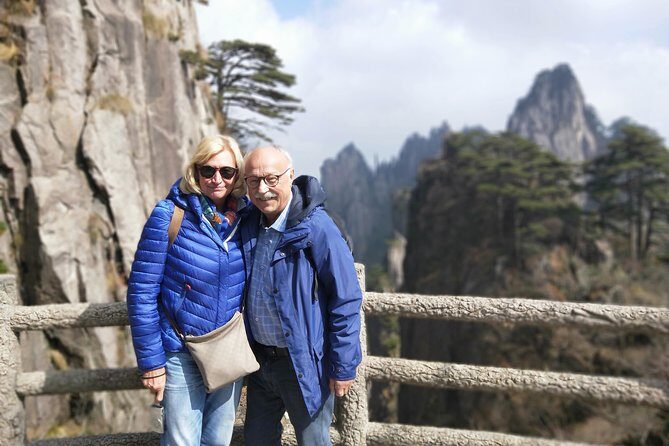
Two of the most memorable Huangshan features are the strange stone formations and the pine trees growing where they really shouldn’t. This tour hits both.
Dreamed Pen of Fine Essays (Bi Sheng Hua)
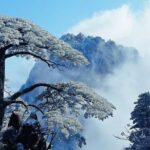
Bi Sheng Hua is described as a rock with a pine tree growing on top. The rock resembles the tip of a Chinese calligraphy brush. It’s a small stop, but it’s one of those shapes you’ll remember later because it doesn’t look like anything else.
This is also a good chance to slow down and look at the details. In fog, the silhouette matters more than color. In clear weather, you can see how the pine and stone create a single graphic shape.
Lion Peak and the classic stone monkey view
The next anchor is Lion Peak, famous for sunrise views. Even if you’re not catching sunrise on this schedule, the spot is included because it gives you another classic composition: Stone Monkey Gazing over the Sea of Clouds.
If you’ve seen Huangshan photos before, you’ve probably seen versions of this “animal watching clouds” idea. The mountain does a good job of making you feel like nature is doing the human thing—posing.
In practical terms, your best shot for the cloud effect is to arrive and look around quickly, then give it a couple minutes. Cloud movement can turn a plain view into a dramatic one.
Descending via Yungu Temple: finish strong without melting
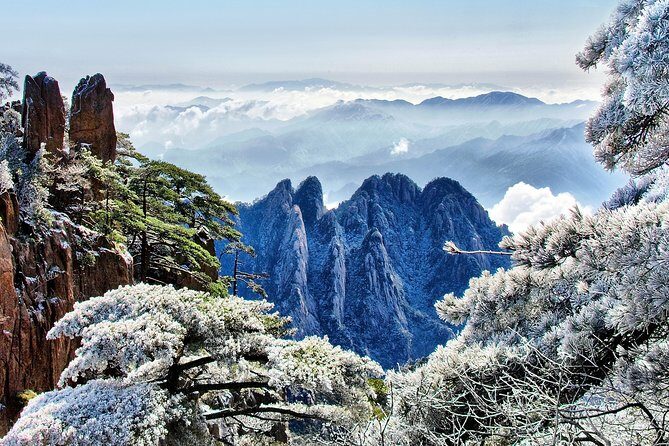
The itinerary has you starting descent at 14:30pm, returning to Huangshan city around 16:00–17:00.
You can descend by foot or take the Yungu cable car again (also at your own expense). After a long viewing run, you’ll feel this choice in your legs. If you’re going to pay for one cable direction to preserve your afternoon, descent is the one that usually helps.
Also, the tour structure keeps it realistic. You’re back in the city by late afternoon, not stuck waiting around until evening.
Optional Hongcun and Xidi: when to add the villages
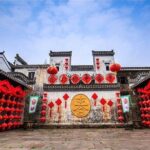
This tour offers an optional add-on for Hongcun and Xidi villages, described as 0.5 to 1 day with train/flight transfer. The listing also states that admission tickets for Hongcun/Xidi are included.
Here’s the honest decision rule:
- Add them if you want more than mountains—old Hui-style village streets, traditional architecture, and a slower cultural pace.
- Skip them if your priority is pure mountain time and you don’t want to split focus between different kinds of sightseeing.
If you’re short on time and don’t want to coordinate multiple segments yourself, the big advantage is the one-stop drop-off service. That reduces the number of moving parts you’re responsible for.
Price and value: what $127 really buys
The price is $127 per person. For that money, you’re getting:
- Admission included for Mt. Huangshan UNESCO Global Geopark
- Admission included for Hongcun/Xidi (if you choose the optional add-on)
- Pickup and drop-off at the meeting point, plus pick-up/drop-off at your selected hotel/location for private-group versions
- Scenic-area shuttle bus to the Yungu cable station
- An experienced English-speaking tour guide
- Air-conditioned vehicle
- A mobile ticket
You do pay extra for:
- Yungu cable car (about $12 per person one-way)
- Lunch (mountain lunch noted as about $14 per person; you can bring food up too)
- Tipping (not included)
So is it good value? In my view, yes—if you want the guide and you want the route solved. Mt. Huangshan days can get complicated quickly: transportation, timing, ticketing, and making sure you hit the key viewpoints. Paying for an organized plan often costs less than the time you waste trying to solve it on the fly.
The only cost risk is the cable car and what you choose for food. If you know you’ll take both cable rides, plan that into your total.
The guide factor: why Megan keeps showing up in the feedback
A standout theme from the experience is the guide experience—especially with a guide named Megan. People describe her as great with English, and they highlight how she’s detailed and helpful during the day, including while riding between stops. That’s not fluff. On Huangshan, quick explanations help you understand what you’re looking at, and good timing helps you not miss the next best viewpoint while you’re still figuring out where to go.
Another praised element is small-group behavior. On some departures, it can even be just one person with the guide, which means you can ask questions and move at your pace. Even if it’s not that small on your day, the max group size of 15 makes it feel more manageable.
If you like tours where someone actually keeps you on track and explains what the mountain is doing, this part is worth leaning into.
Who should book this 1-day Huangshan tour
This tour is a strong match if you:
- Want a guided, efficient day without route planning headaches
- Like a small group atmosphere rather than a big bus crowd
- Care more about classic viewpoints (White Goose Peak, Shixin Peak, Bi Sheng Hua, Lion Peak) than exploring side trails
- Appreciate English explanations while you travel
It may be less ideal if you:
- Want total freedom to roam slowly for hours without a schedule
- Have mobility limitations that make stair-heavy mountain paths difficult (the tour calls for moderate physical fitness)
- Expect a full “tourist village + shopping + extras” style day (this is explicitly no-shopping)
Should you book it?
If your main goal is to see Mt. Huangshan’s headline views in one day, I’d say yes—especially because the plan handles the big logistics and the guide makes the route easy. The guide reputation, small-group size (max 15), and inclusion of the main admission costs make it feel like a tidy deal. Just go in knowing the day is active and you may want to budget for the Yungu cable car if you want to save your energy for the viewpoints.
If you also want the cultural pause of Hongcun and Xidi, add it when your schedule allows. Otherwise, keep the day focused on the mountain and spend your time where the clouds and granite do their thing.
FAQ
What time does the tour start and where do I meet?
You assemble between 7:30–8:00am at Huangshan International Hotel in Tunxi (Huangshan Road, Tunxi District). Your guide waits at the hotel lobby. You need to arrange your own transport to the hotel.
How long is the tour on the ground?
Plan for about 8 hours total. The estimate given is around 5 hours on the mountain, about 2.5 hours for traffic/transfer, and about 30 minutes for lunch on your own.
Is lunch included?
No. Lunch is not included. The tour notes that lunch on the mountain is about $14 per person, and you can bring food up to the mountain.
Are cable cars included?
The Yungu cable car is not included. The itinerary lists it as optional and about $12 per person one-way. You can take it up, and you can also take it down at your own expense.
Are admission tickets included?
Yes. Admission tickets are included for Mt. Huangshan UNESCO Global Geopark. The optional Hongcun/Xidi add-on is also listed as included for admission tickets.
Is there pickup and drop-off?
You start at the hotel meeting point, and the tour also includes pickup and drop-off at your selected hotel/location for private-group versions, plus meeting-point seat-in-coach service.
What group size should I expect?
The experience has a maximum of 15 travelers, and it’s described as shared-coach transportation between the city and scenic area while still having an English-speaking guide with you.
What happens if the weather is bad?
The experience requires good weather. If it’s canceled due to poor weather, you’re offered a different date or a full refund.