REVIEW · BEIJING
11 Days 10 Nights Leisure China Tour with Yangtze River Cruise
Book on Viator →Operated by China Top Trip · Bookable on Viator
Imperial sights meet slow river time on this 11-day China loop. I like how the days blend major history with real local rhythm, and I like that the tour leans on strong on-the-ground guidance (including Hannah Liang in past trips).
I also like the balance: you get unforgettable big-ticket stops like the Forbidden City and Mutianyu Great Wall, but you also get downtime through the Yangtze River cruising days. A possible drawback is that some shore excursions and certain scenic entries during the cruise stretch can be marked as not included, so check your add-on plan before you go.
You’ll see Beijing’s power centers, Xi’an’s archaeology, the Three Gorges scale, then Shanghai’s skyline—without having to stitch it all together yourself.
In This Review
- Key things that make this tour worth your attention
- Beijing First: Tiananmen, Forbidden City, and Temple of Heaven
- Mutianyu Great Wall and Olympic Park: Big Views, Smart Timing
- Hutong Life and the Summer Palace: Beijing Beyond the Postcards
- Xi’an’s Terracotta Warriors: When Scale Hits You
- Xi’an City Wall and Big Wild Goose Pagoda: Classical Calm After the Rush
- Fengdu and the Yangtze Cruise Days: How to Enjoy Gorge Time
- Three Gorges Dam and the River-Route Perspective
- Shanghai Icon Sweep: Jade Buddha, Oriental Pearl, Yu Garden, and the Bund
- Price and logistics: what $2,484 buys you in real life
- Who this tour fits best (and who should double-check)
- Should you book this 11-day Yangtze River cruise tour?
- FAQ
- How long is the 11 Days 10 Nights Leisure China Tour?
- What cities does this tour cover?
- Where does the tour start and end?
- What are the main highlights in Beijing?
- Is the Yangtze River cruise included?
- Are entrance fees included?
- Which meals are included?
- What is not included in the tour price?
- Can I cancel for a refund?
Key things that make this tour worth your attention
- Beijing’s imperial trio: Tiananmen Square, Forbidden City, Temple of Heaven in one guided set
- Mutianyu Great Wall pacing: a well-regarded section with fewer crowds than some others
- Xi’an at full strength: Terracotta Warriors plus city-wall time and classic pagoda sights
- Yangtze cruise focus: gorge views plus major stops connected to the river route
- Shanghai highlights in a logical order: Jade Buddha Temple, Oriental Pearl Tower, Yu Garden, the Bund
- Real-service organization: past guests credited guides like Hannah Liang and Maurizio for careful coordination
Beijing First: Tiananmen, Forbidden City, and Temple of Heaven
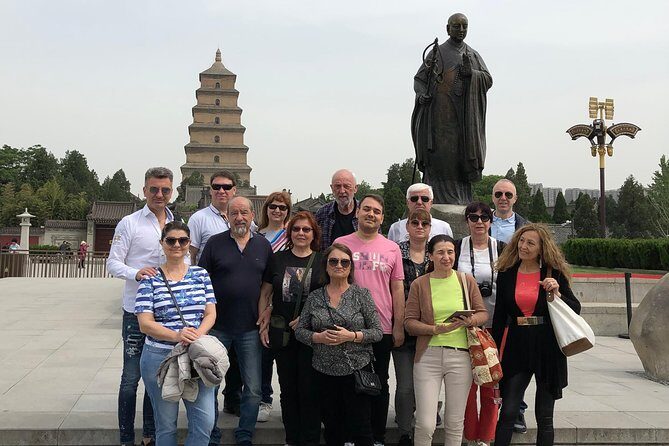
Day one is all about getting your bearings. You land, meet your guide at the airport, then head to your hotel with the rest of the day left open. That matters because Beijing can feel like a lot on day two, especially if you’re arriving from long-haul travel.
On day two, Tiananmen Square sets the mood. It’s the world’s largest city-center square, paved with light-colored granite, and it’s tied to major political moments across Chinese history. You’ll also be in the thick of the civic beat, including the flag-raising and sunset flag-lowering ceremony timing mentioned in the tour plan.
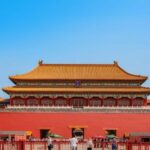
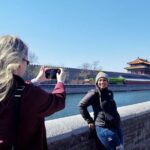
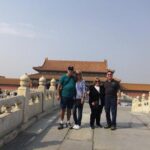
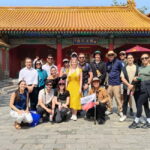
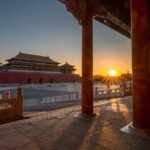
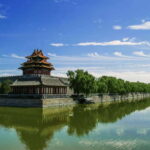
Then comes the Forbidden City (Palace Museum), the big one. With more than 9,000 buildings over 720,000 square meters, it’s not just famous—it’s physically overwhelming in the best way. You’ll spend about two hours inside, enough to see the core layout rather than rushing through everything.
The Temple of Heaven adds a different angle on power. Instead of palaces and emperors, you’re looking at how Ming and Qing rulers worshiped the god of heaven and prayed for good harvests. Even if you’re not a history buff, this stop helps you understand China as something built on ritual, not only monuments.
Practical tip: plan to take breaks. These sights are spread by walking and time in big courtyards, and Beijing weather can swing fast.
You can also read our reviews of more boat tours in Beijing

Mutianyu Great Wall and Olympic Park: Big Views, Smart Timing
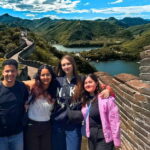
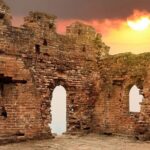
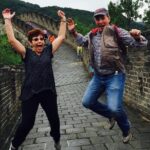
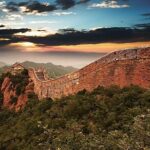
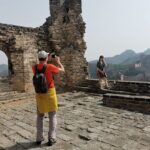
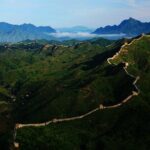
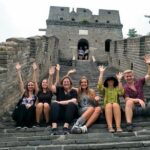
Day three starts with the Mutianyu Great Wall section. It’s known for great preservation and dramatic scenery, and the tour description also notes fewer tourists than some other wall areas. That’s a real value point. Less crowd friction means better photo time and more room to appreciate the terrain.
You’ll get roughly three hours for this wall segment, which gives you a chance to walk enough to feel the climb without turning it into an all-day grind. If you’ve done the Great Wall before, Mutianyu is often the type of choice that feels more relaxing while still delivering the goods.
Later, the Olympic Park and the Water Cube focus on modern Beijing. You’ll see the Bird’s Nest area from the Olympic Green context, then head to the National Aquatics Center (Water Cube). The plan notes the Water Cube ticket is free, which is a nice perk and helps keep your budget steady.
Practical tip: bring water and plan for sun or wind. Great Wall hours can get hot or chilly depending on season, and Olympic Park open areas feel exposed.
Hutong Life and the Summer Palace: Beijing Beyond the Postcards
Day four is where Beijing turns from court and ceremony to daily life. You’ll do a hutong tour, moving through old lanes that trace back to the Ming and Qing eras. Hutongs are where you see the everyday China that doesn’t fit neatly into a museum label—where shopping, dining, and street life are the point.
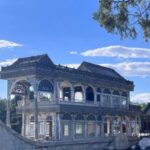
Then you head to the Summer Palace, a massive imperial garden on a scale that feels almost unreal after the city’s stone-heavy centers. The tour lists it as one of the best-preserved imperial gardens in the world, and it being a short drive from central Beijing helps you actually enjoy it rather than just surviving the transfer.
The whole day works because it alternates textures. Hutongs give you street-level human scale, while the Summer Palace gives you garden geometry and palace drama.
One more note: the tour overview also mentions giant pandas and local markets as part of the genuine local experiences. Those stops aren’t spelled out day-by-day here, so your best move is to confirm what’s scheduled once you book. Still, the inclusion of both pandas and markets tells me the operator is aiming for more than only the museum checklist.
Xi’an’s Terracotta Warriors: When Scale Hits You
The pivot from Beijing to Xi’an is a change in tempo. You trade imperial capitals for archaeology, and on day five you go straight to the Museum of Qin Terra-cotta Warriors and Horses.
This stop is long enough to matter: about six hours. You’ll see troops, horses, and chariots in battle formation, which is exactly what makes the Terracotta Warriors unforgettable. It’s not only the artifacts. It’s the way the layout makes the idea of an army feel real.
After that heavy hit, the day shifts to old-city context with the Xi’an Bell Tower. You get around an hour, which is enough to understand why the Bell Tower is a centerpiece in the ancient city layout and why it’s still used as a landmark reference point.
Then comes Muslim Quarter time for shopping. The tour plan frames it as a chance to browse and shop with the time set aside, which is a good match after the morning’s strict attention to ancient history.
Practical tip: wear comfortable shoes here. Xi’an involves a mix of museum floors and older-stone streets, and a lot of walking can sneak up on you when days are packed.
Xi’an City Wall and Big Wild Goose Pagoda: Classical Calm After the Rush
Day six keeps Xi’an’s heritage theme going without repeating the same kind of stop. You’ll visit the Xi’an City Wall, one of the oldest and best-preserved Chinese city walls. The tour says bicycle or sightseeing car options will be arranged on the wall, which is practical because the wall can be tiring if you’re stuck on foot the whole time.
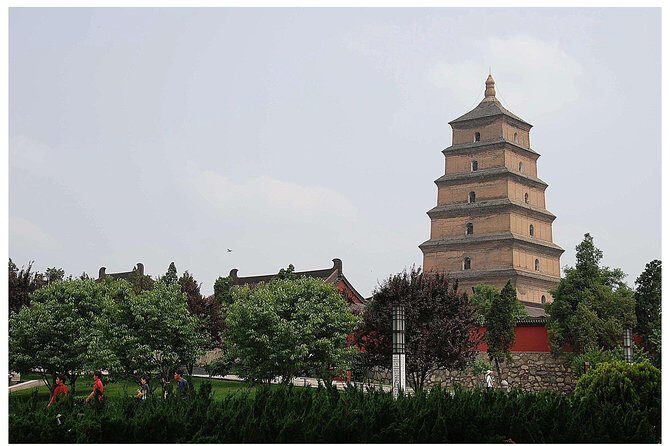
After the wall, the Big Wild Goose Pagoda (Dayanta) is the spiritual counterpart. You get about an hour at this well-preserved Buddhist site with over 1,300 years of history. It’s a quieter type of stop, and that contrast is part of what makes the Xi’an sequence feel well-balanced.
If you care about atmosphere as much as sights, day six is the kind of day that helps you slow down. It gives you a breather before the river days start.
Fengdu and the Yangtze Cruise Days: How to Enjoy Gorge Time
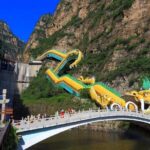
Days seven through nine are built around the Yangtze River cruise experience, and this is where the trip earns its name. You’ll do shore activity at Fengdu Ghost City area in the morning, with a note that the Fengdu “Jade Emperor” is arranged in the morning. There’s also an option to take an additional shore excursion to the Fengdu Ghost City with extra cost.
That setup matters. A cruise day can be long depending on docking times, weather, and how fast you want to move. The tour plan gives you at least one organized shore element, while leaving room for optional add-ons if you want more.
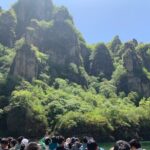
On day eight, you’re linked to Baidicheng Scenic Area (also described as Fengjie White Emperor City) and Qutang Gorge. The plan marks admissions for Baidicheng as not included, so budget for that possibility. Qutang Gorge is described as the shortest of the Three Gorges at eight kilometers, and it’s framed as dramatic with steep cliffs and the Meng Liang staircase from the Song Dynasty.
Day nine brings the Three Gorges Dam Site near Sandouping Town. Even without a lot of extra details in the plan, a dam stop upstream from Yichang signals what you’ll be absorbing: modern engineering placed against massive natural scale. It’s the kind of contrast that makes the gorge scenery feel even bigger.
Practical tip: on cruise days, build your packing strategy around motion. Even when you’re not personally doing the long walking, transfers and boarding can take time, and you’ll want a comfortable layer for open-air viewing.
Three Gorges Dam and the River-Route Perspective
The Three Gorges stretch is famous for size, but the value on this tour is the way it connects multiple viewpoints. You’re not only seeing one scenic postcard. You’re getting a sequence that moves from river-city context (Fengdu and Baidicheng) to the gorge itself (Qutang Gorge) to the modern engineering landmark (Three Gorges Dam Site).
That matters if you’re the kind of traveler who likes to understand how regions work, not only what they look like. A dam isn’t just a structure here. It’s a major factor shaping how the river route is used and experienced.
One thing to keep in mind: some cruise-day entries are listed as not included. So if you want to maximize time ashore at every stop, you should plan for extra ticket costs or optional excursions.
Shanghai Icon Sweep: Jade Buddha, Oriental Pearl, Yu Garden, and the Bund
By day ten, you’re in Shanghai, and the tour shifts again from classical to skyline. First up is Jade Buddha Temple, originally built in 1882. The tour description highlights a white jade Buddha that was brought from Burma to Zhejiang Province, then installed at the temple.
Next you’ll go to the Oriental Pearl Tower. The tower reaches 468 meters and the plan notes it as a landmark of architecture, with elevators inside and a distinctive design metaphor described through pearls dropping onto a jade plate. You’ll spend about three hours total here, which generally gives room for photos and time in tower facilities, depending on what you choose on the day.
After the tower, Yu Garden (Yuyuan) offers the classical contrast. It’s described as the only fully restored classical Chinese garden in Shanghai, with about 20,000 square meters and a “world in miniature” approach with pavilions, corridors, hills, rocks, lotus ponds, bridges, and winding paths. This is one of those stops that feels worth slowing down for. The garden details repay you when you take your time.
Then you get Nanjing Road, Shanghai’s major commercial street, for about three hours. The plan includes that the street is the city’s No.1 commercial center, with heavy shopping density and night neon energy once evening hits.
Finally, you’ll do the Bund (Wai Tan) along the Huangpu River for about three hours. The Bund’s value is in the two-side feeling—historic riverfront view in the foreground, with modern towers across the water.
Practical tip: Shanghai is easy to overdo. Keep one hour where you do less sightseeing and more just walking and watching. It helps the day feel fun instead of exhausting.
Price and logistics: what $2,484 buys you in real life
At $2,484 per person, the main value isn’t only the number. It’s what you’re not doing: you aren’t planning the transfers, ticket timing, or day-to-day coordination across Beijing, Xi’an, the Yangtze cruise days, and Shanghai.
The package includes all taxes and handling charges, plus entrance fees and the Yangtze cruise. It also includes a driver/guide, hotel/port pickup and drop-off, hotel accommodation, bottled water, and a set meal plan: 10 breakfasts, 9 lunches, and 2 dinners.
That’s the part that can quietly make a big difference. When you’re in multi-city China, it’s not only ticket prices that add up. It’s also your time, stress, and the cost of last-minute fixes.
What’s not included is also pretty clear. International airfare and train tickets in and out of China are not included, and optional tours and meals can add up if you want extra shore excursions during cruise days or extra entries where the plan lists admissions as not included.
My reading of the pricing: this is a fair value for travelers who want guided comfort and full coverage, especially if you prefer not to manage logistics daily.
Who this tour fits best (and who should double-check)
This tour fits best if you want a guided route through China’s headline sites without sacrificing the chance to see everyday life. If you like big monuments but also enjoy street-level scenes like hutongs and market time, this works.
It’s also a good fit for travelers who don’t want to research every ticket, every transfer, and every timing detail across multiple cities. With pickup and drop-off handled, you can focus on the sights.
If you’re the type who hates packed days, you should think about pacing. The plan includes major stops daily—palaces, wall sections, major museums, then cruise days, then Shanghai icons. It’s not a slow, lounge-only trip.
Should you book this 11-day Yangtze River cruise tour?
I’d book it if you want strong guidance, a clear route from Beijing to Shanghai, and the Yangtze cruise built into the schedule instead of treated like an afterthought. The fact that past guests praised careful organization, including guides like Hannah Liang and Maurizio, is a good sign that the day flow is managed with attention to detail.
I’d hesitate only if you know you want total control over every ticket and shore stop. Since some cruise-day scenic entries and optional excursions can be extra, you may end up planning a few add-ons on your own.
If you’re flexible and you want the “great hits” plus real local touches, this is a solid, practical way to see a lot of China without the headache.
FAQ
How long is the 11 Days 10 Nights Leisure China Tour?
It runs for 11 days and about 10 nights.
What cities does this tour cover?
You’ll visit Beijing, Xi’an, the Yangtze River cruise areas (including Fengdu and the Three Gorges region), and Shanghai.
Where does the tour start and end?
It starts at Beijing Capital International Airport and ends at Pudong International Airport in Shanghai.
What are the main highlights in Beijing?
Tiananmen Square, the Forbidden City (Palace Museum), the Temple of Heaven, Mutianyu Great Wall, Olympic Park (including the Water Cube), a hutong tour, and the Summer Palace.
Is the Yangtze River cruise included?
Yes, the Yangtze Cruise is included.
Are entrance fees included?
Yes. The package lists entrance fees as included.
Which meals are included?
Breakfast is included 10 times, lunch 9 times, and dinner 2 times.
What is not included in the tour price?
International airfare or train tickets in and out of China, optional tours/activities/meals, and any private expenses.
Can I cancel for a refund?
Yes. You can cancel up to 6 days in advance for a full refund.