REVIEW · BEIJING
3 Day Private Xi’an Tour from Beijing
Book on Viator →Operated by China Adventure Travel Ltd · Bookable on Viator
Xi’an on a private 3-day run from Beijing is a great way to see China’s biggest standout sights without the daily stress of trains, tickets, or guessing where to eat. You get a private guide and built-in time for the Terracotta Warriors, the Ancient City Wall, the Big Wild Goose Pagoda, and an evening walk through the Muslim Quarter, plus meals that taste local instead of turning into airport-style sad food. I like the calm logistics most: pickup, transport, and overnight stays mean you spend your energy on sites, not schedules. The main thing to think about is your Beijing–Xi’an transport choice, because the overnight Soft Sleeper train can be a mixed bag for comfort and privacy.
In This Review
- Private guide + real meals, but verify your room and train setup
- Key points worth knowing before you go
- Beijing to Xi’an: train sleep-cabins or fly for sanity
- Day 2 at the Terracotta Warriors: UNESCO with a guide’s spine
- Big Wild Goose Pagoda: Tang-era Buddhism you can actually read
- The Muslim Quarter after dark: market energy and a guided dinner
- Xi’an City Wall in the morning: gates, battlements, and great walking pace
- Shaanxi History Museum: modern halls, real scale, lots of objects
- Hotel, meals, and the real value of a $900 private tour
- Practical tips to keep this trip smooth (and not stressful)
- Should you book this Xi’an private tour?
- FAQ
- What transportation is included between Beijing and Xi’an?
- Is the Terracotta Warriors admission included?
- Are tickets included for the other major sights?
- What meals does the tour include?
- Where does the tour start, and when?
- Is a visa included?
Private guide + real meals, but verify your room and train setup

The tour leans practical: you start early, see the big three, and end with the kind of details you miss on a quick group stop, like how the guides connect Tang-era Buddhism at Dayanta to everyday street life in the Muslim Quarter. I also like that you’re not just dropped at monuments; your guide stays close, and I’ve seen how much that matters in crowded stations. One past participant said their guide escorted them through a busy train station until they were settled on board, which is the difference between travel being smooth and travel being chaos. The possible drawback: hotel quality can depend on the specific room allocation, and at least one participant reported issues with a different Xi’an hotel property than expected, so you should confirm exactly where you’re booked.
Key points worth knowing before you go
- Terracotta Warriors with guided context: You’ll hear why the figures were placed with Qin Shi Huang and how the site reads beyond the photos.
- Big Wild Goose Pagoda in one focused afternoon: A guided walk inside helps connect the Tang Dynasty story to what you’re seeing now.
- Muslim Quarter night timing: Evening food and market streets give you a better feel for the neighborhood than a daytime glance.
- You get two nights of accommodation: This makes the pace realistic, not a rushed day-trip sprint.
- Transport choice matters: Train can be cheaper or available, but a flight can make the trip feel civilized.
You can also read our reviews of more private tours in Beijing

Beijing to Xi’an: train sleep-cabins or fly for sanity
Your day typically starts with a morning meeting and pickup in Beijing, then you’re on your way to Xi’an. The experience is built around two transport styles, depending on the option you choose: an overnight train approach or round-trip airfare.
If you pick the overnight train, you leave Beijing in the evening and sleep on board in a Soft Sleeper cabin. The tour description mentions a sliding door for privacy and a cabin designed around two soft bunk beds. Here’s the practical caution: one participant’s direct experience was that the train felt filthy and smelled like a public bathroom, and they reported limited privacy and shared feelings in the sleeper setup. Even if the cabin has a door, you can still be dealing with older rolling stock, thin walls, and shared toilet areas.
If you pick the flight option, the trade-off is simple: you swap the romance of overnight trains for a smoother rest and faster repositioning. One participant even recommended skipping the train entirely and taking a plane for comfort. I agree with the underlying logic. If you want your first full day in Xi’an to be sharp and un-tired, flying usually wins.
Either way, this tour is structured so you’re not left alone with station chaos. One past guest described their guide staying with them in the crowd at Beijing West Railway Station until they were settled on the train. That matters because stations can feel like moving mazes, especially when you’re handling tickets, gates, and luggage.
Bottom line: choose the train only if you’re comfortable with trains that are older or less hygienic than you’d expect, and you don’t mind sharing basic space with strangers. Choose the flight if you want your energy for the Terracotta Warriors and the Wall.
Day 2 at the Terracotta Warriors: UNESCO with a guide’s spine
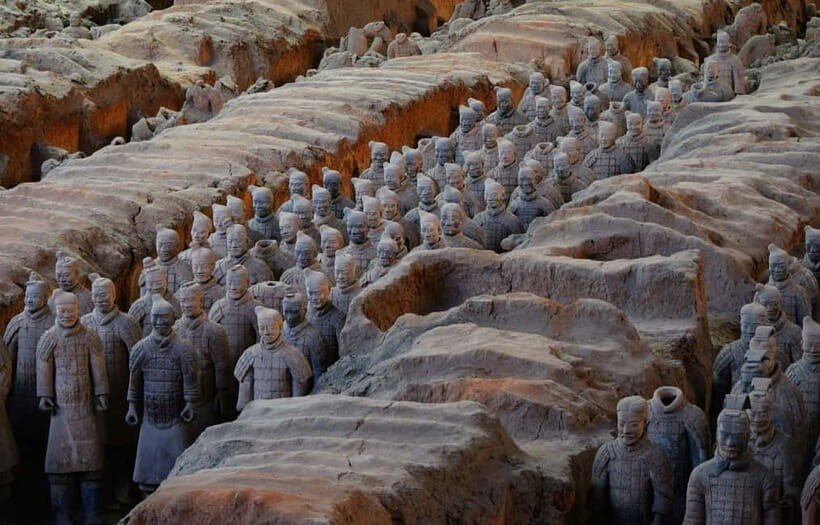
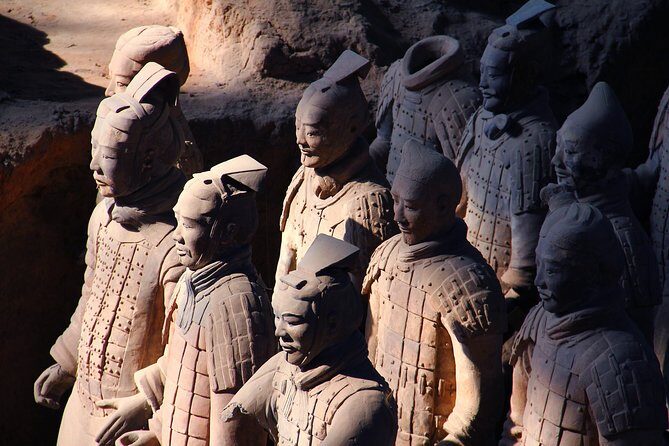
Most Xi’an trips live or die on one stop: the Mausoleum of the First Qin Emperor. On this tour, your second day starts with a morning arrival rhythm and then heads straight into the UNESCO World Heritage site.
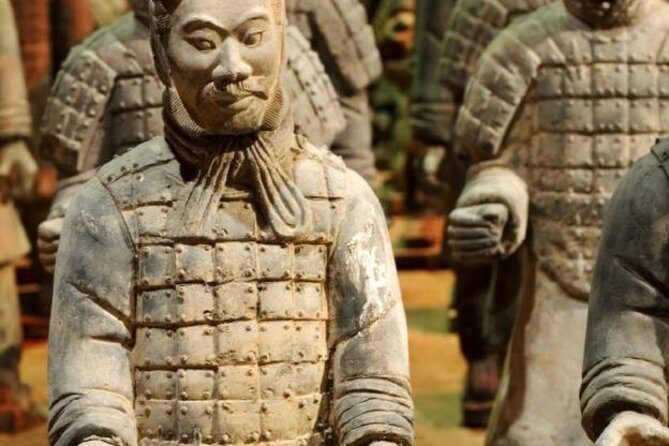
The scale hits you in stages. You see the terracotta figures and horses arranged as an archaeological battlefield, and then your guide adds the story that makes the site feel more intentional than just impressive. The explanation you’ll get is that these soldiers were buried with Qin Shi Huang to protect him in the afterlife. Even if you’ve read that before, hearing it while you’re standing near the pits makes the concept click.
What I like about doing this with a private guide is the pacing. You’re not doing a photo sprint. Your guide can point out patterns and features that your eyes might skip in a crowd. You also get time that supports understanding: the tour allocates about 1.5 hours for this first major block with admission included.
Practical note: plan on walking and standing. This is a site you experience with your feet. Wear comfortable shoes you can trust on flat but uneven museum-site surfaces.
Big Wild Goose Pagoda: Tang-era Buddhism you can actually read
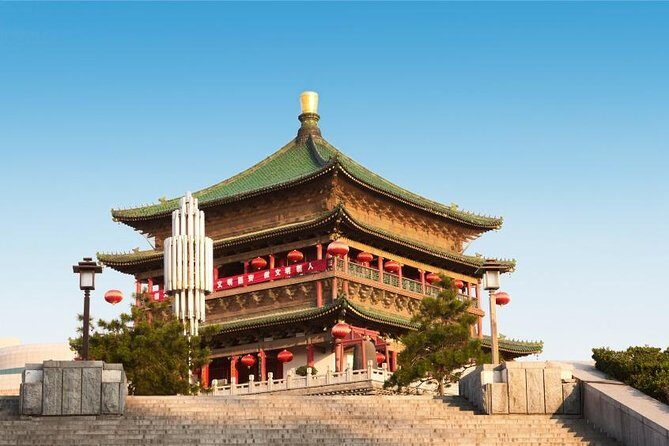
After lunch, the afternoon pivots to Big Wild Goose Pagoda, also called Dayanta. This is a Buddhist pagoda built in 652 during the Tang Dynasty, and the tour keeps it focused and guide-led rather than letting you wander and guess.
If the Terracotta Army is about power and the emperor’s story, Dayanta is about Buddhism and cultural movement. Your guide explains that this religious site housed Buddha figurines brought to China from India. That’s the kind of detail that turns a famous monument into a lived connection between regions.
You get around 1 hour 10 minutes here, with admission included. That’s enough time to walk the space, look inside, and understand what you’re seeing without feeling dragged from room to room.
Tip: go slower than you think you need. Pagodas reward attention to details like carvings, layout, and how the interior spaces are organized for worship and viewing. Even if you’re not chasing every inscription, a guide’s context makes your time there feel purposeful.
The Muslim Quarter after dark: market energy and a guided dinner
Evening is where Xi’an starts to feel like Xi’an. The tour builds in an evening walk through the Muslim Quarter, which is known for its food lanes, small shops, and crafts.
You’ll stroll past stores selling Shaanxi produce and arts and crafts, and then you’ll stop for dinner at a local restaurant selected by your guide. That matters because restaurant “choices” in a tourist district can turn into either very ordinary food or places that cater mainly to foreigners. A guide-chosen spot usually means fewer surprises and better odds you’ll taste local Muslim specialties as intended by the neighborhood.
The tour allots about 1 hour 40 minutes for this evening block, with museum-style freedom but still guided enough that you’re not guessing where to go or what to order.
One more practical note: if you have dietary needs, share them at booking. The tour asks you to advise specific dietary requirements ahead of time, and that gives your guide a chance to steer the meal choice.
A few more Beijing tours and experiences worth a look





Xi’an City Wall in the morning: gates, battlements, and great walking pace
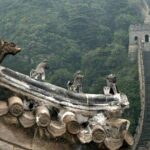
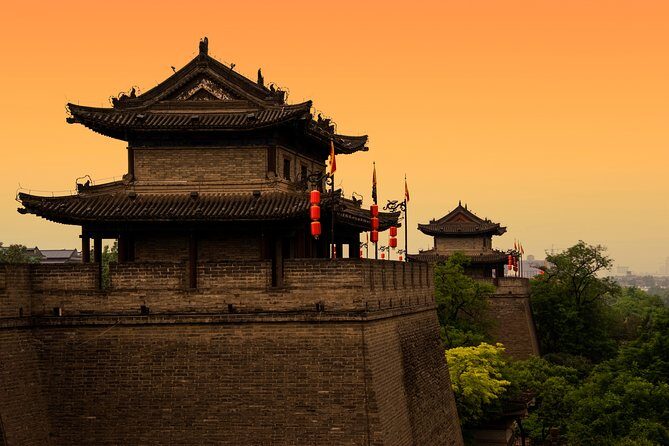
On your final day, you start with the Ancient City Wall. This wall stretches around the city and was erected in the 14th century by Ming Dynasty rulers. Your guide helps you see more than just stone lines on a map.
You’ll be looking at gates, tunnels, watch towers, and battlements. Those terms sound historical and abstract, but standing there makes them physical. You can feel how the wall was designed for defense and observation, and your guide connects each structure to the bigger city story.
The tour keeps this stop about 1 hour, with admission included. That’s enough time to get key segments in without turning it into a marathon. It also pairs well with a second stop the same morning.
A useful extra from one participant: they added a roughly 1.5-hour cycle tour on top of the ancient wall and said it was great fun. If you like bikes and want a different angle on the city, this is the kind of add-on you can ask about once you’re already there.
Shaanxi History Museum: modern halls, real scale, lots of objects
After the wall, you go to the Shaanxi History Museum. It’s described as one of the first large state museums in China with modern facilities, and it holds more than 300,000 items. That’s the kind of number that sounds impressive until you realize you’ll only see a small slice in your allotted time.
You get about 1 hour 10 minutes here, and admission is included. The museum includes murals, paintings, pottery, coins, and bronze, gold, and silver objects. Even if you’re not a museum person, this stop helps anchor what you just saw at the Terracotta Warriors in a broader regional timeline.
I like that the itinerary doesn’t treat the museum as optional trivia. It’s a bridge from Qin power and Tang culture into the wider Shaanxi story. It also gives you an indoor option if the weather is hot or a bit unpredictable.
Hotel, meals, and the real value of a $900 private tour
Let’s talk value in plain terms.
This experience is priced at $900 per person, and it includes a lot that usually costs extra when you book sights separately. You also get a private guide with private transportation. On top of that, you get two nights of accommodation plus breakfast, lunch (twice), and dinner (at least once, and the inclusion list shows dinner is included). Entrance tickets for the main sights are also included.
The tour includes accommodation in Ramada Bell Tower Hotel Xi’an in the provided details. One participant, however, reported an experience with a different hotel property named Skytel, describing room quality issues like a tiny refurbished room, lack of a refrigerator, air conditioning problems, and privacy concerns with glass separation between the main room and bathroom. I can’t confirm room-by-room outcomes, but I can tell you what to do: when you book, ask what exact hotel and room category you’re assigned. If you’re paying a premium for comfort, don’t leave that to chance.
Room setup details are also worth knowing. Standard hotel rooms in China are described as having two single/twin beds. If you’re traveling with an odd number of adults, three people may be placed in one room with an additional bed.
Meals are chosen for authenticity rather than convenience. One participant described the tour as an excellent way to see the Terracotta Army and Xi’an, with the train, hotel, and flight working fine, and credited the guide as excellent. That supports a key point: the private guide isn’t just for talking in museums; they help stitch the day together so you actually enjoy it.
What I think you’re paying for: not just tickets. You’re paying for decision-making off your plate. A private guide reduces time lost to ticket lines, confusion, and route mistakes. In a city with major sites spread across different neighborhoods, that’s real value.
Practical tips to keep this trip smooth (and not stressful)
Here’s how you make this tour feel easy in real life.
- Bring passport details early. The booking requires passport name, number, expiry, and country for all participants. Get that sorted quickly.
- Choose your Beijing–Xi’an mode with your sleep in mind. If you pick the overnight train, expect less comfort than you’d get in a hotel bed. If you want a sharper experience, consider airfare.
- Wear walking shoes for the Wall and the larger site areas. Both are hands-on, legs-on days.
- Ask about the hotel assignment so you know what you’ll actually get. The tour lists Ramada Bell Tower Hotel Xi’an, but room experiences can differ.
- Plan for an evening that includes food. If you have dietary restrictions, flag them at booking so the guide can adjust the restaurant.
- Use a light, smart packing approach. You may have a long travel day on either the train or flight side, and you’ll want quick access to essentials.
If plans change, there is a cancellation window that allows a full refund if you cancel sufficiently ahead of the start date. The cutoff is based on local time, so double-check timing when you decide.
Should you book this Xi’an private tour?
I’d book this tour if you want a first-timer friendly Xi’an that hits the big UNESCO moment, the Tang-era icon, and the city’s everyday street texture in a tight 3 days—without making yourself a part-time logistics manager. The private guide, the included transportation, and the meal plan are the main reasons it works.
I’d think twice if:
- You’re very sensitive to sleep and hygiene and you’re considering the overnight Soft Sleeper train.
- You care a lot about hotel room privacy and comfort, especially after reading how room allocations can vary.
If you’re flexible on transport comfort and you verify your hotel booking, this tour is a strong way to see Xi’an in a way that feels guided, not cobbled together.
FAQ
What transportation is included between Beijing and Xi’an?
The tour includes round-trip flight or high-speed train between Beijing and Xi’an, depending on the option you select. Pickup and drop-off in Beijing are included.
Is the Terracotta Warriors admission included?
Yes. Admission for the Museum of Qin Terra-cotta Warriors and Horses is included.
Are tickets included for the other major sights?
Yes. Admission is included for Big Wild Goose Pagoda, the Muslim Quarter stop is listed with admission free, and the Ancient City Wall and Shaanxi History Museum also have admission included.
What meals does the tour include?
The tour includes breakfast for two days, lunch for two days, and dinner is included.
Where does the tour start, and when?
The start time is 7:00 am. You’ll also have hotel pickup in Beijing.
Is a visa included?
No. China entry visa is not included.