REVIEW · BEIJING
Beijing Culture Event: Tradition Music, Tea Ceremony, Calligraphy
Book on Viator →Operated by ChiNice Travel · Bookable on Viator
One ticket, three quiet rituals. In Beijing, you get a guided tea ceremony, a guqin performance with hands-on practice, and a calligraphy workshop in one 2–3 hour block. It’s designed for people who want something authentic without stitching together three separate activities.
I love two things about this format. First, the Beijing Guqin Association connection matters because the guqin isn’t treated like background music; it’s treated like the serious scholar’s instrument it is, tied to official-culture settings. Second, the calligraphy part isn’t just watching; you learn basic brush techniques and write your own meaningful word or phrase.
One consideration: this is not a long masterclass. With a 2–3 hour time window and a maximum group size of 12, you’ll leave with a strong taste of each tradition, but not deep training.
In This Review
- Key Points You’ll Appreciate Before You Go
- Tea, Guqin, and Calligraphy All in One Beijing Evening
- Huagong Road Tea Ceremony: Etiquette, Philosophy, and Tasting
- Guqin Music with a Beijing Association Master: Try a Real Melody
- Calligraphy Workshop: Learning Brush Basics and Writing Your Own Phrase
- Coffee and Tea Included: The Session Feeling You’re Paying For
- Value Check: Is $15 Good for Tea, Guqin, and Calligraphy?
- Getting There on Huagong Road: Simple Start, No Town Sprint
- Who Should Book This (and Who Might Want a Different Option)
- Final Verdict: Should You Book This Beijing Culture Event?
- FAQ
- How long is the Beijing Tradition Music, Tea Ceremony, and Calligraphy experience?
- How much does it cost per person?
- What’s included in the ticket?
- Where is the meeting point?
- How large is the group?
- Is there an English guide, and can most people participate?
- What is the cancellation policy?
Key Points You’ll Appreciate Before You Go
- Small group (max 12) keeps the session calm and easy to participate in.
- Huagong Road meeting point means it’s straightforward to start, and you end back where you began.
- Tea etiquette plus tasting gives you more than a cup of tea; you learn how to approach the ritual.
- Guqin hands-on practice includes trying a simple melody from Crouching Tiger, Hidden Dragon.
- Calligraphy with guidance lets you produce your own character-based keepsake idea (a word or phrase).
- English guide makes the culture parts understandable, not just performance-time.
Tea, Guqin, and Calligraphy All in One Beijing Evening
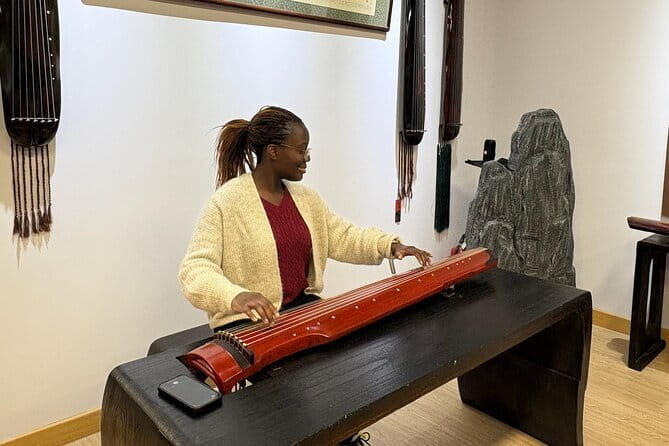
This experience is built around three traditions that often get separated into different neighborhoods and different ticket lines. Here, they’re stitched together into one flow: tea first (mind and manners), guqin next (sound and character), calligraphy last (mark and meaning).
You’re looking at a session that runs about 2 to 3 hours, with a mobile ticket and a set meeting point on Huagong Road, Hua Gong Lu, Chaoyang District, Beijing. It ends back at the same meeting point, so you’re not racing across town when your brain is already full of new things.
The small group size is a real advantage. When the session is limited to 12 people, you’re more likely to feel invited to participate during the tea, guqin, and calligraphy moments—without the pressure that comes with big tours.
You can also read our reviews of more tours and experiences in Beijing.


Huagong Road Tea Ceremony: Etiquette, Philosophy, and Tasting
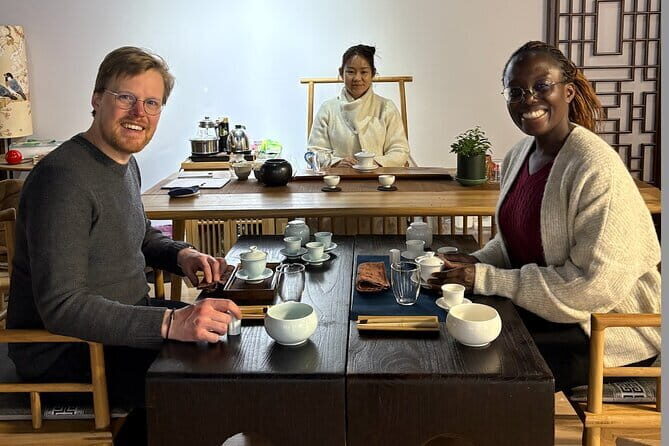
The session starts with a guided tea ceremony and tasting. That matters because this isn’t framed like a tourist demo where you just watch someone pour. You’re guided through the philosophy and etiquette behind tea, so you understand why the ritual is slow, careful, and intentional.
Here’s what I think makes this part useful for you: tea culture in China often feels confusing if you only drink tea like a beverage. Learning the etiquette helps you read what you’re doing while you’re doing it. You get the sense that the ritual is about respect—toward the maker, the guests, and the moment.
Also note the practical angle. This experience is designed to be relaxing. Reviews often describe it as peaceful and no-pressure, which fits the tea ceremony pacing. If you’re traveling with jet lag, tea and a calm room can be a smarter first step than sprinting to another loud landmark.
Guqin Music with a Beijing Association Master: Try a Real Melody
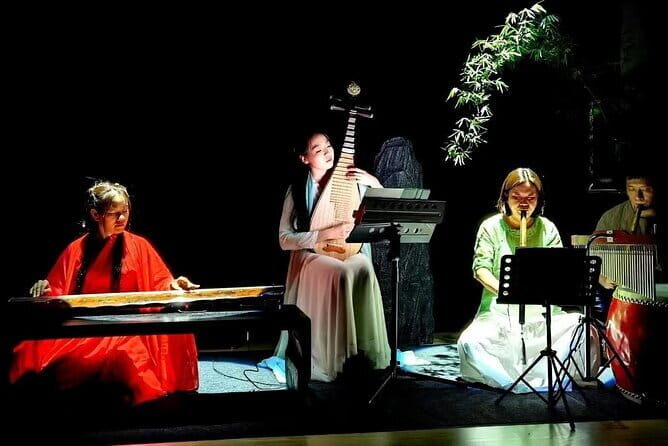
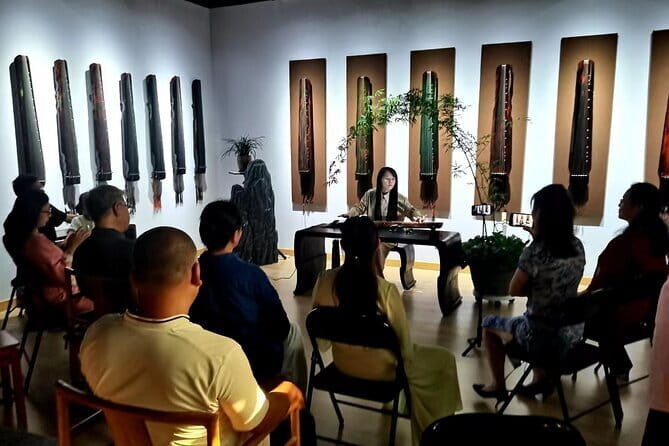
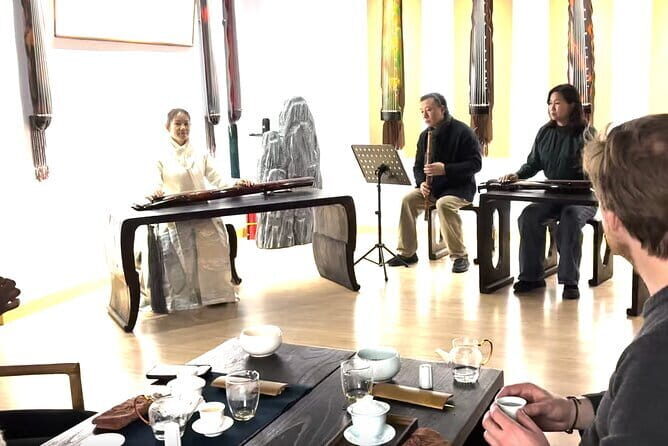
Then comes the guqin, and it’s treated like a big deal. The guqin is described as a 2,000-year-old instrument, associated with scholars and dignitaries. You’ll also learn that it’s used in the highest-level settings to receive foreign guests, which helps explain why the sound is so controlled and deliberate.
The performer is identified as a master from the Beijing Guqin Association, and that’s not just a prestige label. It usually means the session is more than a single performance slot; you get explanations and guidance that connect the music to Chinese cultural thinking.
The hands-on part is one of the strongest reasons to book. You don’t need prior experience. The format includes trying to play a simple, beautiful tune from Crouching Tiger, Hidden Dragon. For most people, that’s the moment where “I heard about the guqin” becomes “I actually touched the sound.”
A fascinating detail also comes up in the teaching: the way guqin scores relate to Chinese characters. One review highlights that the instructor explained how the sheet music is written in Chinese character form. If that explanation is included in your group session, it’s a neat extra layer—music as language as well as sound.
Calligraphy Workshop: Learning Brush Basics and Writing Your Own Phrase

The last phase is calligraphy, taught as a workshop rather than a lecture. You’ll discover basic brush techniques, then write your own meaningful word or phrase.
For you, the value here is the conversion of ideas into something physical. After tea and music, calligraphy becomes a slower, focused activity where you’re not just absorbing. You’re producing. Even if your first attempt looks different from a calligraphy master’s work, the process still teaches how control and intention show up on the page.
This part also tends to work well for different travel styles. If you’re introverted, calligraphy is a structured way to participate without performing socially. And if you like artsy evenings, it’s interactive in a way a museum stop usually isn’t.
If you’re into traditional clothing: one review mentions wearing hanfu during the experience. That’s not listed as a guaranteed included item in the core details you were given, so I’d treat it as a possible bonus rather than something you should count on. Still, it tells you the mood is often dressed up in a traditional way.
Coffee and Tea Included: The Session Feeling You’re Paying For

Your ticket includes coffee and/or tea, along with the tea ceremony experience. That’s a small detail, but it affects the whole vibe. If you’re sitting through guqin sounds and then writing with ink-brush motions (even basic ones), you want the body supported. A warm drink also keeps the mood from tipping into “cultural fatigue.”
It’s also part of why the whole evening feels like one integrated experience. The tea ceremony doesn’t sit beside the other parts as a separate stop; it sets the pacing. Guqin then continues that calm attentiveness, and calligraphy becomes the closing quiet action.
The equipment side gets attention too. The included details mention using a guqin with 50+ years history. Even though the guqin itself is described as an ancient tradition, the instrument used for the session is also treated as meaningful.





Value Check: Is $15 Good for Tea, Guqin, and Calligraphy?

Let’s talk money without the fluff. At $15 per person, you’re paying for a small-group cultural program that includes:
- a guided tea ceremony and tasting experience
- a live traditional guqin performance, plus you try playing a simple melody
- a guided calligraphy workshop where you write your own word or phrase
- an English guide
- coffee and/or tea
For context, single-item cultural activities in major cities can cost a lot more when you add instructor time and a live performance element. Here, you’re getting three different skill modes (tea ritual, music practice, writing practice) inside a single ticket price.
What’s not included is also clear. No dinner and no lunch. So plan a meal before or after, and don’t assume the ticket fills the whole night.
The small group size (max 12) is another quiet value factor. With fewer people, you’re more likely to get personal attention and smoother participation across all three parts. That matters more than people think when the price is low.
Getting There on Huagong Road: Simple Start, No Town Sprint
Logistics are refreshingly straightforward. The activity starts on Huagong Road (Hua Gong Lu), Chaoyang District, and ends back at the meeting point. That keeps you from spending energy figuring out where the next part is while you’re already learning new things.
The session is near public transportation, and you’ll have a mobile ticket. Confirmation happens within 48 hours of booking, based on availability, so you’ll want to book far enough ahead if you have a tight schedule.
Timing is also part of the “why this works” story. A 2 to 3 hour cultural event is a sweet spot: long enough for real participation, short enough that you can still enjoy Beijing before or after.
If you’re trying to fit it around other plans, remember it’s designed as a complete sequence. Tea sets the tone, guqin gives you the sound, calligraphy gives you the mark. Skipping one part would defeat the balance.
Who Should Book This (and Who Might Want a Different Option)
This is a great fit if you want an authentic-feeling evening with hands-on participation. If you like traditions that are quiet but meaningful, the tea ceremony pacing and the guqin focus are a strong match. Calligraphy adds a creative output step, so it’s not only passive listening.
It’s also a smart pick for:
- couples looking for a special date format (tea, music, and writing together changes the usual dinner routine)
- families who want a low-stress activity
- introverts who prefer calm structured participation
- people with professional curiosity (one review describes bringing clients and getting impressed)
You might choose something else if you’re expecting an all-day deep training program. This one is built for a short, high-quality cultural snapshot across multiple arts. You’ll likely leave with new appreciation and a basic start, not with a certificate-level skill set in any one craft.
Service animals are allowed, and the experience notes that most travelers can participate, which is helpful if you need specific accommodations.
Final Verdict: Should You Book This Beijing Culture Event?
Yes, you should book it if your goal is a calm, structured, and genuinely interactive cultural evening for a low price. The best-case outcome is that tea etiquette helps you understand what you’re doing, the guqin teaching makes the music feel readable instead of mysterious, and calligraphy gives you a final “I made something” moment.
Before you book, be honest about expectations. If you want hours of practice, go look for a longer workshop. But if you want a short evening that connects tea, guqin, and calligraphy into one experience you can actually participate in, this is a very solid use of your time.
FAQ
How long is the Beijing Tradition Music, Tea Ceremony, and Calligraphy experience?
It runs about 2 to 3 hours.
How much does it cost per person?
The price is $15.00 per person.
What’s included in the ticket?
You get tea ceremony performance and experience, coffee and/or tea, a traditional instrument performance, use of a guqin instrument, and an English guide.
Where is the meeting point?
The start point is Huagong Road, Hua Gong Lu, Chaoyang District, Beijing, and the tour ends back at the same meeting point.
How large is the group?
The experience has a maximum of 12 travelers.
Is there an English guide, and can most people participate?
Yes, there is an English guide, and the experience notes that most travelers can participate.
What is the cancellation policy?
You can cancel for a full refund if you cancel at least 24 hours before the start time. If you cancel less than 24 hours before, the amount you paid won’t be refunded.