REVIEW · BEIJING
Beijing: Private Biking Tour Along Central Axis of Beijing
Book on GetYourGuide →Operated by JTB Travel Agency · Bookable on GetYourGuide
The Central Axis turns history into a ride. I love the way the Beijing Central Axis makes big, complicated landmarks feel like one clear route, and I love that you also get quiet hutong streets, not just emperor-sized monuments. If you want pictures plus perspective, this is a smart way to do Beijing in a short window.
One thing to consider: bike fit can vary, and at least one rider said the bike felt too small—so it’s worth speaking up about sizing right away.
In This Review
- Key highlights you’ll feel on this tour
- Following the Dragon’s Backbone: Beijing Central Axis by Bike
- Tian’anmen Square and Gate with Mao’s Portrait: Big Formal Space, Explained
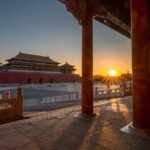
- Forbidden City Edge Views: Moat, Corner Turrets, and the Formal Entrance Feel
- Old Commercial Streets and Jing-Hang Canal: From Imperial Lines to Everyday Motion
- Drum and Bell Towers: The Time-Announcer Twin Peaks
- Hutongs Between the Emperors: Local Lanes, Markets, and Daily Life
- Bikes, Pace, and Group Size: What 3 Hours Actually Means
- Price and Value at $67: Why This Might Beat DIY Beijing
- Getting to the meeting point: Ci Qi Kou Station, Line 5 Exit D
- Should you book this Beijing Central Axis biking tour?
- FAQ
- FAQ
- How long is the Beijing private biking tour along the Central Axis?
- What is the price per person?
- Where is the meeting point?
- How big is the group?
- Is the tour wheelchair accessible?
- What language will the guide speak?
- What’s included in the price?
- Are tickets for sights included?
- Can I cancel and get a full refund?
- Can I reserve now and pay later?
Key highlights you’ll feel on this tour
- Beijing’s “dragon’s backbone”: a Fengshui-style central line that ties the city’s most important buildings together
- Tian’anmen Square and Tian’anmen Gate: built-up formal space with the Mao portrait above the gate
- Forbidden City edge views: the moat and corner turrets near the great formal entrance
- Jing-Hang Canal stop: views of the longest manmade canal, plus temples and shops nearby
- Drum and Bell Towers: the time-setting twin towers that anchor the north end of the axis
- English guides who explain fast: guides like Amber and Jacky made it easier to understand what you were seeing
Following the Dragon’s Backbone: Beijing Central Axis by Bike
Beijing’s Central Axis is basically the city’s master alignment. It’s a 7.8-kilometer axial line running north-to-south through major imperial landmarks—from the Bell and Drum Towers down through spots like Wanning Bridge and Jingshan Hill, and ending at the Yongdingmen Gate. The result is that, instead of bouncing around Beijing, you ride a straight idea of power, planning, and ceremony.
This tour’s core concept is simple: bike along that line, so the landmarks don’t feel random. Tian’anmen isn’t just a square. It’s the north-to-south spine. The Forbidden City isn’t just a famous wall and gate area. It’s part of the same designed procession. And the lakes, bridges, and towers you encounter along the way all connect back to that central layout.
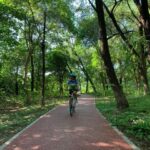
You’ll also get a second layer: side streets branching off the axis. That’s where hutongs come in—older residential lanes where ordinary people lived and live. On foot, hutongs can feel like a maze. On a bike with a guide, they become a short detour with context.
You can also read our reviews of more cycling tours in Beijing


Tian’anmen Square and Gate with Mao’s Portrait: Big Formal Space, Explained
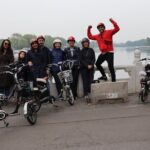
The ride’s first emotional hit is Tian’anmen Square, one of the most iconic places in China. Even if you’ve only seen it in photos, you’ll feel how it’s built for ceremony—wide open space, strong geometry, and a sense of scale that’s hard to get anywhere else in the city.
Then you move to Tian’anmen Gate, where the Chairman Mao portrait is displayed. The gate isn’t a random landmark here; it’s part of the same imperial framework. Around the gate you’ll see key surrounding buildings such as the Parliament building and the National Museum. The guide’s job is to help you read the area: what you’re looking at, why it’s positioned where it is, and how it fits into the central-axis story.
Practical takeaway: this is the kind of stop where timing matters. You’ll likely want a steady pace and your camera ready, but also time to look up. The gate’s message is in the vertical scale—down the axis toward you, and upward toward the portrait.
Forbidden City Edge Views: Moat, Corner Turrets, and the Formal Entrance Feel
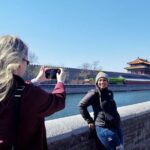
You don’t just look at the Forbidden City as a single “big place.” This route gives you the huge formal entrance feel from the outside edge, plus the city moat and the corner turrets that define the architecture.
Those details matter. The moat gives you distance and structure. The corner turrets show how the Forbidden City presents power at street level—sharp lines, layered defenses, and that sense that everything was designed to impress from a distance. Even without spending the whole day inside, you get the overall posture of the complex.
There’s also a good chance you’ll pass through areas where the city’s old-and-new rhythm shows up: new systems of movement, but ancient geometry still visible. That’s one of the reasons people like biking here. You stay connected to the axis instead of losing time crossing the city.
If you’re the type who likes architecture more than shopping, this leg will likely be one of your favorites.
Old Commercial Streets and Jing-Hang Canal: From Imperial Lines to Everyday Motion
As the route keeps moving, you’ll shift from pure imperial staging into spaces that feel more lived-in. The tour includes ancient commercial streets in Beijing, where you can see how trade and daily needs grew around major buildings and corridors.
Then comes the Jing-Hang Canal. You’re riding near one of the world’s most historic water corridors, described as the longest manmade canal. What you get from this stop is the canal’s long, practical shape—plus temples and stores beside it. It’s a different “Beijing” from the axis drama. The scale is still big, but the mood is more everyday.
One thing I like about placing the canal here: by the time you reach it, you’ve already seen the city’s official face. The canal helps you understand the city’s lifelines. Water routes and markets are part of what kept Beijing functioning across centuries.
Drum and Bell Towers: The Time-Announcer Twin Peaks
Heading toward the north end, you’ll encounter the drum and bell towers—often described as “time’s announcer” twin towers. This matters because the Central Axis isn’t just a physical spine. It’s also a timeline in stone.
From this area you can think about how Beijing managed order: when to open gates, when to mark hours, and how the city’s rhythm was broadcast. The towers act like a landmark that turns the whole route into a story you can measure with your eyes.
For many first-time visitors, this is also a great “reset.” Tian’anmen and Forbidden City edges can feel intense. The tower area gives you perspective and helps you understand why the axis begins where it begins.
You can also read our reviews of more private tours in Beijing



Hutongs Between the Emperors: Local Lanes, Markets, and Daily Life
The best surprise in this kind of route is how quickly hutongs start to feel like a living neighborhood instead of a photo background.
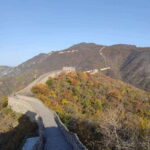
This tour includes exploring hutongs connected with the central way, where ordinary people live. The idea is not to treat hutongs as a museum. You’re meant to see the side streets that branch off from the axis—streets with daily routines, local markets, and family life in the background.
You’ll also hear that the tour is built to find those “hidden” lanes that you might otherwise miss. On bike, the guide can point out what matters: the connection between the wide ceremonial avenues and the narrow residential networks.
Two helpful realities: first, hutongs can feel confusing if you’re wandering alone. Second, you’ll likely notice more detail with a guide who knows what to point at and when to turn.
If your goal is to leave Beijing with more than just famous gates and big squares, this hutong portion is the part that makes the trip feel personal.
Bikes, Pace, and Group Size: What 3 Hours Actually Means
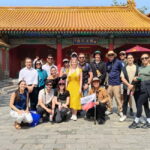
This is a 3-hour tour, built as a small-group experience limited to 8 participants. That smaller size is a big deal on a route like this. You’re moving through dense, high-attention areas, so you don’t want to fight for space or wait forever for the slowest rider.
The tour uses shared bikes per person, plus mineral water. You’re not choosing between a half-day hike and a short photo stop. You’re getting a ride that covers a lot of ground along the central axis concept—described as about 20 kilometers across the tour.
Your pace will likely be “active but managed.” If you’re comfortable on a bike and you like stopping to look, this format works well. If you’re easily overwhelmed by traffic and tight spaces, tell the guide early and focus on staying relaxed.
And since bike fit can be a real factor (one rider reported the bike felt too small), don’t just accept it quietly. A quick adjustment can change the whole experience.
Price and Value at $67: Why This Might Beat DIY Beijing
At $67 per person for 3 hours, the value comes from three buckets: a guide, time saved, and a route design you probably won’t replicate easily.
You get an English-speaking guide, pickup service from the meeting point, a bike, and mineral water. Tickets aren’t included, so if you plan to enter paid sights, you’ll want to account for that separately. Still, even without ticketed entry, the route is packed with major landmarks and architectural viewing points along the axis.
Where this beats DIY: the central axis is structured, but navigating the details is not. You’re not just going from A to B. You’re going with someone who explains why each stop sits where it does and what details to notice (moat edges, corner turrets, tower roles, and the link between imperial lines and everyday neighborhoods).
One more value angle is timing. A bike tour keeps you in motion without turning every stop into a long walk. For a short stay, that can matter a lot.
Getting to the meeting point: Ci Qi Kou Station, Line 5 Exit D
Your meeting point is Exit D of Ci Qi Kou station on Line 5. The practical approach is to take a taxi and set the destination as 磁器口地铁站D出口. Your guide meets you at the meeting point and then you start riding from there.
If you’re the type who likes buffer time, plan a few extra minutes. Communication tends to be the difference between a smooth start and a stressful one in city centers.
Should you book this Beijing Central Axis biking tour?
I’d book it if you want Beijing in one coherent line: Tian’anmen to Forbidden City edges, then down toward the canal and up to the towers, with hutongs stitched in so you don’t leave with only official monuments in your head. The small group size, English guide, and the bike format make it practical for most visitors.
I’d hesitate only if bike comfort is a big priority for you and you’re worried about sizing. If that’s you, bring it up immediately when you meet the guide. Also remember that sightseeing tickets are not included, so check whether you need paid entry or if viewing from the route is enough for your style.
If your ideal Beijing day includes both structure and street-level life, this Central Axis bike tour is a strong match.
FAQ
FAQ
How long is the Beijing private biking tour along the Central Axis?
The tour lasts 3 hours.
What is the price per person?
It costs $67 per person.
Where is the meeting point?
Meet at Exit D of Ci Qi Kou station (Line 5). Your guide will meet you there.
How big is the group?
The group is limited to 8 participants.
Is the tour wheelchair accessible?
Yes, the tour is listed as wheelchair accessible.
What language will the guide speak?
The guide speaks English.
What’s included in the price?
Included are an English-speaking guide, pickup service from the meeting point, a shared bike per person, and mineral water.
Are tickets for sights included?
No. Tickets for any tourist sights are not included.
Can I cancel and get a full refund?
Yes. You can cancel up to 24 hours in advance for a full refund.
Can I reserve now and pay later?
Yes. The option Reserve now & pay later is available.