REVIEW · BEIJING
Beijing Tai Chi and Tea Ceremony Experience
Book on Viator →Operated by Beijing San Feng Tai Chi Club · Bookable on Viator
Morning calm beats the usual rush. This Beijing experience ties Tai Chi to Taoist ideas of Qi and then slows you down with a proper tea ceremony in a tea house setting.
I love how the Tai Chi lesson is structured for real beginners, not just for people who already know the moves. I also love the tea part: you taste multiple teas (4–5 types) and you get help from the tea master to notice differences, not just drink something warm.
One consideration: you should plan your day for a 3-hour block and don’t expect a full meal included. Wear comfortable shoes, and consider grabbing a snack before or after if you’re hungry.
In This Review
- Key highlights to look for
- Why Tai Chi and Tea Make Sense Together in Beijing
- Meeting Point Near Qianmen and How the 3 Hours Run
- One Hour of Tai Chi Basics With Eric: Taoism, Qi, and Relaxation
- Learning the Moves Without Feeling Awkward: Presence With Mind, Eyes, and Body
- From Tai Chi to Tea: What to Expect at the Tea House
- Alice’s Kungfu Tea Ceremony: How to Taste Like You Mean It
- Included vs Not Included: Planning Your Morning Smart
- Price and Value: Does $95 Pay Off?
- Who This Beijing Tai Chi and Tea Ceremony Experience Fits Best
- A Practical Way to Pair It With Your Beijing Day
- Should You Book This Tour?
- FAQ
- How long is the Beijing Tai Chi and Tea Ceremony experience?
- What time does the experience start?
- Where does the tour start, and where does it end?
- What will I do during the Tai Chi portion?
- What happens during the tea ceremony portion?
- What’s included in the price?
- Is food or private transportation included?
Key highlights to look for
- Taoist framing of Tai Chi: Qi, relaxation, and harmony with nature explained in plain language
- Eric teaches to your level: lesson adjusted if you are a beginner
- A one-hour Tai Chi focus: relaxation forms, typical movements, and self-massage methods
- Tea house tasting built for your senses: 4–5 teas plus 3–5 snacks
- Kungfu Tea ceremony practice with Alice and guidance on tea quality
- Private group format: only your group participates for a more personal morning
Why Tai Chi and Tea Make Sense Together in Beijing
Beijing mornings can be noisy everywhere else. This one gives you a different rhythm. You start with Tai Chi, but not in the generic, just-stretches way. The class connects the practice to Taoism, where relaxation work is meant to help your body’s Qi move more freely. The idea is less about dramatic poses and more about steady breathing, gentle control, and learning how to be present in your own body.
Then you shift to tea. In Taoist tradition, tea is treated as more than a drink. It’s often described as supporting the Shen and calming the temperament, which is basically another form of internal cultivation—just through something you can taste and smell.
If you like experiences where one part of the activity supports the other, you’ll enjoy the flow here. Movement first, then meditation through sipping is a satisfying pairing, especially if you’ve been sightseeing hard the day before.
You can also read our reviews of more tours and experiences in Beijing.


Meeting Point Near Qianmen and How the 3 Hours Run

The experience starts at Ji Xiao Lan Former Residence (Ji Xiao Lan Gu Ju), in the Qianmen / Xi Cheng Qu area, at 9:00am. It ends back at the meeting point. It’s described as near public transportation, which matters in Beijing because getting across town can take longer than you expect.
You’ll want comfortable walking shoes. Even though you’re not doing a long hike, Tai Chi involves standing, shifting weight, and moving through basic forms. Don’t count on being in one spot for long.
Also, it’s priced at $95 per person and it’s a private tour/activity for your group. That private setup usually means you can ask more questions, get more feedback, and avoid feeling like you’re lost in a crowd.
One Hour of Tai Chi Basics With Eric: Taoism, Qi, and Relaxation
The Tai Chi portion runs about one hour, and it’s taught by an English-speaking master named Eric. One big win here: you don’t feel like the teacher is performing at you. Eric explains what makes Tai Chi so popular worldwide, and he ties it back to the Taoist roots—specifically the idea of moving toward better harmony between body and nature by improving the flow of Qi.
For your first class, you’re not thrown into advanced choreography. You learn:
- basic relaxation work
- typical Tai Chi movements in a beginner-friendly way
- self-massage methods (so you have something practical to repeat later)
Eric also checks your experience level and adjusts how the lesson is organized. If you’re brand-new, that’s huge. You can follow without guessing. And if you’ve tried Tai Chi before, you still get structure and reminders that help you clean up your basics.
What I like most about this style of teaching is that it doesn’t treat Tai Chi like a slow-motion sport. It’s presented as an approach to the body—quiet focus, control, and gradual steadiness. When the instructor keeps bringing you back to that feeling, your posture tends to improve faster than you’d expect.
Learning the Moves Without Feeling Awkward: Presence With Mind, Eyes, and Body
In many Tai Chi classes, beginners worry about looking wrong. This session encourages something different: you practice presence. You work with mind, eyes, and body as part of the same skill.
That matters because Tai Chi looks simple from the outside, but it depends on small details: where your attention goes, how your shoulders relax, how you coordinate your gaze with your movement. If you’re tense, your balance suffers. If you’re rushing, your motion loses its purpose.
Eric’s class is paced so you can feel what you’re doing. You’ll practice a set of movements and relaxation forms, and you’ll also learn the self-massage part, which adds a grounded, body-friendly element. It makes the class feel like something you can use after you leave, not just something you do for an hour and forget.
One more practical note: bring a mindset that’s open to gentle effort. Tai Chi is not about pushing hard. It’s about learning control, and that takes a calm pace.
From Tai Chi to Tea: What to Expect at the Tea House
After the Tai Chi lesson, you move into the tea house portion. This is where the experience slows down on purpose.
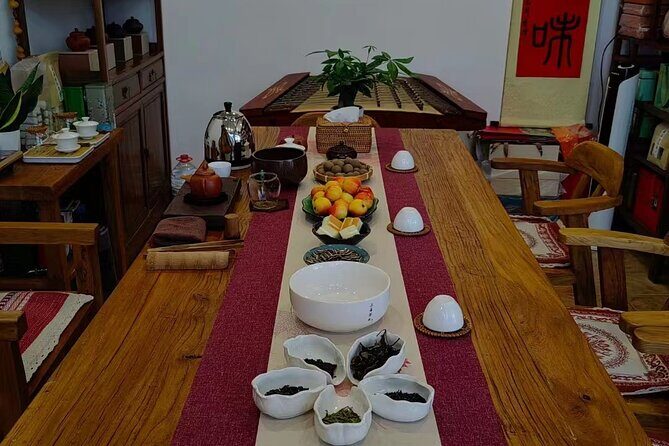
You get to taste 4–5 types of Chinese tea and also enjoy 3–5 snacks. The tea master Alice helps you learn how to distinguish tea quality yourself, and she guides you through a Kungfu Tea ceremony style experience.
This is more than drinking random cups. You’re learning a method: notice the tea, compare the flavors, and connect what you’re tasting with how the tea is made and handled. The class is built around helping you taste with attention.
And since the session is described as a way to relax and meditate while sipping tea, the tone shifts. You go from moving your body to listening with your senses.

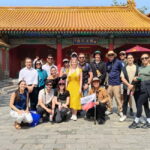




Alice’s Kungfu Tea Ceremony: How to Taste Like You Mean It
Kungfu tea culture can sound complicated, but in a guided setting it becomes doable fast. With Alice, you’re shown how to experience tea in a way that supports calm focus. The teaching points you toward noticing differences between teas—taste, aroma, and overall character—so you don’t just get one nice drink.
I especially like this part of the experience because it turns tea into a skill. Once you know what to look for, you can order tea later in Beijing and actually enjoy the differences instead of playing a guessing game.
A practical tip: pace yourself. Don’t rush to finish a cup just to move on to the next. If you treat it like a tasting, you’ll remember it better—and you’ll feel the relaxation part more clearly.
Included vs Not Included: Planning Your Morning Smart
The experience includes coffee and/or tea and all fees and taxes. That’s nice because you’re not constantly adding small costs.
What’s not included is food and private transportation. You do get 3–5 snacks with the tea portion, but that’s not guaranteed to be a full meal.
So if you’re the type who needs breakfast, you have two options:
- eat before you go, then enjoy the tea snacks as part of the tasting
- or if you tend to snack lightly, bring a small backup snack for later
Also, since there’s no private transport included, you’ll rely on public transportation to get to the meeting point.
Price and Value: Does $95 Pay Off?
At $95 per person for about 3 hours, the value comes from the pairing: instruction plus tasting. You’re not just paying for a tea experience or just paying for Tai Chi.
You’re getting:
- one hour of Tai Chi instruction with Taoist context, including relaxation work, typical movements, and self-massage methods
- a tea ceremony/tasting with 4–5 Chinese teas and snacks
- an English-speaking instructor experience split between Eric (Tai Chi) and Alice (tea)
In a city like Beijing, where lots of tours are built around rushing from one photo stop to another, paying for guided learning can feel like a better use of time. You also get a private-group feel, which usually makes the $95 feel less like a generic activity and more like a real lesson.
That said, this tour is best if you genuinely like slow learning and hands-on guidance. If you want pure sightseeing and lots of walking routes, you may feel it’s too focused.
Who This Beijing Tai Chi and Tea Ceremony Experience Fits Best
This is a strong choice for:
- beginners who want a clear start and patient instruction
- travelers who like cultural practice, not just cultural talk
- people who enjoy calm mornings and sensory experiences
- anyone planning a day with slower, reflective time after (it fits well as a morning stop before heading out for major sights)
You might want to skip or reconsider if:
- you’re looking for a full-day tour or lots of landmarks
- you need transportation included, since private transport isn’t part of the package
- you expect a full meal (snacks are included, but food isn’t listed as included beyond that)
A Practical Way to Pair It With Your Beijing Day
Because it’s a 9:00am start and finishes back at the meeting point, you can plan the rest of your day without stress. This kind of class also helps you reset after travel fatigue.
If your schedule includes major sights later, this experience can work like a warm-up. Tai Chi loosens your body and teaches you how to slow down. Then tea keeps that calm mood going. It’s a good strategy for not burning out mid-trip.
Just plan around the fact that you’ll be standing and moving gently for about an hour, followed by a seated tasting. Comfortable shoes and hydration help.
Should You Book This Tour?
If you want a morning in Beijing that feels personal, calm, and practical, I’d book it. The strongest reason is the pairing: Tai Chi with Taoist context taught by Eric, followed by a guided tea tasting and Kungfu-style ceremony with Alice. You leave with both a body practice and a sensory habit, not just photos.
Book it especially if you’re a beginner or you like clear instruction. The main reason to hesitate is if you’re hungry for a full meal included or you want a transport-covered, big-sight itinerary.
If those don’t apply, this is a smart, value-based way to experience Beijing culture through something you can actually repeat after you get home.
FAQ
How long is the Beijing Tai Chi and Tea Ceremony experience?
It runs about 3 hours total.
What time does the experience start?
The start time is 9:00am.
Where does the tour start, and where does it end?
It starts at Ji Xiao Lan Former Residence (Ji Xiao Lan Gu Ju, 前门 Xi Cheng Qu, Bei Jing Shi, China, 100052) and ends back at the meeting point.
What will I do during the Tai Chi portion?
You’ll learn Tai Chi Taoism knowledge, basic relaxation forms, typical Tai Chi movements, and self-massage methods.
What happens during the tea ceremony portion?
You’ll taste 4–5 types of Chinese tea and enjoy 3–5 snacks, with guidance from the tea master on distinguishing tea quality and participating in a Kungfu Tea ceremony.
What’s included in the price?
Coffee and/or tea are included, along with all fees and taxes.
Is food or private transportation included?
Food is not included, and private transportation is also not included.