REVIEW · BEIJING
Ming Tombs Sacred Way & Underground Palace & Water Wall P Tour
Book on Viator →Operated by Mark's Guide & Driver Service Beijing · Bookable on Viator
Ming Tombs meet the Water Great Wall. What makes this day work is the pairing of Sacred Way grandeur with a more adventurous Great Wall hike that actually feels different from the usual Beijing routines. I especially like how the Ming sites are structured so you get the big ceremonial entrance first, then go underground to see the Emperor’s actual burial space. One thing to consider: the English-speaking help is mainly via the driver, not necessarily as a full English guide inside every ticketed attraction.
What I also like is the rhythm of the whole itinerary: you do the tombs in the morning, eat Chinese lunch included, then switch to a less-crowded Great Wall section at Huanghuacheng. The Dingling Underground Palace stop is 89 feet below ground, and it adds a wow factor that most one-day Ming Tombs plans don’t. The Great Wall portion includes real walking and rampart navigation, so wear solid shoes and expect a steady day rather than a slow stroll.
In This Review
- Key highlights to know before you go
- Entering Ming Tombs Sacred Way: stone animals, spirit statues, and imperial staging
- Dingling Underground Palace: Wanli’s five rooms, 89 feet down
- Huanghuacheng Water Great Wall hike: walking a wall that meets a lake
- Price and logistics: what you’re really paying for at $150
- The small practical details that shape your comfort
- Who this tour suits best (and who might prefer something else)
- Should you book the Ming Tombs Sacred Way, Dingling Underground Palace and Huanghuacheng Water Great Wall tour?
- FAQ
- What city is this tour based in?
- What sites are included on this tour?
- How long is the tour?
- What time does the tour start?
- Is hotel pickup and drop-off included?
- Is lunch included?
- Are entrance fees included?
- Who provides English support?
- What are the minimum age requirements?
- Can I cancel and get a full refund?
Key highlights to know before you go
- Sacred Way with massive spirit statues: a long walkway lined with unique stone figures, including myth animals.
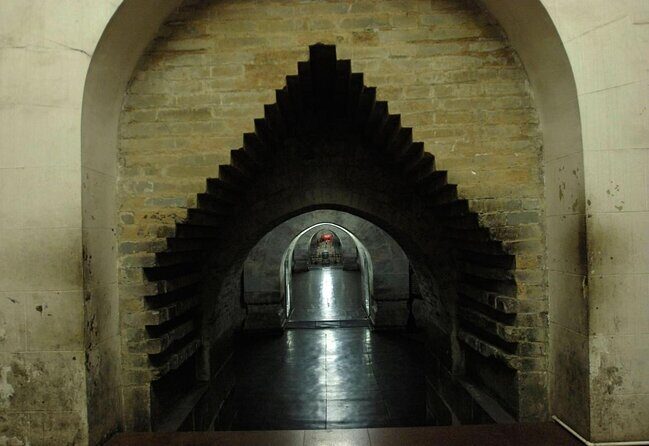
- Dingling Underground Palace at 89 feet deep: Wanli’s tomb, designed with five rooms and preserved displays.
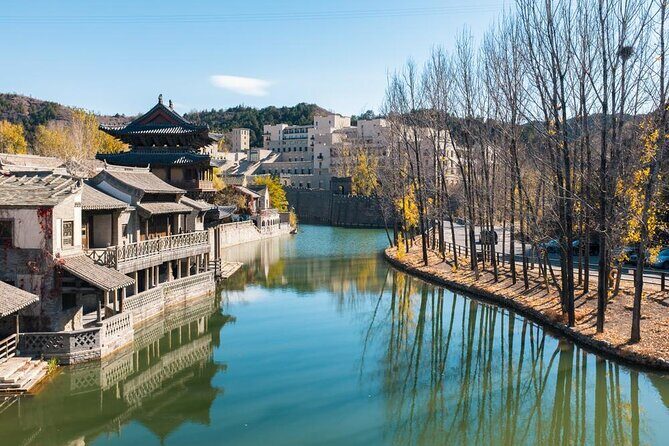
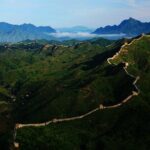
- Huanghuacheng Water Great Wall: a wild-feeling section that was affected by the Xishuiyu Dam and now hugs the man-made lake view.
- Guide support for the climb: your guide shows the best path up and how to move safely along the ramparts.
- Tickets and a Chinese lunch included: less hassle, more time for actual sights.
- Hotel pickup/drop-off in an AC car: practical for a full day outside the city.
Entering Ming Tombs Sacred Way: stone animals, spirit statues, and imperial staging
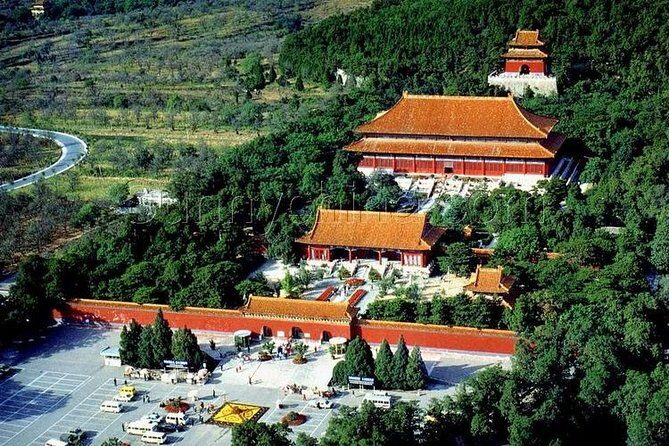
The day starts with hotel pickup around 8:30 am and a drive of about 1.5 hours to the Ming Tombs area. You’re aiming at a burial complex tied to 13 Ming emperors, spread over about 30 acres. The layout is less about one tomb and more about the full ceremonial setup that made emperors feel larger than life—so you’ll begin at the entrance experience, not by rushing straight to the underground.
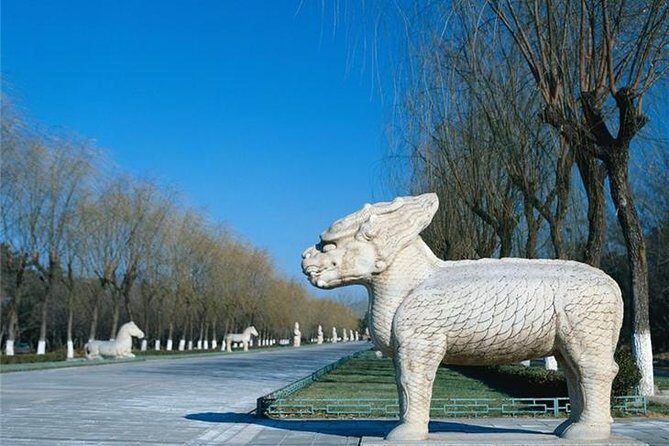
Stop 1 focuses on the Sacred Way (also called the Spirit Way). This is the long, decorated walkway leading into the burial grounds, lined with impressive large statues connected to rank, authority, and symbolism. The key detail here is the variety and scale: you’ll see around 36 statues, and they’re not just repeating generic shapes. Expect figures representing important officials and meritorious figures, plus exotic animals such as lions, camels, elephants, xiezhis (a myth-style guardian creature), and even a unicorn-like xuan imagery. If you’re the kind of person who enjoys decoding what symbols were meant to communicate, this is where you’ll feel the most payoff.
What I like about this stop for a first-time Beijing visitor: it’s visually powerful without requiring deep background knowledge. You can walk it and still understand the message—power on a path—because the statues are built to be read in sequence. The drawback is also practical: this is a walk through an outdoor area. If it’s hot or hazy, the mid-morning sun can feel intense, so plan for water and stay aware of the pace your body can handle.
Admission time for this stop is about 30 minutes. That’s enough to get the big picture and take photos, but not enough to linger at every statue for long. If you like to stand and study, I’d treat this as a guided highlight rather than a slow museum-style exploration.
You can also read our reviews of more tours and experiences in Beijing.


Dingling Underground Palace: Wanli’s five rooms, 89 feet down
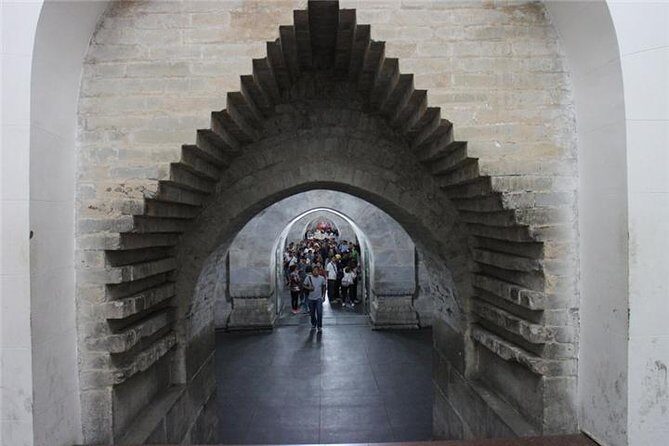
After the Sacred Way, you move to Dingling Underground Palace. This is the Ding Tombs component that’s the only one open to the public, which matters because it shapes what you’ll actually be able to see today. Dingling is where Emperor Wanli is buried, and the quick context helps: he ruled for 48 years, one of the longest reigns of the Ming period.
The headline detail is the depth. The tomb sits about 89 feet below ground. That alone changes how you experience it. Instead of feeling like you’re just walking around outdoor architecture, you’re stepping into a preserved burial interior where the design choices were made for a very specific purpose: housing the emperor’s burial space and the artifacts meant to accompany status even after death.
Inside, the tomb is described as having five rooms, and there are exhibits that show some of the Emperor’s jewels and other artifacts. What I like about including this after the Sacred Way is contrast. The Sacred Way gives you the public, ceremonial, symbolic front. Dingling gives you the private, physical, and preserved burial reality.
A realistic consideration: underground spaces can feel cooler but also more compressed depending on crowd flow and lighting. Since the tour includes admission tickets, you’ll be entering through the standard route, but you should still mentally prepare for a more controlled environment. Also, your English-speaking support is listed as the driver rather than an English tour guide inside the attractions. That means you’ll want to keep your questions ready for the places where your guide can explain, and don’t count on a full English narrative inside every room.
Lunch comes next at a local Chinese restaurant. This is important value-wise because it prevents the classic day-tour problem of spending time searching for food near a remote site. It’s also a helpful reset before the Great Wall drive.
Huanghuacheng Water Great Wall hike: walking a wall that meets a lake
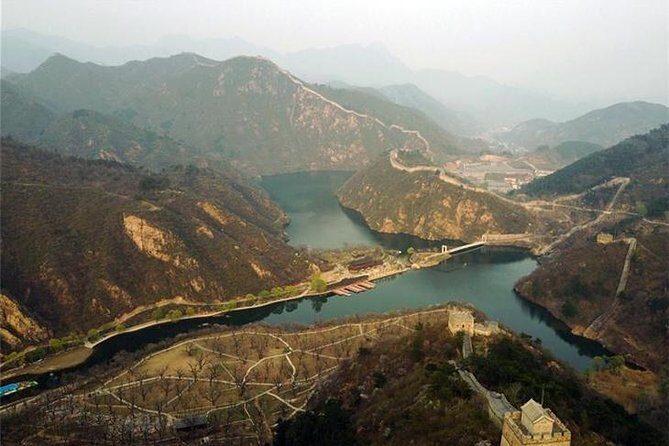
After lunch, you travel to the Great Wall at Huanghuacheng. This is the part of the itinerary that changes the tone from “imperial tomb sightseeing” to “outdoor walking and views.” What sets Huanghuacheng apart from the most famous Great Wall sections is that this plan focuses on a section that’s less visited and still in its original, wild condition. You’re not just seeing a restored postcard wall; you’re seeing the wall as it looks in its natural setting.
At Xishuiyu village, your guide shows you the best path to ascend the ramparts and how to navigate them safely. That’s a big deal. Great Wall terrain can be uneven, steep, and slippery in certain weather. Here, you’re not left alone to figure it out, and the tour explicitly frames the hike as something you do with guidance.
The story behind the water view is one of the more memorable elements of this route. When the Xishuiyu Dam was built, the valley floor that once lay under the wall’s crossing was flooded. Over time, the wall that ran through that space became part of the shoreline story—so now you get an image of the wall cascading toward the man-made lake below. It’s a different visual pattern than the typical wall-over-valleys view. Instead of only looking outward, you’re looking down toward water, and that changes the whole feeling.
There’s also a seasonal detail that the tour explains: in summer, the village below can become a sea of wild yellow flowers. The name tied to this is huanghua, which is part of why the section carries its identity. Even if you’re not there in peak bloom season, the point still holds—you’re getting a wall location that’s tied to local ecology, not just an engineered viewpoint.
The time on the wall is about 2 hours, and then you descend. After that, you have freedom to wander down by the lake. That free time is more than an optional bonus. It gives you a chance to reset your legs, take photos from lower angles, and enjoy the view without constantly climbing. If you’re hoping for a mix of active walking and relaxed scenic time, this is a good structure.
The main drawback for some people is obvious but important: this is a hiking-style wall experience. Even though it’s described as a pleasant contrast and not sold as extreme trekking, you’re still on the ramparts. If you have knee issues or mobility concerns, shoes alone won’t solve everything—this may require a slower pace and extra care.
Price and logistics: what you’re really paying for at $150
At $150 per person for an 8-hour private outing, the value comes from bundling four things you’d otherwise have to coordinate separately:
1) Transportation: hotel pickup and drop-off in an air-conditioned car for the full day, including the drive out to the Ming Tombs and then over to Huanghuacheng.
2) Food: lunch at a local Chinese restaurant.
3) Admissions: entrance fees are included, with admission tickets included for the tomb and wall segments.
4) Human help where it matters most: an English-speaking driver and a guide who helps with navigation, especially at the Great Wall.
If you try to DIY this route, you’ll spend real time figuring out how to get between the Ming Tombs area and Huanghuacheng, then dealing with ticket lines and language gaps. This tour is designed to remove the friction and keep the day moving.
The main trade-off is that English narration inside sites isn’t guaranteed as a dedicated English tour guide. You’ll rely on the driver and the guide’s explanations where they can support you. For the Sacred Way and the Water Great Wall climb, that guidance matters. For the underground rooms, you’ll want to go in with a curiosity mindset and be comfortable reading signage or relying on partial explanations.
The small practical details that shape your comfort
This is a full-day plan, and comfort is not optional. You’re given a clear tip: wear comfortable hiking shoes. I agree. Great Wall stone surfaces, stairs, and rampart paths demand grip. If you wear soft sneakers that work on smooth pavement but not uneven steps, you’ll feel it fast.
Timing-wise, you start at 8:30 am and run about 8 hours total. That means you should eat a real breakfast before pickup. Once you’re out in the countryside, your options become mostly what the tour provides or what’s available nearby.
The tour also lists a minimum age of 10 years, and it says most people can participate. That typically points to moderate walking, not a hardcore endurance challenge. Still, you’re mixing tomb interiors with an outdoor wall hike and then optional lake wandering. This is the kind of itinerary where you’ll benefit from pacing yourself rather than trying to power through for every photo.
One more practical note: it’s a private tour/activity, so you won’t share the day with strangers. That usually helps with flexibility—stopping for photos, moving at a pace that works for your group, and keeping navigation calmer on uneven routes.




Who this tour suits best (and who might prefer something else)
This tour is a strong fit if you want a single day that covers both Ming imperial storytelling and a Great Wall experience with a water setting. The combination of Sacred Way symbolism, Dingling’s 89-feet-deep tomb, and the Huanghuacheng lake-view wall is a smart way to avoid picking only one side of the story.
You’ll especially enjoy it if:
- You like guided structure and don’t want to wrestle with logistics between sites.
- You want something different from the most crowded, heavily marketed Great Wall sections.
- You’re curious about how symbols and imperial design show up both outdoors (statues) and indoors (burial design).
You might think twice if:
- You need fully guided English interpretation inside every room and hallway.
- You want a totally relaxed sightseeing day with minimal walking.
- You have limited mobility for ramparts and uneven outdoor steps.
Should you book the Ming Tombs Sacred Way, Dingling Underground Palace and Huanghuacheng Water Great Wall tour?
I’d book it if your priority is variety with solid value: Ming Tombs Sacred Way, a real underground tomb experience at Dingling, and then a Great Wall hike that includes the lake views created by the Xishuiyu Dam story. The day feels balanced—ceremony in the morning, nature and walking in the afternoon.
If you’re deciding between this and a simpler Great Wall-only tour, consider what you gain here: you also get the Ming burial complex and the Imperial-era symbolism that explains why the Great Wall and empire building mattered. It’s not just two sites shoved together; the route tells a coherent story about power, planning, and landscape.
FAQ
What city is this tour based in?
It’s in Beijing, China.
What sites are included on this tour?
You’ll visit the Ming Tombs area with the Sacred Way, Dingling Underground Palace (the public open Ding Tomb), and the Water Great Wall at Huanghuacheng.
How long is the tour?
It’s about 8 hours.
What time does the tour start?
The start time is 8:30 am.
Is hotel pickup and drop-off included?
Yes, hotel pickup and drop-off are included.
Is lunch included?
Yes, Chinese lunch is included.
Are entrance fees included?
Yes, entrance fees are included, and admission tickets are included for the stops.
Who provides English support?
An English-speaking driver is included, but an English-speaking tour guide inside the attractions is not included.
What are the minimum age requirements?
The minimum age is 10 years.
Can I cancel and get a full refund?
Yes, you can cancel up to 24 hours in advance for a full refund.