REVIEW · GUILIN
Mini Group: Longji Rice Terraced Fields and Minority Villages Tour
Book on Viator →Operated by Trippest Travel · Bookable on Viator
Longji rice terraces feel like a living map. I love how this full-day trip turns a hard-to-plan region into a smooth, guided day, with Longji Rice Terraced Fields plus minority villages and photo-worthy lookouts. You’ll learn why local people keep farming these slopes and how Zhuang and Yao communities shape what you see.
Two things I like a lot: the tour stays genuinely small (up to 10), and the guide time feels personal rather than rushed. In the English-guided experience, guides like Lily and Hill come up for very strong English and clear storytelling, which matters when you’re trying to understand what the terraces mean beyond the photos.
The one drawback to think about is physical effort and travel time. The drive can be long, roads can feel rough, and the viewpoints plus walking mean you should plan for heat or steep paths even though the group size helps.
In This Review
- Key highlights worth planning around
- Longji Rice Terraced Fields Beyond the Guilin Day-Bus
- Pickup From Guilin or Yangshuo and the Real Meaning of a Small Group
- Ancient Zhuang Village: Where the Terraces Story Starts
- Ping’an Village After Lunch: Seven Star and the Nine Dragons View
- The Yao Long-Hair Moment, Plus the Shopping Reality
- Walking the Terraces: Guzhuang to Ping’an and the Heat Factor
- Price and Logistics: Why $160 Can Be Good Value Here
- Practical Tips for Mountain Roads, Weather, and Walking Tracks
- Should You Book This Longji Terraces and Minority Villages Tour?
- FAQ
- How long is the Longji Rice Terraced Fields and minority villages tour?
- What group size should I expect?
- Where do pickup and drop-off happen?
- What time does the tour usually start?
- What’s included in the price?
- Is lunch included?
- Do I need to hike?
- What about tips and cancellations?
Key highlights worth planning around
- Small group (max 10) keeps the day relaxed and easier to manage on foot
- Hotel pickup and drop-off reduces the usual taxi-and-tickets hassle
- Ancient Zhuang Village gives context for where the terraced farming story starts
- Ping’an Village viewpoints include the Seven Star with Moon and Nine Dragons and Five Tigers
- Yao long-hair cultural moment adds meaning (not just another stop)
- Guzhuang Village to Ping’an hike puts you on the terraces instead of viewing them only from vans
Longji Rice Terraced Fields Beyond the Guilin Day-Bus
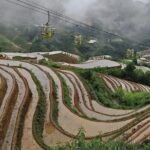
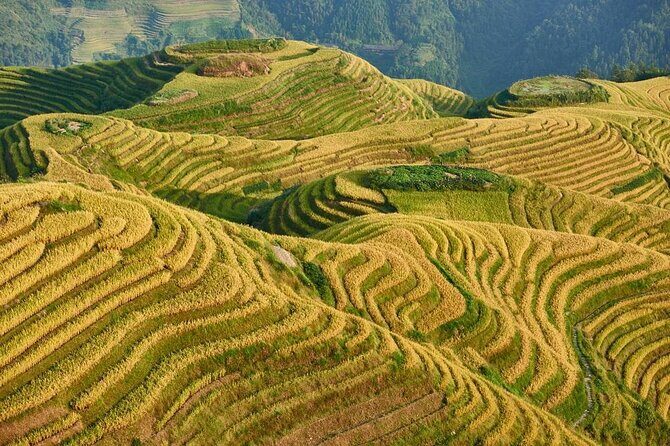
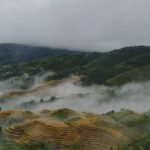
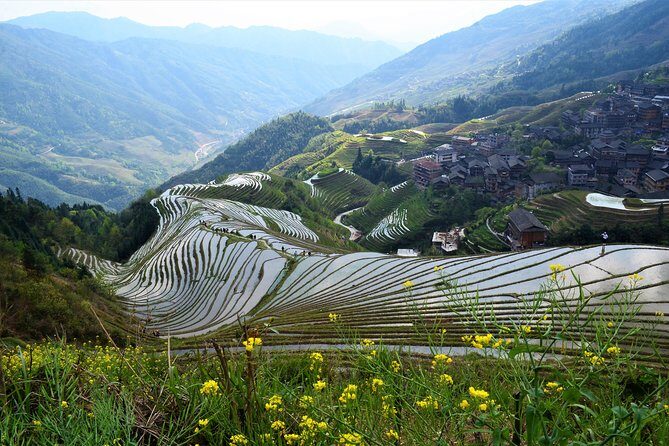
Longji Rice Terraced Fields sit in Longsheng County, in Guilin city’s wider region. The area covers multiple villages and has a history stretching back thousands of years, while today’s terraced farming is tied to local Zhuang and Yao communities who have worked these mountainous slopes for centuries. The result is more than a pretty backdrop. It’s a working landscape made layer by layer.
What makes this tour feel different from the typical Guilin routine is that you’re not just shuttled to one viewpoint and sent on your way. You visit village life first, then you move through the terraced scenery with a guide who can explain what you’re seeing as you go. That’s how the day stays meaningful even when the sky decides to be moody.
Altitude also plays a role in what you experience. Ancient Zhuang Village sits roughly around 1,300 meters at its highest points and drops lower from there. Even if you’re not thinking about altitude, you’ll feel the rhythm shift: early light up high, then warmer conditions as the day moves along and you descend.
If your goal is to go beyond Guilin city photos and actually understand how people live with the terraces, this route fits well. And if your goal is pure scenery, the viewpoints in Ping’an Village do exactly what you’d hope: they’re the kind of places where your camera is tempted even if you’re trying to put it away.
You can also read our reviews of more tours and experiences in Guilin.

Pickup From Guilin or Yangshuo and the Real Meaning of a Small Group
This is set up as a full-day small-group outing with pickup and drop-off from hotels in Guilin or Yangshuo. Pickup is usually around 8 am, and the guide is waiting in the hotel lobby or a nearby agreed location. That early start matters because you’ll want daylight for viewpoints and a cooler window for walking.
The small group size (no more than 10) is not just marketing. On terraced days, you often feel rushed when groups are large. Here, the day flows with enough space to stop, take photos, and walk at a sensible pace without feeling like cattle moving from one photo spot to the next. It’s also easier to hear explanations when the group isn’t huge.
In Yangshuo, the pickup drop-off area can depend on where your hotel sits. If you’re beyond the urban area, you may need to take a taxi to the Green Lotus Hotel (碧莲江景酒店). It’s a small detail, but it can save you stress if you plan ahead.
Another logistics point that’s worth knowing: if the group grows to more than 6 participants, you’ll transfer to shuttle buses at the scenic area due to vehicle restrictions for driving up or down the hill. The shuttle bus fee is included in the tour price, so you’re not hit with surprise add-ons once you’re already committed to the day.
And yes, the driving is part of the deal. Even with a small group, this is a long outing and you’re trading comfort for access. Some guests note the road feel can be rough on the mountain drive, so pack patience and plan to sit back during the transfers.
Ancient Zhuang Village: Where the Terraces Story Starts
Your morning centers on Longji Rice Terraces and Ancient Zhuang Village. You’ll usually spend about 2 hours here, including your admission ticket to the terraced fields. This is the part of the day that helps you understand the terraces as a human project, not a scenery postcard.
Ancient Zhuang Village is described as the origin point of the Zhuang people’s terraced fields. That matters because it explains why the villages aren’t just accessories to the views. The terraces were built and maintained by farming communities on steep ground, and the village layout connects directly to how water, fields, and pathways work together.
Altitude and the layered design are what you’ll notice first. At higher points you can see how the fields step down through the mountain curves. If the weather is clear, you’ll likely get strong depth in the pattern lines. If it’s misty or overcast, the terraces still look dramatic, but the scale can feel different—less sharp, more atmospheric.
This is also a good moment to slow down. Give yourself time to walk short sections on foot rather than only standing at one spot. Even in a guided setting, you’ll get more out of it by paying attention to practical details the guide points out—how terrace edges channel water, and how farming shapes daily movement between the village and the fields.
If you’re the type who likes photos but also wants context, this stop is a win. It’s where the rest of the day starts making sense.
Ping’an Village After Lunch: Seven Star and the Nine Dragons View
After the morning on the terraces, the day shifts toward Ping’an Village, which is the area many people think of first when they picture Longji. You’ll typically have around 3 hours here, and admission is part of the included package.
Ping’an is famous for the views, and you’re likely to hit several major lookouts. One highlight is the Seven Star with Moon viewpoint, which is tied to some of the most widely shared images of the Longji terraces. Another is the Nine Dragons and Five Tigers viewpoint, which the guide uses as a “now look at this” moment. These viewpoint stops aren’t identical, either. They show the terrace pattern from different angles and distances, and that changes how you interpret the full slopes.
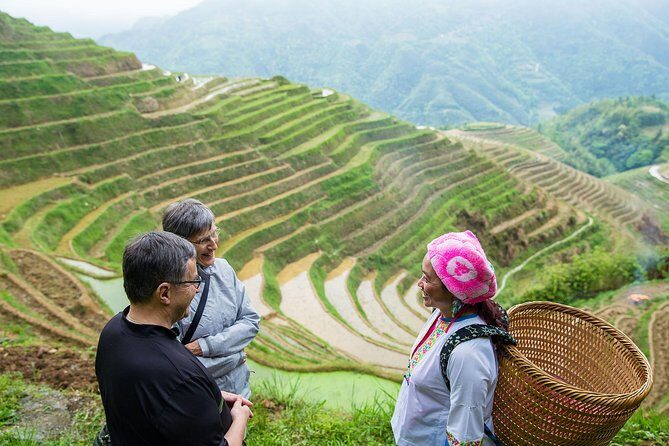
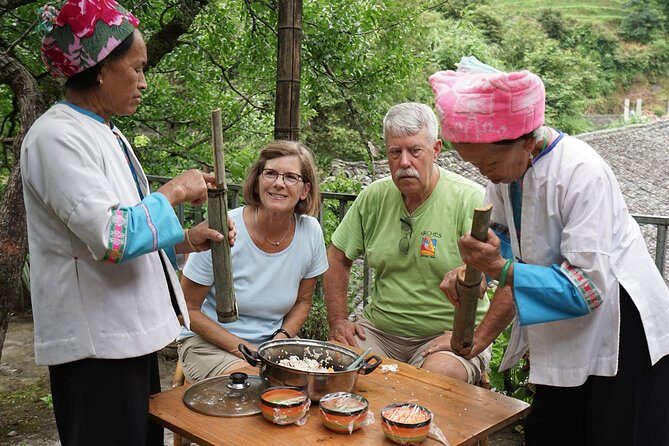
You’ll also get a cultural moment with a Yao long-haired tradition. The schedule includes an interview with an old Yao woman with long hair from a nearby village, focusing on Yao women in red clothing and the long-hair culture. The tour notes a specific custom: girls only allow hair to be cut twice in their lifetime. It’s brief, but it’s the kind of detail you remember because it’s specific and human.
Then it’s back to the viewpoints. The goal is simple: let the terraces be the backdrop while you also connect them to the people who shaped them. When it’s cloudy, you might lose the crispest panorama, and you’ll have to adjust expectations. One theme from the experience is that views can change with weather, so bring flexibility.
Also, keep an eye on timing for your energy. It can get hot in the afternoon, and the terrain means you’re not just sightseeing from a flat walkway.
The Yao Long-Hair Moment, Plus the Shopping Reality
This tour includes an encounter connected to the Yao long-haired tradition. That’s a meaningful cultural thread, and it’s one of the reasons this outing feels more grounded than a pure viewpoint crawl. You’re not just looking at terraces; you’re hearing about how hair practices and clothing reflect identity and family life in Yao communities.
That said, you should expect the environment to be commercial, too. Some guests report non-stop requests to purchase items around the long-haired ladies singing or presentation area, including follow-ups from sellers. This can turn a calm cultural moment into an awkward one, especially if you’re tired or trying to focus on photos.
My practical advice: decide in advance what you’ll do. If you want to buy, set a budget and keep it simple. If you don’t want to buy, be polite and firm early. The guides can help you move along, but your tone matters. A calm, direct no works better than long explanations that invite more conversation.
It’s also worth keeping your attention on the actual cultural content during the interview. Listen for the details, like the hair-cut custom, rather than getting pulled into the sales rhythm. If you keep your footing and focus, the experience stays respectful and informative even when the setting is busy.
And if you’re sensitive to crowd pressure, go into the stop prepared for motion and noise. The tour can be excellent, but it won’t feel like a quiet museum visit.

Walking the Terraces: Guzhuang to Ping’an and the Heat Factor
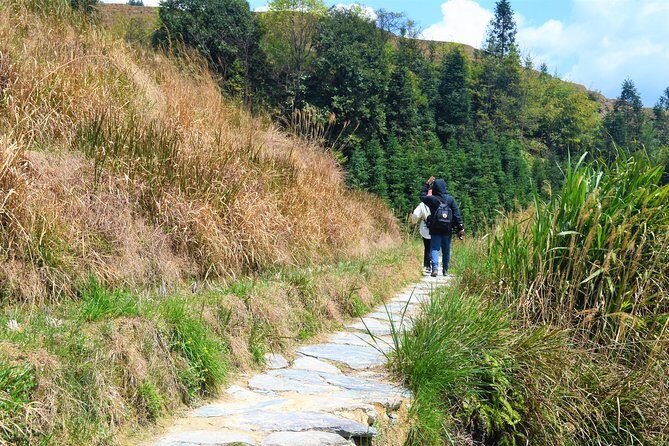
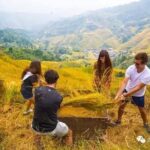
You’re not just transported and dropped at viewpoints. You get a hiking segment: a trip from Guzhuang Village to Ping’an Village, and it’s included in the tour. This is where the day becomes more than a photo route. You can see the terraces at walking level and get a stronger sense of how people move through the area in real life.
One reason this works in a small group is that the guide can direct you to the best tracks for the season and current conditions. Some guests describe being driven to the top and then walking down, with instructions for the route and what to watch for while navigating back to the vehicle meeting point.
Because the terraces are steep and the weather can swing quickly, you’ll want solid shoes and a water plan. Bottled water is included, which helps, but don’t treat it as unlimited. The heat can be intense, and the walking route can feel much harder than it looks from the van.
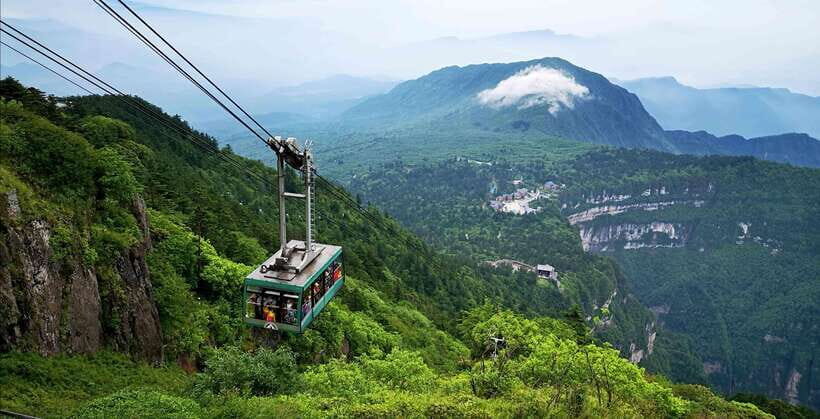
A useful detail from the experience: if hiking feels too much due to heat, some guests used a cable car option instead of hiking uphill. That suggests flexibility may exist depending on conditions and what’s operating that day. If you’re worried, ask your guide what route is best for you based on the day’s temperature and how your group is doing.
Finally, navigation can be a challenge in the village areas. Signage isn’t always great, and even with a guide, you might spend time figuring out where the main route is once you’re moving on foot. A small map screenshot on your phone can save time, and it can help you stay oriented during slower moments on the way down.
Price and Logistics: Why $160 Can Be Good Value Here
At $160 per person, this isn’t a budget add-on, but it can be strong value because so much is handled for you. Your price includes transport between attractions with hotel pickup and drop-off, an English-speaking guide, admission tickets to the Longji terraces, bottled water, and the included hiking segment from Guzhuang to Ping’an. If the group is split for vehicle restrictions, the shuttle bus fee is included too.
What you’re buying is time and clarity. Longji can be a pain to piece together with taxis and ticket logistics. You’d either need to hire a car or spend time figuring out routes, timing, and where the best viewpoints are for the day. Here, the structure is built in: morning terraces, midday shift, then Ping’an viewpoints and cultural stop.
Two things keep the day feeling worth the price for many people: the English guide and the small group pace. When you understand what you’re looking at, you don’t just collect views—you understand the pattern, the farming choices, and the role of minority communities. That’s hard to replicate if you go totally independent without local context.
Lunch is not included. That means you’ll want to budget for a meal. Tips are also not included, and there’s an informal guideline of CNY 50–100 per person for guide and driver (not compulsory, but appreciated). If you’re the type who likes to keep things smooth, bring some cash so you can tip without scrambling at the end.
One more practical value point: the tour tends to sell enough that it’s often booked about 35 days in advance on average. If you’re traveling during peak periods or you’re particular about your hotel pickup, booking earlier helps.
Practical Tips for Mountain Roads, Weather, and Walking Tracks
This is a mountain day. Even when the schedule is smooth, the environment does its own thing. I suggest you treat the day like two experiences happening at once: a transportation-heavy outing with mountain driving, and a walking-based sightseeing day where weather can change what you see.
Weather is the biggest wildcard. If clouds or mist roll in, you may not get the crispest view at the top lookouts. That doesn’t automatically mean it’s a waste of time. The terraces can still look impressive; they just shift from sharp contrast to softer, distant layers. If you really care about maximum visibility, you’ll benefit from being flexible and arriving early as the tour does.
Bring layers. Early morning can feel cooler, and then afternoons warm up quickly. A light rain jacket is smart, and sunscreen matters. Even if you’re not walking for hours, you’ll still be outside and exposed between viewpoints.
For walking, pack for grip. Terrace paths can be uneven and sometimes slick. A hat helps, and sunglasses can be a lifesaver when the sun hits the steps and the light bounces off the fields.
Also, consider how you’ll handle the heat. If you’re worried about endurance, ask your guide what the pace looks like that day and whether an alternative to a steep hike route is possible. Some guests have used a cable car option, and your guide can often help you make a sensible decision.
And about the cultural stop: keep your focus on the conversation and what you’re learning, then politely manage the shopping pressure without turning it into a big issue. A calm approach helps your day feel respectful rather than stressful.
Finally, since there can be navigation bumps in village areas, take a screenshot of your meeting point and keep your guide’s return time in mind. It’s usually smooth, but the terrain and signage can be confusing if you drift.
Should You Book This Longji Terraces and Minority Villages Tour?
If you want Longji Rice Terraced Fields plus minority village context without wrestling logistics, I’d say yes. This is a strong option when you value an English-speaking guide, a relaxed small-group experience (up to 10), and a day that mixes viewpoints with cultural understanding. The Ping’an lookouts, especially Seven Star with Moon and Nine Dragons and Five Tigers, are exactly the kind of “worth the trip” stops that justify going beyond Guilin city.
I’d think twice if you dislike long mountain driving, rough road conditions, or you’re not comfortable with steep walking, even if it’s guided. If weather matters to you, be ready for visibility changes. And if you need lunch fully built into your budget, plan ahead since lunch isn’t included.
Bottom line: book it if you want a guided, human-scale day trip that helps you see the terraces as a living system, not just a photo wall.
FAQ
How long is the Longji Rice Terraced Fields and minority villages tour?
The tour lasts about 8 hours.
What group size should I expect?
This is a small-group tour with a maximum of 10 travelers.
Where do pickup and drop-off happen?
Pickup and drop-off are available from hotels in Guilin or Yangshuo. In Yangshuo, collection is within the urban area; for hotels farther away, you may need to take a taxi to Green Lotus Hotel.
What time does the tour usually start?
Pickup is usually around 8 am.
What’s included in the price?
Transport between attractions (including pickup and return to your hotel), an English-speaking local guide, admission ticket to Longji Rice Field Terraces, bottled water, and the hiking trip from Guzhuang Village to Ping’an Village are included.
Is lunch included?
No, lunch is not included.
Do I need to hike?
Yes. There is an included hiking trip from Guzhuang Village to Ping’an Village.
What about tips and cancellations?
Tipping is not compulsory, but a guideline of CNY 50–100 per person is suggested for the guide and driver. The experience offers free cancellation up to 24 hours in advance for a full refund, and cancellations less than 24 hours before the start are not refunded. If the minimum number of travelers isn’t met, you may be offered another date or a full refund.