REVIEW · BEIJING
Summer Palace, Hutong Rickshaw, Lama and Confucius Temple Tour
Book on Viator →Operated by Beijing Meitu Travel Agency Co., Ltd. · Bookable on Viator
A full day in Beijing, neatly stitched together. You get a private guided route that hits four major sights, plus a Hutong rickshaw ride, and it all comes with hotel pickup and drop-off so you spend less time figuring out transport and more time seeing Beijing up close. The guide work matters here too: names like Susan, Nancy, Cathy, and Diego show up in the guide lineup, and they focus on the stories behind what you’re standing in front of.
My favorite part is the pacing with proper time at each stop. Summer Palace is long enough for the big moments like Kunming Lake, the Long Corridor, and Empress Dowager Cixi’s favorite rooms. Then you switch gears to the Lama Temple’s Tibetan-style halls and Buddha sculptures, and you finish at the Temple of Confucius and Guozijian, a place that feels calmer than the rush you may expect in the city center. One thing to keep in mind: it’s a packed schedule, with several 1.5–2 hour visits, so comfy walking shoes help.
In This Review
- Key highlights you’ll care about
- Why this 8-hour Beijing circuit makes sense
- Hotel pickup, air-conditioned car, and fewer logistics headaches
- Summer Palace: Cixi’s imperial garden, from Kunming Lake to the Long Corridor
- Hutong rickshaw ride: old courtyards, Hou Hai photos, and Yin Ding Bridge
- Lama Temple (Yonghegong): Tibetan-style art and the 26-meter sandalwood Buddha
- Temple of Confucius and Guozijian: the imperial education story
- Peking duck lunch: included fuel for a long day
- Price and value: what $180.90 buys you in real terms
- What kind of traveler should book this?
- Should you book this tour?
- FAQ
- What time does the tour start?
- How long is the tour?
- Is hotel pickup and drop-off included?
- Does the tour include entrance fees?
- What language guides are available?
- Is lunch included, and what is it?
- Is this a private tour?
- Can I cancel for a full refund?
Key highlights you’ll care about
- Summer Palace with Cixi backstory: built in the 1700s, burned and rebuilt, with the Long Corridor and Kunming Lake in the mix
- Hutong rickshaw through old Beijing: a short ride that gives you a real feel for courtyard neighborhoods
- Lama Temple’s big-ticket wonders: the 26-meter sandalwood Buddha and the Five Hundred Arhats mountain area
- Confucius Temple + Guozijian: a less crowded education-and-schools story at the imperial college museum site
- Peking duck lunch included: one paid meal handled for you, plus bottled water to keep things easy
Why this 8-hour Beijing circuit makes sense
This tour works because it reduces the usual Beijing friction. You don’t have to plan routes, you don’t have to guess which order makes the most sense, and you don’t have to lose time translating signs when you could be walking through the gate.
You also get a balanced day. Summer Palace is the imperial garden side of Beijing. Hutongs give you the everyday older-city side. Lama Temple leans spiritual and artistic, while the Temple of Confucius and Guozijian brings in the education and administration angle of China’s past. That mix is exactly why it feels better than a single-sight outing.
There’s a practical bonus too: entrance fees are included, and you’ll receive a mobile ticket. It’s the kind of setup that helps you avoid the annoying last-minute scramble at ticket windows.
You can also read our reviews of more tours and experiences in Beijing.
Hotel pickup, air-conditioned car, and fewer logistics headaches
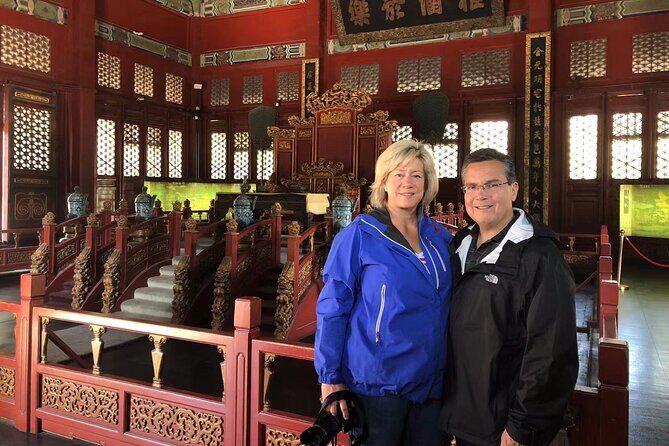
Starting at 9:00 am with hotel pickup and ending with drop-off sounds simple, but in Beijing it’s a real time-saver. Travel days can turn into map-work and subway math fast. Here, transfers are handled, and you’re riding in a comfortable air-conditioned car.
That matters most when you have multiple sites in one day. Between Summer Palace, the Lama Temple area, and then the Confucius Temple and Guozijian site, you want your schedule to stay stable. Even with good public transport, the day can wobble. This setup helps keep it from wobbling.
Your guide comes with you the whole way, too. So when you hit a confusing courtyard layout or a temple hall that looks similar to the last one, you’re not stuck guessing what you’re supposed to notice.
Summer Palace: Cixi’s imperial garden, from Kunming Lake to the Long Corridor
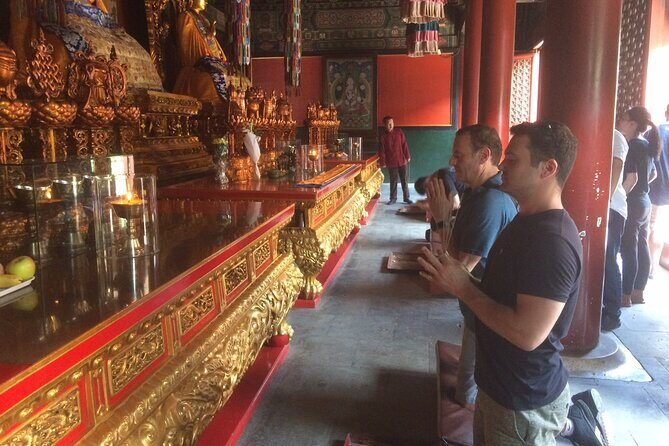
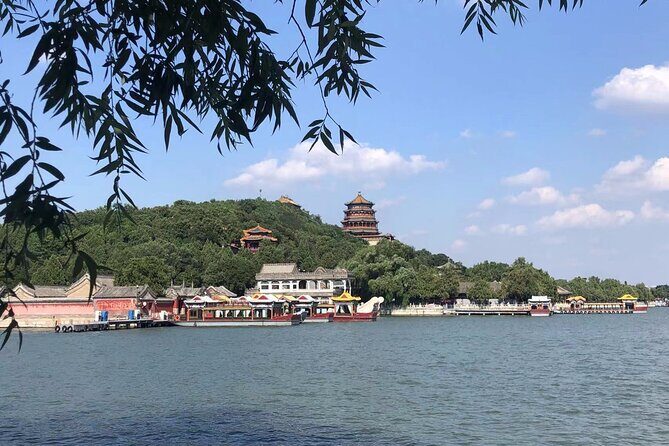
The Summer Palace (Yiheyuan) is the kind of place where one good explanation changes everything. You’re not just strolling through a pretty garden. You’re learning why this imperial landscape was built, how it changed over time, and why Empress Dowager Cixi spent so much time here.
The tour frames that story with key historical moments: it was built around the mid-1700s, it burned during the 1860 period, and it was rebuilt by the late 1800s. When you hear those dates while you’re standing in the complex, you get a clearer sense of why certain structures look the way they do and what survived.
From a sightseeing point of view, you’ll focus on the big signature scenes:
- Kunming Lake, which sets the tone for much of the palace’s viewpoints
- the Long Corridor, famous for its painted interior design
- Cixi-linked spaces, including a look at her opera house and the kind of birthday celebration rooms associated with her life
There’s also an “insider story” angle. The tour notes a secret story behind Cixi’s favorite life here, and that kind of narrative is what turns the palace from scenic to memorable.
Expect about 2 hours here. That’s usually enough time to see the main highlights without feeling rushed every 10 minutes.
Hutong rickshaw ride: old courtyards, Hou Hai photos, and Yin Ding Bridge
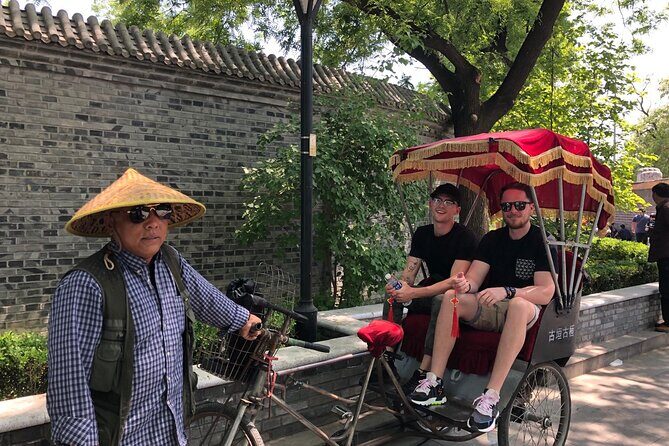
Then you shift from palace beauty to street-scale Beijing. The Hutong segment uses a rickshaw, taking you through the older courtyard lanes where daily life shaped the neighborhood for generations.
This stop is short, about 1 hour 30 minutes, which is good. Hutongs are best when you get a feel quickly rather than when you try to turn them into a full-day museum. The rickshaw format keeps it moving at a human pace, and it also changes your perspective—you’re not just walking past walls and gates, you’re actively traveling through the maze.
You’ll visit a representative square courtyard and learn the culture behind it. It’s the kind of detail you’d miss if you only snapped photos while rushing to the next site.
Another concrete photo moment is the Yin Ding Bridge of the Hou Hai Lake area. If you like sunset-style views or just want a recognizable spot for your images, this is the part to lean into. The tour also frames this stop as a chance to feel a different Beijing. That’s not marketing fluff; the atmosphere genuinely changes once you leave the temple-and-palace scale.
Lama Temple (Yonghegong): Tibetan-style art and the 26-meter sandalwood Buddha
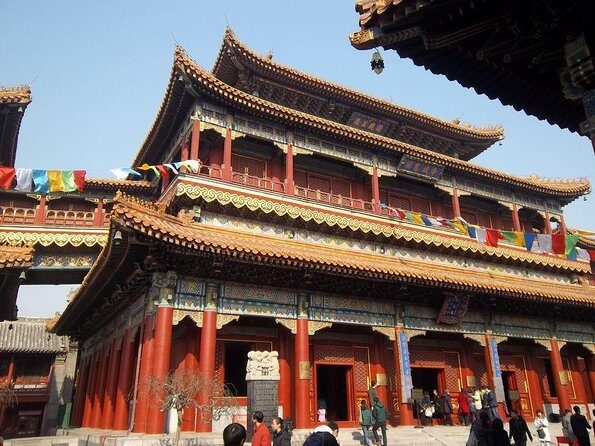
Next is Lama Temple, also known as Yonghegong. This is one of Beijing’s best-known Tibetan-style complexes, and the tour gives you enough background to appreciate what you’re seeing.
The key story here is tied to emperors. The temple was built in 1694 by Emperor Kang Xi for his fourth son, Yin Zhen. Later, Emperor Qian Long was also born here, so the tour highlights the idea of a “blessed land for two emperors.” That framing helps you understand why the site carries such status.
What makes this stop especially worthwhile is the specific “three wonders” approach:
- the Five Hundred Arhats mountain area
- the 26-meter-high sandalwood Buddha, listed in the Guinness World Book in 1900
- the nan mu Buddha niches, which are described as exquisite
Those details matter because they give you anchors while you walk. Otherwise, temples can blur together—multiple halls, multiple angles, lots of incense and stone. With clear points to watch for, your brain stays engaged.
You’ll have about 1.5 hours here. For a site with multiple impressive rooms and statue areas, that’s a good chunk of time without making the rest of the day feel impossible.
Temple of Confucius and Guozijian: the imperial education story
After Lama Temple, you cross the street to the Temple of Confucius. The tour notes it was built in 1302 during the Yuan dynasty, and you’re there for worship of Confucius in ancient China. Even if you’re not a religion-focused traveler, this stop works because it shows you how values and authority were linked.
The Temple of Confucius segment also has a practical advantage: it’s described as a place with fewer crowds. That’s helpful for pacing after the more high-energy stops earlier in the day. You can take a breath, look around, and actually read what’s in front of you.
Then you continue to Guozijian Museum, the imperial college. This is where you get the education-and-administration angle. The tour highlights Guozijian as the only preserved and complete site of the highest institution and administration for managing education across Yuan, Ming, and Qing dynasties.
In plain terms: you’re walking through a place that was basically an academic power center. If you enjoy architecture plus the “why did people believe this mattered” side of history, this is a strong finish.
You’ll spend about 1.5 hours here, and that works well because the day can start tiring if you try to squeeze in too much late.
Peking duck lunch: included fuel for a long day
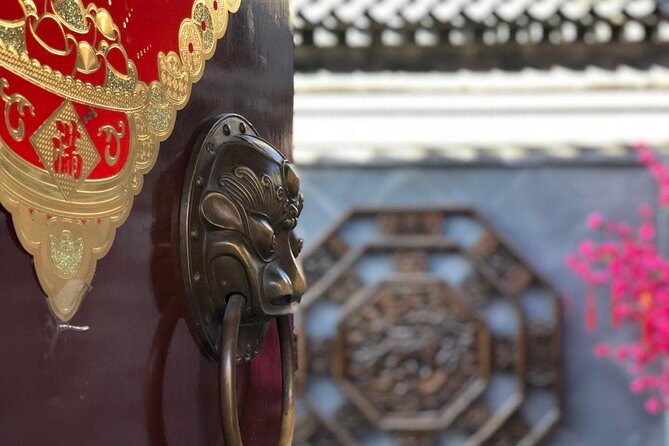
Food is where tours often get vague. Here, lunch is included, and it’s a famous Peking duck lunch at a popular duck restaurant.
The practical value is that you don’t have to hunt for something halfway across the city. And because lunch is handled inside the tour rhythm, you’re less likely to lose time waiting or searching for menus you can’t read.
This part can also be a cultural win. One guide in the lineup is described as introducing a new type of food experience (hotpot) in a separate context, but for this specific tour you can at least count on duck and the standard tourist-friendly service that comes with a set lunch plan.
You’ll also get bottled water. For a day with lots of walking, that’s a small detail you’ll appreciate later.
Price and value: what $180.90 buys you in real terms
At $180.90 per person, the big question is whether you’re paying for convenience or for actual sightseeing value. In this case, the included items do a lot of the heavy lifting:
- professional guide (English/Spanish/French/German options)
- air-conditioned car with hotel pickup and drop-off
- all entrance fees
- Peking duck lunch
- bottled water
- mobile ticket
When entrance fees and transport are included, the cost often stops feeling like a “tour tax” and starts feeling like you’re buying back time and avoiding decision fatigue. You’re also getting a full circuit of sites rather than a single attraction.
The private nature matters too. This is a private tour/activity, meaning only your group participates. That can make a big difference if you want your guide to adjust pacing and attention, especially when you’re moving between palace, temples, and hutongs.
One downside to consider is simply stamina. The itinerary is packed into one day, so you’re paying for an efficient route, not a slow travel day.
What kind of traveler should book this?
I’d point this tour toward you if you want:
- a guided route that covers several top Beijing sights in one go
- a Hutong experience that’s more than just a street walk
- a guide-led explanation for palace and temple symbolism
- an included lunch so you can stay on schedule
It’s also a strong pick for first-time Beijing visitors who don’t want to spend vacation energy on logistics.
If you prefer a slow, photo-only day with lots of downtime, this one may feel structured. But if you like “see a lot, learn a lot, keep it organized,” it’s a good match.
Should you book this tour?
I’d book it if you value simplicity and structured storytelling. The combination of Summer Palace’s Cixi-linked highlights, a rickshaw ride through Hutongs with a Hou Hai photo stop, and temple visits that connect art to imperial and spiritual life is a smart use of one day.
Skip it if your main goal is one deep, unhurried site visit. This tour is designed to move, with set time windows at each stop.
If you’re choosing based on value, the included entrance fees, lunch, guide, and pickup/drop-off make it feel more like a complete day plan than a budget add-on.
FAQ
What time does the tour start?
The start time is listed as 9:00 am.
How long is the tour?
The duration is approximately 8 hours.
Is hotel pickup and drop-off included?
Yes, hotel pickup and drop-off are included.
Does the tour include entrance fees?
Yes, all sights entrance fees are included.
What language guides are available?
The tour includes a professional guide in English, Spanish, French, or German.
Is lunch included, and what is it?
Yes. Lunch is included and features a famous Peking duck lunch.
Is this a private tour?
Yes. It’s private, and only your group participates.
Can I cancel for a full refund?
You can cancel up to 24 hours in advance of the experience’s start time for a full refund.