REVIEW · ZHANGJIAJIE
3-Day “Secrets Of Zhangjiajie” Deep Photography Tour
Book on Viator →Operated by Eric Denny Fun Tours-Zhangjiajie · Bookable on Viator
Zhangjiajie, timed for your camera. This 3-day deep photography tour is built around classic viewpoints and quieter, more angle-rich places where you can shoot with a 360-degree mindset. You get private transportation, an English-speaking guide, and the key idea that you should take your camera right away so the day feels less like sightseeing and more like a photo plan.
What I like most: you chase “secret” shooting angles, not just postcard stops, and the route keeps you moving through the park’s best backdrops without getting stuck in constant crowd crush. I also appreciate the practical touches—bottled water, snacks, and fruit—so you can stay focused on shooting instead of hunting for food.
One consideration: the advertised price does not include entrance tickets. The total ticket cost is listed as 829 CNY (about $114 USD) per adult, so budget for that on top of the tour price.
In This Review
- Key Points You’ll Care About
- Zhangjiajie as a Photo Playground: What This Tour Really Delivers
- Price and Tickets: Where Your Budget Will Land
- Day 1 in the UNESCO Pillar Forest: Zhangjiajie National Forest Park
- Bailong Elevator to Yuanjiajie: The Fastest Way to Big-View Energy
- Tianzi Mountain: A Battlefield View With a Human Story
- 空中田园 (Sky Garden Terrace): Shooting Without the Crowd Noise
- Day 2: Golden Whip Brook and the Canyon-Walk Advantage
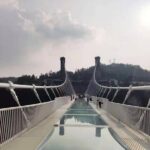
- Day 3: Tianmen Mountain National Forest Park and the Glass Walkway
- Guide Support That Actually Improves Your Photos
- Who This Tour Suits (and Who Might Feel Off-Track)
- Should You Book This 3-Day Photography Tour?
- FAQ
- How much does the 3-day Secrets of Zhangjiajie deep photography tour cost?
- Does the price include entrance fees to the parks?
- What’s included in the tour besides the guide?
- Are pickup and drop-off included?
- What time does the tour start?
- Where does the tour take place?
- Is this a private tour?
Key Points You’ll Care About
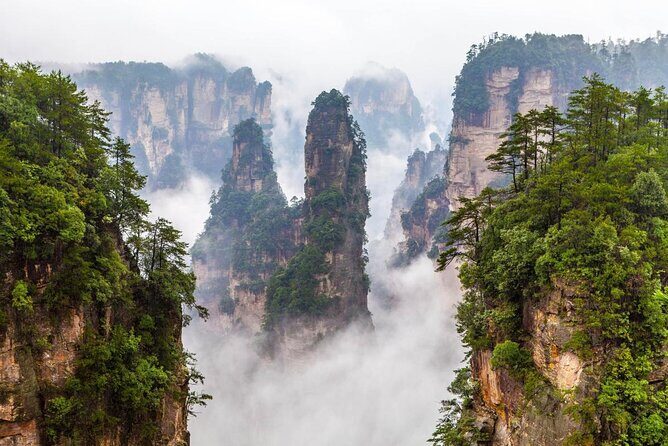
- Secret photo angles, not just famous lookouts: you’re guided to less-disturbed areas for stronger compositions.
- Private group experience: only your group participates, with private transportation throughout.
- Avatar-related scenery at Yuanjiajie: a real, dramatic set of “floating” sandstone pillars.
- Golden Whip Brook’s canyon walk: a 6 km stream experience on a flatter, well-paved path.
- Tianmen Mountain’s cliff-path and glass walkway: exciting viewpoints with big-picture Zhangjiajie views.
- Included comfort basics: bottled water, snacks, and fruit are part of the day.
Zhangjiajie as a Photo Playground: What This Tour Really Delivers
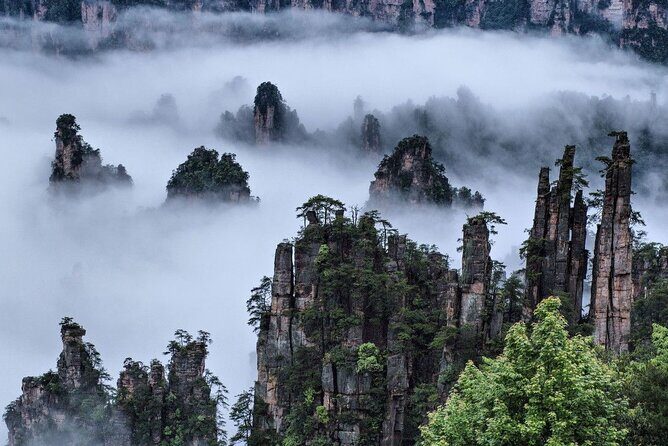
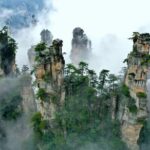
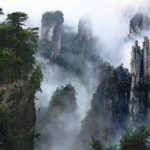
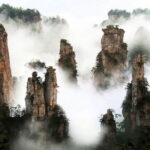
Zhangjiajie is famous for a reason. Those sandstone pillars rise out of mist like they’ve been sculpted by a patient giant. But the real question for you as a photographer is simple: can you control your angles and timing, or are you stuck doing the same wide shots everyone else does?
This tour is designed for the second kind of trip. The approach is to cover the “classics,” then push into deeper areas where you can work the scene from more angles—including the idea of shooting with a full 360-degree view in mind. That matters because Zhangjiajie looks different depending on where the light hits, where the fog sits, and how the pillars stack behind you.
You also get an English-speaking guide and private transportation. That combo is more valuable than it sounds. In a place like this, you don’t want to waste prime shooting time on confusion. You want smooth movement between stops, and you want explanations before you walk so you can frame with purpose.
You can also read our reviews of more tours and experiences in Zhangjiajie.
Price and Tickets: Where Your Budget Will Land
The tour price is $380 per person for the 3-day experience. That includes private transportation, an English-speaking guide, plus bottled water, snacks, and fruit.
The part that can surprise people is the entrance fees. The tour listing states a total of 829 CNY (about $114 USD) per adult in park admission tickets. That total appears to cover multiple parks and attractions across the three days.
So, how do you judge the value? I’d look at it like this:
- If you’re paying for private transport plus an English guide for multiple major parks, you’re already paying for time savings.
- If you care about avoiding crowd dead zones for photography, the “secret spot” approach is what you’re actually buying.
- If you just want one or two quick photo moments, then the entrance-ticket add-on makes a “tour for convenience” feel pricey fast.
For photographers and couples who want to plan, the extra effort—and extra ticket budget—usually makes sense.
Day 1 in the UNESCO Pillar Forest: Zhangjiajie National Forest Park
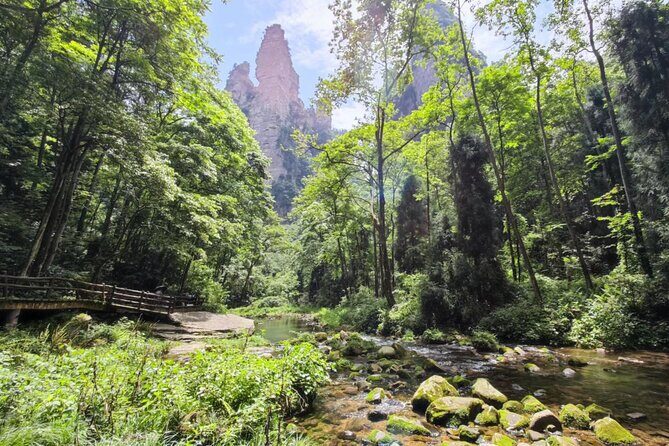
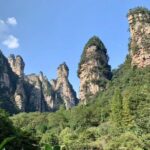
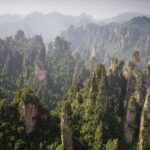
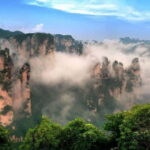
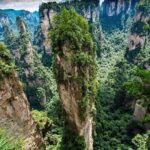
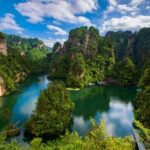
Your first big stop is Zhangjiajie National Forest Park, the UNESCO World Natural Heritage area famous for its sandstone peak forest. The listing calls out over 3,000 pillars in different shapes and sizes, and that scale is the whole story here.
From a shooting perspective, this is where you’ll practice choosing a subject and then using the pillar “forest” as a layered background. With that many spires, you’re not just photographing one view. You’re photographing depth: foreground edges, mid-layer pillars, and then the haze that softens the far distances.
What works well for your camera
- Wide-angle compositions that show scale and the “maze” feeling.
- Telephoto compression to stack pillars closer together.
- Timing with weather: fog and low clouds can transform the scene, and you want to be there when that happens.
The practical drawback
A stop this large can feel endless if you try to shoot everything. The benefit of a photography-oriented guide is that you’ll get direction on what to prioritize, instead of wandering until your battery dies and your patience follows.
Admission tickets are not included here, so again: plan for entry costs.
Bailong Elevator to Yuanjiajie: The Fastest Way to Big-View Energy
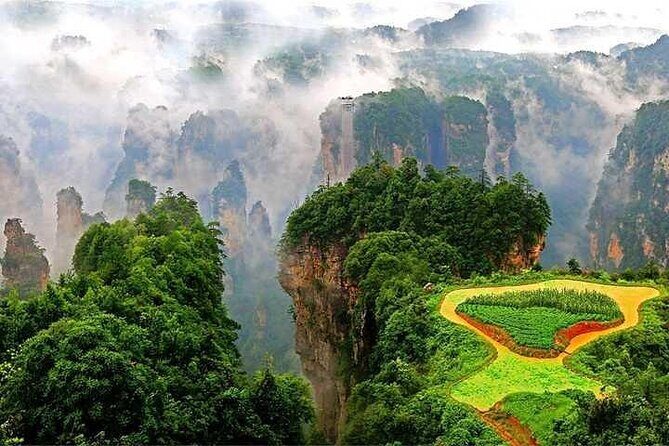
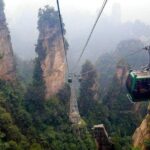
After the park, you’ll ride the Bailong Elevator, described as the world’s highest outdoor elevator at 326 meters, taking about 1 minute 28 seconds.
Why this matters for photos: elevators are time traps when you’re sightseeing casually, but they’re also useful for photographers if you know what you’re doing. You gain altitude quickly, which helps you find a composition before the crowds fully lock onto the same angles.
Once you’re up, you’ll move to Yuanjiajie, known as the main inspiration behind the movie Avatar. The listing notes hundreds of original “floating Avatar mountains,” and specifically calls out Hallelujah Mountain as a major highlight.
This is the stop for dramatic “pillar silhouettes” and stacked mountain-like forms. If you shoot video, this is also where motion and parallax matter—walking a few steps can change the pillar alignment dramatically, especially when mist shifts.
What to expect
- You’ll likely spend enough time to try multiple focal lengths.
- You’re not just grabbing one iconic frame; you’re working a full scene.
Admission tickets are not included, so don’t forget that budget piece.
Tianzi Mountain: A Battlefield View With a Human Story
Next is Tianzi Mountain, where the name means Heavenly Prince. The listing adds a local historical angle: the story ties Tianzi to a figure who led local minority resistance against government forces in the Ming Dynasty about 500 years ago.
That history isn’t just trivia. It helps you frame the scenery more thoughtfully. Tianzi Mountain is an old battle field area, so the viewpoint feels less like pure fantasy scenery and more like a place where people once watched territory and fate shift across distance.
Photo value
- The viewpoint quality here is about looking outward. You’ll get stronger “whole area” context shots.
- If weather is soft and fog rolls through, the terrain reads like it’s layered in time, not just in distance.
Time reality
You only have about 1 hour listed for this stop, so this is not where you want to experiment endlessly. Think of it as a targeted shooting block: establish your main composition early, then refine.
A few more Zhangjiajie tours and experiences worth a look
空中田园 (Sky Garden Terrace): Shooting Without the Crowd Noise
One of the most interesting parts of Day 1 for photographers is 空中田园 (Sky Garden Terrace). The listing describes it as one of the top picks for photographers because it offers less disturbance from tourist crowds.
It mentions two shooting terraces: Big Terrace and Small Terrace, surrounded by small villages.
This is the kind of place that can make your portfolio feel more personal. Instead of only photographing the “pillar universe,” you add the human scale: rooftops, paths, and settlement patterns tucked into the environment.
What to do with your photos
- Use wider frames to include terraces and village layout.
- Look for transitions: where villages meet stairs, where stone edges frame the pillars, where fog breaks the horizon line.
- If you’re working a “story” set, treat Sky Garden Terrace like a chapter break.
The listing suggests around 2 hours here, which gives you time to test angles without rushing.
Admission tickets are not included.
Day 2: Golden Whip Brook and the Canyon-Walk Advantage
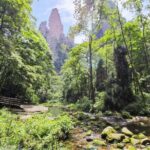
On Day 2 you get Golden Whip Brook, described as one of the most beautiful streams in China. The listing calls it 6 km long, with a well-paved flat walkway along the bottom of a canyon. It also notes that taking photos from a lower perspective gives a different view.
That combination—canyon setting plus flatter path—makes this stop unusually photographer-friendly. You can focus on water texture, repeating shapes, and how light enters the canyon without constantly fighting steep climbs.
Why this helps your shooting
- Flat, paved walking means you can move smoothly and keep framing consistent.
- The canyon walls act like natural reflectors and boundaries, which helps with contrast.
- A lower perspective is ideal for shooting water and rock edges as layered foreground elements.
You’ll have about 2 hours at this stop.
Downtown passage
The itinerary also notes you pass downtown. Since no details are provided beyond that, I’d treat this as a transfer window rather than a “must-shoot” segment.
Admission tickets are not included.
Day 3: Tianmen Mountain National Forest Park and the Glass Walkway
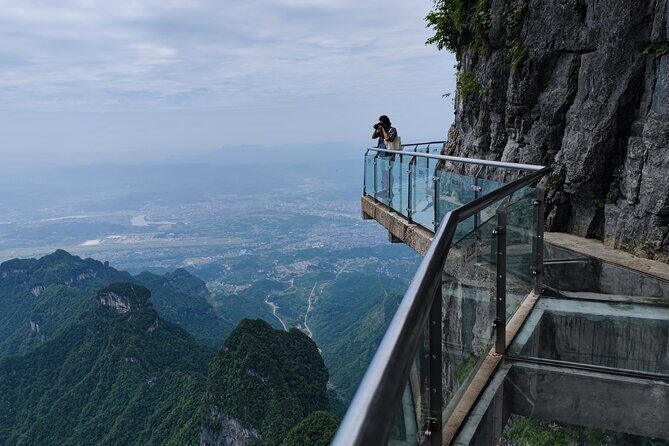
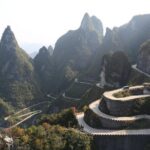
Day 3 is all about Tianmen Mountain National Forest Park. The listing describes Tianmen as appearing like a New Legend of Zhangjiajie, and it labels Tianmen Mountain as the highest spot at about 1,500 meters in Zhangjiajie.
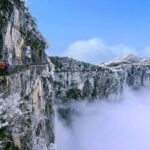
What makes it exciting for photographers is the cliff-path and glass walkway, plus the big-picture views over the wider area.
Photo value of a glass walkway
If you like reflections and graphic lines, glass sections can create a strong “foreground frame” effect. Even when you don’t shoot reflections, the walkway often gives you a clean angle to show depth beyond the edge.
What to watch for
This is also a mental game. You’ll be on cliff paths, and if heights make you uncomfortable, you might still be able to shoot from calmer sections—but you should take your comfort seriously.
The stop duration listed is about 6 hours, which is generous. That time matters because Tianmen’s best photos often come from being able to wait for weather to shift and then move to the next angle before the light changes again.
Admission tickets are not included.
Guide Support That Actually Improves Your Photos
A photography tour lives or dies by the guide’s ability to turn scenery into shots. In the experiences shared, you’ll see names like Lina, plus mention of arrangements by Eric and guidance by Mike. The common thread is that the guide brings more than basic directions.
I like that the tour is presented as locally minded and photography-centric—meaning you aren’t only hearing history as a lecture. You’re getting context before you walk, so you can choose where to stand and why.
You’ll also notice a theme around “secret spots” and avoiding crowds. That doesn’t mean you escape people completely. It means you try to position your shooting around quieter windows and less-frequented angles, which is exactly where your images start to feel different.
And yes, the guide and driver attention to organization shows up in the comments: airport pickup help, schedule advice when arrivals shift, and a clear plan for how days flow.
Who This Tour Suits (and Who Might Feel Off-Track)
This works best if you’re:
- A photography enthusiast who wants more than standard postcard framing.
- Traveling with a partner or small group that values private, flexible timing.
- Ready for moderate walking and the reality that parks involve stairs, slopes, and long visual patience.
You might feel less thrilled if you’re:
- Only interested in one iconic viewpoint and hate entry-ticket budgeting.
- Looking for a strictly low-effort, zero-excitement day. Tianmen’s cliff-path and glass walkway can be intense.
The tour does specify a moderate physical fitness level. That doesn’t mean you need to be an athlete, but it does mean you should be comfortable moving through mountain terrain.
Should You Book This 3-Day Photography Tour?
If you’re the kind of traveler who brings more than one lens and actually cares about angle, timing, and light, I think you’ll appreciate what this tour is selling. The combination of private transport, an English-speaking guide, and a photography-first route is a practical way to get stronger images from Zhangjiajie without spending your days guessing.
Book it if:
- You want the UNESCO pillar scenes plus the Avatar connection at Yuanjiajie.
- You like the idea of shooting less-crowded terrace viewpoints at Sky Garden Terrace.
- You want a mix of water, cliffs, and canyon texture across three packed days.
Consider a different style of tour if you’re:
- Tight on budget because entrance fees add up.
- Not comfortable with cliff-path experiences or longer park days.
FAQ
How much does the 3-day Secrets of Zhangjiajie deep photography tour cost?
The tour costs $380.00 per person.
Does the price include entrance fees to the parks?
No. Entrance fees are not included. The listing gives a total of 829 CNY (about $114 USD) per adult for park tickets.
What’s included in the tour besides the guide?
The tour includes private transportation, an English-speaking guide, bottled water, and snack and fruit.
Are pickup and drop-off included?
Yes. Pickup is offered, and arrival pickup and departure dropoff are included. The experience also ends back at the meeting point.
What time does the tour start?
Start time is listed as 8:30 am.
Where does the tour take place?
It starts in Zhangjiajie, Hunan, China, and the activities are within Zhangjiajie.
Is this a private tour?
Yes. It is private, and only your group will participate.