REVIEW · TIBET
7 Days Lhasa to Kathmandu Overland Small Group Tibet Tour via EBC
Book on Viator →Operated by Tibet Vista · Bookable on Viator
Altitude plus temples equals a trip you won’t forget. This 7-day overland run ties together classic Lhasa sights and the road up to Everest Base Camp, with a guide and vehicle oxygen to help you feel steadier at altitude. I especially like that you get hotel pickup and a real small-group setup (up to 12 people), so the days don’t feel like a cattle chute.
One possible drawback: the route is physically demanding. You’ll spend multiple days on the road over high passes, and sunrise or views at Everest Base Camp depend on weather, not just planning.
In This Review
- Key highlights at a glance
- What this tour really is: an overland highlight reel, with permits handled
- Price and value: why US$989 can make sense (if you read the fine print)
- Lhasa in two days: Potala, Jokhang, Barkor kora, and the monastery rhythm
- Day 2: Potala Palace, Jokhang Temple, Barkor Street
- Day 3: Drepung and Sera, plus the monks’ debate show
- The high-pass road to Shigatse and Gyantse: how Day 4 sets up Everest later
- Everest Base Camp approach from Shigatse: permits, high passes, and the Echo bus
- Rongbuk sunrise and the EBC to Kyirong stretch: when timing meets weather
- The Gyirong border exit and your Kathmandu option
- Guides and drivers: the small-group advantage shows up in the human details
- Who should book this tour, and who should think twice
- Should you book 7 Days Lhasa to Kathmandu Overland via Everest Base Camp?
- FAQ
- How long is the tour?
- What is the starting time and where does the tour end?
- What group size is this tour?
- Is oxygen provided during the trip?
- What’s included in the tour price (US$989 per person)?
- What is not included?
- Do I need to get permits during the trip?
- Can I transfer to Kathmandu after crossing the border?
Key highlights at a glance
- Small group, max 12: more chances to ask questions and adjust pacing when people feel the altitude.
- Oxygen in the vehicle: included, which matters on long drives and high elevations.
- Lhasa classics in a tight window: Potala Palace, Jokhang Temple, Barkor Street, plus major monasteries.
- Sera Monastery debate time: this often becomes the most memorable cultural moment in Lhasa.
- Everest Base Camp by road with Echo bus: included entry and the Echo bus ride save you from extra steps.
- Optional jeep to Kathmandu: after crossing at Gyirong, you can keep the adventure rolling for an extra US$60.
What this tour really is: an overland highlight reel, with permits handled
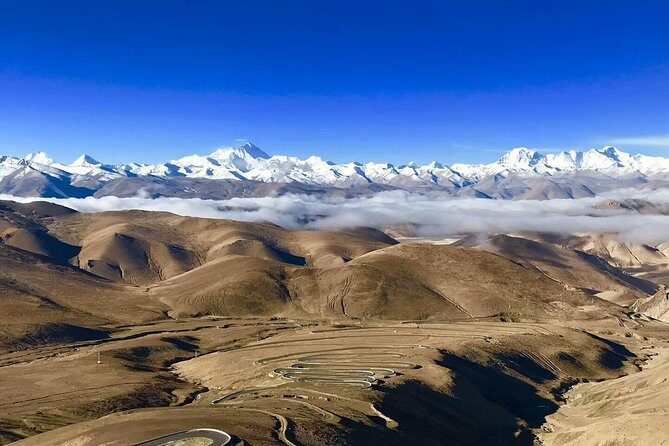
This is the practical version of a Lhasa-to-Nepal journey. You’re not just sightseeing in Tibet at random. The itinerary strings together the places most people come for—Lhasa’s big religious sites, Shigatse and Gyantse stops, and then the Everest Base Camp approach—while the operator manages the paperwork side like Tibet permits.
You’ll travel by comfortable van or minibus with an experienced local driver and an English-speaking Tibetan guide. That combination matters because altitude and road conditions can turn “I’ll wing it” plans into stress. Here, your daily rhythm is already mapped out: pickup, driving, scheduled visits, and hotel check-ins.
Also, it’s not a huge group. Maximum 12 travelers keeps the day-to-day experience more personal, and it’s easier for your guide to help you manage timing, photos, bathroom breaks, and altitude comfort without rushing everyone.
Price and value: why US$989 can make sense (if you read the fine print)
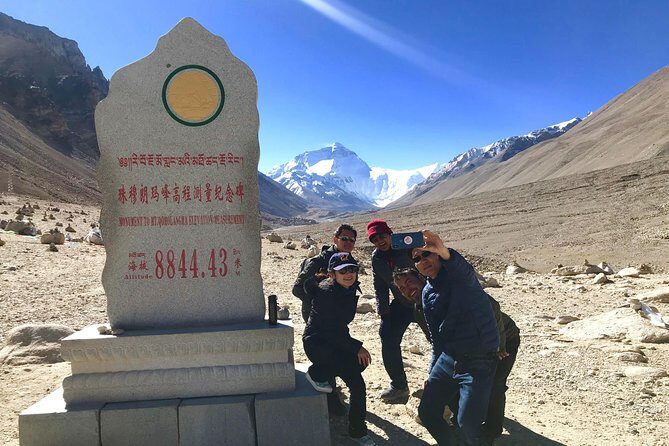
At US$989 per person, the value depends on two things: what you’d otherwise spend on logistics, and how much you want to avoid hassle.
Included, you get:
- Tibet travel permit and other necessary permits
- English-speaking local Tibetan guide
- Hotel pickup and drop-off in Lhasa on designated times
- 6 breakfasts
- One welcome dinner
- Oxygen provided in the vehicle
- Drinking water during the trip, plus tourist accident/casualty insurance
- Hotel stays (twin-sharing based) and listed site entrance tickets, plus the Everest Base Camp Echo bus
Not included are the big obvious items: lunches and dinners, plus your Nepal jeep from Gyirong to Kathmandu (US$60), and any single supplement if you want your own room.
Here’s the one thing I’d double-check before you pay your final attention: the itinerary notes say some admission tickets like Potala Palace and Jokhang Temple are not included, while the main inclusions say entrance fees for all listed sites are included. That doesn’t mean the trip is bad; it just means you should confirm with the operator what’s covered in your exact package so you don’t get surprised with a ticket line later.
Lhasa in two days: Potala, Jokhang, Barkor kora, and the monastery rhythm
Lhasa is the emotional start of the trip. The city’s old religious spine shows up fast if you know where to look, and this route hits the top anchors early enough that you’re not just doing photos—you’re getting context.
Day 2: Potala Palace, Jokhang Temple, Barkor Street
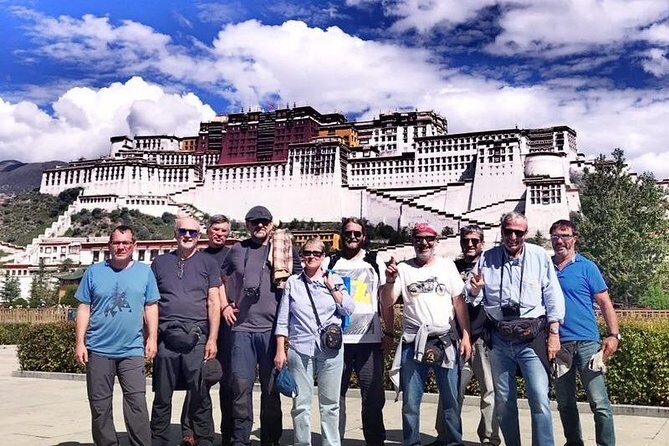
Potala Palace is the standout “big wow” site. It’s described here as the winter palace of the Dalai Lama, with royal collections tied to long Tibetan history. Plan for time to look slowly, not just snap pictures—because the building rewards patient wandering.
Then you’ll head to Jokhang Temple, one of Tibet’s foundational sacred sites, founded in the 7th century. Inside, you can see the statue of Buddha Shakyamuni at the age of twelve. Even if you’re not a religion scholar, Jokhang’s role in daily devotion is easy to feel.
After lunch comes Barkor Street, built around the temple area. This is where you can watch pilgrims doing the kora, the religious circle walk, and peek into the old-market vibe. There’s also a chance to taste Tibetan tea with locals during that stop—small moment, big atmosphere.
Day 3: Drepung and Sera, plus the monks’ debate show
Drepung Monastery is next, set about 25 kilometers southwest of Lhasa downtown. It’s framed as a protected ancient Tibetan site in a valley area, and the stop includes time to explore its spaces.
In the afternoon, Sera Monastery is the culture spike. You’ll hear about the “great three” Gelug monasteries, and the real draw is the monks’ debate that typically happens around 3 to 5 in the afternoon. It’s not just a performance; it’s how training and teaching show up in real life. If you’re the type who likes seeing tradition as action, this is the moment.
One practical thought: Sera’s debate timing is weather- and schedule-dependent. But if it runs, it’s the kind of thing you remember later as a real human scene, not just a view.
The high-pass road to Shigatse and Gyantse: how Day 4 sets up Everest later
On road days, you’re trading walking time for altitude exposure. That’s not bad, but it’s different. Day 4 is a classic “see the Tibet you came for” driving day, with passes and scenic pull-offs built into the plan.
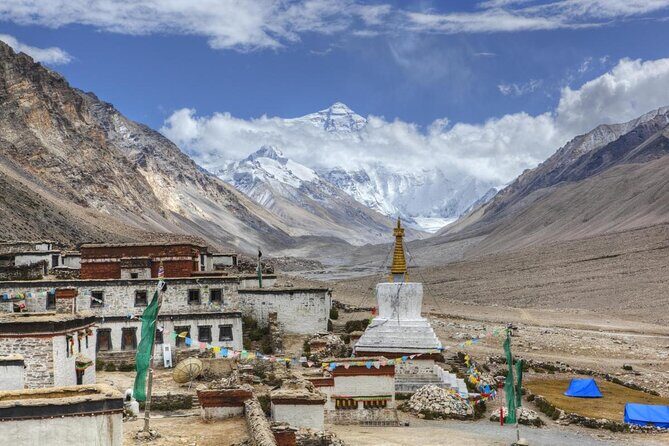
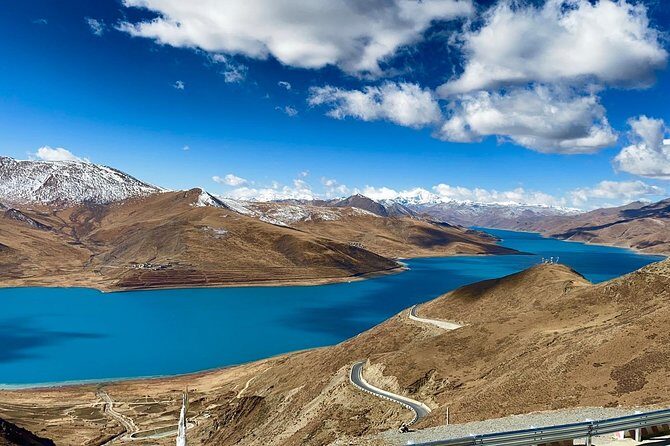
You drive from Lhasa to Shigatse, crossing the Gampala pass (4790 meters). Along the way you get a glimpse of Yamdrok-tso (around 4400 meters). The lake is surrounded by snow-capped mountains, and that’s exactly the kind of view that helps make the long van ride feel worth it.
After that you pass and enjoy Karola Glacier on the roadside. Then you stop near Manak Dam Lake and head up toward Simila Mountain Pass, with a chance to hang prayer flags. In Tibet, that gesture is simple but meaningful, especially when it’s done at a stop where you also get the big-picture mountain setting.
You continue to Gyantse, described as historically Tibet’s third largest city after Lhasa and Shigatse. That detail matters because Gyantse isn’t a random dot on a map; it’s a regional hub that helps break up the distance mentally as you move toward the Everest side of the journey.
Everest Base Camp approach from Shigatse: permits, high passes, and the Echo bus
Day 5 is where the trip tilts from monasteries and lakes toward serious altitude country. The plan includes a key administrative stop: you’ll get your Alien’s travel permit before leaving Shigatse. If paperwork stresses you out, this is a real relief. You’re not hunting for forms while your body is adjusting to elevation.
You’ll start with Tashilunpo Monastery, described as the home of the Panchan Lama. Then it’s into the road portion, with lunch in Lhatse.
After that, you cross high passes: Tsola Pass (4600 meters) and Gyatsola Pass (5248 meters). Soon after you enter Mt. Everest National Nature Reserve, you’re told to enjoy panoramas of the Himalaya at Gawula Pass (around 5198 meters). This is one of those “slow your breathing and look” moments.
Then you drive toward Everest Base Camp. The package includes entrance ticket fees for the listed sites and the Everest Base Camp Echo bus. That Echo bus piece is worth noting because it typically saves you time and effort at the last stage, when you’re already tired and altitude can make every step feel like a workout.
Rongbuk sunrise and the EBC to Kyirong stretch: when timing meets weather
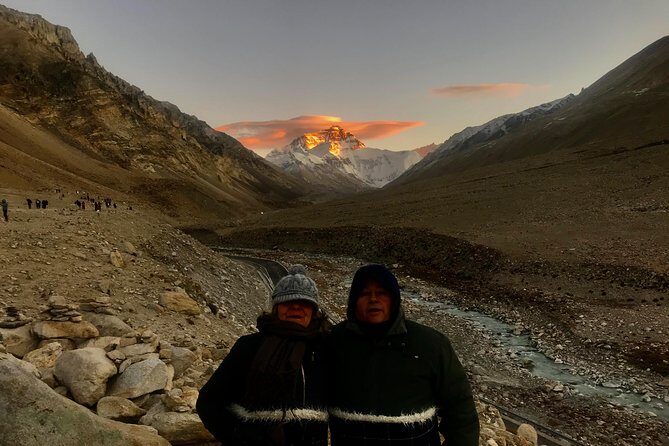
Day 6 begins with a possible sunrise attempt. You can appreciate sunrise of Everest Peak from the lodging area if weather permits. That’s the key phrase: permits are fixed, but weather isn’t. When sunrise works, it’s a memorable payoff. When it doesn’t, you still get the Everest-area scenery and the monastery stop that anchors the day.
You then visit Rongbuk Monastery, described as the unique highest monastery with nuns and monks living together. It’s a different feel than Lhasa’s monasteries—more frontier, less city, and it fits the Everest approach mood.
After Everest Base Camp, you move from EBC to Kyirong. On the way you get views of Mt. Shishapangma and Pekutso Lake, plus a pass at Ghungtang Lhamo (5236 meters). You arrive in Kyirong in late afternoon, and the descent is part of the experience: when you go down to Gyirong County from above 5000 meters, the scenery changes to forest and waterfalls, instead of constant snow-country visuals.
This matters for your body. A gradual change in elevation can feel like a mercy after the highest sections of the route.
The Gyirong border exit and your Kathmandu option
Day 7 is built around leaving China at the Gyirong border. Your tour guide assists you to exit China and see you off at Gyirong border, and the service ends after that point.
If you want to continue toward Kathmandu, there’s an option for a jeep transfer from Gyirong border to Kathmandu for an additional US$60. The distance is listed as 130 km. You’ll want to keep in mind that this is a separate arrangement from the tour’s core package—so plan your Nepal-side logistics accordingly.
If your end goal is Kathmandu quickly, this option is convenient. If you want extra time in Tibet-related border towns, you’d need a different plan, because this tour is designed to deliver you to Gyirong cleanly.
Guides and drivers: the small-group advantage shows up in the human details
The most consistent praise I saw was not just about the sights; it was about how the trip is run day to day. Names that came up in feedback include guides such as Lobsang, Lhatse Tenzin, and Lhakpa, with Lhakton also mentioned in another review. Drivers named Ihakpa, Sangye, and Sangyue showed up too, often described as caring, responsible, and steady on the road.
That lines up with what you need on an overland trip: calm driving, clear explanations, and the ability to keep things moving without making you feel rushed. If you’ve ever been on a group tour where the guide talks non-stop but doesn’t help, this seems like the opposite. People singled out guide personalities and practical care, which is exactly what you want for a week at high altitude.
Who should book this tour, and who should think twice
This tour is a strong fit if:
- You want Lhasa’s top religious landmarks in a tight, well-paced sequence
- You care about Everest Base Camp but don’t want to piece together permits and transport on your own
- You’d rather ride in a small group (max 12) with oxygen support and an established plan
It might be less ideal if:
- You hate long driving days. This is an overland itinerary first, not a walking-first trip.
- You’re very sensitive to altitude and want maximum flexibility to slow down. The tour includes oxygen in the vehicle, but you’re still crossing high passes and spending time at elevation.
- You dislike uncertainty. Sunrise plans at Everest Base Camp depend on weather, so you should come with the mindset that you’re going for the region and the experience, not only one photo moment.
Should you book 7 Days Lhasa to Kathmandu Overland via Everest Base Camp?
If your priority is classic Lhasa plus Everest Base Camp without the administrative headache, I’d say this is worth your attention. The value looks solid for what’s included—permits, guide, pickup, breakfasts, oxygen support, and the Everest Base Camp Echo bus—especially at the US$989 price point.
I’d book it if you’re comfortable with altitude and long road days, and if you confirm the admission-ticket coverage mismatch between the itinerary stop notes and the inclusions. Do that one check, and you remove the main “could be annoying” issue.
If you want, tell me your travel month and whether you’re starting from Lhasa or already in China. I can help you sanity-check what to expect at altitude and how to budget for lunches and the optional jeep to Kathmandu.
FAQ
How long is the tour?
The tour runs for 7 days (approx.).
What is the starting time and where does the tour end?
It starts at 9:00 am and ends back at the meeting point.
What group size is this tour?
The tour has a maximum of 12 travelers.
Is oxygen provided during the trip?
Yes. Oxygen is provided in the tourist vehicle to help guarantee guest health.
What’s included in the tour price (US$989 per person)?
The package includes Tibet travel permits and other necessary permits, an English-speaking local Tibetan guide, transportation by van/minibus with an experienced local driver, oxygen and drinking water during the trip, breakfasts (6), one welcome dinner, and hotel pickup/drop-off in Lhasa. It also includes entrance ticket fees for the sites listed and the Everest Base Camp Echo bus.
What is not included?
Lunches and dinners are not included. The Nepal jeep transfer from Gyirong border to Kathmandu is not included. A single room supplement is also not included.
Do I need to get permits during the trip?
Yes, permits are part of the process. The tour includes Tibet travel permit and other necessary permits. On the route, you’ll also get an Alien’s travel permit in Shigatse.
Can I transfer to Kathmandu after crossing the border?
Yes. After exiting China at Gyirong border, you can choose a jeep transfer to Kathmandu for an additional US$60 (130 km).