REVIEW · DUNHUANG
8-Day Silk Road Trip of Dunhuang, Jiayuguan, Zhangye with Accommodation
Book on Viator →Operated by Silk Road Angel Tours · Bookable on Viator
Caves, walls, and rainbow stone in eight days. The big draw for me is how this route strings together Mogao Caves with the digital film center, so you get context before you hit the murals and statues. You also get a guide who helps you move fast without feeling rushed.
I also love that the trip handles the practical stuff: air-conditioned hotel stays and a full set of included meals from breakfast to dinner. One thing to watch is the evening Silk Road dance drama has a seasonal run, so if your dates fall in the off months, you’ll swap out that evening plan.
In This Review
- Key things to know before you go
- Why This Dunhuang-to-Zhangye Silk Road Route Makes Sense
- Hotels, Meals, and Transport: The Practical Stuff That Saves Your Energy
- Day 1: Meet Your Guide and Settle In Dunhuang
- Day 2: Mogao Caves, White Horse Pagoda, and the Evening Silk Road Show
- Day 3: Han Dynasty Border Walls at Yumen Pass, Then Mingsha Sand Dunes
- Day 4: Yulin Caves as Mogao’s Sister, Plus Suoyangcheng’s UNESCO Ruins
- Day 5: Jiayuguan Pass, the Great Wall Museum, and the Overhanging Section
- Day 6: Zhangye Danxia Geopark and the Color-Heat Logic
- Day 7: Giant Buddha Temple and Horse Hoof Temple Grottos
- Day 8: Pingshanhu Grand Canyon and Your Flight or Train Exit
- Price and Value: Is $2,199 Fair for an 8-Day Silk Road Loop?
- What I’d Watch For Before Booking
- Who This Tour Fits Best
- Should You Book This 8-Day Silk Road Trip?
- FAQ
- FAQ
- How do I meet the tour guide?
- Where do you stay during the tour?
- Are meals included?
- What major sights are included?
- Are entrance tickets included?
- Are airport transfers included?
- Is camel riding included?
- Can I request vegetarian meals?
- Do you offer help for children or wheelchair needs?
Key things to know before you go
- 4-star hotels in Dunhuang, Jiayuguan, and Zhangye with air-con and bottled water
- Mogao Caves with a digital film center for context before the main grotto visit
- A Great Wall day at Jiayuguan Pass, plus time to climb the Overhanging Great Wall
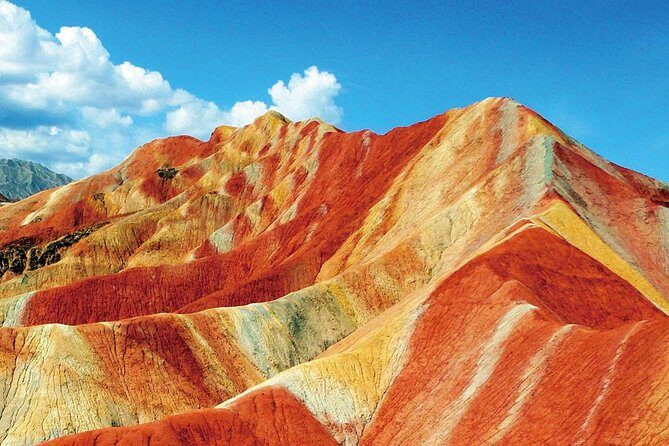
- Zhangye Danxia Geopark with long morning-to-evening time for the colorful rock formations
- Seven breakfasts, lunches, and dinners so you’re not hunting menus after sightseeing
Why This Dunhuang-to-Zhangye Silk Road Route Makes Sense
If you only have about a week, this is a very logical loop through the Hexi Corridor—Dunhuang to Jiayuguan to Zhangye. You’re not bouncing randomly. The route is built around big, different “worlds”: Buddhist cave art, frontier walls, desert dunes, and those sharply colored Zhangye rock formations.
You’ll feel the geography doing the work. Dunhuang is your desert gateway. Jiayuguan is your Great Wall endgame. Zhangye is where the rocks start looking like a science project gone right. It’s a trip that keeps changing your view every day, without turning each day into a sprint.
You can also read our reviews of more tours and experiences in Dunhuang.
Hotels, Meals, and Transport: The Practical Stuff That Saves Your Energy
This kind of Western China trip has a dirty secret: most of your time can vanish into logistics. Here, that problem is handled for you. You get 7 nights of hotel (4-star where stated), air-conditioned transport, and bottled water. That matters in places where the heat can make sightseeing feel twice as long.
Meals are also a big deal on this route. You’re covered with 7 breakfasts, 7 lunches, and 7 dinners, so you can keep your day aligned with cave times and museum closures. You’ll still want to pace yourself. But you won’t be spending your best daylight trying to decode menus or find something reliable.
One small but important tip: since you’re given vegetarian option on request, if you eat that way, tell the operator at booking. That’s the easiest way to keep meals smooth.
Day 1: Meet Your Guide and Settle In Dunhuang
Your day starts with a meeting point at Dunhuang airport (DNH) or Dunhuang Railway Station. Then it’s straight to a comfort car/van/bus transfer to the hotel. The goal here is simple: get your bearings fast, not fight with your first logistics step after you arrive.
Dunhuang is a place where jet lag can sneak up. A relaxed start helps. Spend the evening doing the boring-but-useful stuff—hydrating, taking a short walk nearby if you feel up for it, and getting ready for an early, mural-heavy day ahead.
Day 2: Mogao Caves, White Horse Pagoda, and the Evening Silk Road Show
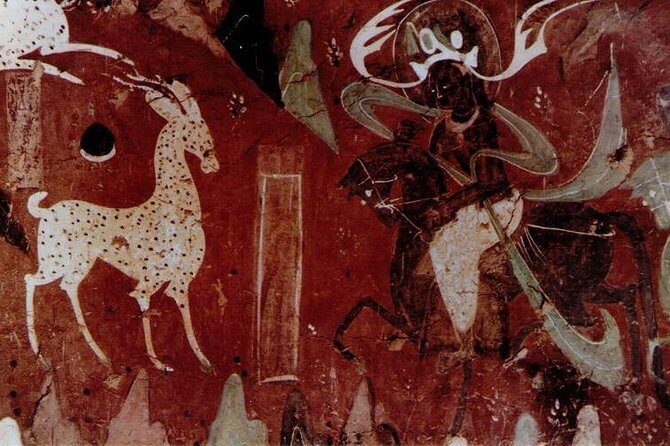
This is the day people remember. You’ll visit Mogao Caves plus the Digital Film Center. It’s one of those smart pairings: the film center helps you understand what you’re seeing before you face the scale of the site.
At Mogao, you’re looking at 492 grottoes, 45,000 square meters of murals, 2,400 painted statues, and over 250 residential caves still remaining. That’s so much material that without context, your brain goes into fog mode. The digital introduction helps you focus on themes, styles, and why the caves matter.
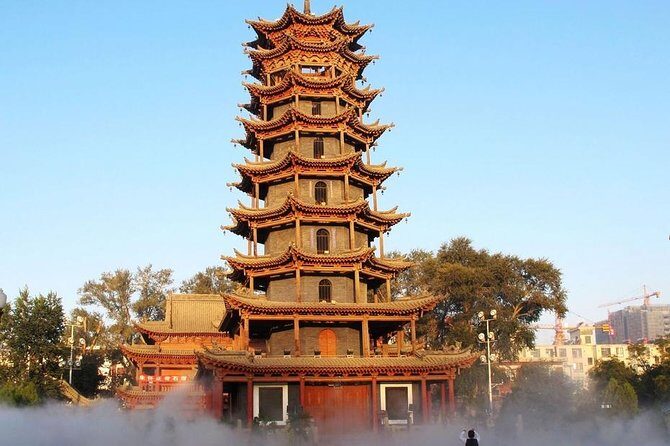
After lunch, you head to the White Horse Pagoda of Dunhuang for about half an hour. It’s shorter than Mogao, but it gives you a breather and a different angle on the area’s Buddhist connections.
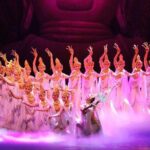
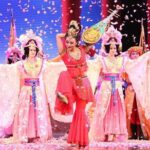
In the evening, you can catch the Silk Road show (a famous dance drama). The catch is seasonal: it’s not available from Nov to the next March. If your dates fall in that gap, you’ll want to have the operator confirm what’s substituted so you don’t arrive with one plan stuck in your head.
Practical advice: plan to be flexible with timing. Cave sites can involve queues and controlled entry times. Your guide’s job is to keep your day running without you losing energy to confusion.
Day 3: Han Dynasty Border Walls at Yumen Pass, Then Mingsha Sand Dunes
Day 3 shifts from caves to frontier history. You’ll visit Yumen Pass and the Great Wall of the Han Dynasty. This is where the Han Dynasty built walls to secure the frontier and manage contact and trade with western regions. Standing there, you get a sense of why this corridor mattered: it wasn’t only about travel. It was about control, movement, and commerce.
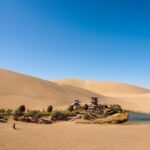
After that, you head to the desert for Mingsha Shan (Echoing-Sand Mountain), plus Crescent Moon Lake. The schedule includes time for Singing-Sand Dunes and an option to ride camels in the sand. Even if you skip the camel ride, you’ll still get the classic “silence with motion” effect that makes desert scenery feel different from anywhere else.
When you’re in the dunes, protect your eyes and hydrate. The trip includes bottled water, but you’ll still want to drink consistently and not treat thirst like a surprise.
Day 4: Yulin Caves as Mogao’s Sister, Plus Suoyangcheng’s UNESCO Ruins
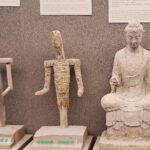
Today you go to another set of caves: Yulin Caves. They’re often described as related in artistic style and origin to Mogao, and they’re known as Mogao’s sister. In practical terms, it means you’ll see familiar themes, but not the exact same experience. That’s what you want on a trip like this: repetition with variation, not repetition with boredom.
After lunch, you visit Suoyangcheng, a relic site that’s been listed by UNESCO (noted as in 2015 in the tour info). This is where you shift from painted walls to the idea of a whole Silk Road stop—traces of a place that functioned as a hub.
How to make this day feel worth it: give yourself permission to slow down for the ruins. The caves are visual fireworks, but ruins reward careful looking. It’s easier with a guide who can point out what to watch for.
Day 5: Jiayuguan Pass, the Great Wall Museum, and the Overhanging Section
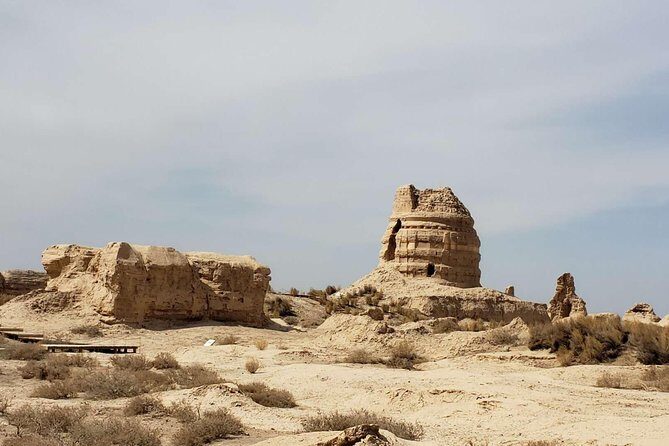
Jiayuguan is your Great Wall “this is the western end” moment. You’ll visit the Jiayuguan Pass along with the Museum of the Great Wall. Then you’ll add Overhanging Great Wall, which includes a climb.
This day is longer on physical effort than some people expect. Even if you’re in decent shape, the altitude changes and sun exposure can make “just some walking” feel like you did more. Wear shoes you trust and bring a hat. The tour includes air-conditioned transport between stops, but the time on the wall is still time on the wall.
The reward is perspective. From the Overhanging Great Wall area, you start to understand why the wall was built like a strategic instrument. This section isn’t just a wall. It’s a boundary marker carved into a harsh environment.
Day 6: Zhangye Danxia Geopark and the Color-Heat Logic
Day 6 is Zhangye Danxia Geopark, and the time block here is long—about 8 hours. That’s a clue that the park isn’t a quick photo stop. You’ll want time to walk between viewpoints and let the colors shift as the light changes.
Danxia is known for its layered rock formations that show up in reds, oranges, and other streaked tones. Here, the tour info also mentions painting bricks connected to the tomb of the Wei & Jin Dynasty, describing colored bricks with various scenes and details. Whether you see those as part of the same visit area or as an associated site, the point is the same: you’re not only seeing natural color. You’re also getting a “made by humans and nature” type of contrast.
If you’re the kind of person who likes photos but hates rushing, this is a good day. You can work at your own pace because the day is built around the site, not around a dozen quick transfers.
Day 7: Giant Buddha Temple and Horse Hoof Temple Grottos
Day 7 is Buddhism again, but in a different flavor. You’ll visit the Dafo Temple of Zhangye, described as home to the biggest Nivana Buddha in Asia. That’s the headline, but the real value is how the site fits the broader theme of the Silk Road caves—how belief and art traveled alongside traders.
Then you add the Horse Hoof Temple Grottos, well known for deity horse footprints. The naming alone tells you what you should look for. The symbolism is vivid, and it keeps the visit from being only general “religious architecture.” You’ll come away with a specific image in your head.
This is also a day where your guide matters. Having someone explain what the footprints represent and why this grotto style is connected to the region helps you connect dots instead of just collecting sights.
Day 8: Pingshanhu Grand Canyon and Your Flight or Train Exit
You’ll start with Pingshanhu Grand Canyon in the morning, then transfer to the airport or Zhangye Railway Station after lunch. The trip also notes that the operator can help you book high-speed train tickets for your next city.
This exit planning is practical. Western China travel can be smoother when your last day isn’t chaos. If you plan your onward travel early, it’s easier to align your departure time with the tour drop-off window.
If you’re sensitive to last-day fatigue, pace Pingshanhu. Canyon days can tempt you into “one more viewpoint” syndrome. Pick two or three strong viewpoints, enjoy them, and save your legs for your next leg of the trip.
Price and Value: Is $2,199 Fair for an 8-Day Silk Road Loop?
At $2,199 per person for about 8 days, you’re paying for several things that add up fast if you DIY it:
- Guided access to major sites (including places with timed entry habits)
- Hotel coverage for 7 nights at stated 4-star comfort
- Transport that’s air-conditioned, plus airport transfers
- All meals listed as 7 breakfasts, 7 lunches, and 7 dinners
- Entrance admissions called out in the day-by-day plan, plus a mobile ticket
Is it cheap? No. But it’s not just sightseeing. It’s the removal of lots of friction. When you combine transport, meals, and major admissions into one package, you’re buying time and stress relief.
Also, the average booking lead time listed is 324 days, which suggests this route is popular. If you want specific travel dates (especially outside peak periods), start early and lock your plan.
What I’d Watch For Before Booking
This trip is strong on structure, but you should still think about your personal fit.
- If you dislike long, guided days, the day timings (especially the full day at Zhangye Danxia) might feel busy.
- If you travel in the months when the Silk Road show isn’t available, you’ll need a backup evening plan. The information clearly states the show isn’t available from Nov to the next March.
- Weather matters for desert and outdoor days. If the itinerary gets adjusted for conditions, you’ll want to stay flexible.
Who This Tour Fits Best
This fits best if you want a guided Silk Road highlights tour without having to be your own planner. You’ll like it if you value comfortable hotels, included meals, and having someone handle the “what to do next” decisions.
It also suits people who are interested in art and culture more than shopping, because the main days focus on Mogao, Yulin, frontier history at Yumen Pass, Great Wall structure at Jiayuguan, and the visually intense Danxia formations.
If you’re the kind of person who loves to wander without a schedule, you might feel boxed in. But if you’d rather spend your energy looking at real sights, this is a solid way to do it.
Should You Book This 8-Day Silk Road Trip?
If your goal is maximum highlights in minimum hassle, I’d say yes—especially if you appreciate the mix of cave art + frontier history + desert scenery + color-rock geology. The included meals and transport are doing real work here, and the route is built so each day teaches you something different.
You should consider another option only if you’re strongly set on the evening Silk Road show during the off months, or if you want a more unstructured, independent pace. Otherwise, this is the kind of trip that makes Western China feel approachable without turning it into a generic checklist.
FAQ
FAQ
How do I meet the tour guide?
You meet your private tour guide at Dunhuang airport (DNH) or Dunhuang Railway Station, and then you transfer to the hotel.
Where do you stay during the tour?
The tour includes 7 nights accommodation with a 4-star hotel in Dunhuang and the best hotels in Zhangye and Jiayuguan, all with air-conditioning and bottled water provided.
Are meals included?
Yes. The tour includes 7 breakfasts, 7 lunches, and 7 dinners.
What major sights are included?
Key stops include Mogao Caves, White Horse Pagoda, Yumen Pass, Mingsha Shan and Crescent Moon Lake, Yulin Caves, Suoyangcheng relic site, Jiayuguan Pass, Overhanging Great Wall, Zhangye Danxia Geopark, Dafo Temple of Zhangye, and Horse Hoof Temple Grottos, plus Pingshanhu Grand Canyon on the final morning.
Are entrance tickets included?
Admission tickets are listed as included for the main attractions in the itinerary, and the tour uses mobile ticket.
Are airport transfers included?
Yes. Transfers to and from the airport are included, and the tour also includes transfer to Zhangye Railway Station if needed.
Is camel riding included?
The tour offers an option to ride camels in the desert, specifically mentioned during the Singing-Sand Dunes portion.
Can I request vegetarian meals?
Yes. A vegetarian option is available if you advise the provider at booking.
Do you offer help for children or wheelchair needs?
The tour notes that wheelchairs and infant seats are available, and children must be accompanied by an adult.