REVIEW · BEIJING
8 Days Private Tour of Beijing, Xian, and Shanghai
Book on Viator →Operated by China Travel Service · Bookable on Viator
Beijing can be a lot to organize. This private trip turns that chaos into a smooth route through three classic cities. I especially like the mix of world-famous sights (Forbidden City, Terracotta Warriors, the Bund) and the practical door-to-door help that handles the big logistics for you.
The other strong point: you’re not doing this in a free-for-all. With a private English-speaking guide and licensed drivers plus pre-planned tickets where listed, you spend less time figuring things out and more time seeing the goods. One possible drawback is that it’s packed: you’ll be on the move between cities and you’ll walk a fair bit—especially on Great Wall time—so build in comfy shoes and a realistic pace.
If you want the main highlights with fewer headaches, this is a solid format. And if the communication is as helpful as it’s been in prior experiences (support people like Grace Chen, Sophia Liu, Maria, and Amy Fang were specifically praised), you’ll likely feel taken care of from the first message.
In This Review
- Key points before you go
- Private Logistics Across Three Cities: What You’re Really Buying
- Beijing Arrival and Day 1: Airport Pickup and Your First Real Views
- Tiananmen Square and Forbidden City: The Big-Demand Hits Without the Guesswork
- Hutong Alley by Rickshaw: A Less-Polished Side of Beijing
- Great Wall at Mutianyu: Scenery Plus a Choose-Your-Effort Option
- Summer Palace on Day 4: Imperial Garden Time With a Calm Tempo
- Xi’an Terracotta Warriors: The Stop Everyone Cares About
- Shaanxi History Museum and Big Wild Goose Pagoda: Two Different Kinds of Wonder
- Shanghai Urban Planning Exhibition Hall: A Smart First Look at the City
- Day 8 in Shanghai: A Simple Finish
- Price and Value: Is $1,462.71 Fair for What You Get?
- Who This Private Beijing–Xi’an–Shanghai Tour Fits Best
- Should You Book This Tour?
- FAQ
- What cities are included in this 8-day private tour?
- How long is the tour?
- What transport is included between the cities?
- Are hotel rooms included, and what standard are they?
- What meals are included?
- Are entrance fees included?
- Is this a private tour?
- Do you get pickup service?
- Can I request a vegetarian option?
- Are optional add-ons like cable cars or bike rentals included?
- Is there any guidance on cancellation timing?
Key points before you go
- Private guides and transfers cut down on transport stress across three cities
- Bullet train + flight is the fastest way to cover Beijing → Xi’an → Shanghai here
- 4-star hotels for 7 nights with daily breakfast and most lunches
- Entrance fees are included for the major stops listed on the schedule
- Flexible add-ons exist at some sites, but extras like cable cars or bike rentals are on you
- English-speaking support is part of the land-tour package (plus bottled water)
Private Logistics Across Three Cities: What You’re Really Buying
This tour’s real value is simple: it buys you time and reduces friction. China is huge, trains and flights take planning, and city-to-city transfers can eat half a day if you’re winging it. Here, you get a built-in route that uses the bullet train where it makes sense and then a flight to connect to Shanghai.
You’ll also appreciate the “day-to-day comfort” details. You travel in an air-conditioned vehicle with a licensed driver, and you have an English-speaking guide during land tours. There’s bottled water included, and the tour uses mobile tickets, which typically helps at ticket gates and timed entries.
The trade-off: because it’s private and pre-set, you can’t spend hours wandering off-script whenever inspiration hits. If you love slow travel, this may feel a bit scheduled. But if you want momentum—without the logistics headache—it’s a good match.
You can also read our reviews of more private tours in Beijing
Beijing Arrival and Day 1: Airport Pickup and Your First Real Views
Day 1 starts the way most people hope a first day starts: you land, then someone meets you. A driver picks you up at Beijing Capital International Airport and transfers you to your hotel for check-in. After that, you’re free to rest—no sightseeing sprint on arrival day.
That matters because jet lag is real. Getting settled first makes Day 2 easier. If you land early, it’s still a relief not to immediately chase transit maps or work out a complicated route into the city.
Your tour package includes an allowance for that first transfer, and you also get the general promise that you’ll be contacted at least a day ahead (email) with pickup info, and the night before the tour day you’ll get a message or call through your hotel room about pickup timing.
Tiananmen Square and Forbidden City: The Big-Demand Hits Without the Guesswork
On Day 2, you hit Tiananmen Square first. It’s the beating heart of modern Beijing, and it’s also huge—so huge that you can feel disoriented if you arrive without a plan. Starting here is smart because you get orientation early: the square’s scale helps you understand where the imperial power lived and why the symbolism matters.
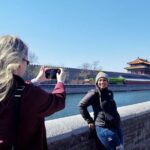
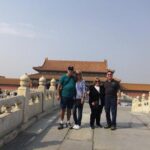
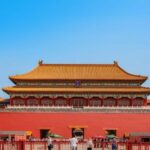
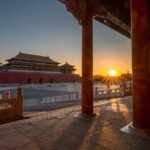
Then you move to the Forbidden City (The Palace Museum). This is a top-tier stop, not because it’s famous (it is), but because it’s preserved to a degree that makes it easier to grasp how the court operated. You’ll spend about two hours there, which is tight but realistic if you want the highlights rather than a two-day museum crawl.
What can be a drawback: the Forbidden City can be crowded, and “two hours” can feel short if you’re a slow reader or you want extra time inside every hall. The fix is attitude. Focus on the major courtyards and the layout, and let your guide handle the storytelling—then you’ll finish with a clearer mental map.
Hutong Alley by Rickshaw: A Less-Polished Side of Beijing
After the imperial stops, Day 2 pivots to everyday Beijing with a Hutong tour—a look at local folk residences in the alley network. This is one of those experiences where the city feels human. It’s not about a single monument; it’s about atmosphere: how people live, how the streets work, and why Beijing isn’t only palaces and museums.
The schedule includes time where you can take a rickshaw to explore the lanes. That’s a fun way to slow down just enough to notice details you’d miss on foot. If you’re worried about crowds, you’ll usually find alley time feels calmer than the big-ticket attractions.
One consideration: hutongs can be narrow and uneven. If you’re sensitive to lots of walking, wear supportive shoes and keep your pace steady.
Great Wall at Mutianyu: Scenery Plus a Choose-Your-Effort Option
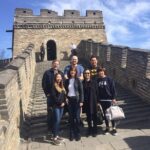
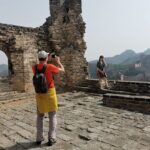
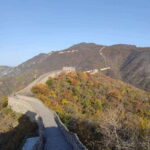
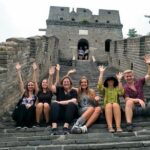
Day 3 is where many people come for the Great Wall, and this itinerary aims for Mutianyu—often described as one of the most scenic sections. You’ll spend about two hours here, with the wall stretching for several kilometers and covered heavily with vegetation in many seasons.
You also get a built-in “you decide” option: if hiking feels like too much, there’s an optional cable car. That flexibility is genuinely useful. You can do a shorter effort climb and still get wall views and photo time.
The practical tip: plan on walking and steps. Even if you take the cable car, you’ll still be on uneven ground. You’ll enjoy the experience more if you treat it like a scenic outing, not a fitness challenge.
On the way back, you also get an outer visit to Bird’s Nest and Water Cube. They’re modern landmarks, but they give you a nice contrast to the Ming/Qing-era sites you saw earlier.

Summer Palace on Day 4: Imperial Garden Time With a Calm Tempo
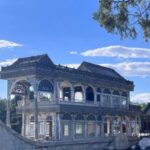
The Summer Palace is Day 4’s anchor, and it’s a welcome change of pace after the stone-and-formality days. You’ll spend around two hours exploring it as an imperial garden with a large footprint and an emphasis on the relationship between buildings and water.
This is a good place to slow down. If you’re tempted to rush every sight, this is where you can reset. The layout also helps your brain connect the themes of power, culture, and environment without feeling like another museum sprint.
After lunch, you transfer to Beijing West Railway Station for the high-speed train to Xi’an. You arrive, then a local driver moves you to your Xi’an hotel.
Xi’an Terracotta Warriors: The Stop Everyone Cares About
Day 5 focuses on Xi’an’s biggest draw: the Museum of Qin Terracotta Warriors and Horses. Expect a structured visit around Pit 1 (the largest), Pit 2, Pit 3, plus the exhibition areas tied to chariots and horses.
This is a rare attraction where scale actually lands. You don’t just see statues—you see a whole military system translated into art and craftsmanship. It’s also one of those museums where your guide’s explanations matter because there’s a lot to notice: layout, variety, and the sense of organization.
Then you visit the Xi’an City Wall. The city wall is one of the more active experiences on the list because you can optionally ride a bike—rental fees are on your own. If you don’t bike, just walking sections can still be worthwhile; you’ll get a feeling for how the city’s defense worked and how Xi’an’s modern streets relate to the older geometry.
In the evening you head to Bell Tower & Drum Tower Square for outer views, then go into Muslim Quarter—an important food-and-street area. It’s also the kind of place where your guide can help you avoid the most touristy traps and point you toward real snacks.
Shaanxi History Museum and Big Wild Goose Pagoda: Two Different Kinds of Wonder
Day 6 has a strong educational arc. First is the Shaanxi History Museum, which is known for collections from across Shaanxi Province and the long arc of dynasties linked to Xi’an as a power center. You’ll spend about 1.5 hours walking key exhibits with your guide’s help.
This stop is valuable because it fills in context. Without it, Terracotta Warriors can feel like a standalone spectacle. With it, you get more sense of what the artifacts belong to—chronology, regions, and why Xi’an mattered so long.
Next is the Big Wild Goose Pagoda (Dayanta). The pagoda relates to preserving sutras and figures brought back from India during the Tang dynasty era. The museum area and garden around it also makes the experience more than just “stand and look.” You get time to walk around and breathe between indoor exhibits.
After lunch you fly economy to Shanghai, then a local driver transfers you to your Shanghai hotel.
Shanghai Urban Planning Exhibition Hall: A Smart First Look at the City
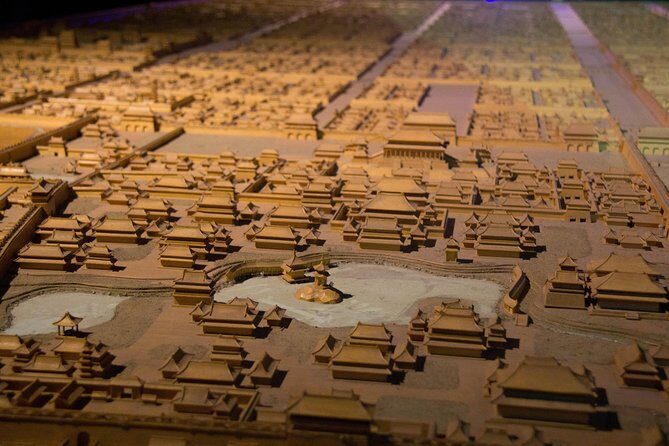
Day 7 starts with pickup around 09:00 and heads to the Shanghai Urban Planning Exhibition Hall. If you’re the type who likes to understand the place you’re visiting instead of only taking photos, this is a great warm-up. It frames Shanghai through “city, human, environment, development,” which helps you connect what you see later—especially modern architecture and riverfront redevelopment patterns.
From there, you go to Yuyuan Garden and then Yuyuan Market. The garden was finished in 1577 for Pan Yunduan’s parents, and walking it gives you a sense of how Chinese garden design creates quiet despite city noise. Then the market adds energy: crafts and food options like steamed buns and other local bites are part of the fun. You can haggle, too, which helps the market feel interactive rather than purely performative.
You also visit Xintiandi, where restored shikumen-style houses are now shops and bars. Even if you skip most shopping, it’s a useful contrast to older Beijing lanes and imperial courtyards.
Then you cap the day with the Bund along the Huangpu River. You’ll see multiple architectural styles side-by-side—Gothic, Baroque, Romanesque, Classicism, Renaissance—plus the riverfront rhythm that makes Shanghai feel like a city always in motion.
Day 8 in Shanghai: A Simple Finish
Day 8 is straightforward: you’re met in your hotel lobby at the confirmed time and escorted to the airport. It’s a clean ending, which is exactly what you want after several days of structured sightseeing.
Price and Value: Is $1,462.71 Fair for What You Get?
At about $1,462.71 per person, the question isn’t only “is it expensive or cheap?” It’s whether it replaces your own headaches.
This package includes:
- 7 nights in 4-star hotels with daily breakfast
- Private transfers with licensed drivers in air-conditioned vehicles
- Excellent English-speaking guide service during land tours
- Entrance fees as listed on the itinerary
- Bullet train Beijing → Xi’an (2nd class economy)
- Flight Xi’an → Shanghai (economy)
- Bottled water
For many people, the biggest “hidden cost” of independent travel is time spent on planning: matching trains, figuring out pickup points, buying tickets, and coordinating city transfers. Here, the itinerary already locks in the big transport moves and includes the bulk of admission fees. That’s often where private packages justify themselves.
What isn’t included matters too. You’ll cover personal expenses and gratuities, and optional add-ons inside attractions are not included (for example, battery cars, shuttle buses, and other optional extras). You’ll also be responsible for anything not tied directly to the listed inclusions.
If you’re traveling as a couple or a small group and you’d rather spend your energy on sights, this can be good value. If you’re comfortable planning trains, ticketing, and city transfers yourself, you may be able to build a cheaper DIY plan. But DIY usually costs time and mental load—something this tour removes.
Who This Private Beijing–Xi’an–Shanghai Tour Fits Best
This works well for:
- People who want the big highlights in three cities without wrestling with transport chaos
- Travelers who appreciate an English-speaking guide to explain what you’re seeing
- First-timers to China who don’t want to spend the first half of the trip learning how things work
It may be less ideal if:
- You’re the kind of person who wants long, unstructured afternoons with no scheduled pickups
- You dislike walking and steps (you will have moderate physical demands, especially on Great Wall day)
- You plan to do lots of optional paid add-ons at sites
Also, if you care about dietary needs, the tour notes a vegetarian option—just request it at booking.
Should You Book This Tour?
I’d book it if you want a guided, private route that hits Beijing’s core sites, Xi’an’s must-see archaeological marvels, and Shanghai’s best “old meets new” contrasts—without turning your vacation into a logistics project. The strongest reason to choose it is the structure: airport and hotel transfers, private guiding, included entry fees where listed, and smart intercity transport (bullet train + flight).
Skip it if you want freedom-first travel, plan to linger far past scheduled time blocks, or you’re hoping optional extras are included (they generally aren’t).
If you’re on the fence, a good approach is to picture your ideal day. If your ideal day includes a plan and explanations, this is a comfortable fit.
FAQ
What cities are included in this 8-day private tour?
It covers Beijing, Xi’an, and Shanghai.
How long is the tour?
It’s listed as 8 days (about 7 nights).
What transport is included between the cities?
You’ll take a 2nd class bullet train from Beijing to Xi’an, and an economy flight from Xi’an to Shanghai. Private car transfers are used for local travel.
Are hotel rooms included, and what standard are they?
Yes. The tour includes 7 nights in 4-star hotels, with daily breakfast in the hotel.
What meals are included?
The package includes breakfast for 7 days and most lunches, as stated in the tour overview. Dinners and any meals not listed are not included.
Are entrance fees included?
Yes, entrance fees are included as listed in the itinerary.
Is this a private tour?
Yes. It’s a private tour/activity, and only your group participates.
Do you get pickup service?
Yes. There are private transfers, including airport pickup upon arrival and hotel-to-where-you-need-to-go transfers during the tour.
Can I request a vegetarian option?
Yes. A vegetarian option is available if you advise the provider at booking.
Are optional add-ons like cable cars or bike rentals included?
Optional activities are not included. That means extras such as cable cars at attractions, bike rental fees on the city wall, and similar on-site add-ons would be paid by you.
Is there any guidance on cancellation timing?
Yes. You can cancel up to 6 days in advance for a full refund, with smaller refunds available if you cancel closer to the start time.