REVIEW · BEIJING
Beijing Wangfujing Calligraphy Class by Forbidden City
Book on Viator →Operated by Hutong Calligraphy Class · Bookable on Viator
Ink, brush, and calm in busy Beijing. This short calligraphy class turns the high-energy Wangfujing area into something quieter by teaching you how Chinese characters are formed, stroke by stroke. You’ll work with classic materials like brush, ink, and rice paper, and you’ll get time to ask questions.
What I’d call the best parts are the teaching and the hands-on results. You’re led by an excellent English calligraphy teacher (Richard), and you’re not just watching—you learn the moves well enough to write your own character. One thing to consider: this is a focused practice session, so it’s not a full sightseeing replacement for major stops in Beijing.
In This Review
- Key highlights you should know first
- Downtown Wangfujing Hutong setting: a calligraphy break in real Beijing
- What you learn: ink strokes, rice paper, inkstones, and seal carving
- Meet Richard: how the class actually teaches you
- Your calligraphy lesson length: 30 minutes, 1 hour, 2 hours, and choosing when to book
- Price and value: why $20 can be worth it in Beijing
- What it’s like as an experience: tea, a bookstore vibe, and learning by doing
- Who should book this class (and who might want a different plan)
- Practical tips so your strokes look better
- Should you book this Beijing calligraphy class?
- FAQ
- How long is the Beijing Wangfujing calligraphy class?
- How much does the calligraphy class cost?
- Where do we meet for the class?
- Is there an English-speaking teacher?
- What class supplies are included?
- What is the maximum group size?
- Do I get a ticket on my phone?
- Do I choose the class length when booking?
- Can I cancel for a full refund?
Key highlights you should know first
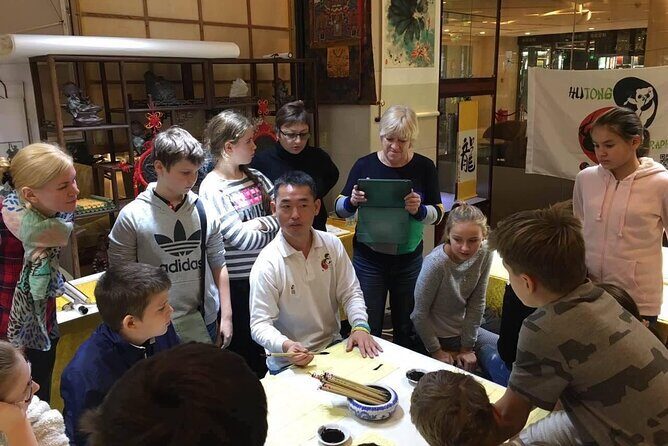
- Small group size (up to 15) keeps the pace friendly and gives you more time to correct your strokes
- English instruction from Richard makes it easier to learn the technique, not just copy shapes
- Classic calligraphy tools included, like brushes, rice paper, and ink-related supplies
- Hutong Calligraphy Class in the Wangfujing area, so you get a more local feel than big-tour venues
- Air-conditioned bookstore setting with tea, which makes it comfortable even in warmer months
- Short options from 30 minutes up to 2 hours, so you can match it to your schedule
Downtown Wangfujing Hutong setting: a calligraphy break in real Beijing
This class takes place in the downtown Wangfujing area, tied to the hutong calligraphy experience. The meeting point is at the Hilton Beijing Wangfujing (王府井东街8号 area), and the activity ends back at the same starting point. That round-trip setup matters because it keeps the experience simple, especially if you’re juggling other sights that day.
The location also helps you shift perspective. When you’re in the Wangfujing zone, it’s easy for Beijing to feel like shopping streets and crowds. Here, you step into a calmer space where the work is about slow precision. One review described the class as being in an air-conditioned bookstore and paired with tea, which is exactly the kind of setting that makes a first calligraphy lesson feel doable.
You can also read our reviews of more city tours in Beijing

What you learn: ink strokes, rice paper, inkstones, and seal carving
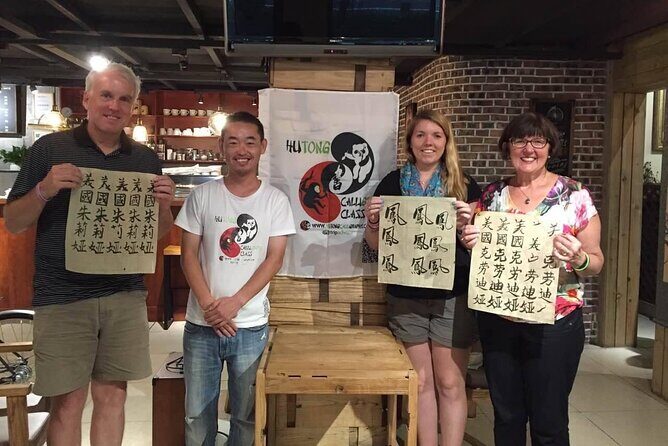
Calligraphy isn’t just writing in China—it’s a way of expressing language with movement. In this class, you learn the basic building blocks behind that idea.
Expect instruction on:
- Brush technique (how the brush moves and how pressure affects the stroke)
- Ink use (so your lines don’t go blotchy or uneven)
- Rice paper basics (what you can and can’t do on paper)
- Inkstone-related setup (the traditional tools that make calligraphy work)
- Seal carving concepts (including what seals are used for and why they matter)
Even if you’re a complete beginner, this structure is valuable because it separates calligraphy into teachable parts. Many people try to copy characters by eye. That usually leads to frustration. This class focuses more on why a stroke looks the way it does, so you start building accuracy instead of chasing perfection.
There’s also a cultural context component. You’ll get insight into why calligraphy has long mattered in Chinese life—how it connects writing, art, and daily practice. That’s the difference between a fun craft activity and a cultural skill you can actually explain after class.
Meet Richard: how the class actually teaches you
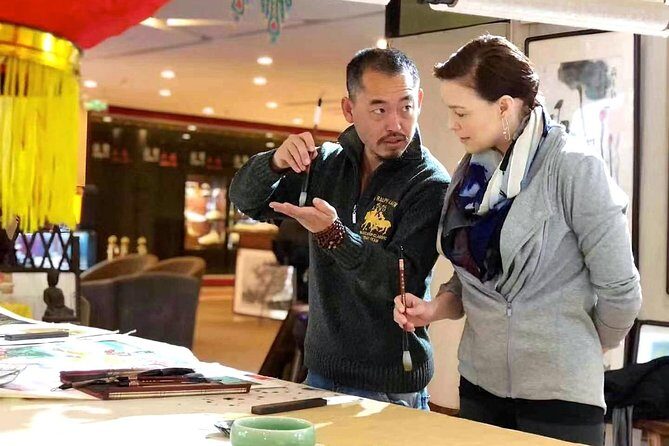
The standout detail here is the English instruction. The class is led by an excellent English calligraphy teacher named Richard, and you get a lesson that’s easy to follow even if your Mandarin is limited.
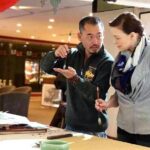
You’ll be guided through how to form characters in Mandarin, and you’ll get support as you practice. Reviews point out that Richard shows you how to write and encourages questions, which is important. In a skill like this, one small correction—like how you angle your brush or how you start a stroke—can change the whole result.
Also, the format is friendly for different skill levels. If you want to focus on basic strokes, you can. If you want to understand more about how calligraphy functions as art and communication, you can ask. The class is designed to feel personal, not like a rushed demo.
Your calligraphy lesson length: 30 minutes, 1 hour, 2 hours, and choosing when to book
The listing offers multiple time options, and that’s a practical advantage. Depending on what you book, you can do:
- 30-minute class
- 90-minute class
- 1-hour class
- 2-hour class
The tour summary commonly lists about 1 hour, which is a good match if you want one focused activity without cutting into your next stop. A longer option tends to be better if you want more practice time or you’d like to go beyond basic strokes.
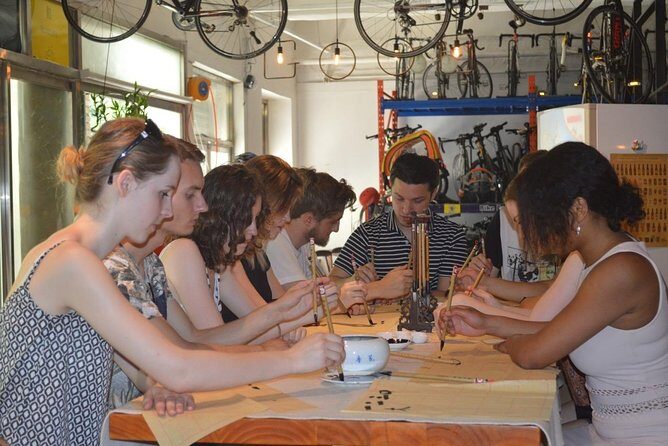
Either way, you’re placed in a group with a maximum of 15 travelers, which helps keep the class interactive. In a larger group, beginners often get stuck waiting for corrections. Here, the smaller size makes it easier to keep moving.
One more small note: the class uses a mobile ticket, so you don’t need to hunt for paper confirmations.
Price and value: why $20 can be worth it in Beijing
The price is $20 per person, and for Beijing, that’s a reasonable cost for a hands-on cultural activity that includes instruction and materials. What makes it good value isn’t just the low price—it’s the fact that you’re using real tools and learning a real skill.
Look at what’s included:
- The calligraphy class time you choose
- An excellent English teacher
- Supplies to use during the class (brushes and materials)
Your only extra expense is typically optional. Gratuities are recommended, but they aren’t required to understand what you’re paying for.
If you’ve been to other city activities where you pay for a short talk and a few photos, this is different. You’re paying for time with a teacher and a chance to produce something you can recognize as calligraphy. Even if your first character isn’t perfect, it’s the start of a skill you can repeat later.
And because it’s priced like this, it’s easy to add as an afternoon plan—especially if you’re traveling with kids and want an activity that feels different from museums and temples.
A few more Beijing tours and experiences worth a look



What it’s like as an experience: tea, a bookstore vibe, and learning by doing
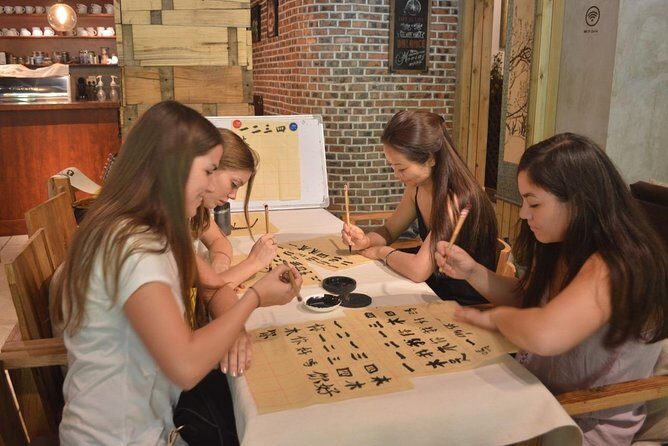
The class atmosphere seems designed to keep you comfortable and focused. One review mentioned an air-conditioned bookstore setting and tea, which matters more than you’d think. Calligraphy takes concentration, and heat or discomfort can make your hands shaky and your lines inconsistent.
You’ll learn about tools like brushes, rice paper, and inkstones, but the lesson is built around action. You write, you adjust, and you write again. That’s what helps beginners progress fast.
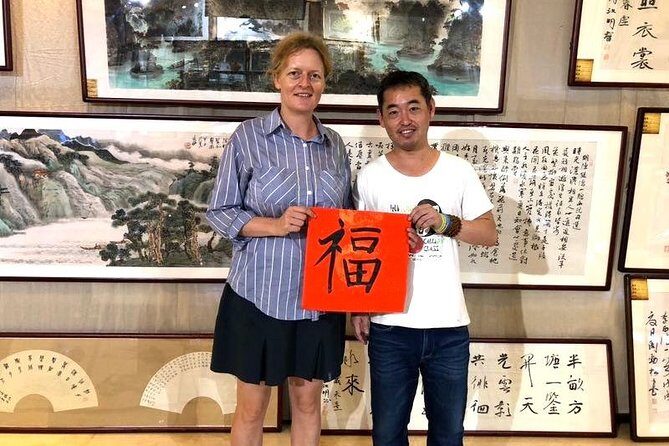
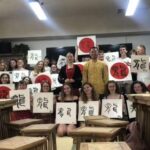
In at least one described session, the student experience included writing a character such as 福 (happiness) and then putting characters onto a decorative board. Even if your finished output looks simple, the goal is progress you can see.
Who should book this class (and who might want a different plan)
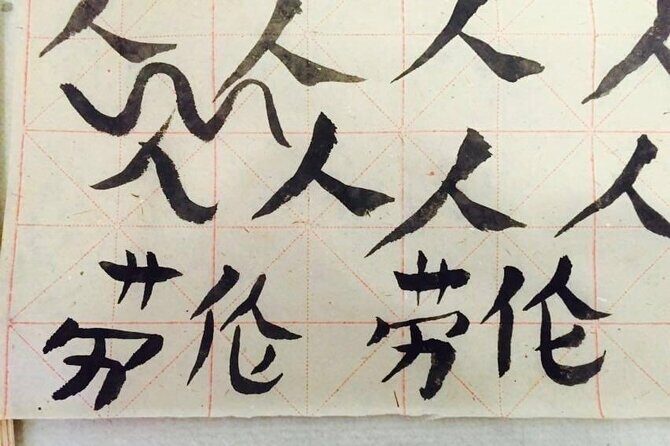
This class is a great fit if:
- You’re traveling with adults and kids and want one shared activity
- You want a hands-on cultural stop in the Wangfujing area
- You like making something tangible, not just sightseeing
- You want to learn basic calligraphy technique with English support
It might be less ideal if:
- You want a big guided tour with lots of major landmarks and long storytelling
- You’re looking for an all-day activity
- You dislike sitting and practicing with fine motor control
Think of it as a skill session. You’re trading a bit of sightseeing time for a memory that’s more personal than a photo.
Practical tips so your strokes look better
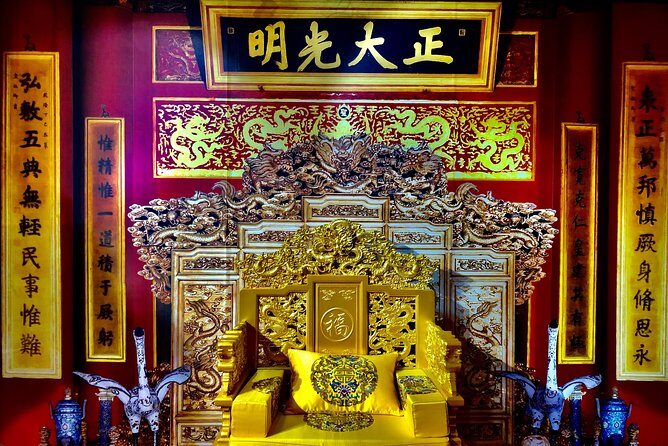
A few simple moves can make a noticeable difference in your results:
- Go in with the mindset of practice, not performance. Calligraphy improves through repetition, even in a short class.
- Ask questions early if something feels off. Richard’s style is built for Q&A, and correcting one technique point prevents you from rehearsing the wrong habit.
- Take your time during the first strokes. The lesson is short, so rushing can lock in mistakes.
- Wear comfortable clothes. Your hands and wrists will be working close to the paper.
If you’re choosing between time options, pick based on your goal. If you want the essentials and a fun afternoon plan, the 1-hour window is ideal. If you want more practice space and time for extra questions, consider a longer option.
Should you book this Beijing calligraphy class?
Yes, if you want a calm, hands-on Beijing experience near Wangfujing that doesn’t require special artistic ability. For about $20, you get real instruction in Chinese calligraphy basics with an English-speaking teacher (Richard), plus the materials needed to practice.
I’d book it especially if:
- You’re traveling as a family and need a kid-friendly cultural activity
- You want something more meaningful than another photo stop
- You like the idea of learning how a character is built, not just copying a finished symbol
Skip it if you’re already overloaded with major sights and you’d rather spend that time touring longer attractions. But if your schedule can spare an hour or two, this is the kind of class that gives you a new appreciation for Chinese writing every time you see it after your trip.
FAQ
How long is the Beijing Wangfujing calligraphy class?
The experience is listed as approximately 1 hour, and there are also class duration options available when booking, including 30 minutes, 90 minutes, 1 hour, and 2 hours.
How much does the calligraphy class cost?
The price is $20.00 per person.
Where do we meet for the class?
You start at Hilton Beijing Wangfujing (王府井东街8号, 100006) and the activity ends back at the meeting point.
Is there an English-speaking teacher?
Yes. The class includes an excellent English calligraphy teacher.
What class supplies are included?
The class includes calligraphy suppliers to use during the class, along with the materials needed for the lesson (such as brushes, rice paper, and ink-related tools).
What is the maximum group size?
The group has a maximum of 15 travelers.
Do I get a ticket on my phone?
Yes, it uses a mobile ticket.
Do I choose the class length when booking?
Yes. You choose the class option (for example 30-minute, 90-minute, 1-hour, or 2-hour) during booking.
Can I cancel for a full refund?
Yes, you can cancel for a full refund if you cancel at least 24 hours before the start time. There is free cancellation under those terms.