REVIEW · BEIJING
11-Day Private China Tour: Beijing, Lhasa, Xi’an and Shanghai
Book on Viator →Operated by Travel China Guide · Bookable on Viator
Tibet is the curveball that makes this trip feel real. You get major UNESCO stops in Beijing, Xi’an, and Lhasa, plus a smooth handoff between cities with three included flights. What I like most is the way the schedule mixes famous sights with local texture, from Hutong rickshaws to Barkhor Street.
The main thing to plan for is the pace and the altitude. Three big flights plus a few long touring days can feel like a sprint, and Tibet will ask a bit of your body before it gives you anything back.
If you want a guided route where logistics are handled and you still get time to look closely, this private tour is a strong fit. It’s especially attractive at this price point because it bundles hotels, guides, transport, entrance fees, and Tibet paperwork into one package.
In This Review
- Key Highlights You’ll Actually Feel on the Ground
- A Private 11-Day China and Tibet Route That Links Four Worlds
- Beijing: Tiananmen, Forbidden City, and Summer Palace Without the Chaos
- Tiananmen Square and the Forbidden City
- Summer Palace: Gardens as Royal Escape
- Mutianyu Great Wall and Hutong Rickshaws: The Beijing Day You’ll Remember
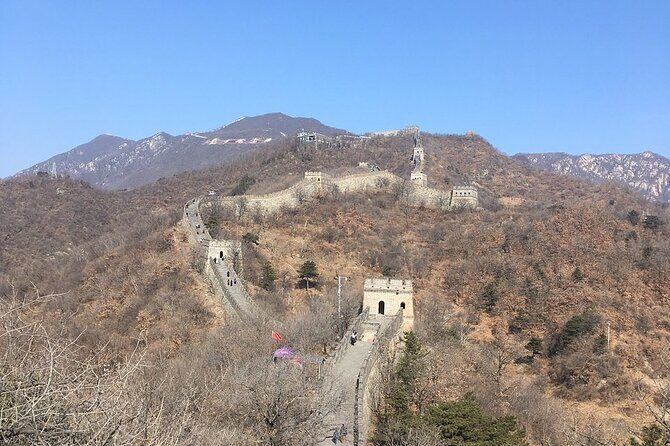
- Mutianyu Great Wall and the Cable Car Advantage
- Bird’s Nest Photo Stop and a Real Hutong Alley Tour
- Flying to Lhasa: Altitude Tips and a Gentle Start in Tibet
- Lhasa’s Sacred Core: Norbulingka, Tibet Museum, Sera Monastery
- Norbulingka Park and the Tibet Museum
- Sera Monastery Debates: Buddhism in Motion
- Potala Palace, Jokhang Temple, and Barkhor Street: Lhasa at Close Range
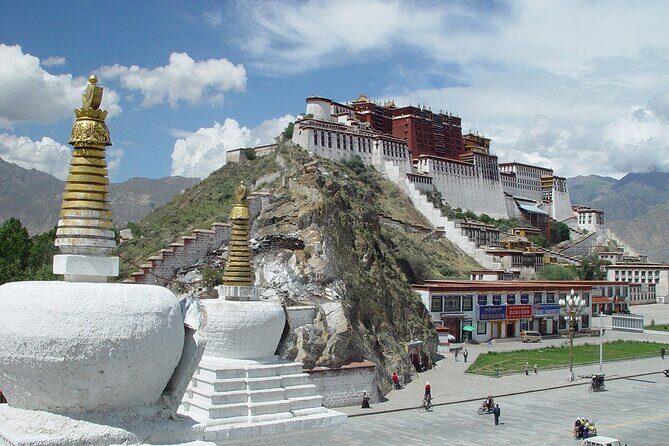
- Potala Palace: Temple Meets Palace
- Jokhang Temple: The Main Pilgrimage Magnet
- Barkhor Street and a Nunnery Visit
- Xi’an: Terracotta Warriors, a Clay Workshop, and Mosque Quarter Nights
- Terracotta Warriors and Horses: Seeing Faces Up Close
- Family Visit and Making a Mini Clay Warrior
- Big Wild Goose Pagoda and Tang-Era Pedestrian Energy
- Xi’an City Wall and the Great Mosque Area
- Shanghai: Museums, Yu Garden, the Bund, and Tianzifang’s Creative Side
- Shanghai Museum: A First-Thing-in-the-Morning Win
- Yu Garden and a Farewell Lunch
- Huangpu River Cruise and the Bund Walk
- Tianzifang: A Less-Formal End to the Trip
- Guides and Logistics: Why This Tour Feels Smooth in Beijing
- Price and Value: What $4,089 Includes, and Where You’ll Still Spend
- Practical Tips for Tibet Altitude and the Pace of Flying
- Who This Tour Fits Best (and Who Should Rethink It)
- Should You Book This 11-Day Private China Tour?
- FAQ
- Where does the tour start, and what time does it begin?
- Is this tour private, or will I be with other groups?
- What flights are included in the package?
- What’s included in the price?
- What should I budget for that’s not included?
- What kind of fitness level do I need?
Key Highlights You’ll Actually Feel on the Ground
- Private, name-your-group service with pickup help in Beijing and a dedicated guide on the key sightseeing days
- Mutianyu Great Wall with cable car planning built in, not just a drive-by photo stop
- Tibet Travel Permit included, plus on-arrival guidance aimed at altitude adjustment
- Terracotta Warriors at close range, with time built in to take it slowly and really see the details
- Shanghai’s mix of old and new, from Yu Garden and the Bund to Tianzifang
A Private 11-Day China and Tibet Route That Links Four Worlds
This tour stitches together four very different China stories: imperial Beijing, high-altitude Lhasa, historic Xi’an, and fast-modern Shanghai. The big value isn’t just that you hit major landmarks. It’s that you travel with guides and transport so you can focus on what you came for: seeing the places, not solving the trip.
Because it’s private, the pacing feels more intentional. You’re not guessing where to queue, which entrance to use, or how to explain what you want to see. The tour also includes mobile tickets, a guide, an air-conditioned vehicle, and entrance fees for the listed sights, so you’re not constantly running back to “what’s included.”
The other value is simple: it’s structured. You get ten nights of accommodation and breakfast for ten days plus four lunches. That helps when you’re mixing sightseeing with travel days and need less decision fatigue.
You can also read our reviews of more private tours in Beijing
Beijing: Tiananmen, Forbidden City, and Summer Palace Without the Chaos
Beijing day one and day two are classic, but handled in a way that keeps you from wasting time. You start with a name-sign meetup at the airport, then it’s straight to your hotel for rest. That matters because Beijing can hit you with motion the moment you land.
Tiananmen Square and the Forbidden City
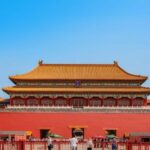
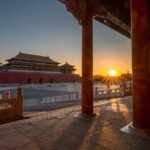
You visit Tiananmen Square first, then head into the Forbidden City (Palace Museum). The Forbidden City isn’t just “big gates and courtyards.” It’s a living layout of power: how the emperor governed, how daily life functioned at court, and how art treasures were displayed. With a guide, you’re more likely to notice the way buildings and axes are designed to reinforce authority.
One thing I like about this plan is the welcome lunch. It’s described as an a la carte Chinese meal at a local restaurant and it’s included. On tours like this, meals can become an afterthought. Here, it’s placed at a natural break after the Forbidden City.
Summer Palace: Gardens as Royal Escape
After that, you go to the Summer Palace. This is where the experience shifts from architecture to atmosphere. The emphasis is on the royal garden setting and the architecture around it. You get a couple hours to slow down and appreciate how the site was meant to be more than a display—almost like the court’s escape route.
A small note: if you love museums and detailed indoor history, you’ll likely want more time inside Beijing’s major sites. The itinerary gives solid time, but it’s built for breadth, not maximum depth.
Mutianyu Great Wall and Hutong Rickshaws: The Beijing Day You’ll Remember
Day three is one of the strongest “experience” days, because it gives you both the wall and the everyday Beijing that sits around it.
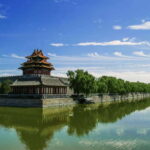
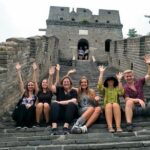
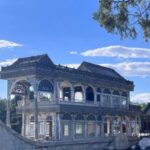
Mutianyu Great Wall and the Cable Car Advantage
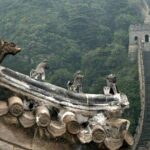
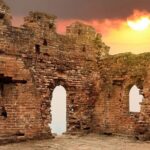
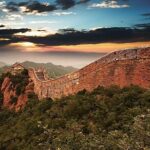
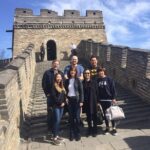
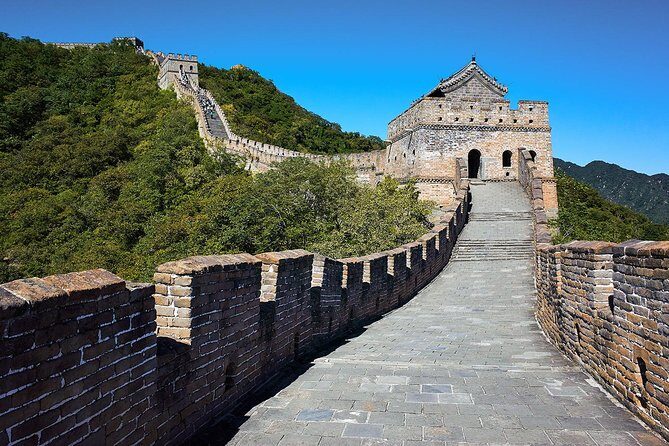
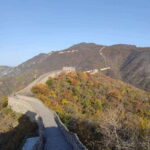
You go to Mutianyu Great Wall with round-trip cable car arranged. That’s a practical win. The cable car helps you avoid feeling wrecked before you even reach the views, and it keeps the focus on the walk and the long sightlines.
When you’re standing on the wall and looking along the ridge, the wall stops being a slogan. It becomes a real structure in real air, stretching up and down. If you’re the type who likes photos, you’ll get them. If you’re the type who likes scale, you’ll get that too.
Bird’s Nest Photo Stop and a Real Hutong Alley Tour
On the way back, there’s a quick Bird’s Nest (National Stadium) stop for pictures outside. That’s clearly positioned as a photo break, not a full stadium visit. Then you transition into a Hutong rickshaw tour, with time that includes the chance to visit a local family.
This is where you get the local texture. Hutongs are the older alley neighborhoods, and a rickshaw ride keeps you moving at a human speed. You also learn the stories of daily life rather than only seeing Beijing as a postcard.
If you’re sensitive to crowded alleys, just know the tour is designed to be active and close to city life. It’s not a quiet stroll.
Flying to Lhasa: Altitude Tips and a Gentle Start in Tibet
Day four is a full transition day: you leave Beijing, then land in Lhasa. The guide meets you at the airport, gives you a quick city introduction, and importantly shares tips to help you avoid altitude reaction when driving downtown.
That detail matters because Tibet isn’t only a sightseeing stop. It’s a physical environment. The itinerary also gives you time to rest after arrival. That’s not wasted time. It’s the part that helps you enjoy the next days without feeling like you’re bargaining with your body.
You should assume you’ll move slower than usual. The plan here is built around getting you acclimated enough to handle temples and palaces the next day.
Lhasa’s Sacred Core: Norbulingka, Tibet Museum, Sera Monastery
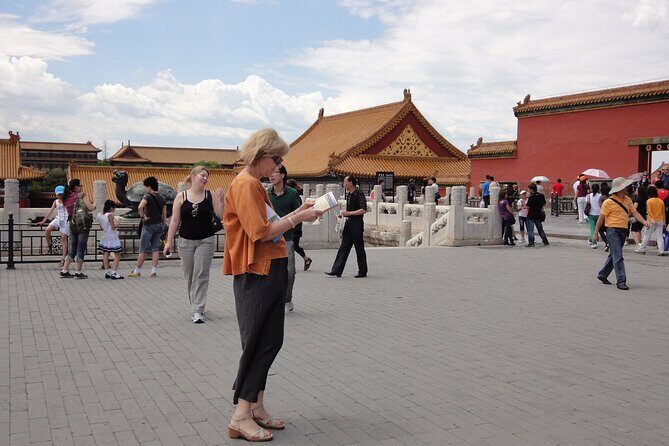
Lhasa days are packed with spiritual landmarks, but the routing makes sense. You’re not jumping across the city aimlessly. The schedule builds from gardens and museum learning into active religious life.
Norbulingka Park and the Tibet Museum
You start with Norbulingka (Precious Stone Garden), described as a former summer house with a large garden. You’re not just visiting a park. It’s presented as a space tied to generations and Buddhist life.
Then you go to the Tibet Museum, which focuses on Tibetan culture and history through artifacts, Buddha figures, handwritten ancient books, Thangka paintings, and handicrafts. Even if you’re not a museum person, this stop helps you “decode” what you’re seeing later in religious sites. It gives you context before you walk into the most sacred spaces.
Sera Monastery Debates: Buddhism in Motion
The standout religious experience is Sera Monastery, especially because of the daily debate schedule. The itinerary notes monks debating from 15:00 to 17:00 every day except Sundays, with the style of debate described clearly—clapping hands, using prayer beads, and rapid back-and-forth answering.
This is valuable because you don’t just watch buildings. You watch how belief is trained and tested in real time. Even if you’re not sure what the debate means, you can still read the intensity and the structure.
One consideration: debate sessions can be intense and loud. If you dislike commotion, plan to focus on the meaning and the cadence, not just the volume.
Potala Palace, Jokhang Temple, and Barkhor Street: Lhasa at Close Range
The next day leans into the icons, and it does so with the right mix of architecture, pilgrimage energy, and everyday street life.
Potala Palace: Temple Meets Palace
You visit Potala Palace, built about 1,300 years ago. The tour emphasizes its architecture that blends Tibetan temple and palace styles. You’ll likely come away feeling like you visited a power symbol and a spiritual center at the same time.
Jokhang Temple: The Main Pilgrimage Magnet
Then comes Jokhang Temple, described as a 1,370-year-old pilgrimage destination. Here, you get close to Tibetan Buddhism and learn about loyal believers. If you’ve ever wondered what people mean when they say a religious site is lived-in, Jokhang is a place where faith is visible in body language and routines.
Barkhor Street and a Nunnery Visit
Finally, you go to Barkhor Street, known for its original Lhasa look—stone roads, older buildings, and handicrafts. The itinerary also includes heading to a nunnery to get close to the lifestyle of Buddhist nuns.
I like that the tour includes both sacred and street rhythm. It prevents “sightseeing blindness,” where every stop is a separate photo opportunity. Instead, you experience how sacred spaces connect to daily life right outside them.
Xi’an: Terracotta Warriors, a Clay Workshop, and Mosque Quarter Nights
Xi’an is where the trip shifts from spiritual landmarks to ancient engineering, then into human-scale city neighborhoods.
Terracotta Warriors and Horses: Seeing Faces Up Close
The biggest attraction is the Museum of Qin Terra-cotta Warriors and Horses. The tour description focuses on lifelike soldiers and horses arranged in battle formation, with distinct expressions. It also highlights bronze chariots and weapons.
This is one of those experiences where time helps. The itinerary promises time to enjoy the warriors and horses created around 2,200 years ago. You’ll likely want to slow down and look at faces, stance, and the differences in design rather than treating it like a wall of statues.
Family Visit and Making a Mini Clay Warrior
After the museum, you visit the home of the first discoverer of the Terracotta Army. Then you do a mini clay warrior making activity with a local artisan.
That’s not just a souvenir. It’s a way to connect the big artifact story to the local people who keep craft skills alive.
Big Wild Goose Pagoda and Tang-Era Pedestrian Energy
You also visit Big Wild Goose Pagoda (Dayanta), built in the Tang Dynasty to collect valuable Buddhist sutras brought from India. The next stop is free time at Grand Tang Dynasty Ever Bright City, a pedestrian street where people dress in traditional clothing and you can watch cultural performance-type street scenes.
Xi’an City Wall and the Great Mosque Area
On the next day, you visit Xi’an City Wall Park, then ascend the wall. You can walk and explore history from the wall itself. After that you go to the Great Mosque of Xi’an, then spend time in the Muslim Quarter for nearby snacks.
This area is one of the easiest places to feel the city as a living place. It’s also a practical choice for food: you get time to explore without needing the tour to manage every bite.
Shanghai: Museums, Yu Garden, the Bund, and Tianzifang’s Creative Side
By the time you reach Shanghai, you’ve already seen three major cultural anchors. Shanghai is the shift to pace, design, and contrast—old gardens next to modern skyline views.
Shanghai Museum: A First-Thing-in-the-Morning Win
You start with Shanghai Museum, described as displaying rare historical collections. It’s a strong opening because museums keep you grounded in context before you hit outdoor city highlights.
Yu Garden and a Farewell Lunch
Then you go to Yu Garden (Yuyuan), described as famous and elegant. Lunch is included again as an a la carte Shanghai cuisine meal, so you get a named food moment rather than “eat whenever.”
Huangpu River Cruise and the Bund Walk
After lunch, you take a short cruise on the Huangpu River, passing the Oriental Pearl TV Tower, then you get off for the Bund (Wai Tan) walk. The itinerary emphasizes the European-style buildings on one side and modern Pudong skyscrapers on the other.
That contrast is the whole point. The Bund isn’t just scenic. It’s Shanghai’s history speaking next to its future.
Tianzifang: A Less-Formal End to the Trip
Finally, you visit Tianzifang, described as an old street with relaxation and fun. This kind of stop is good at the end because it doesn’t feel like another checklist item. It’s more about wandering and picking what interests you.
If you’re tired from walking earlier in the day, Tianzifang is a nice place to go slower and sit when you need to.
Guides and Logistics: Why This Tour Feels Smooth in Beijing
The reviews point to something you can’t see from an itinerary: how well the guide manages day flow. In Beijing, guides like Candy have been praised for being organized and efficient, making sure venues run smoothly and on time. Other feedback highlights John for being supportive in practical ways, including helping with a mobile phone during the trip. Celine also comes up as professional and attentive.
Even without name-dropping every city, that pattern matters: you want a guide who can handle the small problems fast—timing issues, where to stand, what to do next—so you spend your energy on sightseeing.
This tour includes professional guides and an experienced driver, plus air-conditioned vehicle and two bottled waters per person per day. Those details sound minor until you’re trying to make it through busy cities without constantly buying basics.
Price and Value: What $4,089 Includes, and Where You’ll Still Spend
At $4,089 per person for an 11-day private trip, you’re paying for a lot of built-in costs. The package includes ten nights in twin-sharing rooms, one-way economy airfare for each main hop between cities (Beijing to Lhasa, Lhasa to Xi’an, Xi’an to Shanghai, plus domestic flight legs as scheduled), and a Tibet Travel Permit.
You also get entrance fees for listed sights, plus most meals (breakfast for ten days and four lunches) and daily water. Transportation is included through the tour days via the air-conditioned vehicle.
What’s not included is also clearly stated: China visa fees, international airfare, and personal expenses. Also, some optional items may require separate payment; for example, the Bird’s Nest stop is noted for outside photos, so it isn’t framed as a ticketed experience.
So is it “worth it”? If you want to see a lot—Beijing plus Tibet plus Xi’an plus Shanghai—while avoiding planning stress, the included flights, permit, guides, and entrance fees make it feel more reasonable. If you’re the type who loves independent travel and already has your own plan tight, the price might feel high compared to DIY.
If you book, and plans change, cancellation is listed as free up to 24 hours in advance for a full refund.
Practical Tips for Tibet Altitude and the Pace of Flying
Your biggest practical hurdle is Tibet, but your guide’s included guidance helps. On arrival in Lhasa, you’ll get tips aimed at avoiding altitude reaction, and you also have time to rest before temple days ramp up.
Still, you’ll want to treat day five and day six as “slow days.” You’re touring major sites like Norbulingka, Tibet Museum, Sera Monastery, Potala Palace, Jokhang Temple, and Barkhor Street. That’s a lot even without altitude.
Also keep your expectations aligned with the design: there are three flights total, and you’ll shift between cities quickly. That’s great for seeing a lot, but it means you should pack smart and keep essentials accessible. The tour includes mobile tickets, and your guide should help you use them, but you’ll still want a calm routine.
For physical fitness, the tour calls for moderate physical fitness. That fits the mix of walking at walls, temple complexes, and city neighborhoods.
Who This Tour Fits Best (and Who Should Rethink It)
This is a strong match if you:
- Want a private experience with a guide and driver doing the hard parts
- Like the “big icons” but also want some local life moments like Hutong rickshaws and Barkhor Street
- Are comfortable with flights and a schedule that moves between four cities
- Appreciate that Tibet paperwork and permit are handled inside the tour
You might rethink it if you:
- Hate altitude exposure and want a more flexible slow itinerary in Tibet
- Want lots of unscheduled time inside each city (this plan includes some free time, but it’s not a free-for-all)
- Prefer deep museum study over breadth across several regions
Should You Book This 11-Day Private China Tour?
I’d book it if you want a single, guided solution that covers Beijing + Lhasa + Xi’an + Shanghai in one trip without you wrestling with tickets, permits, and transfers. The combination of included flights, entrance fees, guides, and the Tibet permit is the key reason this works as value, not just as a list of famous names.
I’d hesitate if you want maximum flexibility in Tibet or you’re looking for a slow travel vibe. This is more “see the classics with guidance” than “wander at your own pace all day.”
If you do book, the best move is to plan for rest and hydration, especially around Lhasa, and use your guide’s expertise early. When Beijing guides like Candy and support-focused guides like John get you through smoothly, you start your trip in a good rhythm—and this tour is built to keep that rhythm going.
FAQ
Where does the tour start, and what time does it begin?
The tour starts at Capital Airport Shunyi, Beijing 101300 China, with a start time of 9:00 am.
Is this tour private, or will I be with other groups?
This is a private tour/activity. Only your group participates.
What flights are included in the package?
The tour includes three flights. The route, as scheduled, is Beijing to Lhasa, then Lhasa to Xi’an, and finally Xi’an to Shanghai.
What’s included in the price?
It includes ten nights of accommodation (twin-sharing), one-way economy-class airfare for the domestic flight legs, Tibet Travel Permit, hotel/driver/guide services, air-conditioned vehicle, entrance fees for the listed sites, two bottled waters per person per day, and breakfast (10) plus lunch (4).
What should I budget for that’s not included?
Not included are China visa fees, international airfare, and personal expenses.
What kind of fitness level do I need?
The tour notes a moderate physical fitness level is recommended, which fits walking and temple/site visits across several days.