REVIEW · BEIJING
Beijing Forbidden City Ticket Booking (Optional: guide service)
Book on Viator →Operated by Lily's Tour Company · Bookable on Viator
That first gate moment is a relief. This ticket sets you up for direct entry to the Forbidden City using your passport, so you can spend your limited time actually walking the palace grounds instead of grinding through crowds. You also choose morning or afternoon entry, and you can upgrade to add a guide service or visit the Treasure Gallery.
Two big things I like here are the built-in focus on the most important halls and the clear “show-your-passport” access method near Tiananmen Square. The route moves through key Outer Court buildings like the Hall of Supreme Harmony and the Gate of Heavenly Purity, then into the Inner Court areas and the Imperial Garden. One drawback to plan for: the Forbidden City requires your passport name and number to match exactly, and a mismatch can stop you at the entrance, so double-check everything before you book.
In This Review
- Key highlights at a glance
- Why passport entry near Tiananmen makes this easier
- The 3 to 4 hour plan: what you’ll see and why it works
- Start at the Palace Museum (Forbidden City) entry
- Hall of Middle Harmony (Zhonghe Dian)
- Hall of Supreme Harmony (Taihe Dian)
- Hall of Preserving Harmony (Baohedian)
- Gate of Heavenly Purity (Qianqing Men)
- Palace of Earthly Tranquility
- Imperial Garden of the Palace Museum
- The Outer Court halls: Supreme Harmony is your anchor
- Crossing into the Inner Court: Gate of Heavenly Purity changes the vibe
- Optional guide or Treasure Gallery: how to choose
- When a guide add-on is worth it
- When Treasure Gallery makes sense
- Price and value: what $9.98 really buys you
- Logistics to take seriously: the passport rules are strict
- Exact passport name and number
- Chinese tourists use different documents
- Kids height rules
- What the small group size changes
- Tips for a smoother visit (so you enjoy it more)
- Should you book this Forbidden City ticket service?
- FAQ
- What is included in the price?
- How long does the visit take?
- Do I need a passport to enter?
- Can I upgrade with a guide or visit the Treasure Gallery?
- Does this work for Chinese tourists?
- When will I receive confirmation after booking?
- Is the ticket valid for multiple days?
- Are there child height rules?
- How many people are in the group?
Key highlights at a glance

- Passport-based entry helps you get inside with less waiting stress
- Outer Court to Inner Court route hits the major must-see buildings
- Hall of Supreme Harmony is a standout (the grandest wooden hall in China)
- Optional guide can add context and help you move at a smart pace
- Treasure Gallery upgrade gives you an extra ticketed-style add-on
- Small max group size (10) keeps the experience more manageable
Why passport entry near Tiananmen makes this easier
Beijing is famous for lines, and the Forbidden City is famous for crowds. This experience is designed to remove the most painful part: trying to secure entry when demand is high. Instead of wrestling with last-minute logistics on the day, you pre-book an admission ticket tied to your passport details.
The location angle matters too. Access is described as near the main entrance close to Tiananmen Square, and you’ll use your passport through security and then show it at the entrance for direct access. That’s exactly what you want if you only have half a day and you’d rather not spend it stuck in the wrong queue.
I also like that the core visit is structured. You get a clear arc across the palace complex rather than wandering randomly for hours and realizing you missed the big buildings entirely.
One more practical note: this is a pre-booking service. If your ticket is successfully obtained, you receive a confirmation letter about 7 days in advance. That timing matters if you’re the type who keeps a tight plan.
A few more Beijing tours and experiences worth a look


The 3 to 4 hour plan: what you’ll see and why it works
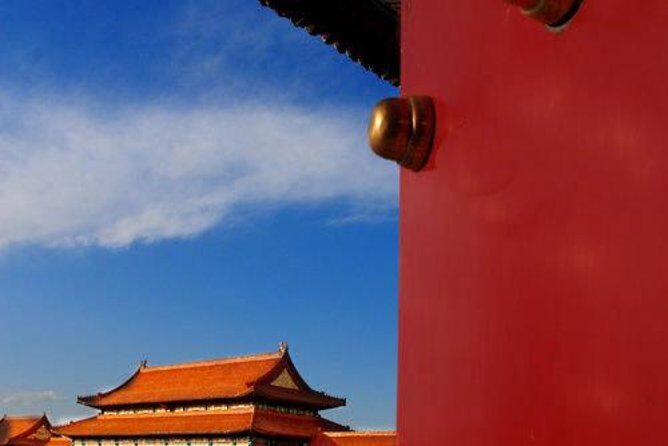
This isn’t a “drive-by photo stop.” It’s a guided sequence built around the palace’s layout, so your visit feels like you’re moving with a purpose.
Start at the Palace Museum (Forbidden City) entry
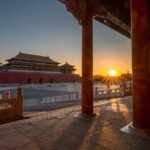
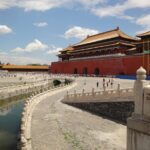
Your ticketed entry leads you into the Forbidden City—The Palace Museum—where you’ll follow security and then use your passport at the main entrance (Meridian Gate area). This is the moment that saves you time. Once inside, the palace is big, and starting efficiently keeps the day from feeling like a long walk with no payoff.
Hall of Middle Harmony (Zhonghe Dian)
Next comes the Hall of Middle Harmony. It’s a shorter stop, about 30 minutes in the pacing described overall for the major harmony halls. This helps you orient yourself fast, before the big ceremony halls.
Why it matters: the “harmony” halls are not just pretty roofs. They signal hierarchy and ceremonial planning, and seeing them in sequence makes the whole complex click.
Hall of Supreme Harmony (Taihe Dian)
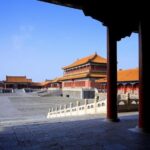
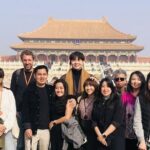
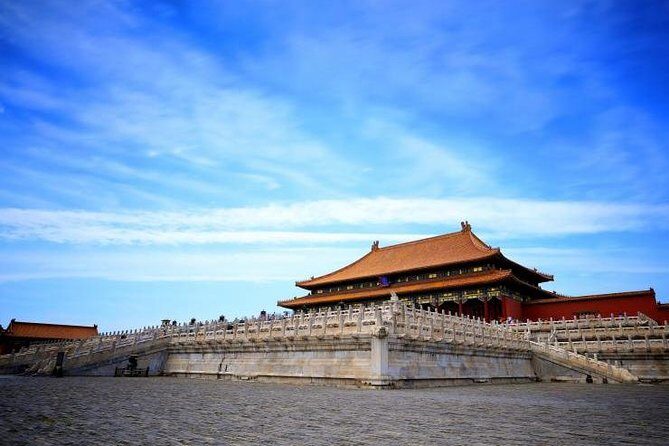
Then you hit the star of the Outer Court. The Hall of Supreme Harmony is described as the grandest hall and the largest wooden structure in China, and it’s often the building your brain locks onto for photos because it looks like the center of power.
Plan for crowding here. Even with direct entry, central areas can still be packed. If you’re sensitive to crowds, treat the first hall as your photo base, then keep moving while the group flow carries you.
You can also read our reviews of more guided tours in Beijing

Hall of Preserving Harmony (Baohedian)
After that, you reach the Hall of Preserving Harmony, a shorter stop (about 15 minutes). It’s the kind of place where you get one more “layer” of the palace’s ceremonial system without losing the momentum of the visit.
Gate of Heavenly Purity (Qianqing Men)
This is the divider point between the Outer and Inner Courts. The Gate of Heavenly Purity separates the palace into those two halves, with the Inner Court behind it—where the emperor’s residential area sits.
This stop is useful because it forces you to stop thinking only about buildings and start thinking about function. Once you’ve crossed this gate (even physically), the palace starts to feel different.
Palace of Earthly Tranquility
Next is the Palace of Earthly Tranquility, which is described as having chambers used as bridal rooms for the emperor and empress, with other chambers used for worship. That mix of private life and ceremonial function is exactly what makes the Inner Court compelling.
This stop is about 20 minutes in the described flow, which is enough time to see the layout without treating it like a museum worksheet.
Imperial Garden of the Palace Museum
Finish in the Imperial Garden behind the Palace of Earthly Tranquility. This is your breathing space at the end of a walking-heavy experience. It’s described as a recreated space where imperial family members staged their own version of leisure life.
If you care about atmosphere over architecture, this is where the visit often feels most human. And if you care about photos, it’s a nice place to reset your energy before you leave.
The Outer Court halls: Supreme Harmony is your anchor
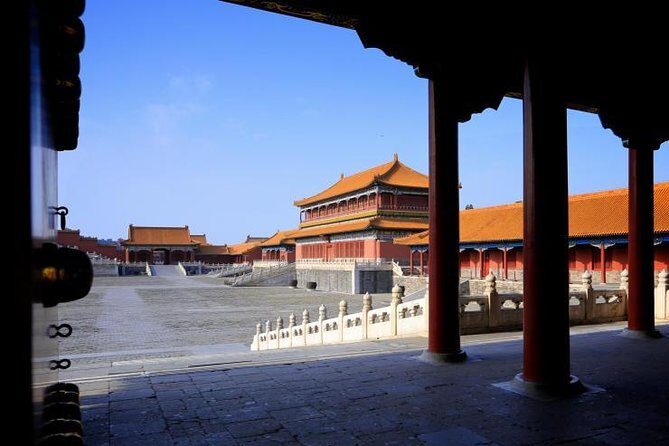
If you remember only one thing from this ticket route, make it the Hall of Supreme Harmony. It’s repeatedly highlighted as the biggest wooden structure in China and the grandest hall in the palace.
Here’s the logic: the Outer Court is built for public ceremony. You can feel it in the scale and symmetry. When you see the Middle, Supreme, and Preserving Harmony halls in sequence, you get a faster grasp of how the palace was designed to stage authority.
A useful way to experience these halls is to do a simple pattern:
- quick wide shot first
- then look slightly left and right for the rooflines and supporting structures
- then return to the main axis for one final central photo
Because you’re moving with a set order, you’re less likely to waste time hunting for the “main view” later.
Crossing into the Inner Court: Gate of Heavenly Purity changes the vibe
The Gate of Heavenly Purity is one of those checkpoints that makes your visit feel like a story. You’re moving from the ceremonial public space into the residential and private areas of the palace.
After the gate, the Palace of Earthly Tranquility adds more texture. Even without a deep lecture, you’re told what the spaces were used for—bridal rooms and worship areas. That gives you a reason to pay attention to layout rather than just admire walls.
Then the Imperial Garden acts like a palate cleanser. By the time you reach it, your feet will be asking for mercy, and you’ll be happy the last stop is a calmer zone.
Optional guide or Treasure Gallery: how to choose
You can upgrade your experience in two ways:
- add a guide service
- visit the Treasure Gallery
When a guide add-on is worth it
If you want context, the guide option can be a smart use of money. In real use, guides such as Bobo, Summer, and Marco have been singled out for clear, engaging explanations and for helping the group keep a good rhythm through a crowded site.
A guide can also help with practical decisions that don’t come in the ticket description: where to stand for photos, how to pace stops, and what to focus on so you don’t miss the “why” behind the “what.”
When Treasure Gallery makes sense
If you already like palace history but don’t want a heavy lecture, the Treasure Gallery upgrade can be a good middle path. You get an extra curated stop without needing to rely entirely on narration.
I’d choose the Treasure Gallery if you’re the type who wants something more “object-focused” rather than just architecture and layout.
Price and value: what $9.98 really buys you
At $9.98 per person, what you’re mainly buying is admission plus a smoother route into the site using passport-based access. You’re not paying for hotel pickup or food, but those add-ons often don’t help much once you’re inside anyway.
The value comes from reducing the most frustrating part: entry stress. The Forbidden City has a daily limit, and the supply can sell out quickly. Getting your entry reserved in advance can save you from spending your best morning refreshing a website or asking strangers for help.
Also, this package is designed for a short visit. Many people come to Beijing with a tight schedule. A 3 to 4 hour palace run that still hits the major highlights is often the difference between seeing the Forbidden City and just hearing about it from your group chat.
Logistics to take seriously: the passport rules are strict
This is where most headaches happen, and it’s also where you can prevent them with care.
Exact passport name and number
You must provide passport name and number during booking for all participants, and they must match your passport exactly. The ticket is real-name registered. If the details don’t match, entrance can be denied.
So do this before you pay:
- copy your passport name exactly as shown
- confirm passport number digits carefully
- double-check for typos in letters and numbers
Chinese tourists use different documents
The rules say Chinese tourists (including Hong Kong and Taiwan) should use their ID card for ticketing, and they must book over 8 days in advance. If you’re traveling with someone who has Chinese ID but the booking was made using a passport, that can create entry trouble.
If you’re in a mixed group, treat it like a form-filling assignment. One person’s missing correct document can spoil the whole experience.
Kids height rules
Children under 1.2 meters can join for free, but if your child is over 1.2 meters, you need a Youth Ticket. If you ignore height rules and assume it will work out, Forbidden City access can refuse entry.
What the small group size changes
This experience lists a maximum of 10 travelers. That’s not huge, and it can matter for pacing.
In a palace this large, small groups usually mean:
- fewer stops getting bunched up in narrow corridors
- easier crowd navigation
- more time actually spent looking rather than waiting for the next regroup point
It also tends to make guides more responsive if you want quick answers during the walk.
Tips for a smoother visit (so you enjoy it more)
A few practical moves can make the difference between a “saw it” trip and a “remember it” trip.
- Bring your passport in your day bag, not in a hotel locker. The entry process depends on it.
- Wear shoes that can handle a long walk. The palace is big, and you’ll cover ground fast.
- Plan for crowds in the central halls, even if entry goes smoothly. Your best strategy is to keep moving and enjoy each stop rather than waiting for an empty moment.
- If you upgrade with a guide, decide what you want most: context, photo timing help, or a clear pace that prevents you from wandering.
And if you’re mixing this with other Tiananmen area sights, keep in mind the location is close, which helps your overall planning.
Should you book this Forbidden City ticket service?
Book it if:
- you want direct entry with less waiting
- you have limited time and want a focused route through the palace’s major highlights
- you’re okay following strict document rules and you can double-check passport details
Skip or reconsider if:
- your travel group includes someone whose document type might not match the passport-based entry method
- you’re not comfortable handling paperwork accuracy
- you’re trying to stay flexible and last-minute, because this ticket is valid only on the day you book
For most first-time visitors, this is a smart way to avoid the worst entry chaos and get your Forbidden City time back for actually seeing the halls, the Inner Court divide, and that finishing Imperial Garden calm.
FAQ
What is included in the price?
The price includes the admission ticket to the Forbidden City (The Palace Museum). Food and drinks are not included.
How long does the visit take?
The experience lasts about 3 to 4 hours.
Do I need a passport to enter?
Yes. Passport is required for all travelers on the day of travel for direct entry (with the note that Chinese tourists use ID card information instead).
Can I upgrade with a guide or visit the Treasure Gallery?
Yes. You can upgrade to explore with a guide service or to visit the Treasure Gallery.
Does this work for Chinese tourists?
Chinese tourists (including Hong Kong and Taiwan) must book over 8 days in advance and must purchase using ID card information, not passport details.
When will I receive confirmation after booking?
If the ticket is obtained, you’ll receive the confirmation letter about 7 days in advance.
Is the ticket valid for multiple days?
No. The ticket is only valid on the day you book to travel.
Are there child height rules?
Yes. Children under 1.2 meters can join for free with an adult. If a child is over 1.2 meters, you should purchase a Youth Ticket.
How many people are in the group?
This experience has a maximum of 10 travelers.