REVIEW · BEIJING
Beijing Calligraphy Class
Book on GetYourGuide →Operated by Hutong Calligraphy · Bookable on GetYourGuide
One hour with a brush can change your whole mood. This Beijing calligraphy class turns Chinese calligraphy into a hands-on, calm skill session you can do in central-town time. I like that you get a real lesson plan (history, scripts, tools, then practice), not just a quick photo stop, and I also love the focus on balance and rhythm that makes the writing feel almost meditative. The one possible drawback: if you want to write a page of artwork like a professional, the short time window may leave you wanting more.
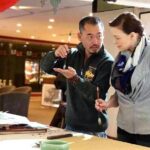
You’ll start in the downtown area near Wangfujing, meeting your teacher at the Sun World Dynasty Hotel lobby. Expect an English-speaking instructor, a guided warm-up, and then step-by-step practice of the characters and strokes your teacher chooses for you. Kids can have fun here too, because the session is built around simple physical drills that turn into real-looking results.
In This Review
- Key Things I’d Highlight Before You Go
- Your First Brushstroke in Downtown Beijing
- Price and Time: What $20 Buys You (and What It Doesn’t)
- What You Learn: Regular, Running, Cursive, and Seat Script
- Tools Included: Brush, Ink Stone, and Rice Paper
- From History Talk to Hand Technique (How the Lesson Usually Flows)
- 1) Warm welcome and quick cultural framing
- 2) Styles, then tools
- 3) Strokes first, then composition
- 4) Meaning behind characters
- 5) A final piece you can feel proud of
- 30 Minutes vs 1 Hour: Choose Based on Your Mood
- Best for 30 minutes
- Best for 1 hour
- Where to Meet and How to Get There Without Stress
- Meet at Sun World Dynasty Hotel Lobby
- Subway directions (Line 5)
- If you’re already in Wangfujing
- Who This Class Fits Best (Adults, Kids, and Everyone in Between)
- Adults
- Kids
- Private-feeling experience
- The Teacher Factor: Patient Guidance in Real Time
- Practical Value: Why This Beats a Quick Photo Stop
- Should You Book This Beijing Calligraphy Class?
- FAQ
- How long is the Beijing Calligraphy Class?
- Where does the class meet in Beijing?
- Is the class taught in English?
- What calligraphy styles are covered?
- Do I need to bring calligraphy tools?
- What is the class price?
- How do I get there by subway?
- Can I cancel for a full refund?
- Is reserve now and pay later available?
Key Things I’d Highlight Before You Go
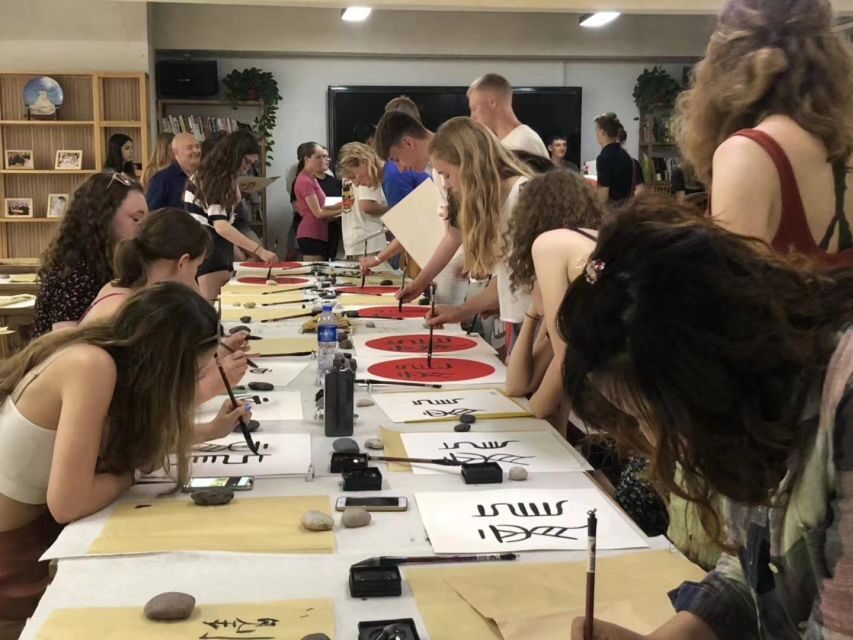
- Central meeting point in Wangfujing: Start at Sun World Dynasty Hotel lobby, then you head to where the session is set up.
- English instruction: The teacher explains both technique and meaning clearly in English.
- You learn multiple script styles: Regular script, running script, cursive script, and seat script.
- Tools are included: Brushes, ink stone, and rice paper are part of the class experience.
- Mindful practice: Expect a patient, relaxing pace that rewards focus, not speed.
- Fun for adults and kids: Reviews repeatedly call out the calm, doable nature of the drills.
Your First Brushstroke in Downtown Beijing
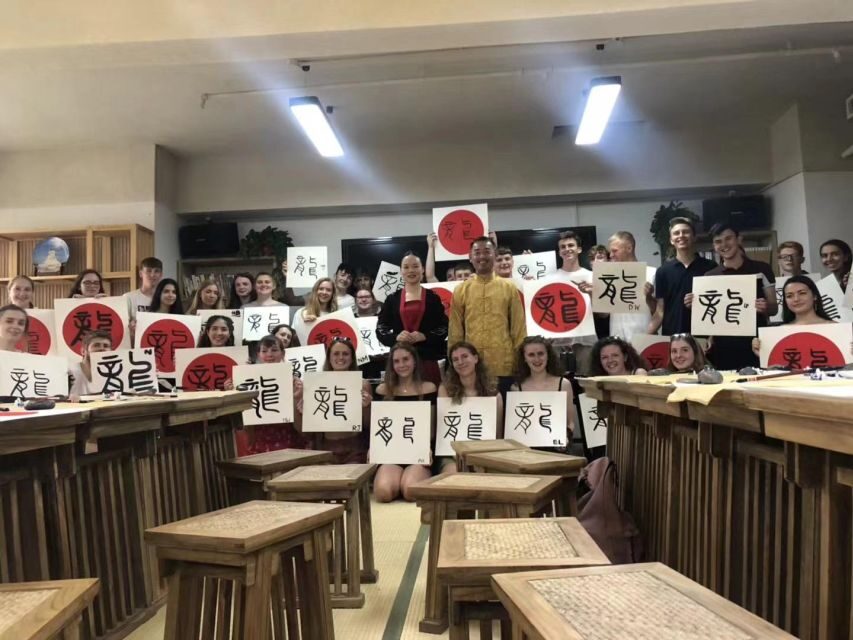
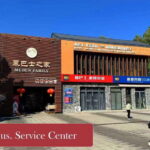
This class is built for people who want something authentic but still manageable during a busy Beijing trip. The meeting point is easy to anchor in your day: your teacher waits at the Sun World Dynasty Hotel Lobby (No. 50 Wangfujing Avenue, Dongcheng District).
Once you’re with the instructor, the class usually starts with context. You’ll get a quick introduction to why calligraphy matters in Chinese culture, and then you’ll connect that meaning to what you’re actually doing with your hand. That matters more than you’d think. If you treat calligraphy like just “pretty writing,” the session can feel random. Here, you’re taught why strokes have logic—then you practice that logic.
The vibe also comes through in the way people describe it: relaxed, quiet, and focused. Several participants specifically highlighted the meditative feel and the teacher’s patience with fine adjustments. For me, that suggests a low-stress experience where you can ask questions and actually improve.
A few more Beijing tours and experiences worth a look
Price and Time: What $20 Buys You (and What It Doesn’t)
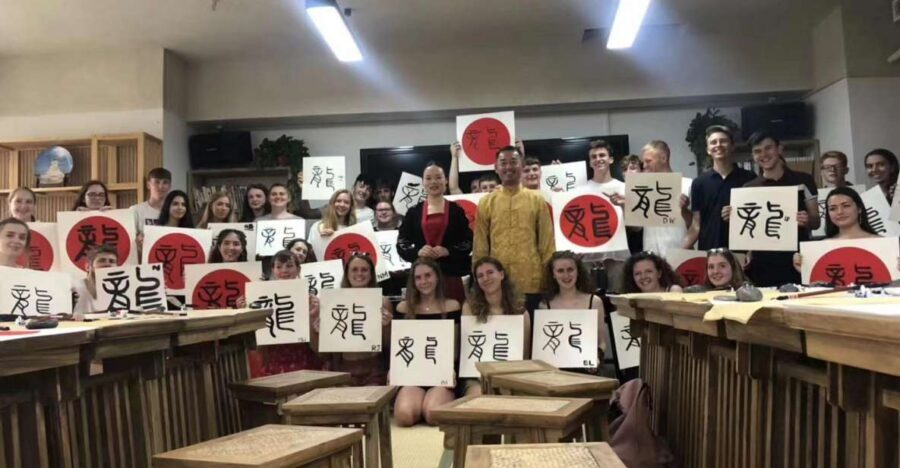
The class runs 30 minutes to 1 hour, and it’s priced at $20 per person. That’s a strong value for central Beijing, especially because you don’t have to bring tools or figure out where to buy supplies.
Here’s the practical way to think about it:
- If you choose the 30-minute option, you’ll likely focus on the essentials: basics of holding the brush, key strokes, and writing one character or short composition.
- If you choose 1 hour, you give yourself more time to practice, correct your form, and finish with a more satisfying result.
What it doesn’t promise: mastery in one sitting. You won’t turn into the kind of person who can produce showpiece calligraphy on demand. But you will leave with a clear understanding of how Chinese characters are built and why good calligraphy looks effortless. That alone can make your later city walking feel different, because you start noticing stroke order, balance, and structure in signage and displays.
What You Learn: Regular, Running, Cursive, and Seat Script
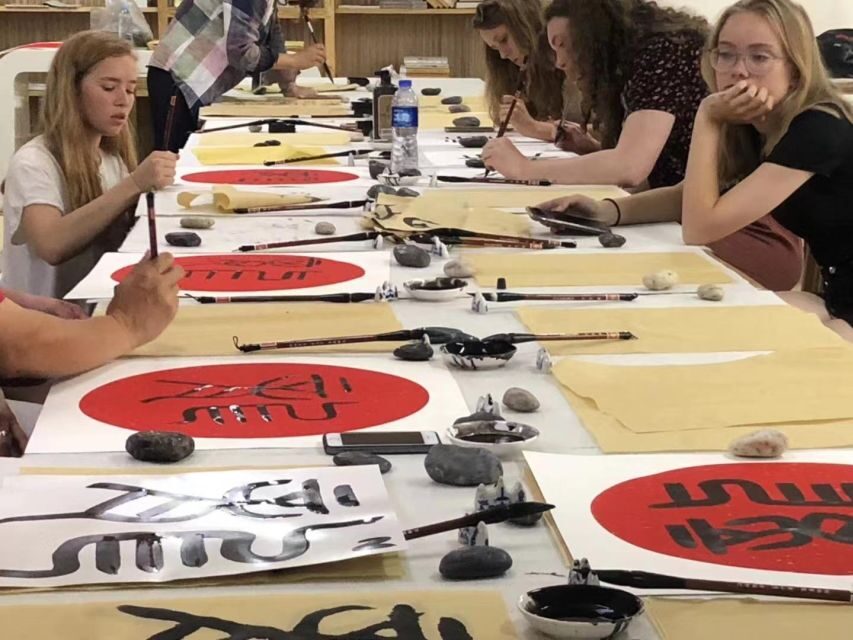
One of the best parts of this workshop is that you’re not stuck in a single style. You’ll learn about several calligraphy scripts, including:
- Regular script
- Running script
- Cursive script
- Seat script (listed as seat script in the class outline)
Even if you’ve never heard these terms, don’t panic. The instructor’s job is to connect the style names to what you feel in your hand. For beginners, that’s huge. A common frustration in art classes is staring at a finished example and not understanding what to copy. This class uses stroke-focused practice so the style concepts become physical.
You’ll also learn about balance, rhythm, and harmony. Those sound like art-world buzzwords until you realize what they mean here: spacing, stroke weight, and the way curves and angles relate on the page. When people say the experience is relaxing, it’s often because the teacher guides you to focus on a few repeatable actions instead of overthinking the final look.
Tools Included: Brush, Ink Stone, and Rice Paper
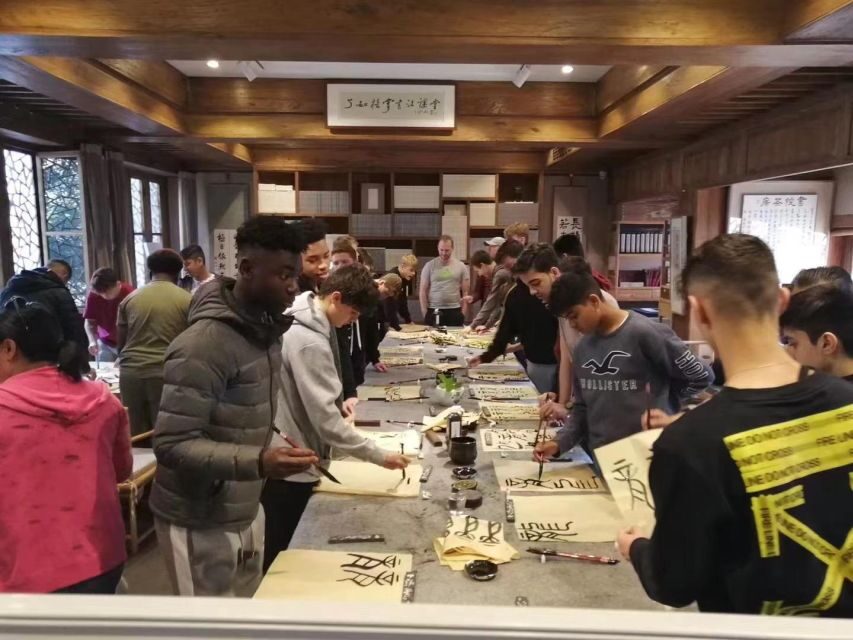
The class takes care of the supplies. You’ll use the tools typically associated with traditional Chinese calligraphy:
- Brushes
- Ink stones
- Rice paper
That tool list is more than “nice to have.” Ink stone and rice paper change the whole experience. With the ink stone, you’re dealing with flow and viscosity rather than squeezing black marker onto paper. With rice paper, you’re dealing with absorbency and how the brush stroke settles. Your instructor will guide you through the basics, like how to hold the brush and how to control the first contact of bristles with paper.
In plain terms: these are the tools that make calligraphy feel like calligraphy. And they remove a barrier for first-timers. You won’t spend your day hunting for materials, and you won’t spend your practice time compensating for cheap substitutes.
From History Talk to Hand Technique (How the Lesson Usually Flows)
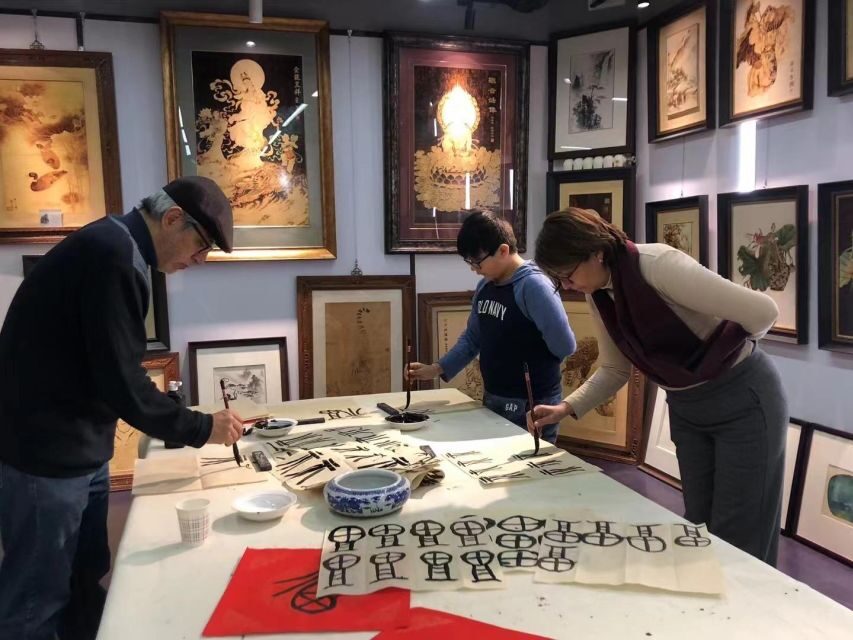
Here’s the typical rhythm of the session as it’s described: intro, styles and tools, then controlled practice that leads to a finished character.





1) Warm welcome and quick cultural framing
Your teacher begins with a history and significance introduction—enough to give you context for what makes calligraphy meaningful in Chinese culture. Then you’ll connect that context to what you’re about to learn.
2) Styles, then tools
You’ll learn about the scripts and the instruments used. Expect explanation of the brushes, ink stone, and rice paper, plus how each part affects your strokes.
3) Strokes first, then composition
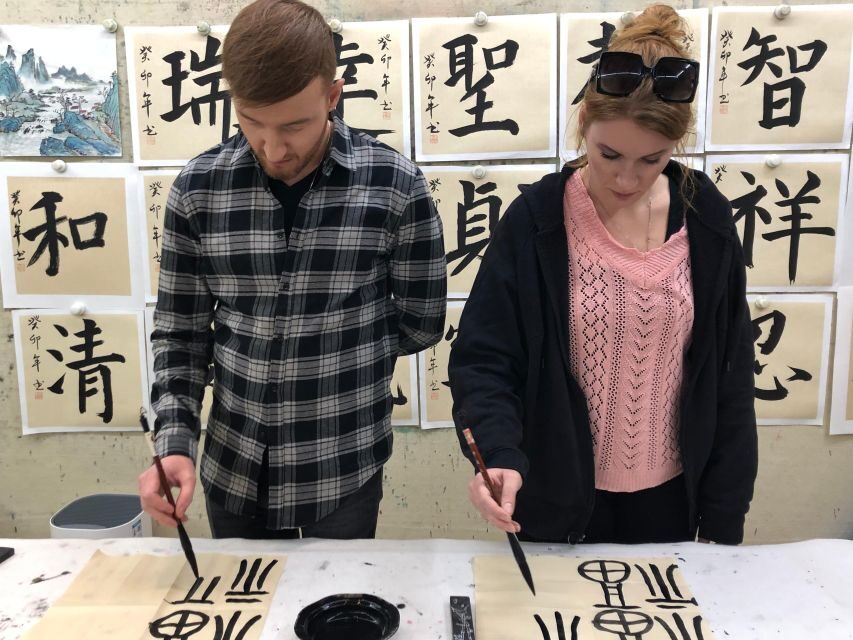
You start with simpler strokes. Then the teacher moves you toward more complex compositions, with attention to balance and rhythm. This is where the workshop becomes more than an art class. You’re training focus, patience, and fine motor control—skills that are useful beyond writing.
4) Meaning behind characters
Calligraphy isn’t only about shape. The class also covers culture meanings behind certain characters. That’s one reason the final piece can feel personal. When a character has meaning, you don’t just “copy a symbol,” you choose a message.
5) A final piece you can feel proud of
By the end of the lesson, you create a character or short work that reflects your practice. Several participants mentioned making something meaningful and ending up with a satisfying result, especially when the teacher gave adjustments mid-practice.
30 Minutes vs 1 Hour: Choose Based on Your Mood
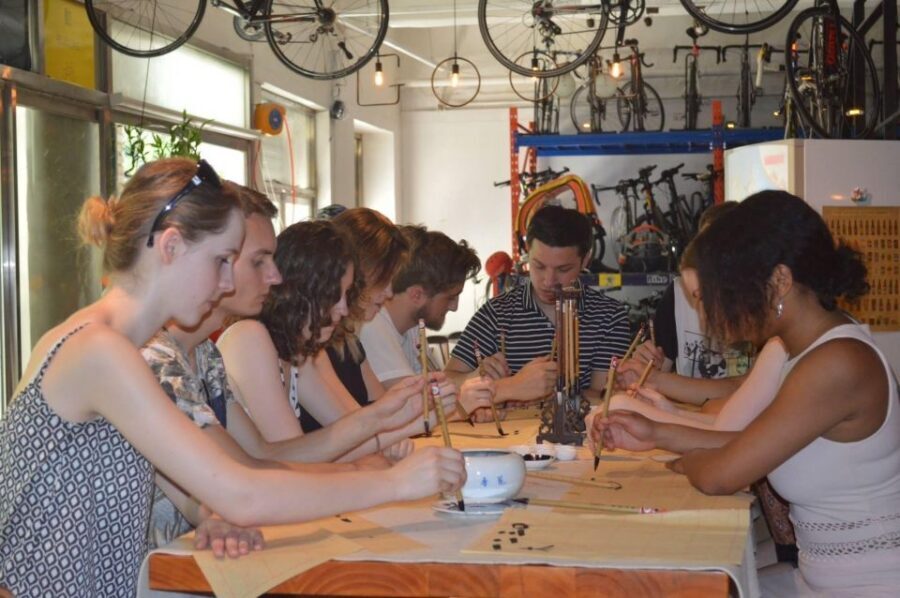
Time choices aren’t just schedules here. They affect the learning arc.
Best for 30 minutes
Pick the 30-minute option if:
- You want a one-time cultural activity that fits in a packed day.
- You prefer a short, focused session with just the essentials.
- You’re not trying to perfect your technique—just understand how it works.
Best for 1 hour
Choose the 1-hour class if:
- You want more repetition and correction.
- You like the idea of practicing your strokes and finishing something with more care.
- You’re bringing kids and want time for patience to pay off.
A theme in the feedback is that people got better during the session, because the teacher doesn’t rush. More time simply gives you more chances to adjust.
Where to Meet and How to Get There Without Stress
Meeting point is straightforward, and that’s rare in small workshops.
Meet at Sun World Dynasty Hotel Lobby
Address: No. 50 Wangfujing Avenue, Dongcheng District, Beijing (北京天伦王朝酒店大厅地址:北京市东城区王府井大街50号)
The teacher is waiting at the lobby. From there, they’ll guide you to the calligraphy setup.
Subway directions (Line 5)
If you’re using the subway:
- Take Line 5
- Get off at Deng Shi Kou Station A Exit (灯市口出口A)
- Walk about 2 minutes (180 meters) to the left
- At the first traffic light, turn left and head west for about 5 minutes (480 meters)
- Total walk time is around 8 minutes
If you’re already in Wangfujing
If your hotel is near Wangfujing, you can likely walk over with no drama. That’s a big practical win: you avoid long transit gaps and keep the session calm instead of rushed.
Who This Class Fits Best (Adults, Kids, and Everyone in Between)
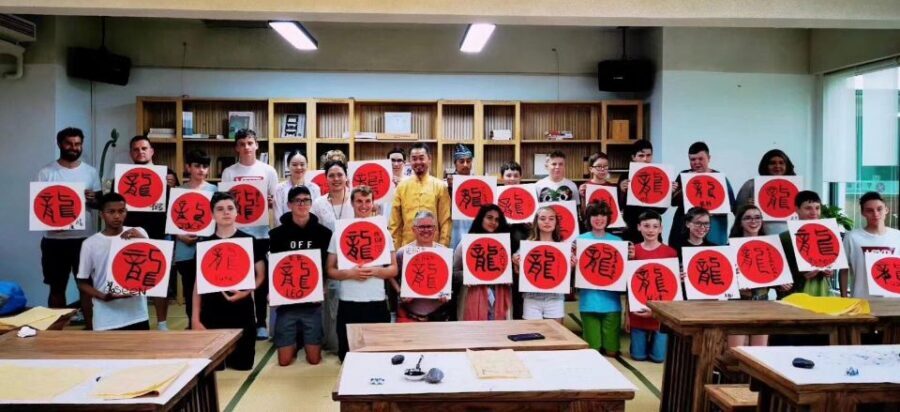
This is a good option for a wide range of people because it’s built on controllable steps. The class is short, the teacher is English-speaking, and the tools are provided.
Adults
You’ll enjoy it if you like:
- slow, focused activities
- skill learning with clear guidance
- understanding the meaning behind what you’re writing
Many participants described the class as relaxing and mindful, with real improvement thanks to patient corrections.
Kids
You’ll also like it if you’re traveling with children. The lessons are physical and repeatable, so kids can follow the motions and still end up with something meaningful. One parent described it as especially suited for their 11-year-old, and several others called out that the class works well for kids.
Private-feeling experience
Some feedback points to the way the instruction adapts even when time is tight. If you have a specific schedule constraint, the teacher’s flexibility can matter.
The Teacher Factor: Patient Guidance in Real Time
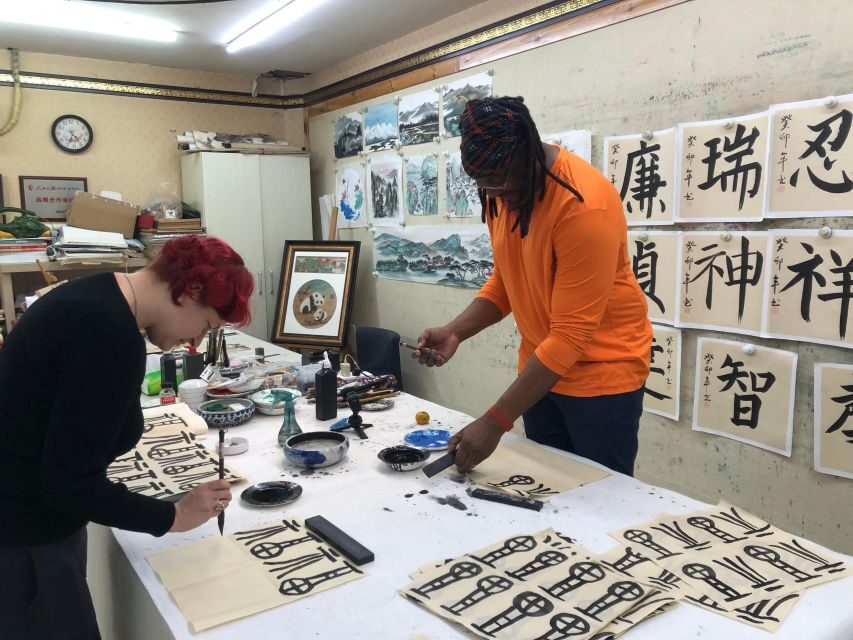
This workshop lives or dies on teaching quality, and that part is consistently strong. Across the session feedback, instructors have been described as professional, patient, and very helpful with adjustments before the final piece.
You might encounter different English-speaking teachers, including names like:
- Richard (also listed as Richard Lee by some participants)
- David
- Li
That’s not a guarantee for your date, but it does tell you something important: the class has multiple instructors who communicate well and coach technique rather than just letting you free-write.
Look for the teacher’s feedback on your grip, your stroke start, and your control through the middle of a character. Those are usually the points that change your results fast.
Practical Value: Why This Beats a Quick Photo Stop
In a city full of sights, calligraphy can look like a “nice add-on.” I’d argue it’s more useful than that.
Here’s why:
- You learn the logic of strokes, not just what a character looks like.
- You get cultural context tied directly to the action of writing.
- You practice patience and focus in a short session that doesn’t require hours of studying.
Also, because supplies are included, you avoid the common cost trap of buying materials you won’t use again. And the class is close to a major central area, so it’s easier to fit into your itinerary without burning half your day in transit.
Should You Book This Beijing Calligraphy Class?
Book it if you want a calm, meaningful activity that teaches real technique in central Beijing. It’s especially worth it if:
- you like hands-on cultural experiences
- you’re traveling with kids
- you want to learn multiple script styles and understand character meaning
- you prefer patient instruction over rushing through an art project
Skip it if you’re looking for a long workshop, advanced calligraphy training, or a deep multi-day art course. This one is about a focused start and a satisfying result, not a years-in-the-making skill jump.
FAQ
How long is the Beijing Calligraphy Class?
You can choose between a 30-minute class and a 1-hour class, depending on what’s available when you book.
Where does the class meet in Beijing?
The teacher waits at the Sun World Dynasty Hotel Lobby at No. 50 Wangfujing Avenue, Dongcheng District, Beijing.
Is the class taught in English?
Yes. The instructor teaches in English.
What calligraphy styles are covered?
The class covers regular script, running script, cursive script, and seat script.
Do I need to bring calligraphy tools?
No. Calligraphy supplies are included for use during the class.
What is the class price?
It costs $20 per person.
How do I get there by subway?
Take Line 5 to Deng Shi Kou Station. Use Exit A, then walk about 8 minutes as directed: left for 2 minutes, turn left at the first traffic light, and walk west for 5 minutes.
Can I cancel for a full refund?
Yes, you can cancel up to 24 hours in advance for a full refund.
Is reserve now and pay later available?
Yes. You can reserve your spot and pay nothing today.