REVIEW · BEIJING
Beijing: 4 hours Discover City by Sidecar
Book on GetYourGuide →Operated by Beijing Sidecar Tour · Bookable on GetYourGuide
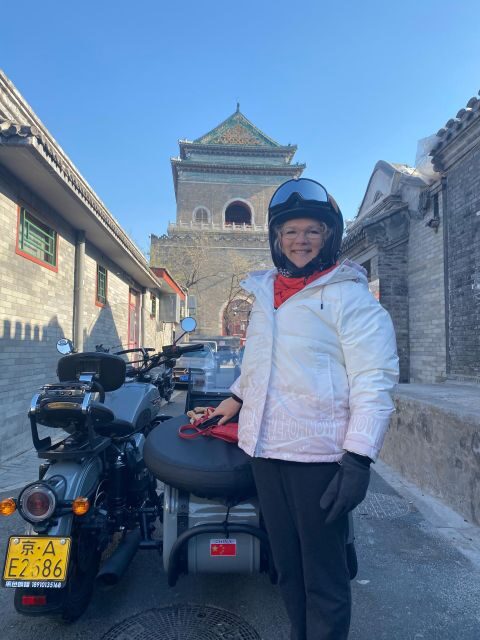
Beijing is better when you see it from street level. This 4-hour private sidecar tour is built for a first impression, moving you from the north-central axis down into older neighborhoods where daily life still plays out in the lanes. I especially like the combination of major-photo spots and quieter, less-touristed temples that feel more local than checklist. One thing to consider: a sidecar ride is a close, hands-on experience, so if you get motion or comfort issues easily, you’ll want to think about that before booking.
What makes the value real is the execution. You get hotel pickup and drop-off (inside the 4th Ring Road), a professional guide and driver, helmets, and even extras like bottled water, rain protection, and a phone charging cable. The tour also includes food: local snacks plus hot coffee/tea in winter or cold soda/beer in summer.
The route is compact but not rushed. You’ll make several photo stops, take short walks into alleys/temple areas, and get a sense of how Beijing’s historic core connects—from Drum & Bell Towers to the Ming City Wall ruins.
In This Review
- Key things you’ll notice on this Beijing Sidecar Tour
- Why sidecar time is a smart way to start Beijing
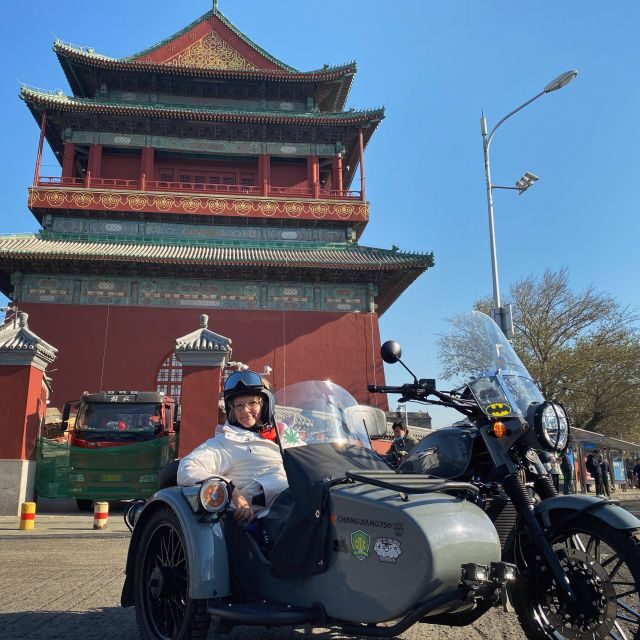
- Getting your bearings at Drum & Bell Towers
- Houhai and the hutong shift into real street life
- Yongdingmen break: coffee, tea, and a key historic gate area
- Miaoying Temple and Niujie Street for the neighborhood feel
- Ming City Wall Ruin Park: the last visible section you’ll remember
- The White Pagoda connection and why it matters
- Price and logistics: what $129 buys you in Beijing time
- What the tour includes (and the small comforts that help)
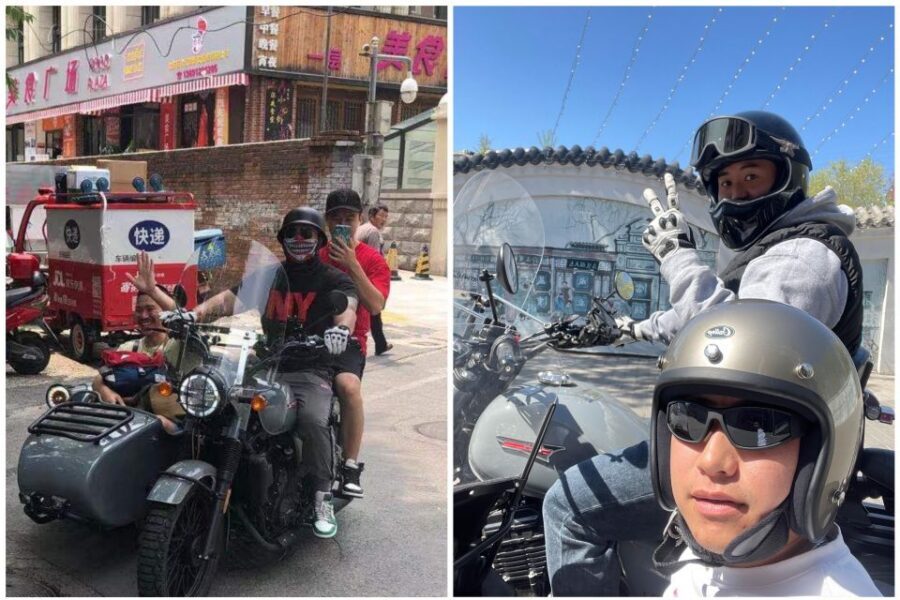
- Group size, sidecar setup, and what to expect during the ride
- How long is enough to feel like you learned Beijing
- Should you book this Beijing Sidecar Tour?
- FAQ
- What’s the duration of the Beijing sidecar tour?
- Is this a private tour?
- Do I get hotel pickup and drop-off?
- What languages are the guide available in?
- What’s included with the tour besides the ride?
- How many sidecars are used for different group sizes?
- Where does the tour go?
- How is communication handled while riding?
- Who should not book this tour?
Key things you’ll notice on this Beijing Sidecar Tour
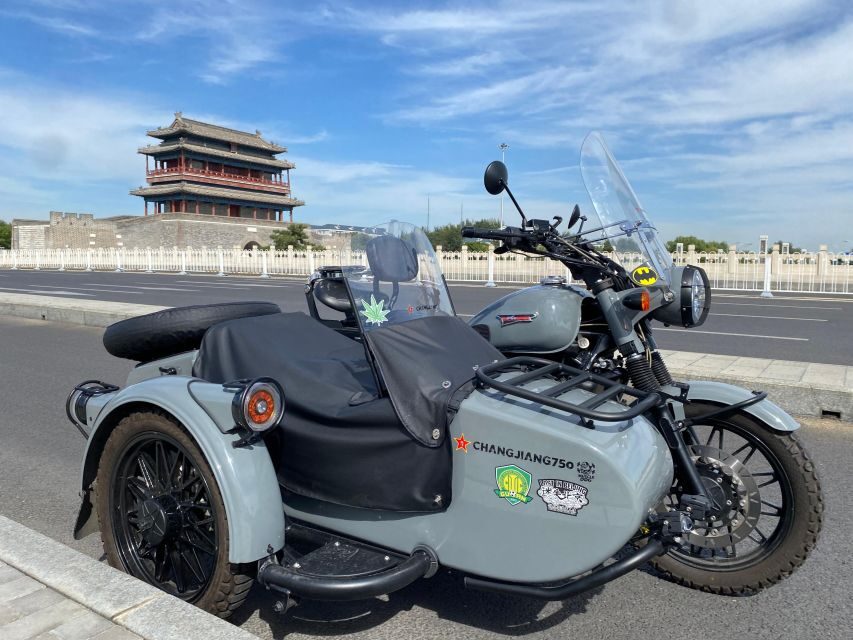
- 100% private format with a professional driver and guide, so the pace and stops can fit your group
- Sidecar views and photo angles that are hard to get on foot or in a van
- Central axis to hutongs: you get the famous north-south spine and the everyday lanes in between
- Snack-and-drink stops with local bites plus hot coffee/tea (winter) or cold soda/beer (summer)
- Ancient stops with local feel, including a temple stop and a street known for its neighborhood character
- Clear guide communication via a helmet-integrated radio speaking system (useful when traffic and noise are loud)
Why sidecar time is a smart way to start Beijing
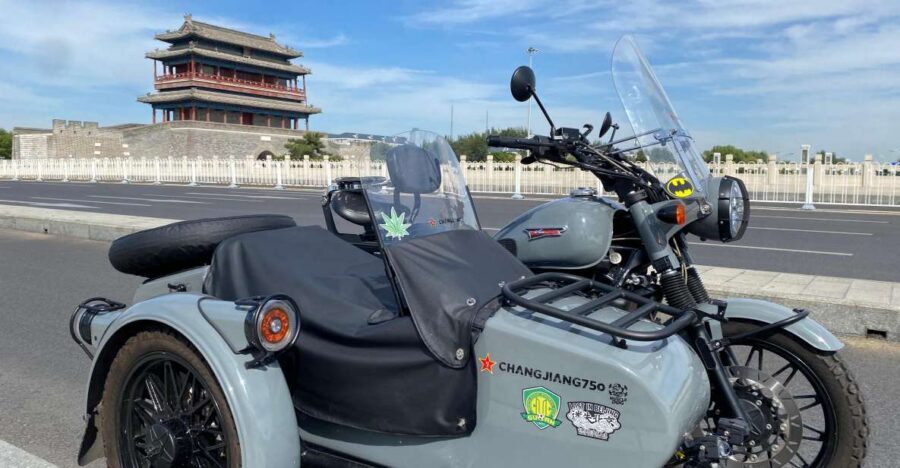
If Beijing is your first time in China, you’ll quickly learn one thing: the city can look “big and similar” until you see it at the right speed. This tour’s biggest strength is that it mixes orientation with authenticity. You start near landmarks that give you the map in your head, then the ride flows into the hutong alley system, where you can feel the rhythm of everyday Beijing.
I like that you’re not only served the obvious photos. The itinerary includes stops that are practical for orientation—then it turns into smaller, more personal moments where you’ll actually slow down, look around, and take in details. And yes, the sidecar itself matters. The view is higher than a walking pace, but you’re still close to the street—good for both pictures and people-watching.
One more practical point: this is built around hotel pickup. That means you’re not spending your first morning fighting transit or guessing how to get to Drum & Bell Towers. It’s a straightforward setup for a limited time window.
You can also read our reviews of more city tours in Beijing

Getting your bearings at Drum & Bell Towers
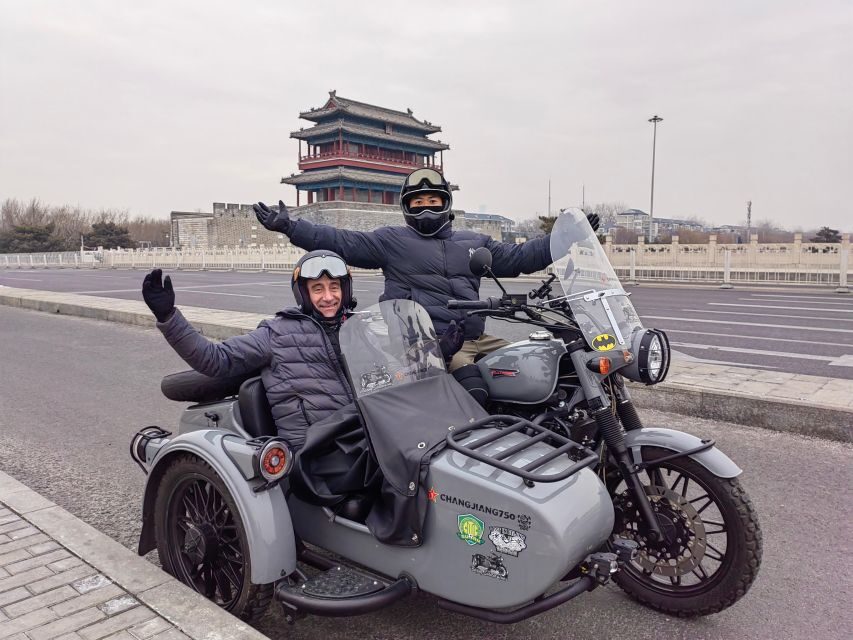
Your north-side start focuses on the area around Beijing Drum & Bell Towers, one of the best “orientation” anchors in central Beijing. You’ll have time for a photo stop and then move onward, using the axis as your guide for how the city is laid out.
What I like here is the framing. Drum & Bell Towers aren’t just scenic. They signal the historic centerline idea that runs through Beijing. Once you see this area, the rest of the route makes more sense, especially when you later ride past gates and toward the older wall ruins.
Potential drawback: because this is a photo stop early in the day, it can feel a bit “look, take photos, move on” if you prefer longer museum-style time. Still, the rest of the route balances it with snacks and smaller neighborhood moments.
Houhai and the hutong shift into real street life
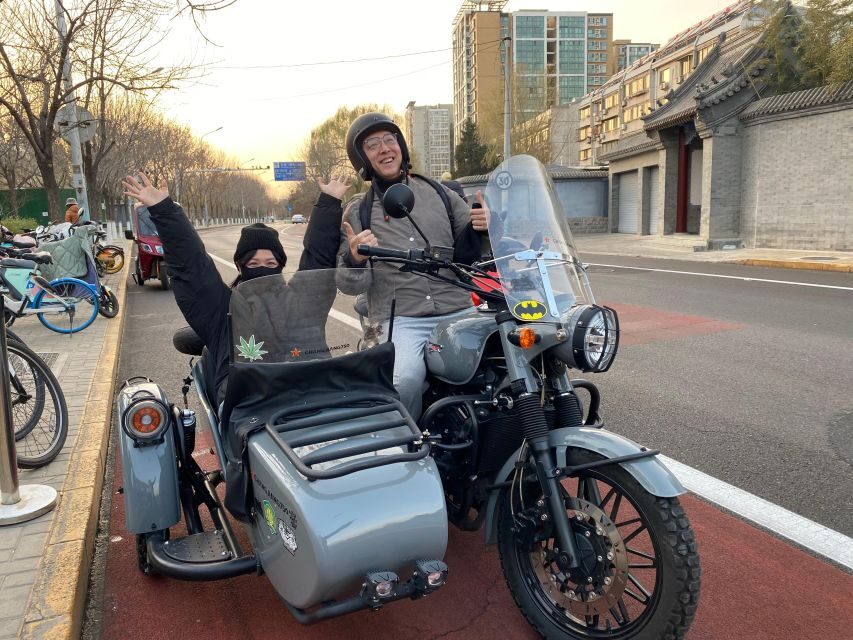
After the tower area, the route heads toward Houhai. This section is designed as a transition: you leave the “grand landmark” feeling and start picking up the texture of older Beijing—quiet lanes, close storefronts, and the kind of street details you miss when you only do big sights.
Then comes the best part for many people: the ride into the small alleyways of the hutongs. You’ll get a sense of the city living close to the ground, where the streets look narrower, the pace feels slower, and local routines are visible. The tour isn’t just a drive-by. You’ll walk into a few temple or alley areas to chill for a bit, which helps the whole experience feel less like transportation and more like sightseeing.
Tip for your comfort: you’ll likely be in the helmet and on the move for stretches. If you’re sensitive to noise and movement, the good news is the guide communication uses a helmet-integrated radio speaking system, so you can still hear explanations without constantly leaning toward your driver.
Yongdingmen break: coffee, tea, and a key historic gate area
One of the most human parts of the tour is the Yongdingmen break. Here you pause for coffee, tea, and food tasting. This is a smart design choice because it gives your body a reset right when the route reaches a dramatic historic zone.
Yongdingmen is tied to the historic city wall system, and the tour uses this stop to connect your earlier axis orientation to the southern side’s deeper layers. If you want a “wait, this makes sense now” moment, this is where it tends to click: the route stops being random sightseeing and starts feeling like a guided walk through Beijing’s planning.
You’ll also get a photo opportunity at a viewpoint stop not long after. That sequence helps you build a mental map: landmarks to neighborhoods to gate area, then onward.
Possible consideration: this is a break built into a moving tour, not a long lunch. If you’re very hungry or you have dietary needs, plan to treat the tasting as a snack-focused stop, not a full meal.
Miaoying Temple and Niujie Street for the neighborhood feel
The itinerary includes Miaoying Temple as a photo stop. Even without a long “temple tour” format, this kind of stop gives you a different kind of Beijing sight. The aim is contrast: you’re not only chasing large monuments. You’re sampling the city’s spiritual and neighborhood geography at a human scale.
After that, Niujie Street rounds out the experience with a street-focused pass and another photo moment. Niujie is the kind of place where the energy feels different from the big central axis areas. Even as a pass-by, it’s the type of stop that can make you feel like you’re seeing Beijing beyond the tourist corridor.
For me, the value of these stops is balance. Many “quick city tours” are all about big buildings. This one adds texture—temple corners, street edges, and the feeling that you’re moving through living areas rather than only staged scenery.

Ming City Wall Ruin Park: the last visible section you’ll remember
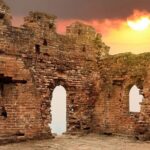
You finish with Ming City Wall Ruin Park, described as the only remains section of the old city wall. This is an important ending choice. It gives your brain a final anchor: after hutongs, temples, gates, and snack stops, you end with something that literally shows the wall line.
The tour includes a photo stop and sightseeing time here, then returns you to your hotel (or can drop you off elsewhere you want to go). That flexibility is useful on a day when you still want energy for your evening plans.
If you care about history, this stop is also practical history. You’re not just told that the wall existed. You’re shown a visible remnant. That makes it easier to connect what you’ve learned about city planning with what you’re seeing on the ground.
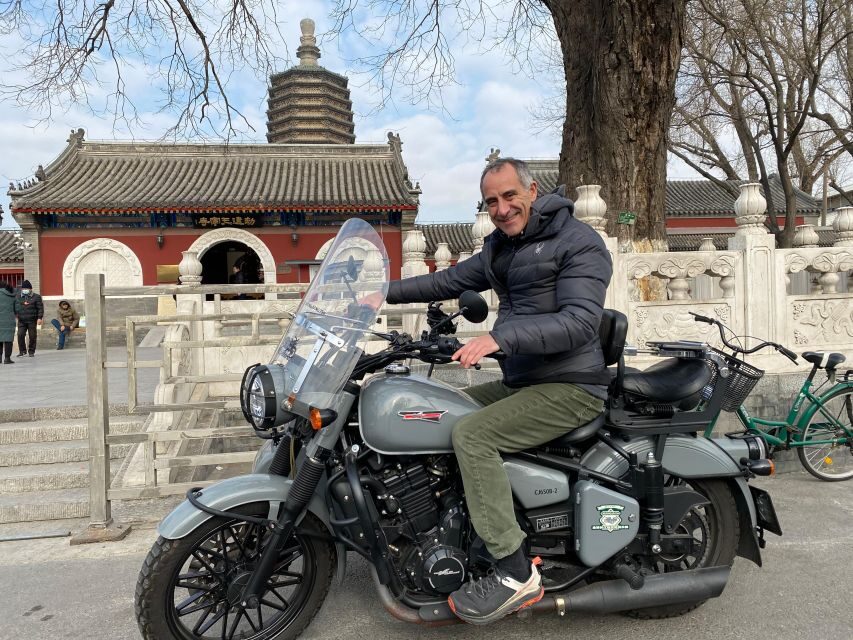
The White Pagoda connection and why it matters
One more standout element in the overall flow is the mention of the White Pagoda, tied to the Nanjing City in the Liao Dynasty and preserved as an over-900-year above-ground building in Beijing. This kind of stop does two jobs at once.
First, it gives you an instant “time depth” in the city. Beijing can feel layered, but it’s easy to miss how old some structures are. Second, it helps you understand that Beijing’s past is not only one dynasty or one style. You’re riding through a city shaped by multiple eras that still leave physical marks.
Even if you’re not a deep-history person, this is the sort of detail a guide can translate into something you’ll actually remember later—especially when you’ve already been oriented by the central axis landmarks earlier in the route.
Price and logistics: what $129 buys you in Beijing time
At $129 per person for about 4 hours, the key question isn’t just the number. It’s what’s included, and how efficiently it uses your time.
This tour bundles several things that are usually “separate costs” when you do DIY:
- hotel pickup and drop-off (within the 4th Ring Road)
- a professional driver and guide
- helmets and rain protection
- bottled water and a phone charging cable
- local snacks plus hot drinks or seasonal beverages
- time-focused photo stops and short walking entries
When you add all of that together, the sidecar format becomes part of the value, not just the novelty. You’re paying for a guide to connect the sights, plus a transport method that gets you around central Beijing without losing your first-day attention to transit complexity.
Where the price can feel less appealing is if you’re traveling light and already know you want to explore only a couple of nearby spots slowly. But if you want an efficient, guided “first impressions” loop that still includes local neighborhoods, the value is clear.
What the tour includes (and the small comforts that help)
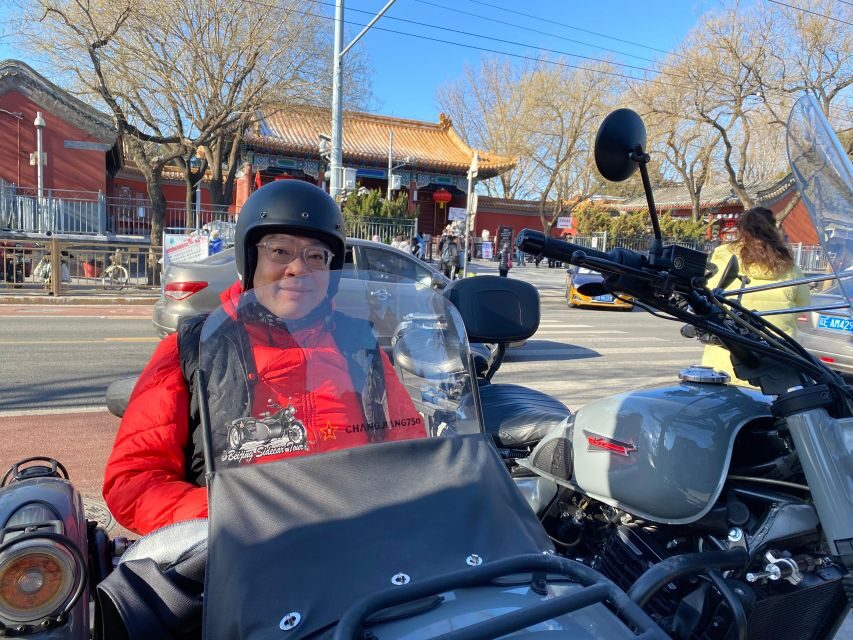
You’re not going to show up and guess what to bring. The tour provides:
- helmets
- bottled water
- raincoat
- phone charge cable
- local snacks
- hot coffee/tea in winter, cold soda/beer in summer
- radio-style guide communication through your helmet
Those details matter more than they sound. Rain in Beijing can be unpredictable, and without a raincoat you’d either skip sights or get soaked and cold. Similarly, having a charging cable helps a lot when you’re taking photos and navigating afterward.
You also get a private group setup. If you’re traveling with someone you trust, it’s easier to talk to your guide, ask questions, and adjust your pace without worrying about strangers slowing you down.
Group size, sidecar setup, and what to expect during the ride
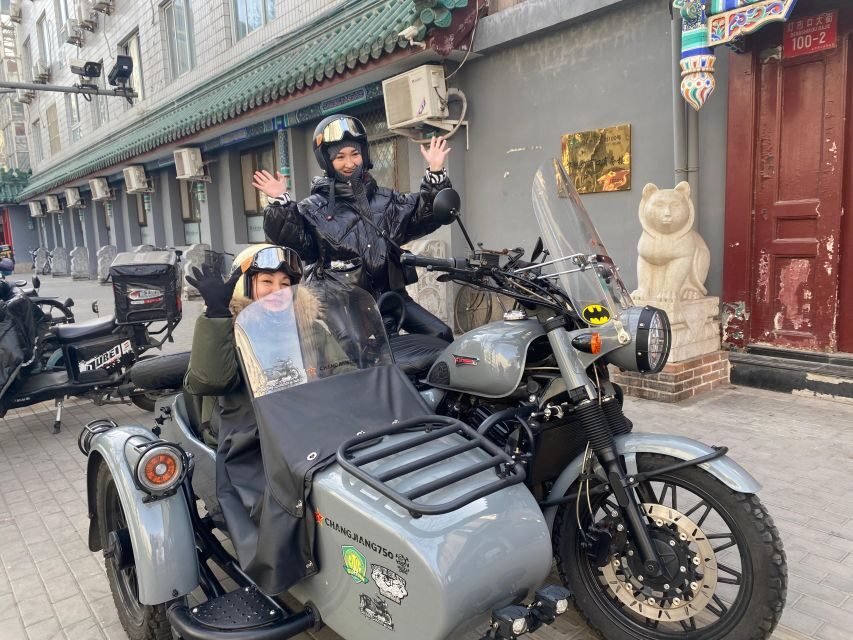
The tour is private, and sidecar arrangement depends on your group size. For example, one sidecar can handle 1–2 passengers, with one person riding in the sidecar and another behind the driver (and a switch is possible halfway). With larger groups, you’ll use two or three sidecars.
This matters because it affects comfort and photo angles. You’ll likely get different views depending on where you sit and when you switch positions. If you want the best photos, switching mid-tour is a helpful option to consider.
Age and health limitations are explicit. It’s not suitable for children under 6, pregnant women, people over 80, or babies under 1. If you fall outside that, you’ll still want to be honest with yourself about comfort with a motorbike-style ride.
How long is enough to feel like you learned Beijing
Four hours can sound short. In practice, it’s the right length for a “first impression” tour because you’ll pack in:
- a major north-central landmark
- a shift into hutongs and neighborhood streets
- a gate-area break with tasting and drinks
- temple and street texture stops
- a wall-remnant finish that anchors the whole route
The best part is the rhythm: photo stops plus a few short walking segments. That keeps your legs from turning the day into a march, while still giving you enough time to look around, not just ride past.
If your schedule allows only one guided city experience early in your trip, this is a strong candidate because it sets your bearings and gives you a feel for where to return later on your own.
Should you book this Beijing Sidecar Tour?
Book it if you want:
- a private, guided first look at central Beijing
- hutong neighborhood energy, not only big-ticket sights
- a fun transport method that makes photos easier
- a guide who can explain history clearly in Chinese and English
- a comfort-focused setup with helmets, rain gear, and snacks
Skip it or ask extra questions if you:
- need a fully seated, museum-style experience
- have concerns about sidecar comfort or motion sensitivity
- are traveling with someone who falls into the listed non-suitable categories
If you’re balancing “see a lot” with “still feel like you’re in a real city,” this tour is a smart match.
FAQ
What’s the duration of the Beijing sidecar tour?
The tour lasts about 4 hours.
Is this a private tour?
Yes. It’s a private group experience.
Do I get hotel pickup and drop-off?
Yes. Pickup and drop-off are included for hotels inside the 4th Ring Road.
What languages are the guide available in?
The live tour guide is available in Chinese and English.
What’s included with the tour besides the ride?
Helmets, bottled water, raincoat, and a phone charge cable are included, along with Beijing local snacks and hot coffee/tea in winter or cold soda/beer in summer.
How many sidecars are used for different group sizes?
One sidecar is used for 1–2 passengers, two sidecars for 3–4 passengers, three sidecars for 5–6 passengers, and so on. Switching seating is possible halfway for the 1–2 passenger setup.
Where does the tour go?
The route covers central Beijing landmarks and older neighborhoods, including areas around Drum & Bell Towers, Houhai, Yongdingmen, Miaoying Temple, Niujie Street, and Ming City Wall Ruin Park, with additional stops along the way.
How is communication handled while riding?
The guide communicates through a helmet-integrated radio speaking system.
Who should not book this tour?
It’s not suitable for children under 6 years, pregnant women, people over 80 years, or babies under 1 year.