REVIEW · ABA SICHUAN
Jiuzhai Valley National Park:Visit Colorful Fairy Tale World
Book on GetYourGuide →Operated by Attract Eye · Bookable on GetYourGuide
One visit and your camera never stops. Jiuzhai Valley is one of those rare parks where the scenery does the hard work for you: more than 114 plateau lakes stacked across the mountains, plus tiered waterfalls that look unreal even in daylight. It also mixes in Tibetan life, so the day feels more than just sightseeing.
I especially love how close you get to the highlights. The walkways and viewing areas are set up so you can move spot to spot without feeling like you’re hunting for views all day. You’ll also get a taste of Tibetan culture through warm music and dance, which adds a human beat to the high-altitude scenery.
The main drawback is simple: it can get crowded, especially in peak seasons, and you may not keep a steady hiking pace. Also note the practical limit: the experience is not suitable for people over 80 years, and you’ll be on your feet in cool mountain weather.
In This Review
- Key Points You’ll Care About
- Jiuzhai Valley’s Fairy-Tale Lakes: What You’re Actually Seeing
- Tiered Waterfalls Up Close: How to Get the Best Photos
- Tibetan Music and Dance: The Cultural Pause You Shouldn’t Skip
- Autumn Color and Winter Snow: Plan Around the Season
- One-Day Flow: Photo Stops, Easy Walking, and a Lunch Break
- Price and What You Actually Get for $38
- Tickets Without Stress: Communication That Helps
- What to Wear and Bring in a High-Mountain Park
- Who This Day Trip Fits Best (and Who Should Think Twice)
- Should You Book This Jiuzhai Valley Day Trip?
- FAQ
- How long is this Jiuzhai Valley experience?
- Where does the experience start?
- What’s included in the price?
- Is a tour guide included?
- Do I need to pay for lunch?
- What do I need to bring?
- Are there any items I can’t bring?
- What information is needed to book the ticket?
- What languages are available?
- Is cancellation refundable?
Key Points You’ll Care About

- More than 114 colorful plateau lakes: many are reachable within one day’s route
- Multi-tier waterfalls: crystal-clear cascades with strong photo impact
- Tibetan music and dance: a culture moment, not just scenery
- Seasonal changes: autumn color, winter snow, year-round variety
- Sightseeing bus included: helps you cover the park without exhausting transfers
Jiuzhai Valley’s Fairy-Tale Lakes: What You’re Actually Seeing

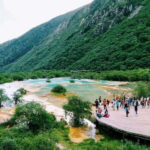
Jiuzhai Valley is also known as Jiuzhaigou (Nine Village Valley), and it’s set in the Min Shan mountain range in northern Sichuan. The park is huge—over 720 sq km—then surrounded by an additional buffer zone. You’re not just visiting a collection of lakes; you’re moving through a mountain system where elevation changes the whole feel of the day, from cooler entry areas to much higher peaks.
The park’s fame comes down to contrasts. You’ll see conic karst landforms, vivid blue-green water, forests that shift with the seasons, and waterfalls feeding the lakes. Even the nature story is part of the experience: Jiuzhai Valley was listed as a UNESCO World Heritage Site in 1992, and it has conservation accreditations connected to long-term protection.
And here’s the fun part: with more than 114 plateau lakes, you quickly stop thinking in single “must-see” spots and start thinking in sequences—walk, pause, shoot, move again. That’s why this day trip works so well: it gives you the best sample of the park without pretending one day is enough to cover everything.
You can also read our reviews of more tours and experiences in Aba Sichuan.
Tiered Waterfalls Up Close: How to Get the Best Photos

Jiuzhai Valley’s waterfalls are the kind that keep surprising you. Rather than one dramatic drop, you often get multiple tiers—water moving in stages, with crystal-clear flow that makes the whole scene feel crisp. If you like photos with depth (foreground + waterfall + distant trees), this park is made for that.
Your practical advantage is that the park route is set up for easy movement between viewpoints. You’re not doing long, off-trail scrambles. Instead, you’ll follow the scenic flow, stopping for photos and walks when the sight hits. That matters because it keeps your energy for the moments that really count—the cascades and the lake edges where the water color looks strongest.
One tip I’d follow if you want the cleanest shots: treat the day like you’re collecting light. Early and late tend to be friendlier for color and reflection. If the park feels busy mid-day, don’t panic—just shift your attention to waterfalls and the paths where you can still get a clear line of sight.
Tibetan Music and Dance: The Cultural Pause You Shouldn’t Skip

The lakes and waterfalls are the headline, but don’t rush past the Tibetan cultural moments. Jiuzhai Valley is called Dzitsa Degu in Tibetan, and the whole park is tied to the Tibetan and local village traditions. The experience includes warm Tibetan music and dance, which gives you a different kind of connection than scenery alone.
Why does this matter? Because high-altitude sightseeing can start feeling repetitive if every stop is just another view. Music and dance interrupt that cycle and help you slow down. Even if you don’t speak the language, you can read the energy, and it makes the park feel lived-in rather than just photographed.
Also, cultural shows tend to work better when you don’t “multi-task” too hard. Keep your phone for photos only when it truly adds value. Then give yourself a real break. The park is cool, your feet are busy, and a calmer moment helps your whole day feel more enjoyable.
Autumn Color and Winter Snow: Plan Around the Season

Jiuzhai Valley is famous for year-round scenery, and the seasonal difference isn’t a small tweak—it changes the whole mood. In autumn, the forests can turn colorful, and you get that mix of warm leaf tones with blue-green water and pale stone. In winter, snow can cover parts of the park, turning familiar shapes into something more sculptural.
This is why a one-day visit still feels worth it: you’re not stuck with just one look. You’re getting a snapshot of how the park behaves across seasons, even if your trip happens to be in just one month.
If you’re choosing your travel timing, think about what kind of photos you want most. Autumn usually gives you richer color contrast. Winter gives you the crisp, colder feel and that clean, high-mountain look. Either works, but your packing needs will differ—warm clothing isn’t optional.
One-Day Flow: Photo Stops, Easy Walking, and a Lunch Break
For a one-day visit, the day is structured around manageable blocks of time. You’ll start at the 九寨沟风景区游客中心 (Jiuzhaigou Scenic Area Visitor Center). From there, expect a first stretch focused on photo stops, sightseeing, and self-guided walking for a few hours.
Then you’ll take a lunch break with about an hour of free time. There’s an optional buffet lunch included at Norilang Restaurant, so you’re not left scrambling for food once you’re tired. After that, you’ll continue with another longer stretch of photo stops and self-guided walking.
Two things make this format work well. First, you’re not stuck waiting around for a rigid schedule all day—you have time to actually enjoy each moment. Second, the sightseeing bus ticket is included, so you can move between parts of the park without burning energy on constant walking between distant points.
If you’ve got strong stamina, you might be tempted to move fast. In busy seasons, that’s hard to do. The better strategy is to plan for pauses. You don’t need to “win” the park with speed; you need to catch the waterfall moment when it looks best and the lake view when your angle isn’t crowded.
Price and What You Actually Get for $38

At $38 per person for a one-day park ticket setup, this is one of those deals that looks simple until you list what’s included. You get the Jiuzhai Valley National Park ticket and the sightseeing bus ticket inside the scenic area. Lunch is available as an optional buffet at Norilang Restaurant, and there’s also an optional exclusive car pickup and drop-off from your hotel.
That matters because logistics can eat the value of a day like this. When the park ticket and the internal transport piece are handled, you spend less time sorting details and more time on the water and waterfalls. The experience is also set up without a traditional guide focus, since the park is really about seeing scenery on your own schedule.
For me, the best “value” angle is time and stress. If you’re traveling in a period when tickets can be harder to arrange, having the ticket and the bus covered removes a big headache. One review experience included effortless ticket exchange and strong communication from the Chinese contact, Theo Du, who even secured tickets on a busiest day.
Tickets Without Stress: Communication That Helps

Jiuzhai Valley can be a high-demand experience, so good communication is more than a nice-to-have. You’ll need to send specific details after booking—contact info plus each person’s full name, nationality, and passport number—so your ticket can be issued. After that, you’ll have a dedicated service staff who shares product details, plans your itinerary professionally, and can help with other attraction bookings.
Language support is practical too. The host or greeter is available in Chinese and English, and the scenic area has bilingual signage at the entrance so you can orient yourself once you arrive. If you’ve ever shown up to a big attraction and spent time figuring out where to go, you’ll appreciate how much simpler this makes your start.
In one highly positive experience, Theo Du handled a busy-day ticket request smoothly, and communication via WhatsApp was clear and complete. The takeaway for you: expect fewer surprises when you follow the info request promptly and keep your details accurate.
What to Wear and Bring in a High-Mountain Park

This is a park where your body matters. You’ll be doing comfortable walking, stopping often, and standing around to watch waterfalls. Bring comfortable shoes and warm clothing—Jiuzhai Valley elevations run high, so even if the forecast looks mild, the park can feel colder than the city.
Packing list essentials from the experience info:
- Comfortable shoes
- Warm clothing
- Comfortable clothes
- Warm shoes
And for rules: alcohol and drugs are not allowed. It’s one of those restrictions that helps keep the park experience safe and respectful.
Who This Day Trip Fits Best (and Who Should Think Twice)

This one-day format suits you if you want a strong hit of Jiuzhai Valley without turning the trip into a multi-day project. It’s great for first-timers who want the famous lakes and waterfalls, plus a light culture moment through Tibetan music and dance.
It’s less suitable if you have limitations that make walking hard. The experience is not suitable for people over 80 years, and the day involves time on your feet, even with the sightseeing bus.
Also consider how you handle crowds. In summer travel periods, the park can be very busy, and it becomes hard to maintain a firm walking pace. If you prefer slow, quiet wandering, you’ll likely enjoy the day more with realistic expectations and patience.
Should You Book This Jiuzhai Valley Day Trip?
Book it if you want the best first-day sampling of Jiuzhai Valley: more than 114 plateau lakes, tiered waterfalls, and Tibetan music and dance, all wrapped into a day with park transport included. The $38 price also makes sense because you’re not just paying for a scenic ticket—you’re paying for reduced friction.
Hold off or plan differently if you need long, low-effort walking time or you’re traveling in a period when crowds could stress you out. If you’re the kind of person who wants to see everything in one go, you’ll probably feel rushed. If you want a high-impact day and an enjoyable cultural pause, this is the right style of trip.
FAQ
How long is this Jiuzhai Valley experience?
It’s valid for one day, so you’ll plan around a full day in the park.
Where does the experience start?
The starting point is 九寨沟风景区游客中心 (Jiuzhaigou Scenic Area Visitor Center).
What’s included in the price?
You get the Jiuzhai Valley National Park ticket, the Jiuzhai Valley sightseeing bus ticket, and an optional buffet lunch at Norilang Restaurant. Optional exclusive hotel pickup and drop-off are also available.
Is a tour guide included?
Tour guide fees are not included, and the focus is mainly on seeing the scenery on your own, so you usually don’t need a guide.
Do I need to pay for lunch?
Lunch is optional. A buffet lunch at Norilang Restaurant is listed as optional and tied to the included package.
What do I need to bring?
Bring comfortable shoes and warm clothing (also warm shoes), since you’ll be walking in mountain conditions.
Are there any items I can’t bring?
Alcohol and drugs are not allowed.
What information is needed to book the ticket?
You’ll need to provide contact details and each person’s full name, nationality, and passport number. You should send this information after booking via email.
What languages are available?
Chinese and English are supported.
Is cancellation refundable?
Yes. You can cancel up to 24 hours in advance for a full refund.