REVIEW · ABA SICHUAN
Huanglong Scenic Area: Explore Stunning Five-Colored Ponds
Book on GetYourGuide →Operated by Attract Eye · Bookable on GetYourGuide
A day here can feel like walking through color. Five-Colored Ponds plus karst travertine make Huanglong one of China’s most striking protected wetlands. What makes it especially interesting is how much scenery you can pack in—terraced ponds, snow-capped peaks, and forest that changes with altitude.
I like the built-in flexibility: you can start from the visitor center or the cableway, and you can choose whether the cable car fits your energy level. I also love the star attractions—especially the Golden Sand Pavement travertine flow and the primeval forest with ancient trees reaching toward the sky.
One thing to consider: the altitude is real, and the park is steep and very walk-heavy. It’s not a fit for everyone, including people over 80, and if you’re sensitive to cold or heights you’ll want to plan carefully.
In This Review
- Key highlights you’ll care about
- Huanglong in One Day: Why the Five-Colored Ponds Are Different
- Choose Your Start: Visitor Center vs Cableway
- The Walk-Up Strategy: Two Mountains, Terraces, and Forest Giants
- Golden Sand Pavement: The Travertine Beach Flow Moment
- Time, Pace, and Facilities Along the Route
- Price and Value: What the $40 Covers (and What Doesn’t)
- Booking Smoothness and Local Support You Can Actually Use
- What to Pack for Sichuan Cold and High Altitude
- Who This Tour Suits Best (and Who Might Struggle)
- Should You Book Huanglong Scenic Area for Your Trip?
- FAQ
- How long is the Huanglong Scenic Area experience?
- What is the price for this Huanglong tour?
- What’s included with the ticket?
- What isn’t included?
- Where do I start the day?
- Do I need to send passport details to book?
- What should I bring?
- Is this suitable for seniors?
Key highlights you’ll care about
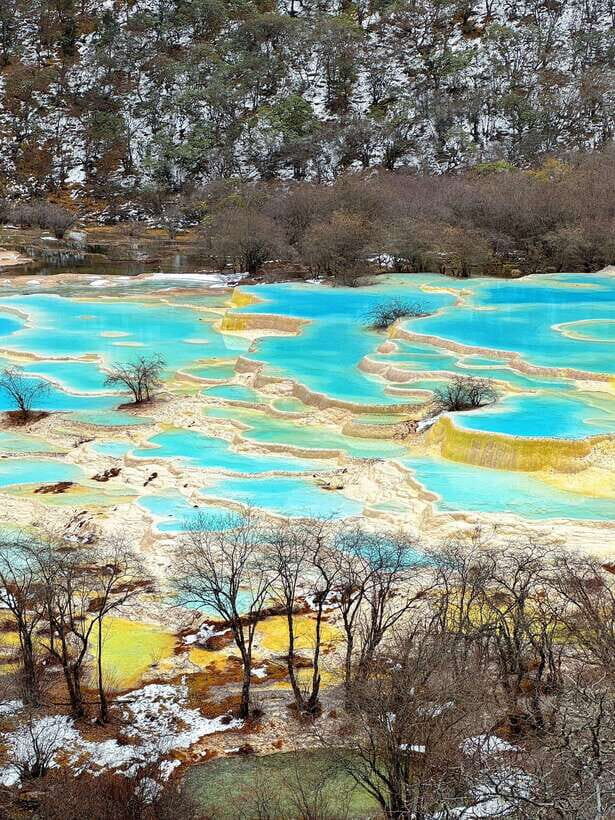
- World-class travertine terraces: Five-Colored Ponds with carbonate deposits forming a layered trail of color.
- Two mountain backdrops: Xuebaoding and Sleeping Beauty Mountain shape the skyline as you move through the valley.
- Primeval forest time: Thousand-year-old trees help break up the pond views with a calmer, older-feeling experience.
- Golden Sand Pavement: The signature travertine beach flow is the visual reason many people make the trip.
- Pick your starting point: Visitor center vs cableway changes the effort and pacing of your day.
- Support that keeps things smooth: Fast confirmation and clear contact (including Theo Du) can make ticket exchange painless.
Huanglong in One Day: Why the Five-Colored Ponds Are Different
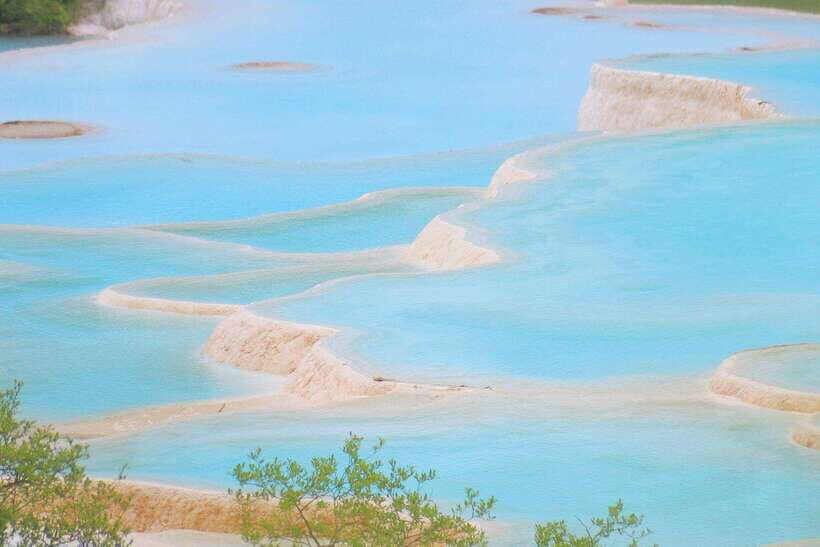
Huanglong Scenic Area sits in Sichuan’s Aba Tibetan and Qiang Autonomous Prefecture, in Songpan County, spanning about 700 square kilometers. This isn’t a quick scenic stroll—at 1,700 to 5,588 meters in altitude, you’re moving through real alpine conditions as you follow the main route in Huanglong Valley.
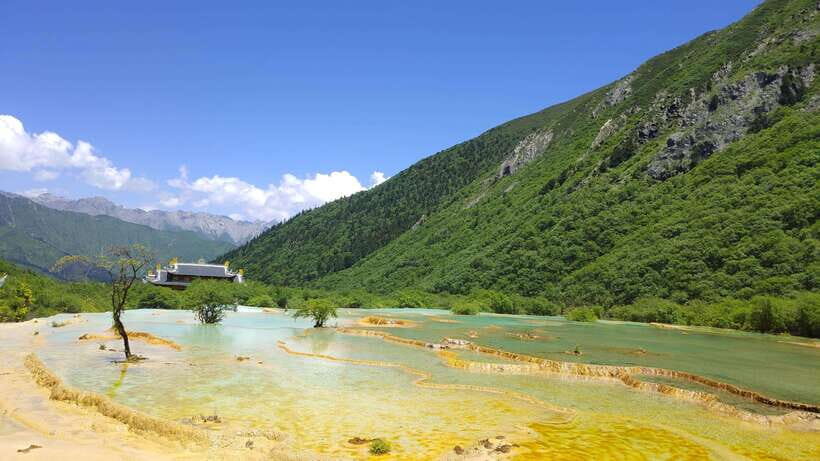
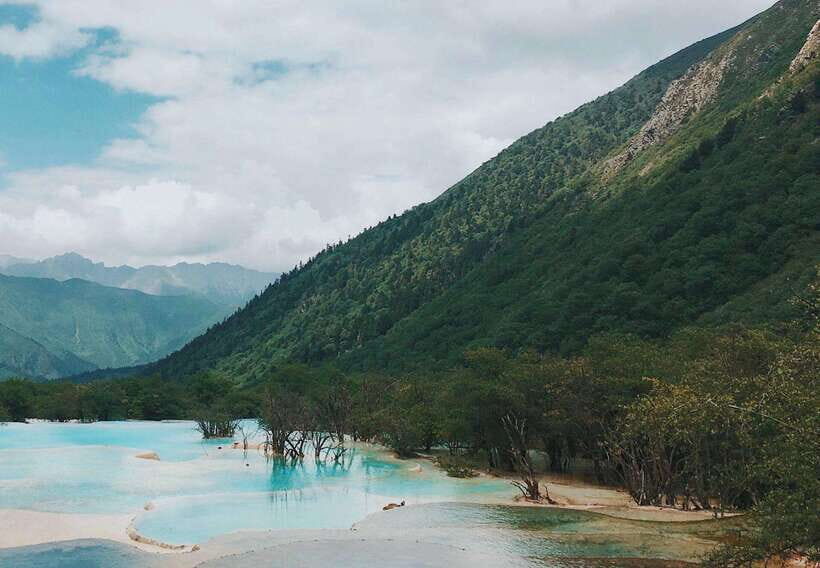
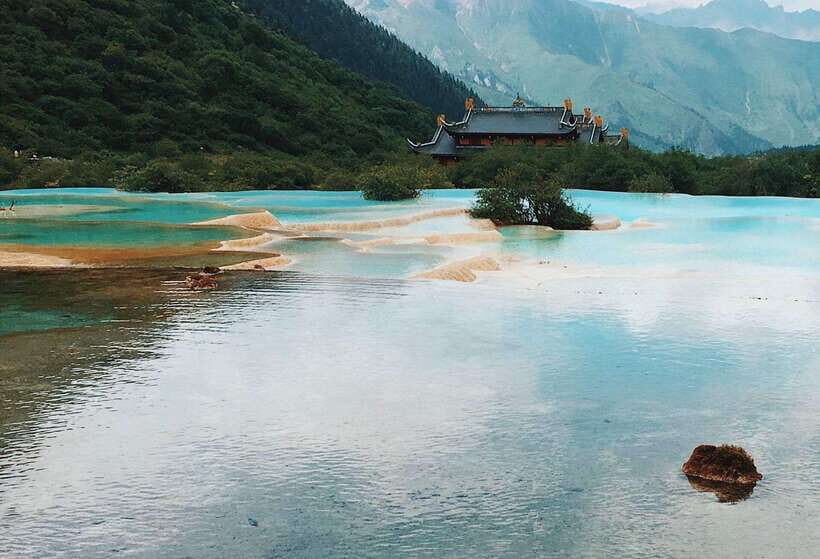
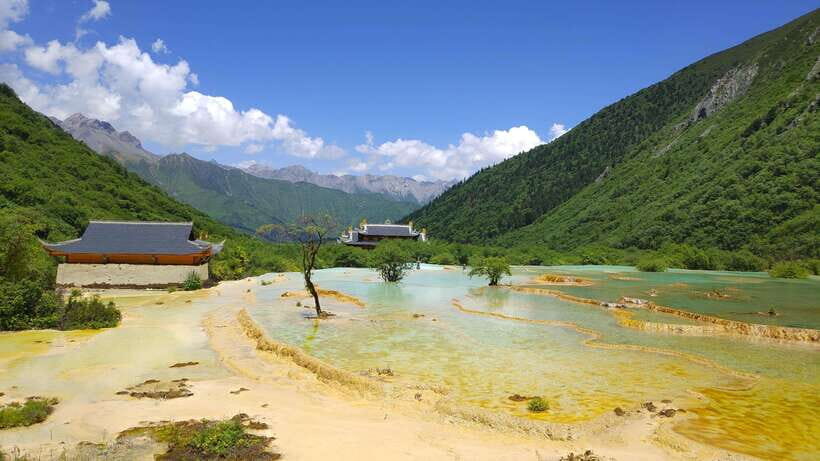
What I find compelling is the way Huanglong’s beauty is built on chemistry and geology: the ponds are formed from carbonate travertine deposits that create terraced, mineral-rich water features. That’s why the views aren’t just pretty; they’re structured. You walk along a sequence of pools and flows that feel almost engineered, yet the colors look natural, sometimes milky and sometimes intensely toned depending on the mineral content and season.
The area is also famous for its “Four Wonders”: colorful ponds, snow-capped mountains, canyons, and forests. In practice, you’ll feel that mix as a rhythm—ponds give you color, mountain sections give you scale, canyons bring depth, and forest stretches the experience into something quieter.
You can also read our reviews of more tours and experiences in Aba Sichuan.
Choose Your Start: Visitor Center vs Cableway
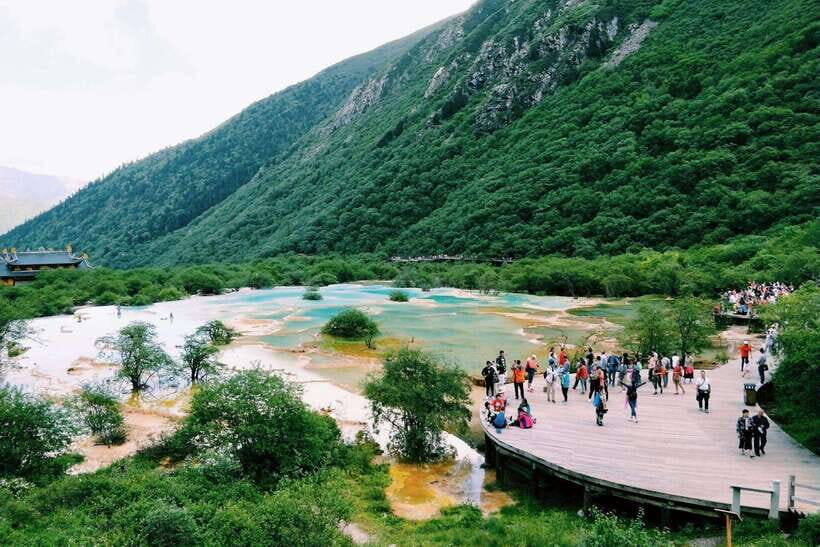
Your day starts to feel different depending on where you begin. There are two starting options: Huanglong Visitor Center (黄龙游人中心) or the cableway (黄龙索道). From there, you’re set up for the main Huanglong route, which is about 3.6 kilometers long in Huanglong Valley.
If you want a more manageable uphill experience, the cableway can be a big help because it reduces the worst of the steep climbing early on. The trade-off is simple: you’ll still need to walk the ponds-and-views section, but your legs arrive to the best viewing zone with less punishment.
If you’d rather earn the views (and don’t mind a harder start), beginning at the visitor center can work well. Either way, the key is that you’re not locked into one pace. The tour style is designed around giving you time for photos, sightseeing, and free time, while still keeping the day organized.
Also worth noting: you’ll likely be outdoors for long stretches, so your “start choice” should match your comfort with cold, wind, and altitude.
The Walk-Up Strategy: Two Mountains, Terraces, and Forest Giants
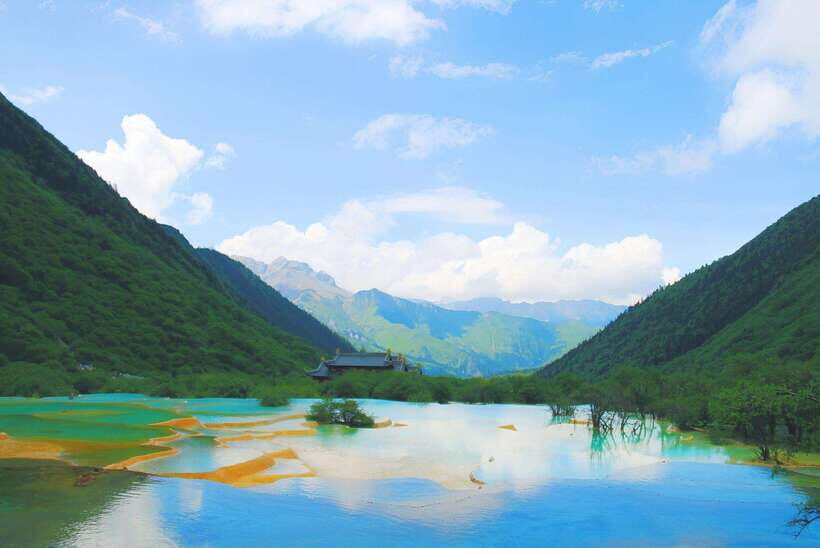
As you move through Huanglong Valley, you’re following a terraced arrangement of travertine features. The trail structure matters because it shapes how you photograph and how you pace yourself. You’re not just looking at one pond—you’re moving through a chain of them, so your best shots come from shifting angles as the terrain rises and falls.
A signature part of the experience is the way two mountains complement each other in the broader view: Xuebaoding and Sleeping Beauty Mountain. As you climb, you’ll see how the peaks frame the color of the ponds below, especially when the weather clears and you get contrast between bright mineral tones and darker rock or tree lines.
Then you reach the primeval forest sections. The park is known for thousand-year-old trees that tower into the sky. I like this part because it breaks the day’s rhythm: after intense pond views, the forest slows you down. The air can feel different too—cooler and less reflective than open water areas—so your senses get a reset.
If you’re traveling in warmer months, plan for crowds and adjust your pace. In peak periods, the trail can feel packed, especially around the most photogenic sections.
Golden Sand Pavement: The Travertine Beach Flow Moment
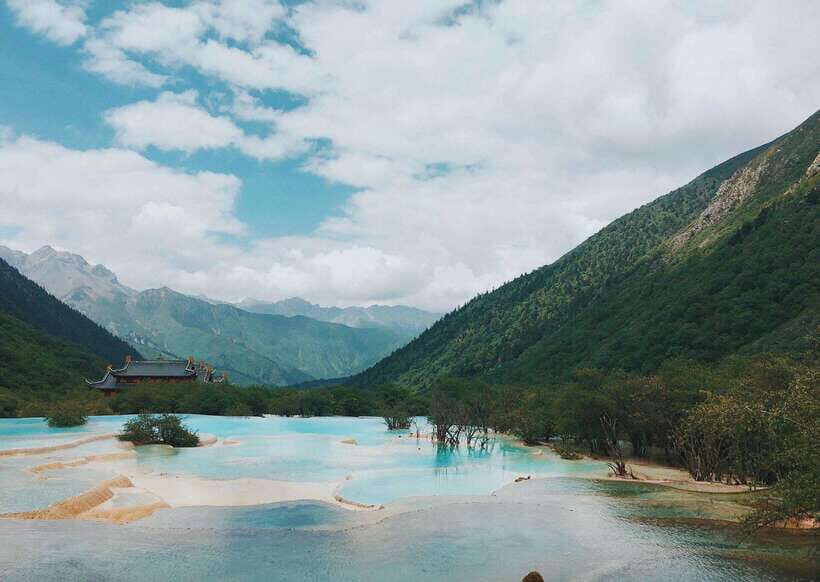
There’s usually one “stop-and-stare” feature in any park day. At Huanglong, that feature is the Golden Sand Pavement—often described as the world’s most spectacular travertine beach flow.
Think of it as a surface formed by carbonate deposits that creates a wide, flowing-looking band. When it’s lit right, it can look like a mineral cascade spread across the ground. Even if you’ve seen photos, the scale here tends to land better in person because you experience it while standing close enough to notice the way the surface changes from patch to patch.
Practically, this section is also where you’ll want to manage your time. Since it’s a top highlight, it’s common to run into slower movement while people wait for the right angle or just stand still to soak it in. A smart approach is to take a couple quick photos, then step aside and watch the movement along the terraces—this is where you really understand how the trail is constructed.
If you’re doing the cableway option, you often still end up walking down afterward. That makes the Golden Sand Pavement even more important as a “middle marker” for your day: it’s the kind of view that tells you you’re in the heart of the scenery.
Time, Pace, and Facilities Along the Route
This tour is built around a 1-day outing with roughly 6 hours of on-site time for photos, sightseeing, free time, scenic walking, and self-guided exploration. That can sound like a lot until you’re in the park and you realize how quickly altitude and cold can affect your energy.
I recommend you treat the day like a “steady walk, frequent pauses” plan. The best views aren’t reached by sprinting; they’re reached by moving slowly enough to notice the terraces and to adjust your photos as the angle changes.
One reason this experience works well in practice is that the route has basic traveler support. You’ll find toilets and food and drink stalls along the paths, which matters when you’re outside for hours in alpine weather. It’s also easier to stay comfortable without turning every snack into a logistical puzzle.
If you’re visiting during high season (summer school holidays, for example), build extra buffer into your schedule. Crowds can limit how quickly you pass the most popular viewpoints, and it’s safer to plan for that than to fight it.
Price and Value: What the $40 Covers (and What Doesn’t)
The headline price is $40 per person for a day at Huanglong. That’s not just an admission number—it’s part of a package approach where you mainly pay for getting inside and staying on track.
What’s included:
- Huanglong National Scenic Area ticket
- Cableway ticket if you choose it (optional)
- Tourist sightseeing bus if you choose it (optional)
What’s not included:
- Tour guide fees
- Personal expenses like souvenirs
So here’s how I’d think about value: you’re paying for the park entry experience plus optional transportation tools that can change how hard the day feels. If you’re someone who wants to conserve legs, the cableway option can be worth it because walking uphill at altitude is where fatigue sneaks in.
If you’re traveling with flexible timing and don’t need a guide-style explanation at every step, this setup can be a smart way to manage cost while still keeping the day organized.
Booking Smoothness and Local Support You Can Actually Use
A lot of tours fail the practical test: the booking is fine, but then you’re on your own. This one is designed to reduce that stress.
You can book with free cancellation up to 24 hours in advance for a full refund. You also get a reserve now & pay later option, which helps if your plans might shift. Confirmation can be quick too, with a fastest confirmation time of 10 minutes.
Here’s the part that really matters: you provide required personal details to issue the ticket—full name, nationality, and passport number for each person. You’ll send that information via email after booking. After that, you’re assigned dedicated service staff who can help with product details and professional itinerary planning, plus other attractions booking.
From the service side, the name that stands out is Theo Du. The feedback around him is consistent: clear communication, quick responses, and extra checks to keep the activity running smoothly. If you prefer having a real person you can contact rather than guessing at the day-of process, this is a strong reason to choose this style of booking.
What to Pack for Sichuan Cold and High Altitude
If you only pack for comfort, you’ll still be fine. If you pack for warmth, you’ll enjoy the day more.
Bring:
- Comfortable shoes (you’ll walk a lot)
- Warm clothing
- Warm shoes
It’s also helpful to think about wind and sun. Even if the air feels okay at the start, temperature can shift as you climb and as the day progresses. Layering usually beats one heavy coat because you can adjust when you’re moving versus stopping for photos.
Rules to keep in mind:
- Alcohol and drugs are not allowed.
And one more practical caution: people over 80 are not suitable for this activity. That’s less about paperwork and more about the physical demands of the terrain.
Who This Tour Suits Best (and Who Might Struggle)
This kind of one-day Huanglong visit fits best if you:
- want a structured plan for a big natural heritage site
- enjoy walking and taking your time at viewpoint clusters
- like the idea of using the cableway to adjust effort
- want optional support (sightseeing bus, organized ticketing) without paying for a full private expedition
It might be tougher if you:
- have limited mobility or need a very flat route
- struggle with cold or altitude sensitivity
- are traveling with very small children or very elderly companions (the tour explicitly notes a higher-age limit)
If your goal is to see the major “Four Wonders” parts of Huanglong in one day—ponds, mountains, canyons, and forest—this experience is built for that.
Should You Book Huanglong Scenic Area for Your Trip?
I’d book this if you want a smooth, organized way to reach Huanglong’s top travertine sights without turning your day into ticket confusion or transport guesswork. The highlight lineup is strong: Five-Colored Ponds, the primeval forest sections, and the Golden Sand Pavement are exactly the kind of features that justify a one-day commitment.
I’d hesitate only if you know you’re uncomfortable with steep walking, cold weather, or altitude. In that case, you might still visit Huanglong—but you’d need a different plan than a standard half-day-to-full-day walking route.
If you’re choosing between Huanglong and another big Sichuan nature stop, consider how much you want to cover. A lot of people pair Huanglong with Jiuzhaigou Valley because they’re both must-see alpine parks in Sichuan. If you do both, plan for at least a little overlap in your pacing strategy—your legs and lungs will appreciate consistency.
FAQ
How long is the Huanglong Scenic Area experience?
The experience is valid for 1 day. The on-site activity is planned for about 6 hours including walking, sightseeing, and free time.
What is the price for this Huanglong tour?
The price is listed as $40 per person.
What’s included with the ticket?
You get the Huanglong National Scenic Area ticket. You may also choose optional add-ons: the Huanglong cableway ticket and the tourist sightseeing bus.
What isn’t included?
Tour guide fees and personal expenses (like souvenirs) are not included.
Where do I start the day?
You can start at either Huanglong Visitor Center (黄龙游人中心) or Huanglong Cableway (黄龙索道). The meeting point may vary depending on the option booked.
Do I need to send passport details to book?
Yes. Booking requires each person’s contact details and full name, nationality, and passport number. You’ll send this information via email after booking.
What should I bring?
Bring comfortable shoes, warm clothing, comfortable clothes, and warm shoes.
Is this suitable for seniors?
It is not suitable for people over 80 years old.