REVIEW · PINGYAO
Pingyao Ancient City Full-Day Walking Tour
Book on GetYourGuide →Operated by China Tour Guide · Bookable on GetYourGuide
Pingyao on foot feels oddly modern. This full-day walk threads together the city wall views, financial history at Rishengchang, and government courtyards so you understand how the town actually worked.
I love having an English-speaking guide who can explain symbols and street layout, not just point at buildings. And I love how stops like the Yamen (with roots back to 1346 and 300+ rooms) and the Confucian Temple connect architecture to how people lived and dreamed.
One thing to plan for: entrance tickets cost 125 RMB per person and are not included in the tour price.
In This Review
- Key highlights you’ll actually feel
- Why a Pingyao walking tour beats doing it alone
- Pickup, meeting, and how the day starts smoothly
- City wall walking: the best free viewpoint in town
- Rishengchang Exchange Bank: money history you can picture
- Ancient Security Guard Company: the practical side of old Pingyao
- Yamen Pingyao Ancient Government Buildings: the maze behind the authority
- Ming and Qing Street: preserved shops where time shows
- Confucian Temple and the Zhuangyuan procession symbolism
- What the 8 hours feels like in real life
- Who this tour suits best
- Price and value: $229 for up to 6 people
- Using the guide well (so you get more than photos)
- Should you book the Pingyao Ancient City Full-Day Walking Tour?
- FAQ
- How long is the Pingyao Ancient City full-day walking tour?
- What’s included in the price?
- Are admission tickets included?
- Where will you meet the guide?
- Is this a private tour?
- What languages does the guide speak?
Key highlights you’ll actually feel
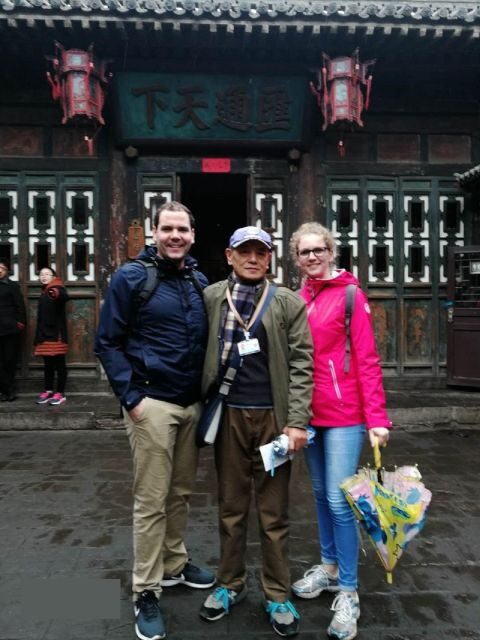
- City wall walking sections with tiled-roof views and glimpses into low courtyards
- Rishengchang Exchange Bank for the story of early Chinese finance
- Ancient Security Guard Company showing how escorting worked in Ming–Qing Pingyao
- Yamen government buildings: a ceremonial gate, court spaces, gardens, and even a prison
- Ming and Qing Street: preserved brick-and-stone shops in old architectural style
- Confucian Temple route to imperial exam symbolism (including the Zhuangyuan procession idea)
Why a Pingyao walking tour beats doing it alone
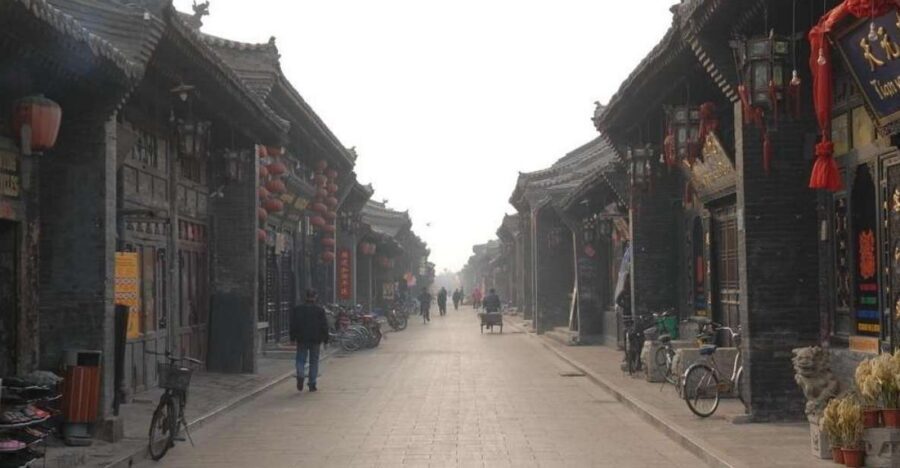
Pingyao is the kind of place where the streets look charming in photos, then you realize the layout has rules. Houses sit low. Courtyards hide in the middle. Streets bend where you would swear they should go straight. On your own, you can still have fun—but you’ll miss the connections.
This full-day format works because it’s built around major anchors: the wall, the old financial site, the government complex, and the cultural-religious spaces. You’ll walk long enough to feel the town’s rhythm, but not so long that you’re just wandering and guessing.
The private-group angle also matters. You can stop for photos, ask questions, and take small breaks without everyone losing the group. That’s not a small thing in a city best understood at walking speed.
You can also read our reviews of more tours and experiences in Pingyao.

Pickup, meeting, and how the day starts smoothly
You start in Pingyao, with pickup from your hotel lobby. If your hotel is inside the Pingyao Ancient City, the guide meets you in the lobby right there. If you’re outside the walls, you’ll meet inside the old town instead.
That setup prevents the usual stress: you’re not trying to find a meeting point while you’re figuring out gates, alleys, and where the ticket lines are. It also helps because this tour includes a lot of sites where timing and entry procedures matter.
And you’re not thrown into the deep end language-wise. The tour runs with an English-speaking guide (and Chinese is available too), which makes the explanation side of the day feel intentional instead of random.
City wall walking: the best free viewpoint in town
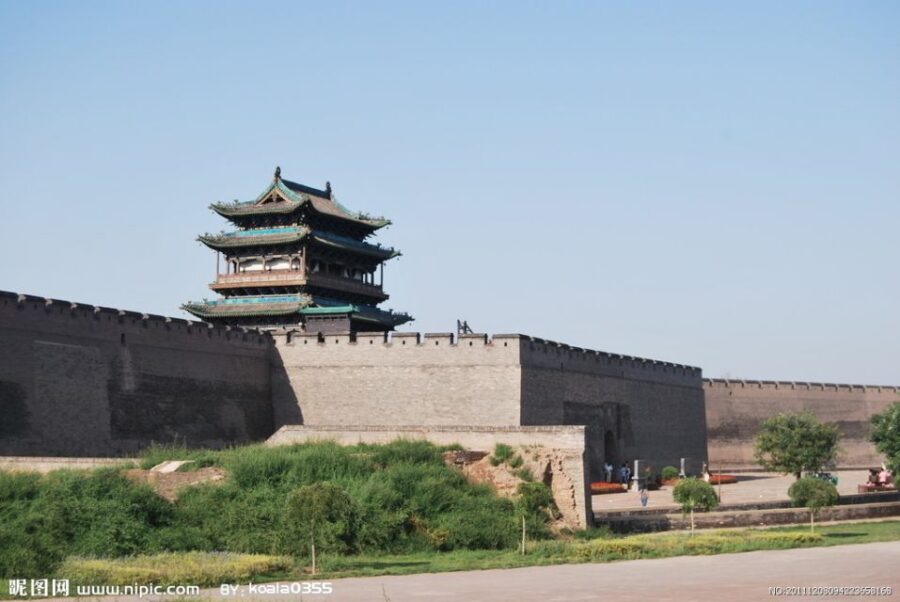
The Pingyao Ancient City Wall is one of those places that makes you stop walking just to look at where you are. It’s built with bricks and stones, and the best part is that you don’t just stand there—you walk parts of it.
Those wall sections give excellent views across the tiled rooftops and down into domestic courtyards. Because so many historic buildings in Pingyao are low-rise, the wall feels less like a boundary and more like a control panel for the whole city.
Practical tip: wear shoes you’re happy to break in. You’ll be on your feet for hours, and wall walking plus uneven old-town streets can be a lot if you’re in soft sneakers with no grip.
Rishengchang Exchange Bank: money history you can picture
Next comes Rishengchang Exchange Bank, described as the first exchange bank of China. That title isn’t just trivia. It helps you understand why Pingyao merchants mattered and why finance sat at the heart of the town’s identity.
Standing near a preserved banking structure changes how you read the streets around it. Instead of seeing only “old buildings,” you can sense a working network—people, contracts, risk, and movement of value.
Your guide’s job here is key. The most useful explanation isn’t a lecture. It’s the way they connect the building layout and nearby spaces to what the bank would have meant for people in that era. It’s the difference between sightseeing and actually understanding.
Ancient Security Guard Company: the practical side of old Pingyao
A fun stop on this route is the Ancient Security Guard Company. It’s noted as the only private organization of armed escort in Pingyao’s history, and one of the two most famous during the Ming and Qing dynasty.
This is where Pingyao gets more real. When you think ancient commerce, you might imagine trade routes and fancy products. But you also need protection. Escort services were about getting goods safely through distances that could be dangerous.
What I like about this stop for your day: it breaks the pattern of only temples and government halls. You get a glimpse at how order was enforced by private groups, and how that supported the daily operations behind the scenes.
Yamen Pingyao Ancient Government Buildings: the maze behind the authority
If there’s one stop that turns Pingyao from charming to fascinating, it’s the Yamen—the old government office complex. In Pingyao, this yamen dates to 1346 during the Yuan Dynasty, and it reportedly held over 300 rooms.
You enter through a ceremonial gate, which cues you that this place wasn’t built for casual visits. The yamen included offices, a court area, meeting rooms, residential areas, a garden, and even a prison.
Here’s what makes it valuable for you: you’re not just seeing rooms. You’re seeing the logic of power—who worked here, how decisions were made, where officials lived, where court happened, and how punishment was organized. A good guide helps you connect each part of the complex to the role it played.
If you like architecture and layout, take your time with this section. The Yamen is the kind of place where rushing means you miss the pattern.
Also, this is a good moment to ask questions about the difference between government buildings and homes in traditional Chinese cities. The tour format makes that easy because you’re guided through the spaces step by step.
Ming and Qing Street: preserved shops where time shows
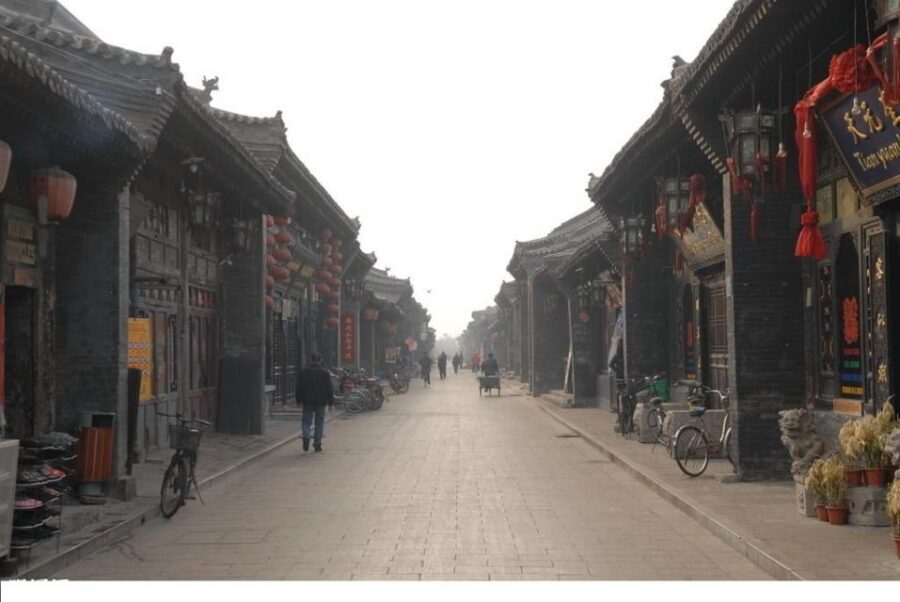
After the heavier government stop, you shift to Ming and Qing Street—traditional shops and houses preserved in a style built with bricks and stones.
The appeal here is contrast. The street gives you an instant sense of what Ming and Qing architecture looked like in daily life, compared to the more modern building styles you’ll see elsewhere in China today.
What I like most is that Ming and Qing Street isn’t just a single viewpoint. It’s a walking corridor of preserved structures, so you can watch the street feel change as you move. It helps you picture the scale of commerce and the tightness of urban living at the time—courtyards, narrow stretches, and shop fronts that feel built for repetition.
Confucian Temple and the Zhuangyuan procession symbolism
Next is the Pingyao Confucian Temple, with a layout designed to reflect its role in intellectual life. The key idea you’ll hear is tied to the imperial exam system.
If you walk the paths and pause where the guide indicates the route, it helps you understand what the place meant to ancient Chinese scholars. The tour references the idea of the No. 1 scholars of the annual imperial examinations—called Zhuangyuan—marching past.
That detail changes your experience. You start seeing the temple’s layout as a stage for achievement, not only as a spiritual site. Even if you don’t know all the academic history, the built environment helps the story click.
If you’re the kind of traveler who likes when a cultural site has a clear human connection, this stop delivers. It’s about how recognition and learning were tied to places like this.
What the 8 hours feels like in real life
The full tour runs 8 hours, with about 6 hours of sightseeing. In practice, that means you’ll have time for movement, explanations, and short pauses without feeling like you’re on a strict sprint.
Because you’re walking a lot in an ancient city, your comfort depends on basics: water, sunscreen, and shoes. The itinerary includes wall walking plus multiple historical compounds and streets, so plan for a steady pace.
If you want a smoother day, aim for lighter layers. Old towns can surprise you—shade can be scarce on streets and certain areas might feel cooler or warmer depending on where the courtyard openings face.
And one underrated benefit: when you have an organized route, you waste less time backtracking. That keeps your energy for the parts that matter most—views from the wall, the Yamen room-to-room layout, and the preserved street sections.
Who this tour suits best
This is a strong choice if you like:
- historic cities where you can read the layout as a story
- architecture and the meaning behind courtyards, gates, and street patterns
- a guided day that focuses on big anchors rather than a long list of random stops
It’s also a good fit for travelers who don’t want to wrestle with entrance tickets and site entry details. Your guide can help you buy the tickets on the tour day.
If you’re traveling with mixed interests—one person loves buildings, another wants the emotional story of how people lived—this route has a good balance of government, finance, security, commerce, and Confucian symbolism.
Price and value: $229 for up to 6 people
The price is $229 per group up to 6, for a private full-day walk. That’s one of the best parts of this experience if you’re traveling as a small group (friends, family, or a couple plus someone else).
Here’s the honest value math: the tour price covers the English-speaking guide, but admission tickets are not included. The tour lists admission at 125 RMB per person (children half price, tour guide free). So your total cost depends on who’s in your group.
Even with that extra ticket cost, the value is still strong because you’re not just paying for entry. You’re paying for routing, interpretation, and help with ticket buying on the day. And in a place where streets can be confusing, a guide who understands the logic can save you a lot of time and wandering.
Using the guide well (so you get more than photos)
The guides described in the experience have a consistent style: they focus on city layout, architecture, symbolism, and how the old town worked in everyday terms.
For instance, guides named Lisa, Grace, Mike, Leo, Johanna, and Joanna are highlighted for being attentive, explaining layout and symbolism clearly, and adjusting to the pace of the group. Some also helped with practical issues beyond the strict sites—like assisting with tickets for other activities when questions came up.
You can help this work by telling your guide what you care about early:
- Do you want more time on the wall viewpoints?
- Are you more interested in government spaces (Yamen) or daily-life street scenes (Ming and Qing Street)?
- Do you want extra photo time in courtyards and along preserved streets?
The tour even notes that if you have special visiting preferences, you can leave a message so arrangements can be made.
Should you book the Pingyao Ancient City Full-Day Walking Tour?
Book it if you want a guided walk that hits the major anchors of Pingyao without turning your day into a checklist. The combination of city wall views, Rishengchang’s finance story, the Yamen’s room-by-room power layout, and the Confucian Temple exam symbolism gives you a rounded understanding in one day.
Skip it (or consider a lighter plan) if you hate walking for long stretches, or if you only want to stroll and take photos without caring about why a place is arranged the way it is. This tour is at its best when you’re curious enough to ask questions and slow down occasionally.
If your group size is small and you want a private guide who can keep the day coherent, this one usually makes sense.
FAQ
How long is the Pingyao Ancient City full-day walking tour?
The tour lasts 8 hours, with about 6 hours of sightseeing.
What’s included in the price?
It includes an English-speaking guide and pickup in Pingyao from your hotel lobby.
Are admission tickets included?
No. Admission tickets cost 125 RMB per person (children pay half price, and the tour guide is free). Your guide will help you buy tickets on the tour day.
Where will you meet the guide?
If your hotel is inside the Pingyao Ancient City, the guide meets you in the hotel lobby. If your hotel is outside the ancient city, you’ll meet inside the old town instead.
Is this a private tour?
Yes. It’s a private group tour for up to 6 people.
What languages does the guide speak?
The tour is offered with a live guide in English and Chinese.