REVIEW · BEIJING
10-Day China Tour to Beijing, Xian, Chengdu and Shanghai
Book on Viator →Operated by Travel China Guide · Bookable on Viator
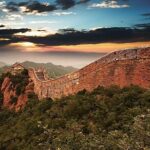
The Great Wall feels unreal after a quick pickup. This tour is built around big, memorable sights, and I especially like the Mutianyu Great Wall experience and the Giant Panda Breeding Research Base in Chengdu. You get guided visits to major landmarks and enough structure that you can focus on seeing, not sorting out logistics.
I also appreciate that the trip keeps moving in a smart order: imperial Beijing first, then Xi’an’s famous archaeology, then pandas, and finally Shanghai’s mix of old gardens and modern skyline. One possible drawback: the pace is busy, with high-speed trains and a flight, so long travel days mean you’ll want comfortable shoes and a simple game plan for meals.
The human touch matters too. One guide named Emily was mentioned by a recent guest as a friendly, helpful presence on the first stretch in Beijing, and that kind of guidance is exactly what you want when days are packed. Also, this is a private tour, so it’s just your group, not a revolving door of strangers.
In This Review
- Key things I’d pay attention to
- Price and value: $2,979 with transport and several admissions included
- Day 1 in Beijing: airport pickup, hotel transfer, and breathing room
- Beijing day 2: Tiananmen Square, the Forbidden City, Lama Temple, and Temple of Heaven
- Beijing day 3: Mutianyu Great Wall cable car, Bird’s Nest photos, and a Hutong rickshaw ride
- Day 4: Summer Palace garden views, then a high-speed train to Xi’an
- Xi’an day 5: Terracotta Warriors museum time, Big Wild Goose Pagoda, and Ever Bright City
- Xi’an day 6: City Wall park strolls, the Xi’an Mosque, and Muslim Quarter snacks
- Day 7 Chengdu: giant pandas early, then Xiaojiahe local life in the afternoon
- Day 8: Chengdu to Shanghai by flight, then The Bund and an Huangpu River cruise
- Day 9: Shanghai Museum, Yu Garden’s Nine Zigzag Bridge, and Zhujiajiao Water Town
- Day 10: final Shanghai transfer, plus the maglev option
- Who this tour suits best (and who may find it a squeeze)
- Should you book this 10-Day China Tour?
- FAQ
- What’s included in the tour price?
- Are admission tickets included?
- How do the city-to-city transfers work?
- Where is the meeting point and what time does it start?
- Is it a private tour?
- Can I get a refund if I cancel?
Key things I’d pay attention to
- High-impact sights, with tickets handled: Forbidden City, Lama Temple, Temple of Heaven, Mutianyu Great Wall, Terracotta Warriors, panda base, Shanghai Museum, Yu Garden, and more.
- Real intercity speed: Beijing to Xi’an by one-way high-speed train, then Xi’an to Chengdu by high-speed train, plus a Chengdu to Shanghai flight.
- Fun local adds, not only monuments: Hutong rickshaw ride, Xi’an Muslim Quarter browsing, and Zhujiajiao Water Town.
- Group travel, but private: professional guide and experienced driver with your group only.
- Food and comfort basics included: breakfasts (9), lunches (3), and two bottled waters per person per day, plus an air-conditioned vehicle.
Price and value: $2,979 with transport and several admissions included
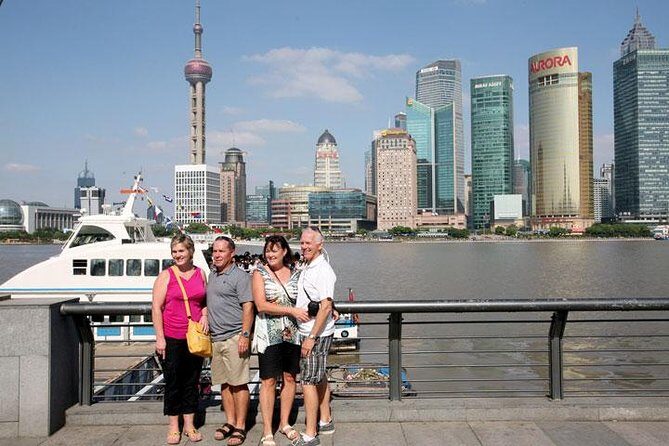
At $2,979 per person, this isn’t a “budget China” deal. But it’s also not only a sightseeing bundle. The value comes from the major transportation pieces (high-speed trains from Beijing to Xi’an and Xi’an to Chengdu, and an economy-class flight from Chengdu to Shanghai) plus a set of included meals and a long list of admission tickets.
If you tried to piece this route together yourself, you’d spend time coordinating train times, buying multiple tickets, and booking guides per city. Here, you get one guided flow across four cities, with an air-conditioned vehicle and professional driver support for the city days.
One extra thing: it’s described as being booked about 220 days in advance on average. That usually points to demand, not necessarily quality—but it does suggest you should book sooner rather than later if you have fixed travel dates.
You can also read our reviews of more tours and experiences in Beijing.

Day 1 in Beijing: airport pickup, hotel transfer, and breathing room
Your day starts with a meeting point at Capital Airport Shunyi with a listed start time of 9:00 am. Once you arrive, a guide meets you and transfers you to the hotel, and then the rest of the day is free.
That free time is practical. After flights, you don’t want a “wake up and rush” plan. Use the first evening to get your bearings, eat something easy near your hotel, and plan your early start for Tiananmen Square the next day.
This is also where the tour’s private-group format helps. You’re not sharing your first day with extra strangers who need different pacing. If you’re the type who likes to adjust to jet lag with a slower first evening, that matters.
Beijing day 2: Tiananmen Square, the Forbidden City, Lama Temple, and Temple of Heaven
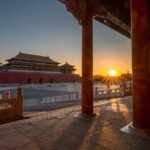
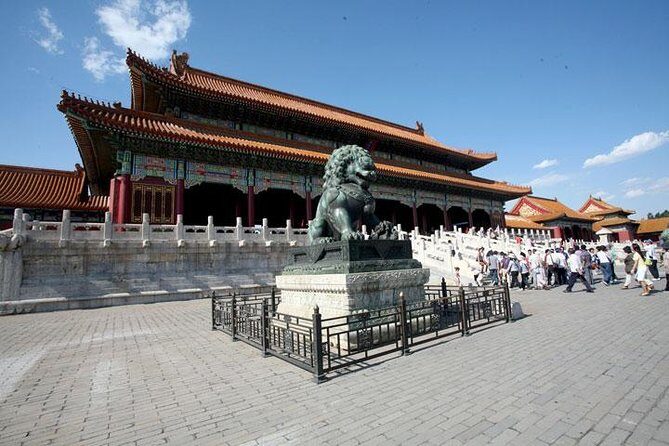
Beijing hits you right away with Tiananmen Square, described as the biggest urban city square in the world. It’s short—around 30 minutes—but it’s the kind of sight that gives you context fast. Standing in that space helps the rest of the imperial story make sense.
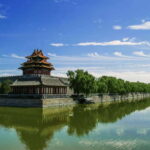
From there you go straight into the Forbidden City (Palace Museum). The tour sets aside about 3 hours, which is enough time to see the main palace halls and get a feel for how structured power looked in daily life. Just don’t plan to read every plaque; think of it as an orientation to the setting.
After lunch, you shift to religion and culture with Lama Temple (Yonghegong). The key detail here is the architectural blend—Han, Manchu, Mongolian, and Tibetan influences under one roof. That contrast is a good reminder that Beijing isn’t only “emperor sites.”
Then comes Temple of Heaven, where emperors worshiped the heavens for good harvests. With about 1.5 hours, it’s a strong pairing: you see the political world at Forbidden City, then the spiritual world at Temple of Heaven.
Beijing day 3: Mutianyu Great Wall cable car, Bird’s Nest photos, and a Hutong rickshaw ride
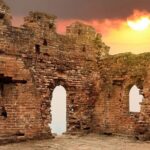
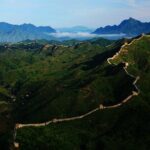
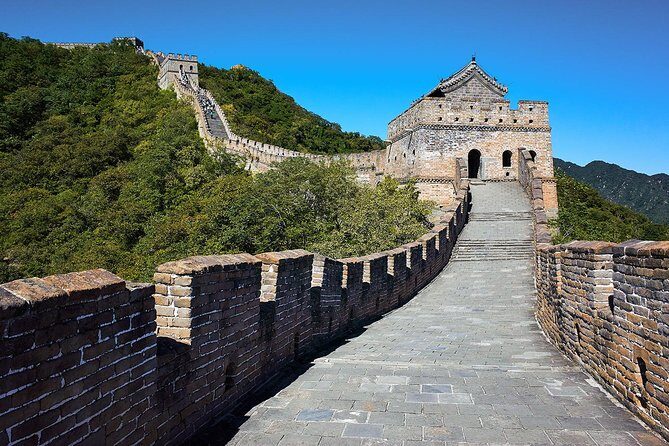
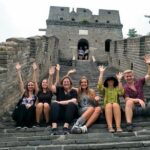
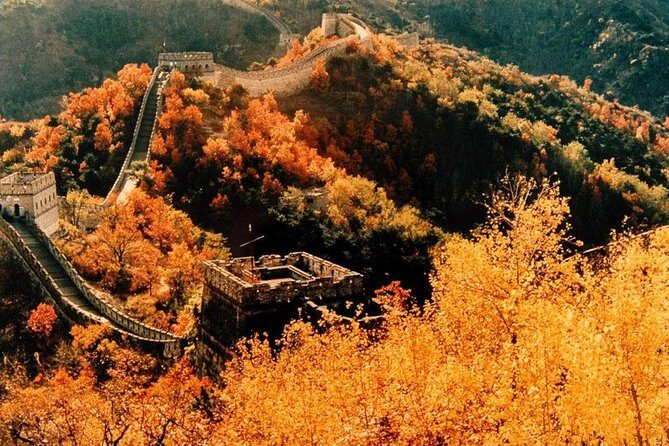
This day is built for the top Beijing must-do: the Mutianyu Great Wall. You’ll go by vehicle, and the tour arranges a round-trip cable car. That matters because the Great Wall can be a leg burner, and cable car access helps you spend more time on the actual wall views instead of only transportation and stair climbing.
You get about 3 hours total, with the core experience being time walking and looking out over the wall stretch. If you’ve ever watched the Great Wall in photos and wondered if it really feels huge, Mutianyu is a place where that clicks quickly.
In the afternoon you head back downtown for a brief stop at the Bird’s Nest National Stadium. Time is short (about 20 minutes) and admission isn’t included, but the idea is simple: see the famous Olympic design and take photos from a distance.
Then you finish with a Hutong rickshaw tour through narrow alleyways lined with old courtyard homes. This part is included for about 1.5 hours. It’s less about monuments and more about everyday texture—how neighborhoods once worked, and how they still feel in motion.
Day 4: Summer Palace garden views, then a high-speed train to Xi’an
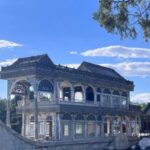
Today starts with the Summer Palace (Yiheyuan), described as the largest existing imperial garden. You get around 2 hours, which is a good chunk for seeing the major constructions without turning it into a sprint.
The Summer Palace works best when you treat it like a place you can move slowly through. Even if you’re not a serious garden person, it gives you a softer side to imperial China than the palace halls.
Then you transition to speed: you take a high-speed train to Xi’an for about 4.5 hours. The tour recommends bringing snacks or a book for the ride, and that’s smart advice on any train day. When the train lands, you’re already halfway to the next highlight.
Xi’an day 5: Terracotta Warriors museum time, Big Wild Goose Pagoda, and Ever Bright City
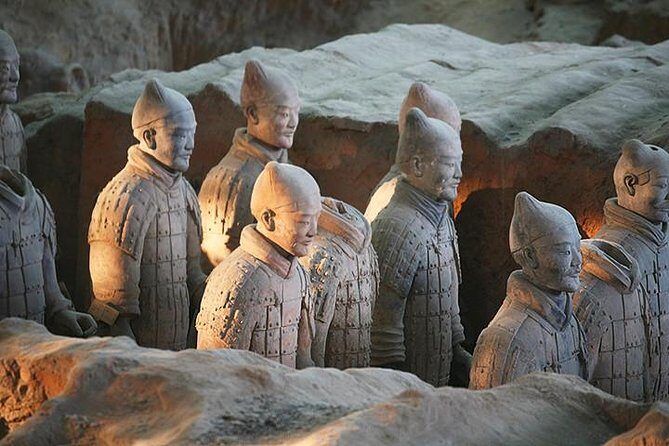
Xi’an’s signature stop is the Museum of the Qin Terra-cotta Warriors and Horses. The tour sets aside about 4 hours and focuses on the three excavated pits with warrior figures and ancient weapons. This is the part that most people remember for the rest of the trip—not because it’s fast, but because it’s so specific and physical.
After that, you go to Big Wild Goose Pagoda (Dayanta), around 1 hour. It’s a square brick pagoda and one of Xi’an’s long-running landmarks, and the time allocation makes it a “see it well, then move on” stop instead of an overlong detour.
The day ends at Grand Tang Dynasty Ever Bright City, a tourist street area where people dress in traditional-style clothing. It’s included for about 1.5 hours. Think of it as an evening atmosphere stop—fun for photos and quick browsing—rather than a museum day.
Xi’an day 6: City Wall park strolls, the Xi’an Mosque, and Muslim Quarter snacks
Today begins with the City Wall Park. You’ll get around 2.5 hours total across the park and the wall itself, and the key value here is that you can observe day-to-day life of locals from the wall area.
Then you visit the Xi’an Mosque, noted as one of the oldest, largest, and best-preserved Islamic mosques in China. The tour gives about 30 minutes. Short is fine here if you treat it as a respectful introduction to a different cultural layer inside the same city.
After that, you explore the Muslim Quarter. The tour includes about 1 hour, and it specifically mentions browsing handicraft souvenirs and eating halal snacks and food on your own. This is one of those flexible pieces that often makes a tour feel more like travel and less like checking boxes.
Day 7 Chengdu: giant pandas early, then Xiaojiahe local life in the afternoon
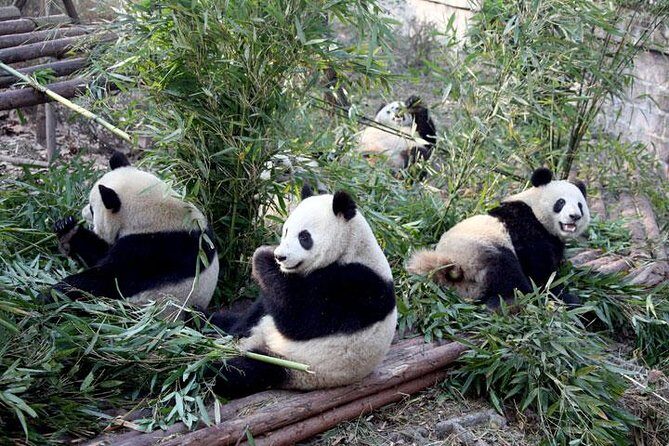
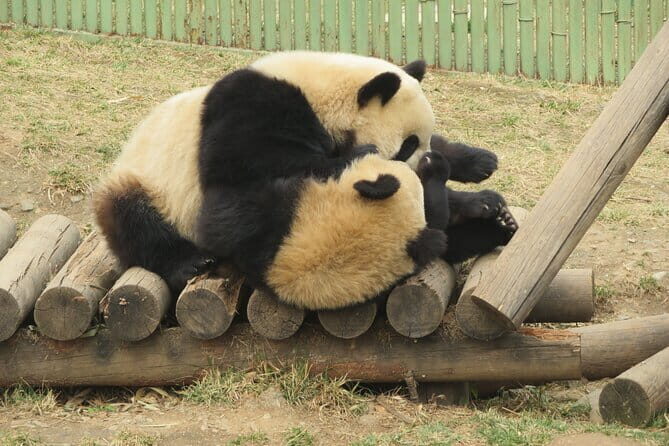
This is panda day, and it starts early at the Giant Panda Breeding Research Base. The tour calls out that the pickup is earlier because pandas are more active in the morning, and that’s a practical detail you’ll feel once you’re there.
You get about 2 hours at the base, with the main goal being close viewing of the pandas in their research environment. If you’re hoping for that classic panda “right in front of you” moment, morning timing is often the difference.
After lunch time is handled differently: you head to Xiaojiahe Residential District, then spend about 3 hours in the community. The tour mentions eating like locals at Yongle Rest for lunch, but it also lists lunch as at your own cost here. This is a good chance to see everyday neighborhood life, not just curated tourist sights.
Day 8: Chengdu to Shanghai by flight, then The Bund and an Huangpu River cruise
In the morning you get escorted to the airport in Chengdu for the flight to Shanghai. On arrival, your local guide escorts you to your hotel for check-in, and you get time to reset.
Then you visit The Bund on the west bank of the Huangpu River. The included stop is about 1 hour and focuses on the early 20th-century western-style buildings that still line the riverfront. Even if you’re not into architecture, this stretch gives you an easy baseline for Shanghai’s story.
After The Bund, there’s an included Huangpu River cruise (about 1 hour). This is a great pairing with the previous stop: older riverfront on one side, modern skyscrapers on the other. It’s also a lower-effort way to see skyline variety without standing in one spot for hours.
Day 9: Shanghai Museum, Yu Garden’s Nine Zigzag Bridge, and Zhujiajiao Water Town
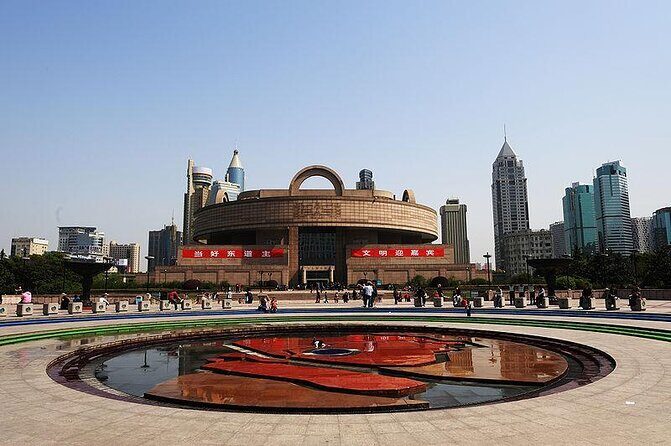
Your day starts at the Shanghai Museum (Shanghai Bowuguan), described as one of the four largest museums in China and focused on art works from ancient times. You get about 2 hours. It’s not only about seeing objects; it’s also a chance to understand how “ancient” shows up in a modern megacity.
Next is Yu Garden (Yuyuan) for around 2 hours. A specific highlight is the Nine Zigzag Bridge and the mid-lake pavilion. When a garden has named features like this, it’s usually worth slowing down for a bit and actually looking, not just walking past.
The afternoon goes to Zhujiajiao Ancient Town, a water town sometimes called the Oriental Venice. The tour gives about 2 hours. It’s intentionally different from central Shanghai: more about waterway streets and older homes than big-city nightlife.
Day 10: final Shanghai transfer, plus the maglev option
Your last day is straightforward: you’re picked up at the hotel and taken to the airport based on your international flight schedule.
The tour notes an optional alternative if you prefer: a maglev train ride to Pudong Airport. You’d decide that based on your flight timing and energy level. If you want a last quick Shanghai-style moment, maglev can be a fun way to end.
Who this tour suits best (and who may find it a squeeze)
This itinerary fits you if you want a guided, ticketed route that covers top-name highlights across four cities without spending your vacation researching trains and museum hours.
It also fits if you like variety in one trip: imperial Beijing, archaeology in Xi’an, pandas plus local community time in Chengdu, then Shanghai museums and water towns.
It may feel tight if you dislike early starts, or if you prefer slower city days. The route includes multiple long-distance transfers (two high-speed trains and one flight), and those days compress your “free time” compared with a stay-put itinerary.
The tour also states it is not suitable for people over 80 years old. If age or mobility limits are part of your planning, it’s worth taking that seriously early.
Should you book this 10-Day China Tour?
Book it if you want a structured route with strong highlights: Mutianyu Great Wall, the Terracotta Warriors, and the pandas are all core parts, and you’re not left hunting for tickets or private transport between major cities. The included breakfasts and lunches, plus two bottled waters per person per day, are the kind of basics that keep you from mentally budgeting every day.
Skip it or consider alternatives if you’re sensitive to pace. This isn’t a “settle in” trip; it’s a “move smart and see a lot” plan, with travel days that take up real time.
If you do book, I’d go in with one mindset: treat each day as a set of quality stops, not a checklist of every possible detail. You’ll get more enjoyment that way, especially when the schedule is full and the distances between highlights are real.
FAQ
What’s included in the tour price?
Hotel accommodation (twin-sharing), one-way high-speed trains (Beijing to Xi’an and Xi’an to Chengdu), one-way economy flight (Chengdu to Shanghai), breakfasts (9), lunches (3), two bottled waters per person per day, an air-conditioned vehicle, and a professional guide with an experienced driver.
Are admission tickets included?
Many admissions are included for key stops like the Forbidden City, Lama Temple, Temple of Heaven, Mutianyu Great Wall, Terracotta Warriors museum, Big Wild Goose Pagoda, City Wall areas, the panda base, Shanghai Museum, Yu Garden, and Zhujiajiao Ancient Town. Some items like the Bird’s Nest are noted as not included.
How do the city-to-city transfers work?
You’ll travel from Beijing to Xi’an by one-way high-speed train, then from Xi’an to Chengdu by one-way high-speed train. After that, you fly from Chengdu to Shanghai (economy class).
Where is the meeting point and what time does it start?
The start is listed at Capital Airport Shunyi, Beijing 101300 China, with a 9:00 am start time.
Is it a private tour?
Yes. It’s described as a private tour/activity, meaning only your group participates.
Can I get a refund if I cancel?
No. The experience is non-refundable and cannot be changed for any reason. Also, it states it is not suitable for people over 80 years old.
You Might Also Enjoy
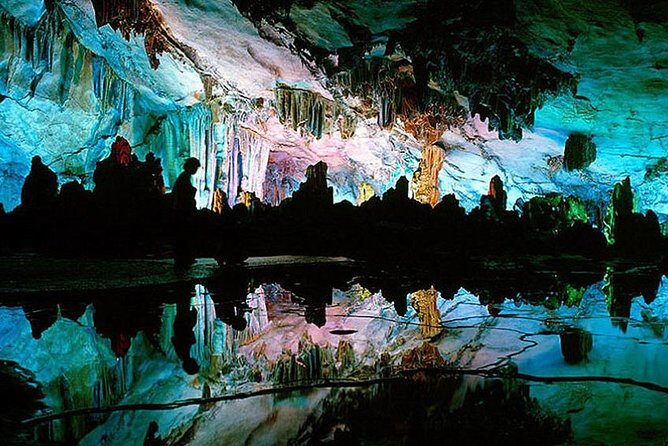 Private Guilin Full Day Tour including Fubo Hill, Reed Flute Cave, Elephant Hill and Seven Star Park
 Half Day Tour to Xi’an Wild Panda Breeding and Protecting Center
 Private Day Trip: Outdoor Hot Spring Experience and Mutianyu Great Wall4-day Private Tour to minorities villages and Fanjing from Guilin