REVIEW · CHINA
8 Days China Silk Road Private Tour to Xining, Zhangye, Dunhuang
Book on Viator →Operated by China Travel Service · Bookable on Viator
A trip like this hits two worlds at once. Tibetan Buddhism and Silk Road wonders sit side by side for a full, varied week. I like that the route mixes big nature stops with serious cultural sites, so you’re not stuck in one kind of scenery. One thing to consider: you’ll deal with long drives and cold-air altitude-style days, so pack for temperature swings.
Two specific parts I really like: Chaka Salt Lake for its sky-mirror photo moments, and the Buddhist art of Mogao Caves for sheer scale. The plan also gives you a classic Silk Road arc through Qinghai Lake, Zhangye’s historic temples, and the Jiayuguan region. If you’re the type who hates itinerary pace, note that this is a packed 8-day rhythm.
You’ll get a private-group setup with airport pickup, an English-speaking guide, and transport in an air-conditioned vehicle. That’s a big comfort factor in remote areas. The one likely drawback is the tent night near Rainbow Mountain, because there’s no private bathroom—just public baths and toilets.
In This Review
- Key points before you go
- Xining Arrival and the Fast Start from Caojiabao Airport
- Chaka Salt Lake: Sky Mirror Views and the Bright-Color Trick
- Qinghai Lake at Erlangjian: Big Air, Friendly Animals, Optional Motion
- Ta’er Monastery: Tibetan Gelug Roots and Tsongkhapa’s Birthplace
- Zhangye’s Dafo Temple and the Sleeping Buddha Scale Factor
- Pingshan Lake Grand Canyon: A Canyon Walk That Feels Like More Than a Photo Stop
- Rainbow Mountain Danxia: Color Layers and a Sunset-Friendly Rhythm
- The Kaoshan Tent Night: Night Sky Potential, Public Bath Reality
- Jinta Populus Euphratica Forest and the Gobi Pass Views
- Jiayuguan Pass: First and Greatest Pass Under Heaven
- Xuanbi Great Wall: The Overhanging Wall at a 45-Degree Feeling
- Dunhuang’s Mogao Caves: The Silk Road’s Big Buddhist Art Hit
- Crescent Moon Pool and Echo Sand Mountain: Water Meets Desert
- Shazhou Night Market: A Different Side of Dunhuang
- Pricing and Value: Is $2,538 per Person Fair for What You Get?
- What You’ll Be Doing Day-to-Day (Without the Usual Guesswork)
- Practical Tips That Make This Trip Feel Easier
- Should you book this private Silk Road tour?
- FAQ
- Where does the tour start and how do I get picked up?
- Do I have a guide every day?
- Are hotel nights included in the price?
- Are admission tickets included for the key attractions?
- Are meals included?
- Can I do optional activities like boat rides or horse riding?
- What are the bathroom facilities like at the tent stay?
- What luggage can I bring?
- Is the tour refundable or changeable?
- One last thing
Key points before you go
- Private-group convenience with airport pickup and drop-off
- Photo-ready contrast from Chaka’s white mirror lake to Rainbow Mountain’s Danxia colors
- Major Buddhist hits at Ta’er Monastery and Mogao Caves
- Silk Road defenses at Jiayuguan Pass plus the Overhanging Great Wall
- Physical effort is real on canyon terrain and in big highland days
- Optional activities cost extra, often paid in cash on-site
Xining Arrival and the Fast Start from Caojiabao Airport
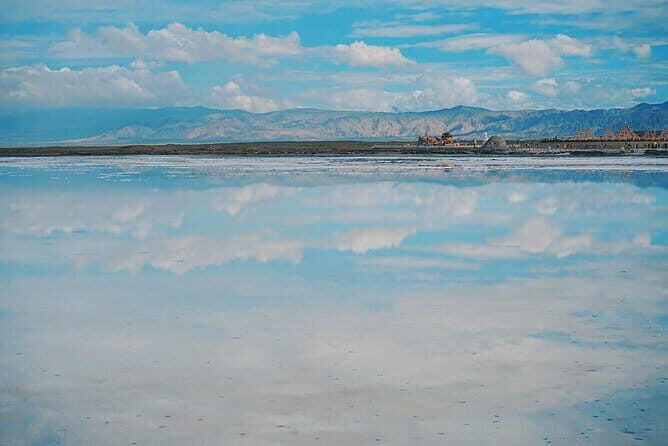
Your trip opens with an airport pickup at Xining Caojiabao Airport. A local English-speaking guide and driver meet you at the exit gate holding a board with your name. This matters more than it sounds: it reduces day-1 stress, especially when flights land at different times or you’re tired.
From there, you don’t waste much energy settling in. You head straight toward Chaka Salt Lake, then return to Xining for rest. If you like to start sightseeing quickly, this style fits you.
You can also read our reviews of more private tours in China
Chaka Salt Lake: Sky Mirror Views and the Bright-Color Trick
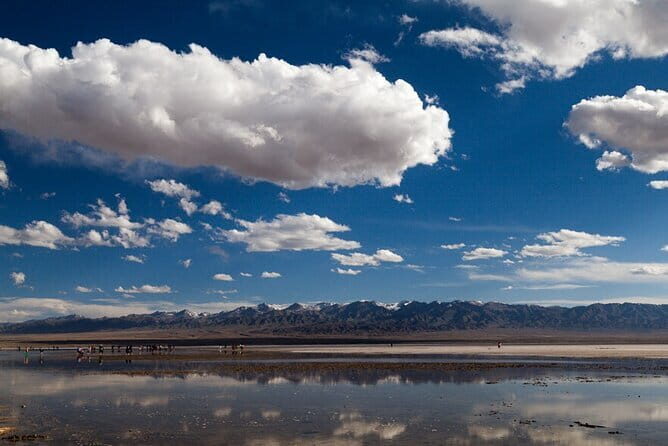
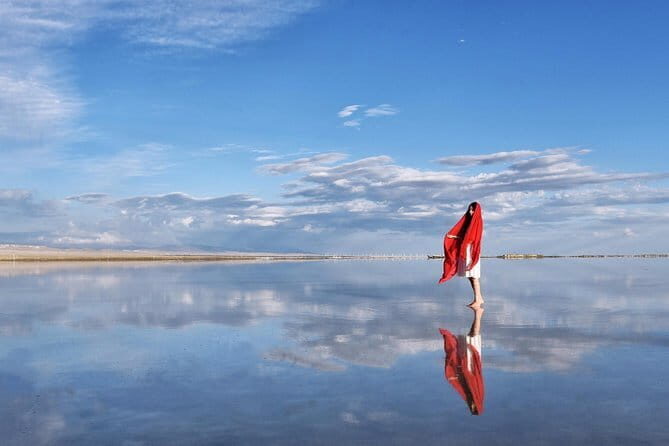
Chaka Salt Lake is famous for a simple reason: the pale salt flats act like a giant reflective surface. The tour describes it as the sky’s mirror in China, with blue sky, white clouds, and birds all showing up in the same frame. And yes, the Tibetan meaning of Chaka is Salt Lake, which helps the name click.
Two practical tips from the plan:
- Bring bright-colored clothing if you want photos where you and the lake contrast strongly.
- Plan on spending time shooting both cloudy and clear moments. Even when light changes, the reflection effect stays the star.
A realistic consideration: the day is built around driving time plus time at the lake, so you may feel like you’re moving fast. If you love slow travel, you might want longer stays, but that’s not what this tour is designed for.
Qinghai Lake at Erlangjian: Big Air, Friendly Animals, Optional Motion
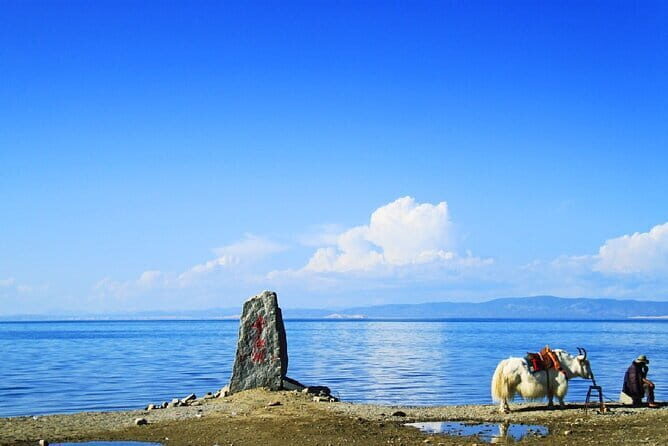
Qinghai Lake is the largest saltwater lake of China, and the day is scheduled for the Erlangjian Scenic Area. The emphasis here is on fresh air and warm sunshine, plus that classic Qinghai vibe: yaks and sheep out on the open stretches with a sky full of cloud.
The tour notes optional add-ons you can pay for on your own: boat cruise, horse riding, and bike riding. That’s useful because you can choose based on energy level and comfort. If you prefer pure scenery, you can skip the extra activity and just enjoy the viewpoints.
One caution: even though the plan lists admission as free for this stop, it doesn’t mean the day is light on effort. You’re still out in open-air settings, so dress in layers and don’t assume weather will behave.
Ta’er Monastery: Tibetan Gelug Roots and Tsongkhapa’s Birthplace

Ta’er Monastery is built into the trip as one of the core cultural stops. The guide-led value here is clear: Ta’er is described as one of the Six Great Monasteries of Tibetan Buddhism Gelug Sect, and it’s linked to the birthplace of Tsongkhapa, the founder of the Gelug tradition.
What I like about this kind of stop is that it’s not just a pretty building photo. The tour frames it as a higher-education institution of Tibetan Buddhism and highlights the spiritual energy you’ll see in pilgrims arriving with devotion. That’s the difference between checking a site off a list and actually understanding what you’re looking at.
A possible drawback: you’ll want respectful, comfortable clothing since this is an active religious place. The time on-site is about 3 hours, so you won’t get a long, slow museum-style visit, but it’s enough to grasp the main visual and religious themes.
Zhangye’s Dafo Temple and the Sleeping Buddha Scale Factor
Zhangye’s Giant Buddhist Temple (Dafo Temple) is where the trip leans into “Silk Road religion at full size.” The temple dates back to the Western Xia Dynasty and the plan points out that it has endured for about 900 years. Inside is a gigantic sleeping Buddha statue of Sakyamuni, described as the largest scale in Asia.
The practical value here isn’t just the size. The tour also notes woodcarving, paintings, statues, and the cultural layers underneath. If you like religious art, you’ll probably appreciate how multiple crafts come together in one place.
A consideration: the temple portion is relatively short (about 1 hour). If you want long hours for art study, you might feel a bit time-pressed.


Pingshan Lake Grand Canyon: A Canyon Walk That Feels Like More Than a Photo Stop
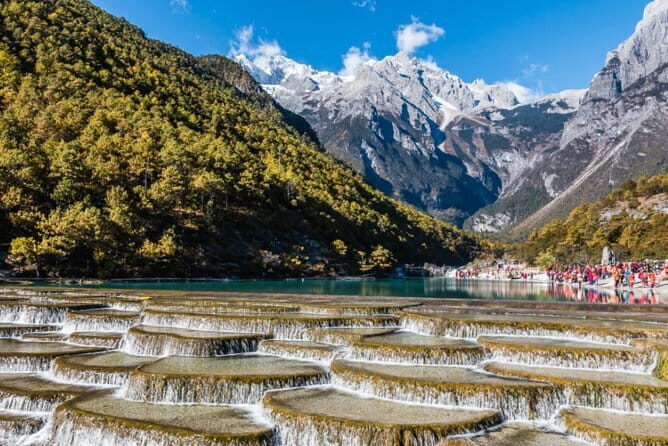
In the afternoon, you go to Pingshan Lake Grand Canyon, described as comparable to the Grand Canyon of Colorado. It’s not only about cliffs. The plan says you can also visit precious animals and plants, and the area is praised as a new Silk Road discovery.
For me, the key is that this isn’t just scenic driving. You get a canyon-style walk experience for about 3 hours. If you’re an adventurer and your legs are ready, this is one of the better “active day” balances on the trip.
The drawback is obvious: canyon terrain means uneven ground and more walking than you might expect from “just sightseeing.” If you have knee issues, take it slow and plan on pacing rather than rushing.
Rainbow Mountain Danxia: Color Layers and a Sunset-Friendly Rhythm
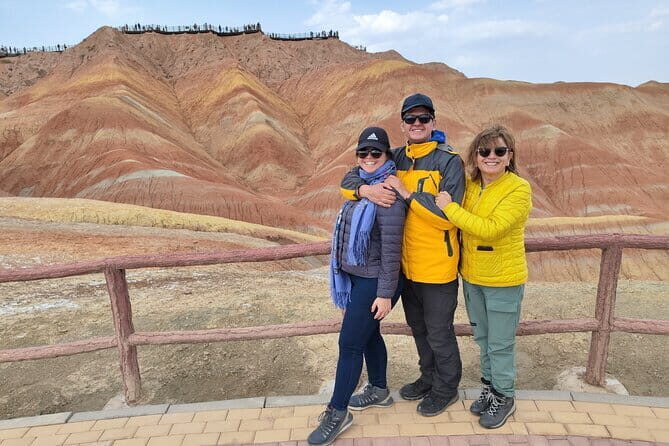
Zhangye Danxia Geopark brings you to Rainbow Mountain Scenic Area. The tour calls out the bright-color Danxia effect and says sunset is best, with most travelers choosing that timing. From a high platform, the visible layers in red tones are the whole show.
What makes this worth your time is the way the light changes the bands of color. Even without extreme hiking, you’ll get a lot of visual payoff from the viewpoint perspective.
If you’re hoping for lots of free wandering space, keep expectations realistic: the tour structure focuses on efficient sightseeing. You still get the key moments for color and light, but you’re not likely to have hours of solo exploration time.
The Kaoshan Tent Night: Night Sky Potential, Public Bath Reality
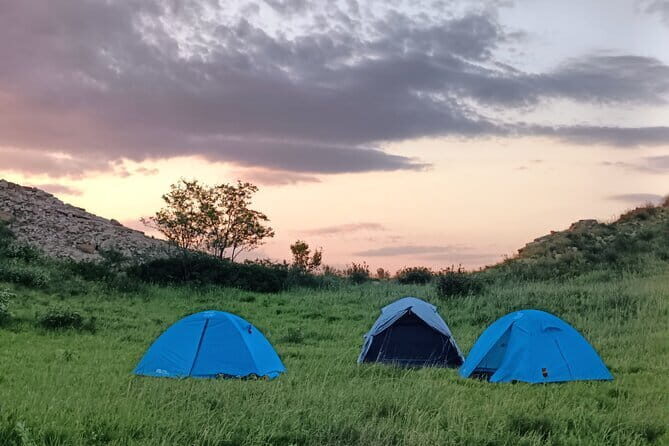
After Rainbow Mountain, the plan drives you to Kaoshan Tent for overnight. This is where comfort becomes a trade. The tour’s important note is blunt: there’s no private bathroom in the tent. You’ll use public baths and toilets.
This kind of night can be memorable if you like a more rustic, “close to nature” feel. But if you’re used to hotel privacy and clean predictable routines, you should treat this as a heads-up, not a surprise.
Practical move: pack your essentials for washing and bathroom trips so you’re not scrambling in the evening.
Jinta Populus Euphratica Forest and the Gobi Pass Views
The tour highlights include Jinta Populus euphratica forest for photography, plus a climb to a pass for wild, vast Gobi-scapes. Even though these highlights aren’t spelled out with specific time blocks in the detailed day list, they’re clearly part of the overall experience the operator is selling.
If you love unusual regional plants and stark desert horizons, this is the section of the trip that should reward you most. Keep your camera ready, but also expect big-distance days around them—this route is built for movement between major Silk Road icons.
Jiayuguan Pass: First and Greatest Pass Under Heaven
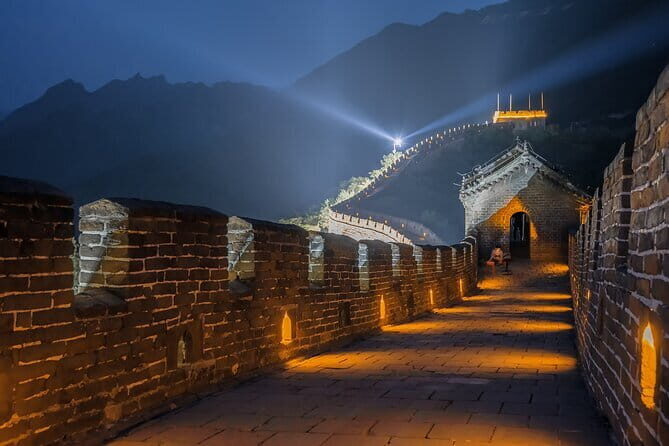
Jiayuguan Pass is scheduled for the morning after you meet your guide. The plan gives it multiple dramatic titles: the First and Greatest Pass Under Heaven, and the Throat of Hexi Corridor. It’s also described as the western end of the Ming Dynasty Great Wall.
This is one of those stops where context helps. The tour connects the pass to military defense and to trade and cultural exchange as a key Silk Road waypoint. You’re not just looking at stones; you’re looking at geography that controlled movement for centuries.
The visit also includes the Jiayuguan Great Wall Museum, which the plan calls the first Great Wall themed museum, with 7 major exhibition areas. Even if you skim, museum time can help you understand what you’re seeing outside.
Xuanbi Great Wall: The Overhanging Wall at a 45-Degree Feeling
Next comes Xuanbi Great Wall, about 11 kilometers from downtown Jiayuguan. The tour describes it as overhanging and named for its 45-degree position that resembles hanging upside down in the sky. It’s described as an important part of Jiayuguan’s northern defense system.
For many people, this is where the views and the photos are both strong. For you, the value depends on your comfort with stairs and steep terrain. If you like dramatic angles and don’t mind walking, you’ll likely enjoy it. If not, take breaks and focus on key viewpoints.
Dunhuang’s Mogao Caves: The Silk Road’s Big Buddhist Art Hit
Mogao Grottoes are the spiritual heavyweight of the trip. The tour describes the site as the existing anthology of Buddhist art with the biggest scale and best preservation in the world, often called the pearls of oriental art.
The plan includes specific art-stat facts:
- 735 “verns” (as listed)
- about 45,000 square kilometers of frescoes (as listed)
- 2,415 painted sculptures
- more than 4,000 flying apsaras
- 5 wooden constructions from Tang and Song eras
- thousands of stone pillars and flagstones with lotus carvings
Even if you don’t memorize every number, you’ll feel the scale when you’re inside. This stop is also where an English-speaking guide can make a real difference—Buddhist iconography is easier to read when someone helps you connect symbols to history and themes.
A drawback to keep in mind: sites this famous can be emotionally intense and visually busy. If you need quiet time, plan on stepping back occasionally.
Crescent Moon Pool and Echo Sand Mountain: Water Meets Desert
After Mogao, you go to Crescent Spring and Echo Sand Mountain. The tour describes a miracle pairing: spring water coexisting with sand mountains for thousands of years. Crescent Spring is described as shaped like a pearl embraced by mountains, while Echo Sand Mountain is described like a huge dragon.
There are optional activities on Echo Sand Mountain. The tour suggests you pay in cash on your own if you want them, and your guide can help you buy tickets. This is nice because you can decide based on how hot or tired you feel.
As a practical matter, bring water, and consider footwear that handles sand. You’ll likely walk around more than you think.
Shazhou Night Market: A Different Side of Dunhuang
The final evening includes Shazhou Night Market. The plan frames it as a northwest city night scene with special energy from being far from China’s center.
This is a good decompression stop after big daytime sites. It’s also the one place on this route where food and browsing might tempt you into spending extra money, so set a small budget if you want to keep the trip tidy.
Pricing and Value: Is $2,538 per Person Fair for What You Get?
At $2,538 per person for 8 days, this is not a budget trip. But it can make sense if you value planning, private-group comfort, and guide help in remote regions.
Here’s what the price covers:
- All transfers in an air-conditioned vehicle
- Professional English-speaking guide as listed in the itinerary
- 7 nights in 4-star hotels with daily breakfast (twin-sharing rooms)
- Government taxes, fuel charge, and parking
- Admission tickets marked included for multiple major sites
- Mobile ticket
What it does not include:
- Any meals
- Tips for driver and guide
- Optional extra rides and shuttles inside attractions
- Single supplement
So the value equation is this: you’re paying for logistics, not just entry tickets. If you want a smooth, low-hassle route with English guidance at major sites like Ta’er and Mogao, the cost starts to look reasonable. If you’re a solo ultra-flex traveler who hates fixed timings, you may feel boxed in.
What You’ll Be Doing Day-to-Day (Without the Usual Guesswork)
This tour moves in a clear sequence: it starts with Qinghai region nature (Qinghai Lake and Chaka Salt Lake), then shifts into Buddhist and historic culture (Ta’er Monastery, Zhangye’s temples), then pulls you into the desert-defense and art center of the Silk Road (Jiayuguan and Dunhuang).
The big win is variety. You’re not only chasing one type of attraction. You’ll mix:
- Natural spectacle (salt lake reflection, open lake views, Danxia colors)
- Walking and canyon time (Pingshan Grand Canyon)
- Religious art and architecture (Ta’er Monastery and Mogao Caves)
- Silk Road infrastructure (Jiayuguan Pass and Xuanbi Great Wall)
- Photo sessions (Rainbow Mountain layers, Populus euphratica forest, Gobi-scapes)
And the guide factor matters. One helpful detail from past experiences: Orlando accompanied guests from Zhangye to Dunhuang, and that kind of continuity often makes the big sites easier to understand. If you book with this group, it’s smart to ask the operator who your guide will be for your segment so you can settle into the same explanations all the way through.
Practical Tips That Make This Trip Feel Easier
A few things I’d plan for based on how the trip is built:
- Bring layers. Qinghai and desert edges can swing from sunny warmth to cooler air.
- Pack for walking on uneven ground at canyon and Great Wall areas.
- Expect cash payments for optional activities noted in the plan (horse riding, boat cruise, extra sand activities).
- On the Kaoshan Tent night, plan around public baths and toilets rather than assuming hotel-style setup.
- Keep luggage simple: you get a maximum of 1 suitcase and 1 carry-on. Oversized items may face restrictions, so check first.
If you’re organizing a vegetarian diet, the plan says a vegetarian option is available if you advise at booking. That’s worth doing early so your meals don’t become a last-minute issue.
Should you book this private Silk Road tour?
Book it if you want:
- A private-group setup with a guide who handles logistics in remote regions
- A balanced mix of Tibetan Buddhism, Silk Road defenses, and world-famous art
- Photo-friendly stops with clear timing like Chaka’s mirror lake and Rainbow Mountain color hours
- A route that’s structured enough to avoid confusion when you’re traveling through multiple cities
Skip it or think twice if:
- You dislike fast pacing and long driving days
- You want a lot of free time at each site (this plan is built for efficient coverage)
- You strongly prefer private bathrooms every night (Kaoshan tent night is public-bath only)
- You’re very price-sensitive and don’t value guide-led interpretation at major monuments
If you want your Silk Road trip to run smoothly without constant ticket-hunting and translation headaches, this one fits that goal.
FAQ
Where does the tour start and how do I get picked up?
The start is Xining Caojiabao Airport. A local English-speaking guide and driver meet you at the exit gate holding a welcome board with your name.
Do I have a guide every day?
You have a professional English-speaking guide as noted in the itinerary. On Day 8, you’re dropped off at Dunhuang airport by the driver with no tour guide service.
Are hotel nights included in the price?
Yes. The tour includes 7 nights in 4-star hotels with daily breakfast, twin-sharing rooms.
Are admission tickets included for the key attractions?
Many admissions are included as listed in the itinerary. Some stops are marked as admission ticket included (for example Chaka Salt Lake, Ta’er Monastery, Dafo Temple, Pingshan Grand Canyon, Rainbow Mountain, Jiayuguan Pass, Mogao Caves, and Crescent Moon Pool), while some are marked admission ticket free.
Are meals included?
No. Any meals are not included.
Can I do optional activities like boat rides or horse riding?
Optional activities are not included unless stated. The plan says you can pay in cash on your own for options such as boat cruise, horse riding, and bike riding, and your guide can help you purchase tickets.
What are the bathroom facilities like at the tent stay?
At Kaoshan Tent, there is no private bathroom. You have public baths and toilets.
What luggage can I bring?
Each traveler is allowed a maximum of 1 suitcase and 1 carry-on bag. Oversized or excessive luggage may have restrictions, so it’s best to ask the operator in advance if you’re bringing something large.
Is the tour refundable or changeable?
This experience is non-refundable and cannot be changed for any reason.
One last thing
If you book, I’d treat this as a “big highlights” Silk Road route: plan to walk, dress for temperature swings, and lean on the guide’s explanations at Ta’er and Mogao. That’s where the trip turns from pretty pictures into real understanding.