REVIEW · KUNMING
8 Days Classic Tour of Yunnan
Book on Viator →Operated by Wonders Of Yunnan Travel · Bookable on Viator
Yunnan feels like China on fast-forward. This classic 8-day circuit strings together old trade routes, mountain scenery, and Tibetan borderland culture with an English-speaking guide and private transfers from start to finish. I especially like how it balances iconic sights (Stone Forest, Jade Dragon, Tiger Leaping Gorge) with slower, more local moments like Dali stroll time and Xizhou’s morning market.
What I also like is that so many key sights come with tickets included, so you’re not constantly doing guesswork at each gate—entrance tickets are part of the plan. One possible drawback: the route is packed, includes an early start for Jade Dragon Snow Mountain, and the Shangri-La area sits well over 3,000 meters, so you’ll want to pace yourself and be ready for altitude and mountain weather changes.
In This Review
- Key highlights worth your attention
- The Kunming to Shangri-La “Classic” Route, and why it works
- Price and logistics that really affect your trip value ($2,015 per person)
- Day 1 in Kunming: Green Lake (Cui Hu) plus a cultural optional night
- Day 2: Stone Forest and Jiuxiang caves, karst views that look staged
- Stone Forest (Shilin County)
- Jiuxiang Scenic Region (Caves)
- Day 3: High-speed train to Dali and Bai Old Town strolling
- Day 4: Xizhou morning market, Erhai boat ride, and Lijiang by night
- Xizhou Town morning market
- Erhai Lake boat trip and Cangshan views
- Old Town of Lijiang (time to enjoy it at night)
- Day 5: Jade Dragon Snow Mountain, Baisha murals, and Shuhe’s quieter vibe
- Jade Dragon (Jade Dragon Snow Mountain) and the Impression show
- Baisha Village murals (Naxi culture)
- Shuhe Ancient Town
- Day 6: Yangtze First Bend, Tiger Leaping Gorge, and up to Dukezong (Shangri-La)
- Yangtze River First Bend (Stone Drum Town)
- Tiger Leaping Gorge (Hutiao Xia)
- Dukezong Ancient Town (Shangri-La)
- Day 7: Songzanlin Monastery and Potatso National Park
- Songzanlin Monastery (Little Potala)
- Potatso National Park
- Day 8: Yak steak cowboy breakfast and airport transfer
- Who this tour suits best (and who should think twice)
- Should you book this Yunnan classic tour?
- FAQ
- What time does the tour start, and do you offer pickup?
- What is included in the $2,015 per person price?
- Is the Dynamic Yunnan show included?
- How do you get from Kunming to Dali?
- Are meals included besides breakfast?
- What passport information do I need to provide?
- Is tipping expected?
- How late can I cancel for a refund?
Key highlights worth your attention

- Tea-Horse Road towns: Dali and Lijiang are shown as trading-world places, not just photo stops.
- Ticket value: major attractions are covered, plus 7 breakfasts and daily water bottles.
- Fast Kunming to Dali transfer: a high-speed train saves you hours of road time.
- Tiger Leaping Gorge to Dukezong: the journey jumps from deep river drama to Tibetan plateau streets.
- Staff help that feels responsive: the operator’s named coordinators like Zoie and Christy have a reputation for prompt, organized communication, which matters when you’re juggling trains and altitude days.
The Kunming to Shangri-La “Classic” Route, and why it works
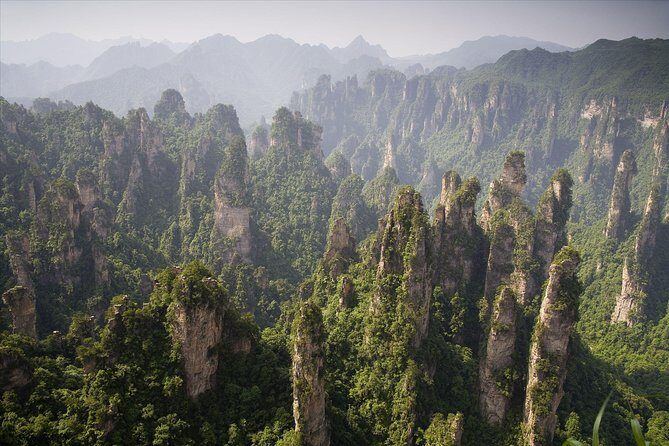
If you want Yunnan that goes beyond city life and factory tours, this itinerary is built for you. It moves in an arc: Kunming’s lake-and-park calm, then karst weirdness at Shilin and Jiuxiang, onward to trading-town Dali, romantic Lijiang at night, and finally north into the Yangtze gorge country and Tibetan borderlands.
The big win is sequencing. You start at lower elevations around Kunming and Dali, then gradually climb toward Shangri-La (Dukezong). That matters because you’ll feel the altitude more as you go, especially on the monastery and park days.
Also, the tour is run as private for your group, so you’re not stuck waiting on a different pace or language skills. The downside is that the schedule still stays ambitious. You’ll be on the move most days, and you’ll need a reasonable fitness level for early mornings and some uphill/outdoor time.
You can also read our reviews of more tours and experiences in Kunming.

Price and logistics that really affect your trip value ($2,015 per person)
Let’s talk value in plain terms. At $2,015.00 per person, you’re paying for a package that includes:
- 7 nights accommodation with breakfast (twin-bed room for 2 pax, per chosen category)
- Private transportation and transfers with pick-up and drop-off
- Experienced licensed local English-speaking guide
- 24/7 English-speaking customer service
- High-speed train Kunming → Dali (2nd class seat)
- Entrance tickets to the attractions listed in the itinerary
- 2 bottles of drinking water (500 ml each) per day
- Supplements for meals and accommodation for driver and guide, plus handling/taxes
Not included: your flight into China, Chinese visa, meals not listed, travel insurance, personal expenses, tips, and the Dynamic Yunnan show (optional add-on).
So is it “worth it”? If you hate the admin part of travel—booking trains, buying tickets, switching guides, figuring out local transport—this price is a way to buy time and certainty. You also get guide help with timing and getting you where you need to be, like the morning market at Xizhou and the handoff to your Tiger Leaping Gorge guide.
Two logistics points you should plan around:
- The tour’s daily working window for the driver and guide is maximum 10 hours per day.
- The itinerary runs on weather in the mountains. If conditions are poor, the experience may be changed or canceled, with an offered different date or a full refund.
Finally, there’s an admin requirement that surprises many first-timers: to register legally with local authorities, you must send passport information. Until they have it, they won’t start arranging the tour for you. This is not the place to procrastinate.
Day 1 in Kunming: Green Lake (Cui Hu) plus a cultural optional night
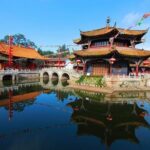
You start with a hotel transfer in Kunming, timed to help you recover after arrival. If you have the energy, Green Lake Park is a relaxing first step. It’s a classic city reset with humped-back bridges and traditional pavilion-style views around the water. Even if you don’t do more than a stroll, it’s a good way to get your bearings fast and not jump straight into a long-journey day.
Then there’s the optional Dynamic Yunnan Show at Kunming’s Art Theatre. It’s not included, but it’s available on request. If you like performance art with ethnic-inspired dance and music elements, it’s an easy add-on after you’ve stretched your legs.
Practical notes:
- Green Lake admission is free per the plan.
- This is a lighter day by design. Keep dinner low-key so you can handle tomorrow’s early road time.
Day 2: Stone Forest and Jiuxiang caves, karst views that look staged
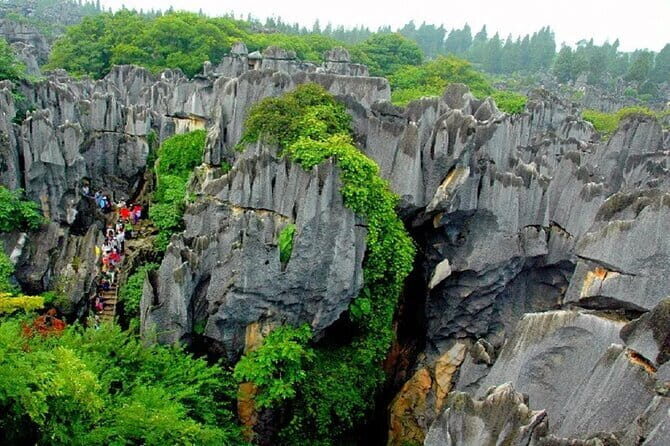
Day 2 is all about geology—Yunnan style, which means huge scale and shapes that feel impossible.
Stone Forest (Shilin County)
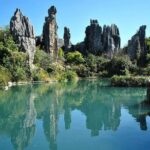
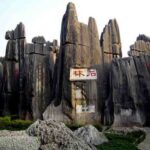
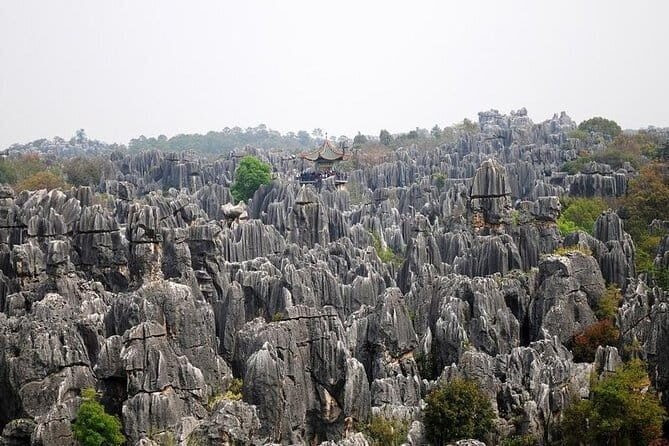
You drive about 1.5 hours from Kunming to the Stone Forest. This is where weather and time have carved a massive karst labyrinth, so you’re basically walking through a “stone forest” of towering formations. The park also connects to living culture: the Sani minority (a branch of the Yi group) is still present in the area, and you may see local life such as folk singing or embroidery activity inside the park.
Why this works on a tour: you get the “wow” factor of the formations, but you’re also not shown only empty scenery.
Possible drawback: the park involves walking on uneven surfaces. Comfortable shoes matter more than souvenirs.

Jiuxiang Scenic Region (Caves)
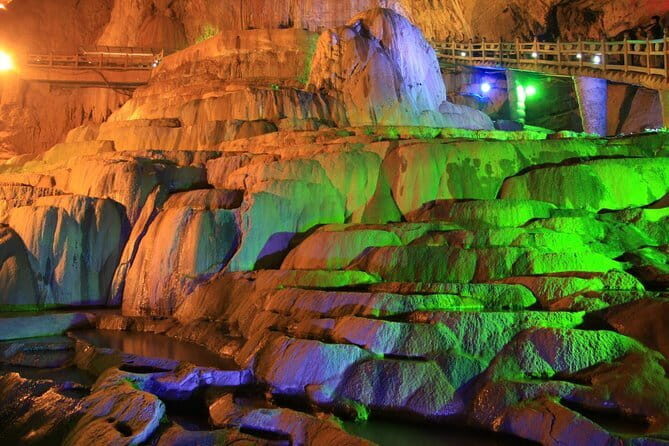
After lunch, you head to Jiuxiang Caves, part of a large cave system in China. The plan includes seeing river-and-waterfall features plus forests and stone bridges inside a fairy-tale setting. You enter through a narrow canyon, and the cable car adds a second angle—views from above while you pass the entrance hidden in the trees.
Why it’s a smart pairing: Stone Forest is open-air surreal. Jiuxiang turns that surreal into something enclosed and cool.
Tip: caves can feel cooler than outside. A light layer helps.
Day 3: High-speed train to Dali and Bai Old Town strolling
You take the train from Kunming to Dali, about two hours. The plan even recommends train D8672 (09:24–11:32), with other times possible by request. This kind of transfer is exactly what you want in Yunnan, where road travel can be slow.
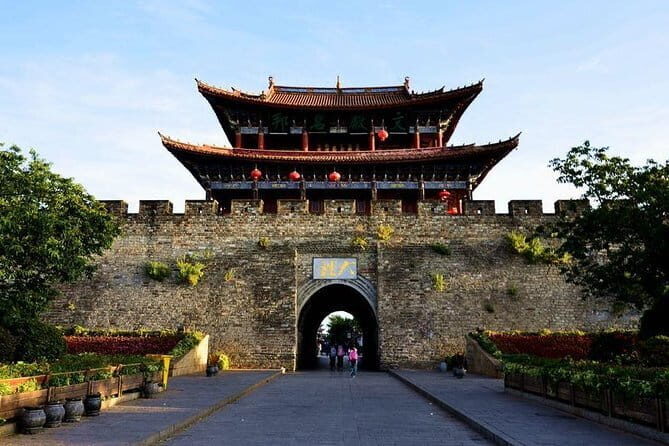
Once you arrive at Dali Railway Station in Xiaguan, your Dali guide meets you and brings you into Dali Old Town. This is where you get the Bai heartland feel—colorful traditional clothing, wooden houses with ornate eaves, and stone streets that have seen centuries of foot traffic.
The itinerary then gives you time to roam. You’re not forced into a “look then rush” loop. Instead, you can stop for a drink, coffee, or chat with local artists selling handicrafts, which is often where you pick up the most practical local context.
What to consider: Dali Old Town time is flexible, so if you’re the type who wants a strict program at every hour, you might find this day feels slower than the ones with big set-piece attractions.
Day 4: Xizhou morning market, Erhai boat ride, and Lijiang by night
This is one of the most “local-leaning” days.
Xizhou Town morning market
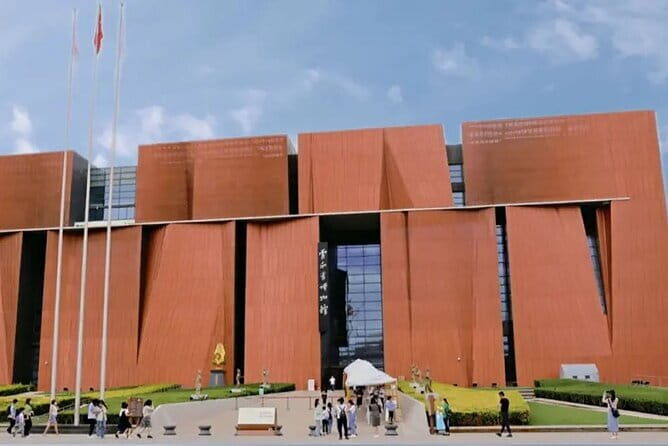
You head to Xizhou, about 19 kilometers north of Dali Old Town, where the morning market is the star. Locals in traditional minority clothing sell and buy fruit, freshly cut meat, spices, livestock—basically the daily economy of this region.
The plan also includes a traditional Three Course Tea ceremony and an example of Bai-style courtyard homes. This is the kind of cultural add-on that helps you understand how people lived between trade stops.
Erhai Lake boat trip and Cangshan views
Then it’s off to Erhai Lake. You take a short boat trip to Tianjingge Island and get big views of the Cangshan Mountain Range rising behind Dali, plus calm lake energy with birds flying overhead.
Old Town of Lijiang (time to enjoy it at night)
After lunch you drive to Lijiang (about 2.5 hours), go straight to your hotel, and then you get time to experience Lijiang Old Town at night. This is a key design choice. Lijiang has channels and a water-supply system that still functions, and after dark it feels more “romantic” and less rushed. The tour framing also emphasizes Lijiang as a Tea Horse Road stopping point—traders, merchants, and the whole trading ecosystem that shaped the town.
Possible drawback: Lijiang Old Town can be busy even without bad weather. If you prefer quiet streets, go looking for side alleys rather than staying only on the main lanes.
Day 5: Jade Dragon Snow Mountain, Baisha murals, and Shuhe’s quieter vibe
This day starts early, and that’s on purpose.
Jade Dragon (Jade Dragon Snow Mountain) and the Impression show
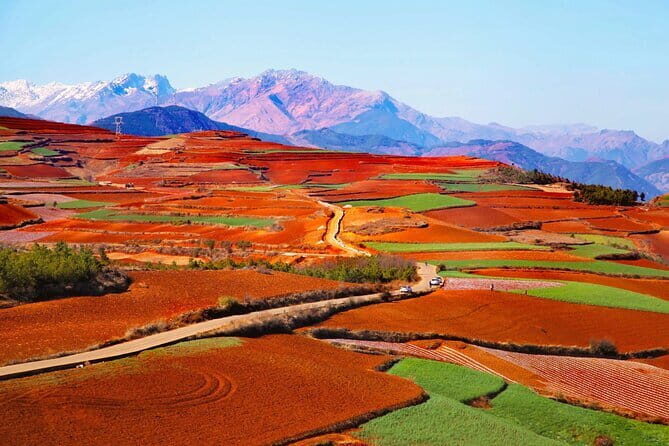
You rise early for Jade Dragon Snow Mountain, with the plan including the Impression show at Ganhaizi at the mountain base. Then you move into Blue Moon Valley and ride a scenic cable car up to Glacier Park.
Even if you’ve seen “snow mountain” photos before, this one is different because the route pairs dramatic views with set pieces designed for visitors. The cable car reduces the amount of steep hiking you need to do, which helps if your group has mixed energy levels.
One important consideration: there can be variations in which cable car sections are included (and that’s caused confusion in the past with some versions). Before you go, make sure you understand which stops are included in your package so there are no surprises around glacier-related viewing areas.
Baisha Village murals (Naxi culture)
Next you visit Baisha Village, known for intricate Baisha murals tied to Naxi cultural heritage. This is a good break from mountain travel because it shifts from scenery to art and community identity.
Shuhe Ancient Town
You end the day at Shuhe Ancient Town, described as picturesque and tranquil. This works well after the energy of Jade Dragon, because Shuhe often feels like the “slower cousin” of Lijiang Old Town.
Day 6: Yangtze First Bend, Tiger Leaping Gorge, and up to Dukezong (Shangri-La)
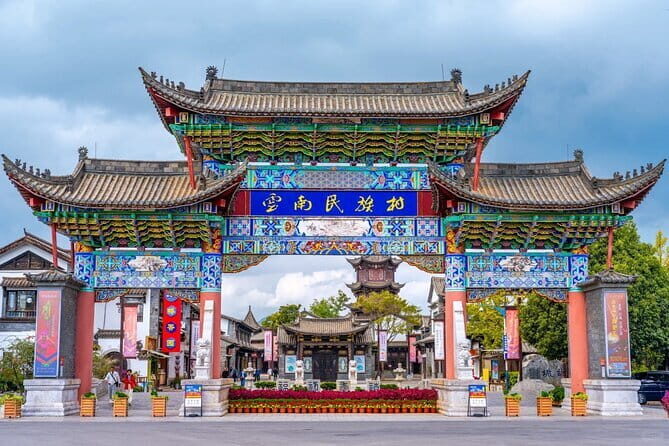
Day 6 is where the tour turns from “pretty Yunnan” into “big geography.”
Yangtze River First Bend (Stone Drum Town)
After breakfast, your driver takes you up to the First Bend of the Yangtze River at Stone Drum Town. This section is part of the Three Parallel Rivers of Yunnan Protected Areas. The plan highlights the river making a sudden V-turn, which is exactly the kind of shape you remember even if you don’t remember every fact.
Tiger Leaping Gorge (Hutiao Xia)
Then you continue north to Tiger Leaping Gorge (Hutiao Xia). The gorge is described as one of the deepest in the world, with the Jinsha river below and snow mountains rising around it. Your new guide meets you here.
The itinerary also notes that on the way you might feel it in your stomach as the road continues toward the area. If you’re prone to motion sickness, bring something you can use before you start the drive.
Dukezong Ancient Town (Shangri-La)
Later you go to Shangri-La, arriving at Dukezong Ancient Town in Zhongdian. The tour’s framing is about gradual change: barley fields, yaks, monks in robes, nomad-style plateau living, and mountains capped with snow year-round.
Altitude warning is built into the plan. Dukezong is at well over 3,000 meters, so this isn’t just a “bring a jacket” situation. It’s a pace-and-breath day. Slow steps help.
Day 7: Songzanlin Monastery and Potatso National Park
If Day 6 is geology and drama, Day 7 is spirit and high-country nature.
Songzanlin Monastery (Little Potala)
After Tibetan breakfast, you visit Songzanlin Monastery, also called Little Potala Palace. It’s a restored 17th-century monastery modeled after Potala in Lhasa, and it’s described as Yunnan’s largest Tibetan monastery with over 700 monks actively practicing. The golden roof is a big visual beacon, and you’ll have a chance to visit a local family and experience everyday herdsman life on the high steppe.
This is one of those moments where the tour is at its best because it moves beyond set-piece sightseeing into real daily life context.
Potatso National Park
After lunch, you go to Potatso National Park for a natural/ecology-focused visit. The plan keeps it broad, but that’s fine here—this area is about conservation and scenery rather than a single “one photo” attraction.
Practical note: you’re still on plateau time. Keep hydrated and don’t treat it like a race day.
Day 8: Yak steak cowboy breakfast and airport transfer
Your last morning includes a “cowboy’s breakfast” featuring prime yak steak and fried mushrooms, then you shop at Shangri-La markets before your driver drives you to the airport.
The plan calls out prayer flags, thangkas, and Khampa Cowboy Hats as popular finds. If you’re buying gifts, I’d treat this as your time window for it. Waiting until a day after your return plans can turn shopping into panic buying.
Who this tour suits best (and who should think twice)
This 8-day classic route is a strong fit if you:
- Want major Yunnan highlights without the planning headache
- Prefer a licensed English-speaking guide and private logistics
- Like a route that mixes big sights with culturally grounded market and town time
- Travel with family and want smooth handoffs between regions
It’s also a reasonable fit for groups that include older travelers, since the pacing uses drives, transfers, and cable cars to reduce strain on the whole group.
Think twice if you:
- Are very sensitive to altitude. Shangri-La is well over 3,000 meters, and you’ll be there for a full day.
- Want long unstructured downtime. The tour gives some roaming time (like Dali and Lijiang night), but the overall schedule is action-forward.
- Dislike early starts. Jade Dragon Snow Mountain requires an early rise.
Should you book this Yunnan classic tour?
If you want the “greatest hits” of Yunnan—Stone Forest, Dali, Lijiang, Yangtze gorge drama, and Tibetan plateau culture—this itinerary is built for exactly that. The price works best when you value tickets, guide expertise, and transport certainty all in one package.
I’d book if your travel style includes: organized days, good pacing for a mixed group, and real cultural stops like Xizhou’s morning market and Songzanlin’s monastery visit.
I’d hesitate if altitude or schedule intensity are dealbreakers, or if you already enjoy doing logistics on your own. In that case, you might spend less by planning trains and hotel transfers independently—just know it’s a lot more work than it looks.
If you do book, do one thing before you leave: confirm the details that affect expectations on the mountain sections (especially Jade Dragon cable car options) and don’t delay sending your passport info, because that’s what gets the tour legally arranged on time.
FAQ
What time does the tour start, and do you offer pickup?
The start time is 8:00 am, and the tour includes pick-up and drop-off as part of the private transportation and transfers.
What is included in the $2,015 per person price?
The price includes 7-night accommodation with breakfast, private transportation and transfers, licensed local English-speaking guide, 24/7 English-speaking customer service, high-speed train Kunming to Dali (2nd class seat), entrance tickets to the listed attractions, and two 500 ml bottles of drinking water per day, plus relevant taxes/handling.
Is the Dynamic Yunnan show included?
No. The Dynamic Yunnan Show ticket is not included, but it’s available on request.
How do you get from Kunming to Dali?
You travel by high-speed train from Kunming to Dali in 2nd class seat (about 2 hours).
Are meals included besides breakfast?
Only breakfast is included (7 breakfasts). Meals that are not listed in the program are not included. You can advise dietary requirements at booking.
What passport information do I need to provide?
To register the tour legally with local authorities, you need to provide passport details, including full name as in passport, passport number, birthday, expiry date, gender, and country. The tour is not arranged until they receive your passport information.
Is tipping expected?
Tipping is custom in China. The tour suggests 2–3 USD per person per day for the driver and 4–5 USD per person per day for the tour guide.
How late can I cancel for a refund?
You can cancel up to 6 days in advance for a full refund. 2–6 days before start time is a 50% refund, and less than 2 days before start time is not refunded. If canceled due to poor weather, you’ll be offered a different date or a full refund.