REVIEW · KUNMING
8-Day Private Yunnan Tour to Kunming, Dali, Lijiang and Shangri-La
Book on Viator →Operated by Travel China Guide · Bookable on Viator
Yunnan has a way of changing your mood fast. This private route strings together major sights across Kunming, Dali, Lijiang, and Shangri-La, with plenty of time in old towns plus nature stops that feel a lot less tourist-mall. You’ll see karst drama at the Stone Forest, classic Bai and Naxi culture, and high-altitude scenery in Shangri-La.
Two things I really like about this tour are the private guide/transport setup and the smart mix of iconic stops with everyday local texture, like a busy wet market in Kunming. The Golden Temple and Green Lake Park give you an easy start, then the trip builds into more memorable places like the Three Pagodas and Erhai Lake walking corridor.
One possible drawback: the pace is full. Even with private transport, you’ll spend long stretches on the move between cities, and in the mountains you should expect lines/time limits at major viewpoints.
In This Review
- Key highlights to look for
- A tight route across four very different Yunnan cities
- Kunming’s Golden Temple and Green Lake Park: an easy first day
- Zhuanxin Wet Market and the Stone Forest: real morning energy, big geology
- High-speed train to Dali: saving time without losing the flow
- Dali Ancient City, Three Pagodas, and an Erhai Lake walking plan
- Bai architecture in Xizhou and tie-dye in Zhoucheng: culture stops that feel hands-on
- Baisha Village murals, Dongba culture, and Jade Spring Pool: Naxi identity in plain view
- From Lijiang to Shangri-La via Yangtze bends and Tiger Leaping Gorge
- Songzanlin Temple and Potatso National Park: Tibetan Buddhism plus high-altitude lakes
- How the itinerary wraps up at Shangri-La Airport
- Price and what you’re really buying (besides the ticket)
- Guides, English support, and the small differences that matter
- Should you book this 8-day Yunnan private tour?
- FAQ
- What cities are included in this 8-day Yunnan private tour?
- Where does the tour start, and what time does it run?
- Is pickup included?
- Is this a private tour or a group tour?
- What’s included in the price?
- What is not included?
- Are admission tickets included?
- What kind of transport will you use between cities?
- What fitness level do you need?
- Is the tour refundable?
Key highlights to look for
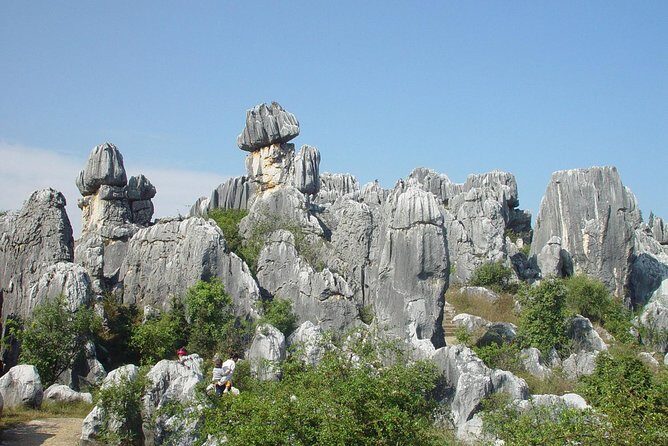
- Stone Forest: karst rock shapes that actually feel like animals and plants, not just “rocks.”
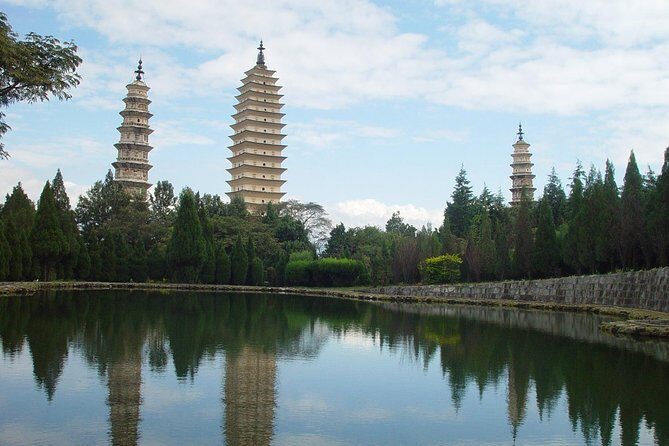
- Dali’s Three Pagodas facing Erhai Lake: easy-to-appreciate scenery with strong historic context.
- Lijiang Old Town at night: bluestone lanes with lantern lighting and a lively bar/food scene.
- Naxi culture stops in Lijiang: Baisha Murals, Dongba Cultural Museum, and the Joseph Rock residence area.
- Shangri-La at high altitude: Songzanlin Temple and Potatso National Park with Shudu Lake over 3,700 meters.
- Private guide continuity: your guide changes by region, but you keep the same end-to-end flow.
A tight route across four very different Yunnan cities
This tour works because it links four places that don’t feel interchangeable. Kunming is the urban gateway. Dali shifts toward lakes and Buddhist-era architecture. Lijiang brings Naxi culture and old-town walking streets. Then Shangri-La climbs into Tibetan Buddhist territory and high-altitude nature.
You’ll also appreciate the private approach. With your own vehicle and guide, you’re not constantly waiting for strangers to wander back. That matters in Yunnan, where some sites involve timed entry, stairs, and photo stops that can eat up time if you’re stuck in a slow group rhythm.
And yes, there are long days in the mix. But this itinerary avoids the most painful kind of travel: repeated backtracking. The direction mostly makes sense—Kunming → Dali → Lijiang → Shangri-La—and that reduces wasted hours.
You can also read our reviews of more private tours in Kunming

Kunming’s Golden Temple and Green Lake Park: an easy first day
Day 1 is set up to help you get grounded quickly after landing. You meet your guide at Kunming Changshui International Airport, then head into the downtown area for check-in. The goal here isn’t pressure. It’s orientation and an early taste of local life.
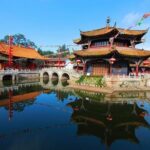
Then you visit Kunming Golden Temple, a Taoist temple on Mingfeng Hill. It’s about 400 years old and known for bronze elements that catch the light against the hillside scenery. This stop is a good “first wow” because you get architecture plus views without needing a full-day commitment.
After that, you stroll through Green Lake Park (West Gate). This is the kind of city park stop that works better than it sounds. You’re close to everyday Kunming—people walking, relaxing, and generally living at a slower pace than the sightseeing schedule. It’s also practical: it doesn’t fry your legs after a flight.
If you want a small strategy for day one: keep your first-night dinner simple and early. Kunming can still feel like a culture shock after travel, and you’ll enjoy Day 2 more when you’re fresh.
Zhuanxin Wet Market and the Stone Forest: real morning energy, big geology
Day 2 starts with the Zhuanxin Wet Market, billed as the largest marketplace in Kunming. You’re there for more than shopping. You’re watching how locals buy food—fruits, vegetables, meats—and how the market keeps moving all day. Even if you don’t buy anything, it gives you an instantly usable lens on daily life.
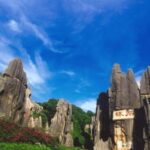
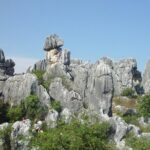
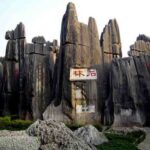
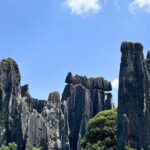
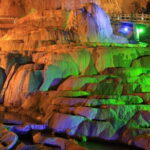
Then comes the big geology hit: Stone Forest Scenic Area. This is classic karst terrain. The rock formations take on shapes that can look like animals and plants, and that’s the point—you can “read” the shapes as you walk. For many people, the Stone Forest is the first place they feel how Yunnan’s terrain drives the character of the entire region.
Practical note: this is a walking-and-standing stop. Bring water (the tour provides two bottled waters per person per day, which helps), and wear shoes that don’t punish you on uneven paths.
One consideration: Stone Forest can be busy depending on the day. If you’re sensitive to crowds, aim to move steadily and don’t linger too long at every photo spot. You’ll enjoy more by keeping your pace.
High-speed train to Dali: saving time without losing the flow
From Kunming to Dali, you don’t waste half the day in a bus slog. You transfer to the railway station and take a high-speed train (~2 hours), then your Dali-based guide picks you up at arrival.
This is one of the most valuable design choices in the itinerary. When you’re doing multi-city tours, transit can become the hidden cost: you spend energy just to relocate. A short high-speed leg keeps you in sightseeing mode.
Once in Dali, you’re escorted to your hotel in the Dali Ancient City area. Staying close to the old city is a smart move because you can step out for evening meals and walking without another taxi ritual.
Dali Ancient City, Three Pagodas, and an Erhai Lake walking plan
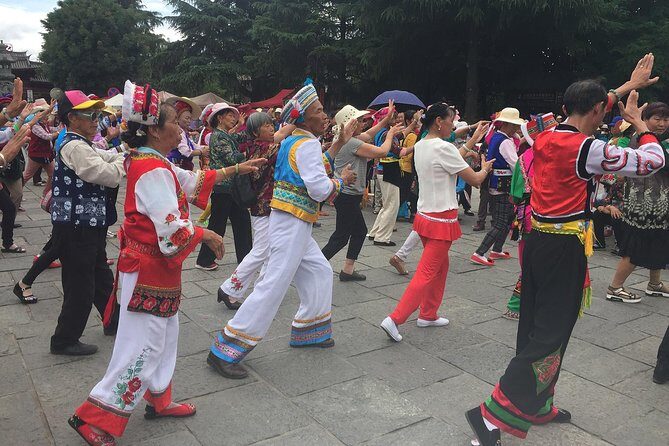
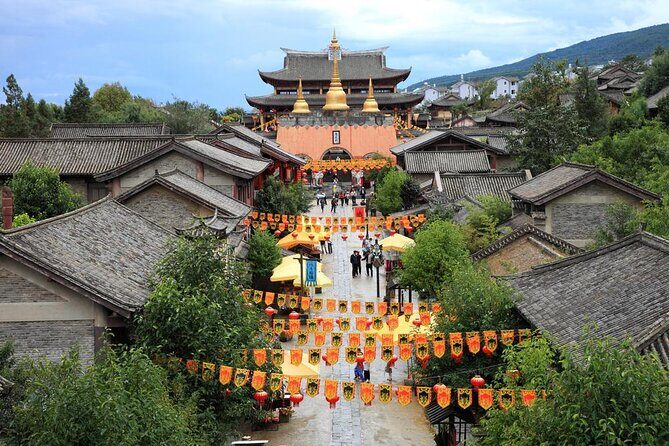
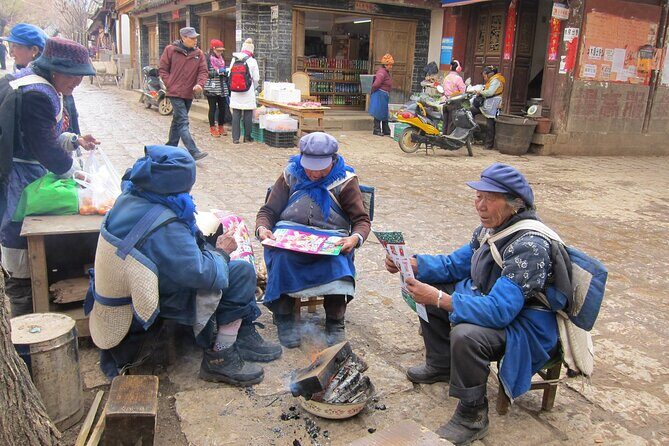
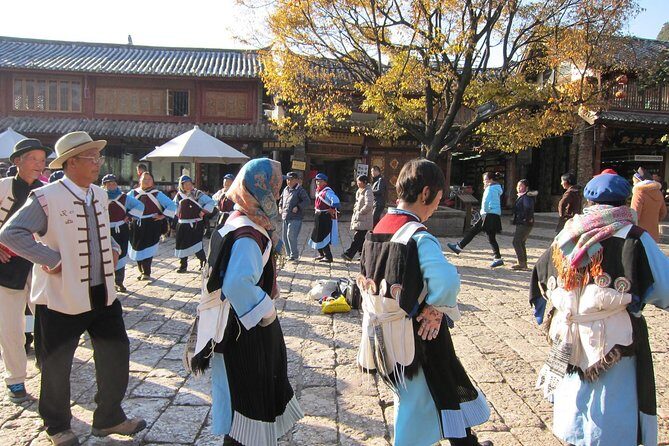
Day 3 is where Dali starts to feel like a place, not just a stop. You visit Dali Ancient City, with roots going back to the Ming Dynasty era (1382 is specifically mentioned). The experience here is part markets, part street wandering, and part people-watching—especially with local cultural dress and everyday rhythm.
Next are the Chongsheng Three Pagodas, facing Erhai Lake. They’re described as about 1,800 years old and set within Chongsheng Temple. This is one of those sights that rewards a calm pace. You’ll get better value if you pause for the lake-facing views and take in how the pagodas work with the water and sky.
The day ends with a guided walk along an ecological corridor of Erhai Lake. If you like getting your legs moving, it’s a nice change from temple time. The guide can also suggest cycling options—bicycle rental is mentioned as at your own cost, and the guide helps with the biking route. That’s a good add-on if you’re the type who enjoys a self-paced loop instead of standing in lines.

Bai architecture in Xizhou and tie-dye in Zhoucheng: culture stops that feel hands-on
On Day 4, you leave Dali and head toward Lijiang, but you don’t do it in a straight line. First stop is the Bai Nationality traditional houses in Xizhou. These are valued because they’re well-preserved and have clear architectural signatures: wood and stone details, plus lime-powdered walls with carving and painting.
Then you go to Zhoucheng Village for traditional hand-made tie-dyeing in a local home setting. This is a better kind of “craft visit” because it’s not just a studio display. It’s framed as part of how local people live and work.
By the time you reach Lijiang, the itinerary shifts to the old-town experience. You check in, then head out for Lijiang Old Town’s Square Street, where bluestone lanes connect souvenir shops, bars, and restaurants. The tour specifically calls out that the most charming part is at night, when red lanterns light up and the street feels both relaxed and lively.
If you’re planning what to do in your free time: pick one street loop and let yourself miss some shops on purpose. Old towns can start to blur if you try to see everything.
Baisha Village murals, Dongba culture, and Jade Spring Pool: Naxi identity in plain view
Day 5 is the culture + nature blend around Lijiang. You start in Baisha Village, visiting a local Naxi family to learn about daily habits and customs. Then you see the Baisha Murals, described as mixing Han, Tibet, and Naxi influences. That mix matters because it shows how cultures overlap in this region, not in a museum-only way.
After that, you visit Yu Wu Village, including the Former Residence of Dr. Joseph Rock in the Yuhu village area at the foot of Jade Dragon Snow Mountain. This stop can be meaningful if you like understanding how foreigners helped document Yunnan, but the practical value is simpler: it gives you a sense of the mountain foothill context without requiring an all-day climb.
Next is Black Dragon Pool Park (Jade Spring Park), described as a large park with monuments. This is the nature break that also helps you reset your pace after museum-style stops. It’s a great spot to take photos and just watch how the light changes across the water and stone.
Then you wrap with the Dongba Cultural Museum, which focuses on Dongba culture preserved by Naxi people. If you want a clearer framework for what you’ve seen in murals and family visits, this museum helps connect the dots. It’s also one of those stops that’s easier to appreciate with time in between (which this itinerary provides).
One possible consideration based on real-world pacing: the Jade Dragon Snow Mountain area can attract lines at peak times. Even if this tour doesn’t promise a long summit plan, you should expect some queue time if you try to extend viewpoints on your own schedule.
From Lijiang to Shangri-La via Yangtze bends and Tiger Leaping Gorge
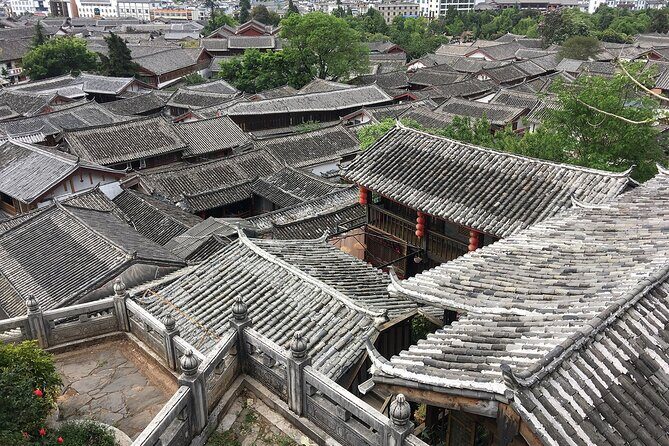
Day 6 is a transition day with landscape-driven stops and a guide handoff. You transfer to Shangri-La, with stops en route including the First Bend of the Yangtze River and Stone Drum Town.
Then there’s a notable change: your Lijiang guide says goodbye, the driver continues, and the Shangri-La guide greets you for the next segment. The route includes Tiger Leaping Gorge, a popular corridor area for dramatic scenery. Even if you only get a partial look, the “travel day” becomes a sight day.
This day matters for value because it reduces stress around logistics. You’re not managing multiple transfers yourself. And since you change regions, the guide handoff avoids the common problem of having to decipher everything without local context.
By the end of the day, you check in at your hotel in Shangri-La. If altitude affects you, take it easy on arrival. Even if you feel fine, your body may not agree for the first night.
Songzanlin Temple and Potatso National Park: Tibetan Buddhism plus high-altitude lakes
Day 7 brings the most altitude-heavy highlights. First is Songzanlin Scenic Area, including Songzanlin Temple, described as the biggest Tibetan Buddhist temple in Yunnan. It’s compared to the Potala Palace in Lhasa in style and layout, hence the nickname small Potala Palace.
This is where you’ll likely notice a shift in architecture and atmosphere compared to what you saw in Kunming and Dali. It’s also a good reminder that Yunnan isn’t one story—it’s several regions rubbing shoulders.
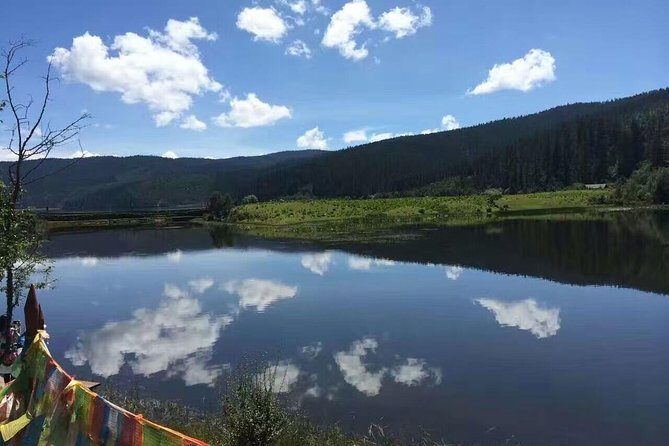
Next is Potatso National Park, with special focus on Shudu Lake, described as one of the largest plateau lakes in Shangri-La and at an altitude over 3,700 meters (12,140 feet). The tour frames Shudu Lake as the highlight, and the bigger point for you is altitude: expect cooler air, thinner comfort zones, and slower steps.
After the main scenery time, you visit a local Tibetan family to experience everyday Tibetan lifestyle. This is one of the few “life contact” stops on a mountain itinerary, and it can be meaningful if you keep expectations respectful. You’re not there to judge—just to observe and ask questions if your guide invites it.
How the itinerary wraps up at Shangri-La Airport
Day 8 is built around a calm finish. After breakfast, your guide escorts you to Shangri-la airport for your departure. The tour lists the meeting around a 30-minute buffer and keeps things simple—no last-minute detours.
This matters because it prevents the classic mistake: trying to squeeze one more sight while your departure time is looming. If you want souvenirs, do them the day before, not the morning you fly.
Price and what you’re really buying (besides the ticket)
At $1,529 per person for an 8-day private tour, you’re paying for three major things:
- Private transport in an air-conditioned vehicle across multiple cities. This reduces the time cost of moving.
- Professional private guide support plus entrance fees for the sites listed on the schedule.
- Hotel stays using twin-sharing rooms as per the itinerary (you also get breakfast for 7 days and two bottled waters per person per day).
That’s why the price can feel fair even when the itinerary looks “packed.” You’re not just buying attractions—you’re buying time saved and decisions handled.
Where you should expect extra spending:
- Visa fee and international airfare are not included.
- Peak season surcharges (public holidays, July & August) are not included.
- Lunch and dinners are not listed as included.
- Optional extras like bicycle rental near Erhai Lake are specifically noted as at your own cost.
- Any personal shopping is obviously on you.
Also, you’ll want to consider the practical value of private tours: you can ask your guide to adjust the pace at sensible moments, especially when crowding or weather changes the feel of a stop.
If you’re the kind of traveler who likes a plan but also wants breathing room, this setup is a good fit.
Guides, English support, and the small differences that matter
Private tours are only as good as the humans driving them. The feedback you provided highlights guide friendliness and organization, including examples of guides like Daniel providing airport welcome and clear information in Lijiang.
There’s also mention of Sally Si arranging a bespoke itinerary within a budget, which suggests the company can work with real constraints rather than forcing a rigid script.
One important caution from the provided information: there was a response clarifying that Xiao Tang may have been a driver cum guide and not the company’s formal guide. That doesn’t change your experience day-to-day much, but it’s a reminder to confirm your guide role details if that matters to you.
Either way, the core point is solid: you should expect an English-capable private guide, plus active help with on-site navigation, timing, and practical advice.
Should you book this 8-day Yunnan private tour?
I’d book this if you want a well-paced classic Yunnan loop with real culture stops (Bai houses, tie-dye, Naxi murals, Dongba culture), plus standout nature (Stone Forest, Erhai Lake corridor, Shudu Lake). The private transport and guide support are the big reasons it feels smooth.
Skip it or plan carefully if you know you’re sensitive to long travel days, crowd lines at major scenic areas, or altitude. In that case, travel with extra water patience, take slower steps in Shangri-La, and don’t plan to do a last-minute “extra viewpoint” on tight schedules.
If your goal is to see the main bones of Yunnan without wrestling logistics, this itinerary is a strong match.
FAQ
What cities are included in this 8-day Yunnan private tour?
The tour covers Kunming, Dali, Lijiang, and Shangri-La.
Where does the tour start, and what time does it run?
Start time is listed as 9:00 am. On Day 1, you meet your guide at Kunming Changshui International Airport and then go to your hotel.
Is pickup included?
Pickup is offered, and Day 1 includes meeting your guide at the airport arrival hall and escorting you to your hotel.
Is this a private tour or a group tour?
This is a private tour/activity and only your group participates.
What’s included in the price?
Included items are twin-sharing accommodations, two bottled waters per person per day, private air-conditioned transport, a professional private tour guide, entrance fees to listed sites, and breakfast for 7 days.
What is not included?
Not included: China visa fee, international airfares, and any peak season surcharge (public holidays, July & August, etc.).
Are admission tickets included?
For scheduled stops, entrance fees are included as listed in the itinerary (some stops show ticket included, others are free).
What kind of transport will you use between cities?
You’ll travel by private air-conditioned vehicle, with a high-speed train used for Kunming to Dali.
What fitness level do you need?
The tour asks for moderate physical fitness, and you’ll be doing walking at multiple scenic areas. Comfortable walking shoes are recommended.
Is the tour refundable?
The experience is listed as non-refundable and cannot be changed for any reason.