REVIEW · BEIJING
Beijing: Confucius Temple and the Impercial College E-ticket
Book on GetYourGuide →Operated by PidanTravelAgency · Bookable on GetYourGuide
Stone tablets carry the exam’s pulse. In one day, I love how Beijing’s Confucius Temple and Guozijian (Imperial College) connect worship, scholarship, and the civil service testing system through real spaces you can walk. The big win here is the chance to see Yuan Dynasty-era architecture plus exhibitions that explain how the imperial examination worked.
I also like the practical entry setup: use the QR code and your passport/ID, then go straight in without the long ticket hassle. One thing to consider is that you must bring your original passport (not a photo) and have your electronic ticket ready on your phone, or you may get stuck at the gate.
In This Review
- Key things I found most interesting
- Entering Confucius Temple and Guozijian with an e-ticket that actually works
- What you’re really seeing: worship, education, and the imperial exams in one circuit
- Confucius Temple’s three-courtyard plan and the 1306 Yuan-era anchor
- The stone tablets: where the imperial examination becomes real names
- Confucius Temple exhibitions: three ways to translate the site
- Guozijian (Imperial College): a state-run education space built in 1308
- Why this layout matters for your visit (not just architectural trivia)
- The best way to pace a one-day e-ticket visit
- Practical details that can make or break your experience
- Price and value: why $7 is a strong deal for two major sites
- Who should book this e-ticket, and who might want something else
- Should you book this Confucius Temple and Imperial College e-ticket?
Key things I found most interesting
- Skip-the-line style entry using QR code + your passport/ID at the gate
- Confucius Temple’s three courtyards and a north-south main axis of halls and gates
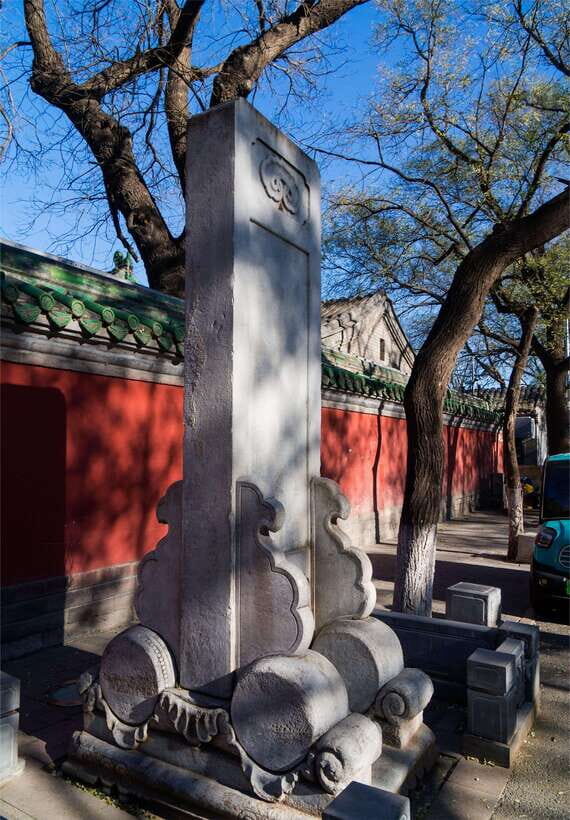
- Stone tablets with 51,624 Jinshi names tied directly to the imperial examination
- Guozijian’s layout as a state-run education center, with gates, halls, and symmetrical pavilions
- Three on-site exhibitions that turn the site into a clear story, not just buildings
- Audio guide option at the entrance if you want more narration while you walk
Entering Confucius Temple and Guozijian with an e-ticket that actually works
This is one of those Beijing tickets that feels designed for real people. You’re not stuck buying from a counter or figuring out maze-like lines. Instead, you use a QR code and your passport (or ID card, depending on what’s accepted for entry with your ticket) to enter.
Plan your day as a walk, not a sit-and-scroll. You’ll move through two connected cultural zones: Confucius Temple first, then Guozijian, the highest educational institution and education-admin organ set up by the state during the Yuan, Ming, and Qing dynasties.
Because it’s only one day, pace matters. Give yourself time to stop at the stone tablets and exhibitions. If you rush, you’ll miss the part that makes this site special: the way it explains the imperial exam system with names, ranks, and real records carved in stone.
A few more Beijing tours and experiences worth a look


What you’re really seeing: worship, education, and the imperial exams in one circuit
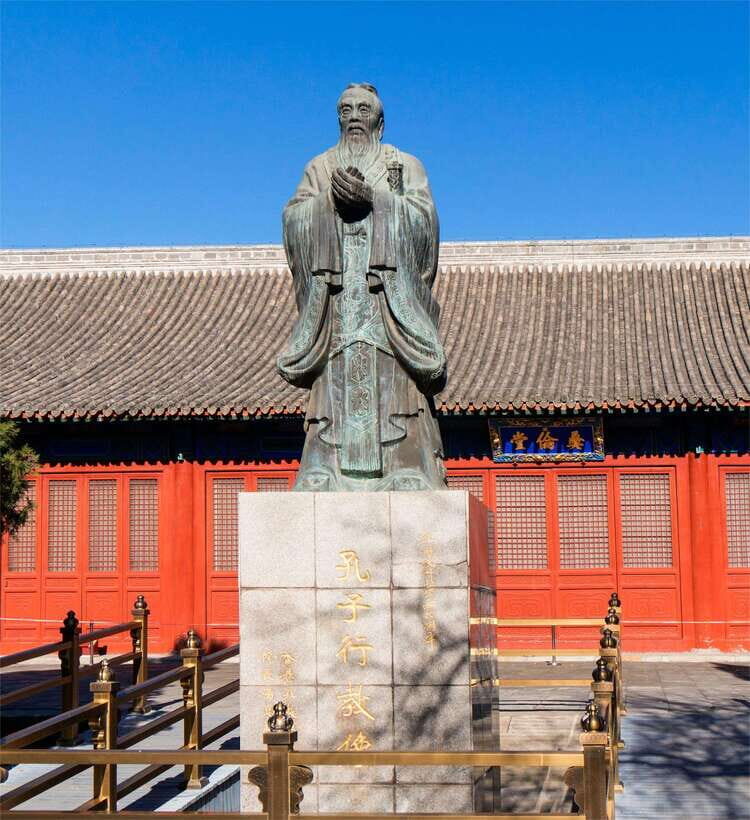
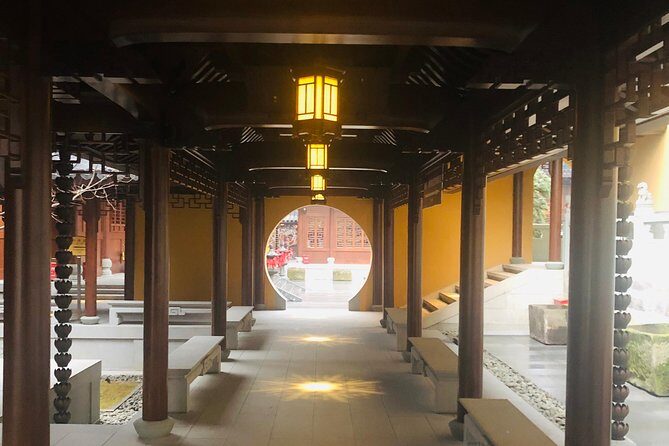
It helps to know what the buildings are doing for you. Confucius Temple wasn’t only a place for visitors to admire architecture. During the Yuan, Ming, and Qing dynasties, it served as a memorial site where ceremonies honored Confucius. That’s why you see a formal layout with major gates and halls aligned on a central axis.
Then Guozijian shifts the focus to schooling and administration. In the Yuan Dynasty, it was the top educational institution tied to state control of learning. So while Confucius Temple gives you the cultural and ceremonial side, Guozijian shows the education machine behind the ideas—especially the civil service track that relied on the imperial examination.
In short: this isn’t just two pretty stops. It’s two halves of the same worldview: respect for learning, and a system that turned that learning into careers.
Confucius Temple’s three-courtyard plan and the 1306 Yuan-era anchor
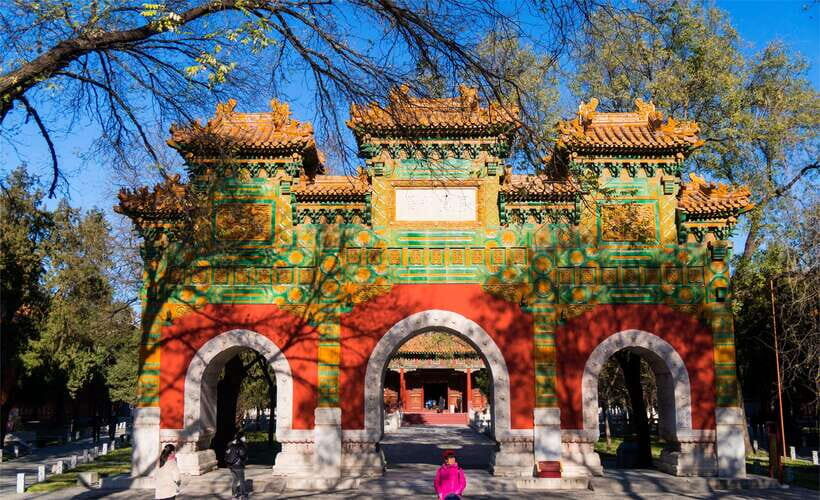
Confucius Temple dates back to the 1306 Dade year of the Yuan Dynasty, and it covers over 22,000 square meters. The construction area is about 7,400 square meters, and the complex is organized into three courtyards.
The layout follows a strict north-south axis. As you enter, you’ll move past the Teacher Gate, then on toward Dacheng Gate and Dacheng Hall. After that, you reach Chong Sheng Temple along the main line of movement. This axis isn’t random. It creates a feel of order and ceremony, like you’re traveling through a designed ritual route.
I like how the place rewards slow walking. Each courtyard gives you a different vantage point on halls and gates, and it’s easier to understand the purpose of the structures when you see them in sequence rather than as isolated photos.
The stone tablets: where the imperial examination becomes real names
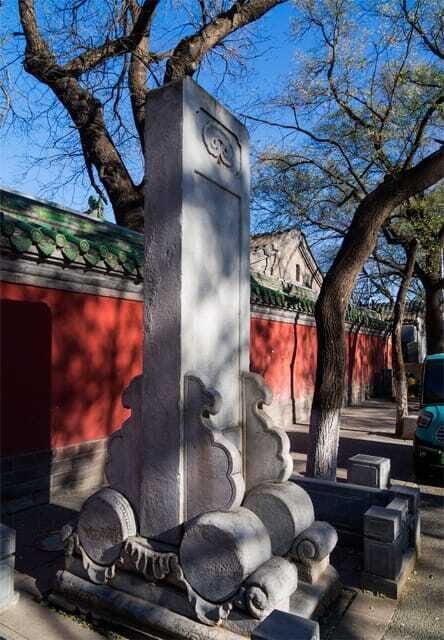
The standout feature inside Confucius Temple is the stone tablet collection. There are 198 stone tablets, arranged into four groups in the front courtyard area—placed on either side.
What makes them more than a decorative detail is the record they contain: a total of 51,624 names of Jinshi, including birthplaces and ranks. Jinshi were the top-level degree holders in the imperial examination system. Those carved records are considered precious materials for research into how the imperial exam worked.
If you’re the type who likes numbers and systems, this is your moment. You’re not just reading about exams; you’re looking at evidence that the results mattered enough to carve them into lasting stone.
Practical tip: take a moment to scan the tablet patterns and organization. Even without deep translation, the sheer scale tells you this was an official, long-running institution—not a one-off historical curiosity.
Confucius Temple exhibitions: three ways to translate the site
Right now, Confucius Temple has three exhibitions. If you want a clear, guided-style understanding without booking a full tour, this is where you’ll build context.
Here are the exhibitions you should look for:
- Exhibition of the Restored Dacheng Hall
- Exhibition of the Great Confucius
- Exhibition of the History of Beijing Confucius Temple
What I like about this trio is that it covers three different angles. One connects you to the physical hall itself (how it was restored and what to pay attention to). One centers Confucius as a figure tied to the site’s meaning. And one gives you the timeline of how the temple in Beijing fits into the bigger story across eras.
If you enjoy museums but don’t want a long indoor slog, these exhibitions are a good match for a one-day ticket.


Guozijian (Imperial College): a state-run education space built in 1308
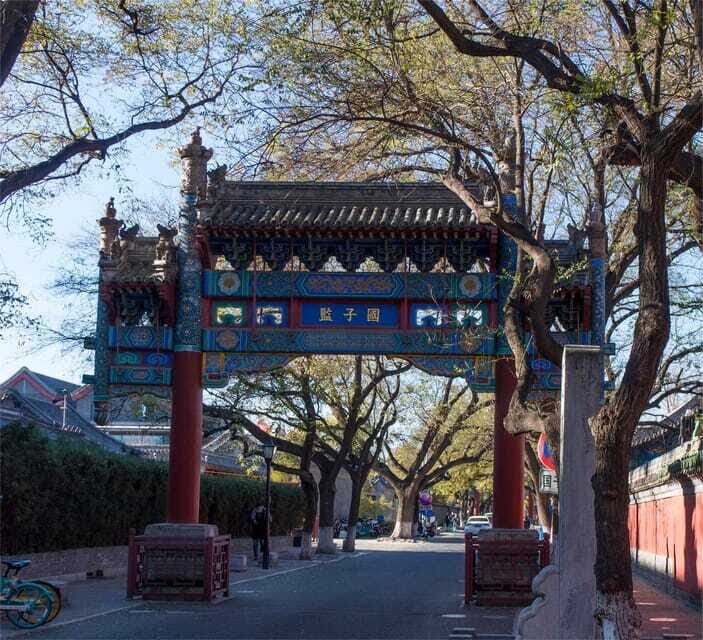
After Confucius Temple, you move to Guozijian, the Imperial College. It was built in the Yuan Dynasty in 1308 during the Zhida reign. This complex covers about 28,000 square meters, again laid out through multiple courtyards.
Guozijian uses the same idea of a main central axis, but the buildings you see are more tied to education and governance. As you walk along that axis, you’ll pass:
- Jixian Gate
- Taixue (Imperial College) Gate
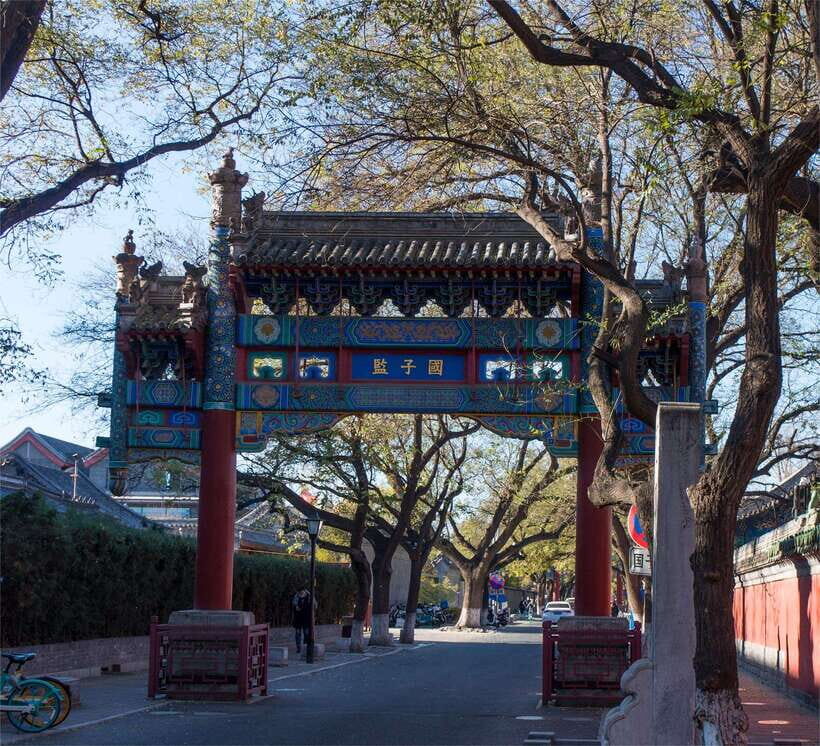
- Glazed memorial arch
- Biyong Hall
- Yilun Hall
- Jingyi Hall
On both sides, you’ll notice traditional symmetry. You can also see Imperial tablet pavilion and Bell and Drum pavilion aligned in a way that reinforces the sense of official order.
And yes, there’s a scale to it. This place includes two halls and six main rooms, plus those pavilions. It feels like an institution designed to run on routine: people arriving, studying, reading, and receiving instruction within a formal state setting.
Why this layout matters for your visit (not just architectural trivia)
I know “axis and gates” can sound like sightseeing filler, but it matters here. The site is built to teach you something while you walk.
Confucius Temple’s route—Teacher Gate to Dacheng Gate to Dacheng Hall—helps you feel how ceremonial learning was organized. Then Guozijian’s gate-and-hall sequence shows you how the state framed education as a system.
If you only take photos, you’ll miss this. If you slow down and watch how the buildings line up, you’ll understand the logic behind it faster than reading a textbook.
Think of it like this: architecture here is a curriculum. It’s telling you what the “important parts” are and in what order they should be experienced.
The best way to pace a one-day e-ticket visit
Because your duration is 1 day, I’d plan your time around two “deep” stops and one “support” stop.
1) Deep stop #1: Confucius Temple stone tablets
Spend enough time here to truly see the scale: 198 tablets and 51,624 Jinshi names. Even if you can’t read every character, you’ll grasp the weight of the record.
2) Deep stop #2: Guozijian main axis spaces
Walk the central line at a calm speed. Look for the sequence of gates and halls: Jixian Gate, Taixue Gate, and the halls that follow. This is the part where you feel the institution’s structure.
Support stop: the three Confucius Temple exhibitions
They’re your fastest way to connect what you’re seeing outside to what it means.
Also, if you want extra help while you walk, there’s an option to buy an audio guide at the entrance of the temple. This can be a smart move if you want more context without standing around reading every panel.
Practical details that can make or break your experience
Here are the small things that actually matter on-site:
- Bring the right ID: plan on using your original passport (and/or ID card, depending on what’s accepted with your ticket). Entry requires your original documents, not screenshots.
- Have your electronic ticket ready: the e-ticket is part of the entry process. Keep it accessible on your phone.
- Expect a guided-flow layout: the complexes are organized to pull you forward, so don’t expect to wander randomly and still “get it.”
- Wheelchair accessible: the site is listed as wheelchair accessible, which is useful if you need step-free navigation.
Because it’s a private group experience, you’re likely to move at your own pace more than with a large mass group. That’s a good fit for a place where stopping to read and look closely is half the fun.
Price and value: why $7 is a strong deal for two major sites
At around $7 per person for a 1-day visit, this ticket is strong value—mainly because you’re not paying for one small stop. You get access to both Confucius Temple and Guozijian (Imperial College), plus the on-site exhibition content inside the Confucius Temple area.
You’re also getting the practical benefit of skip-the-ticket-line style entry, which saves energy. In Beijing, energy is money. If you’re spending hours managing lines, you end up shortening the time you can actually spend seeing details.
So for a budget-minded day, this one works. It’s also a good option if you want a historically meaningful visit without turning your day into a long, expensive tour.
Who should book this e-ticket, and who might want something else
This experience is a great match if you:
- like history tied to systems (education, exams, state institutions)
- enjoy reading carved records and museum-style exhibits
- want a structured walk through a formal complex rather than only an open-air stroll
- prefer using QR code entry and keeping things simple
It might not be perfect for you if:
- you’re looking for a theme-park-style attraction with rides and constant action
- you want lots of hands-on activities (this is mainly buildings, stone records, and exhibitions)
- you’re the type who needs a long guided explanation for every stop; you can use an audio guide, but the experience is still self-paced.
Should you book this Confucius Temple and Imperial College e-ticket?
I’d book it if you want a high-value, structured historical day in Beijing. For the price, you’re getting two major complexes, clear exhibition content, and the unforgettable anchor of the stone tablets with Jinshi names.
I’d also book it if you’re comfortable doing a calm walk and paying attention to layout. The site rewards you for noticing how gates and halls line up, and the exhibitions help you connect what you see to why it mattered.
If you’re tight on time in Beijing and still want something meaningful beyond the usual big-name stops, this one is worth your slot.