REVIEW · BEIJING
Beijing lama Temple Or Confucius Temple Tickets Reservation
Book on GetYourGuide →Operated by Private China Trips · Bookable on GetYourGuide
Beijing’s temple entry can feel confusing until you see the QR code system. This experience is interesting because you’re not just buying a ticket—you’re getting a smooth, scan-and-go way into two major landmarks, with Lama Temple’s standout architecture as the main event. If you like religious art, imperial-era traditions, and getting your day planned without last-minute stress, this one fits.
I love two things here. First, the Lama Temple ticket includes the first entrance charge, so you’re not hunting for add-ons at the gate. Second, the QR code method makes the experience simple: the local supplier sends it straight to your email, mobile, and WhatsApp so you can scan and move on quickly.
One drawback to consider: the ticket included here covers Lama Temple only, not the Confucius Temple entry. You’ll need to manage the Confucius visit separately if you want both, and there’s no English-speaking guide included unless you choose an optional upgrade.
In This Review
- Key highlights to know before you go
- Beijing Lama Temple and Confucius: Two Temples, One Smooth Day
- How the Tickets Work: Passport Details and QR Code Entry
- Getting There: Subway Line 5 Exit F or Taxi to Lama Temple
- Inside Lama Temple: Three Pagodas, Five Halls, and the Three Buddhas
- Walking Between Temples: The Easy Link to Beijing Confucius
- Beijing Confucius Temple Layout: Courtyards, Yellow Glazed Tiles, and Scholar History
- Price and Value: What $16 Covers and What You’ll Still Need
- Optional Guided Trip Upgrades: When a Guide Is Worth the Extra
- Timing, What to Bring, and Small Rules That Matter
- Who This Works Best For (and Who Should Skip It)
- Should You Book? My Practical Recommendation
- FAQ
- What does the ticket price include?
- Do I need to provide passport details at booking?
- How do I get my tickets for entry?
- How do I get to Lama Temple using public transit?
- Can I combine Lama Temple and Confucius Temple in one visit?
- Is an English-speaking guide included?
- Is lunch included?
- Are pets allowed and is it suitable for pregnant women?
Key highlights to know before you go
- QR code delivery to email/mobile/WhatsApp so you can scan at the entrances without scrambling
- Subway option that’s practical: take Line 5 and get off at the Lama Temple station exit “F”
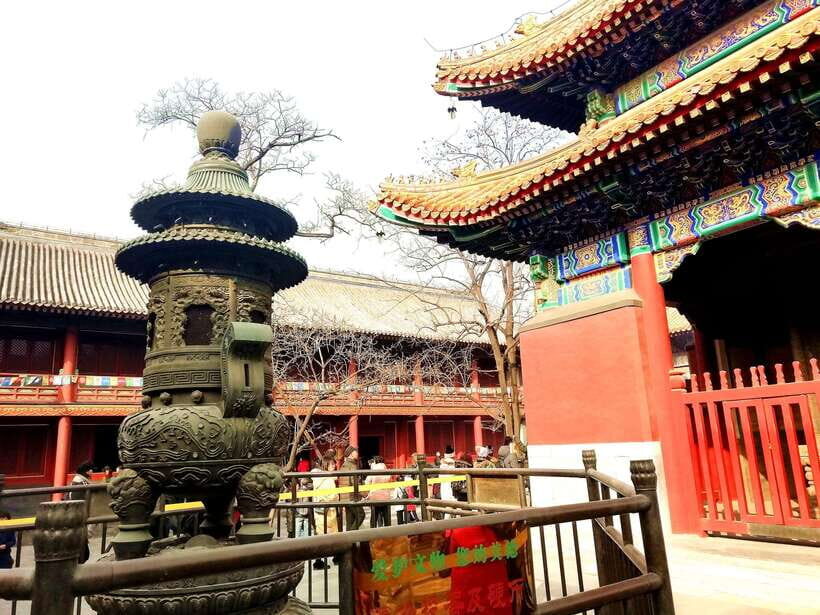
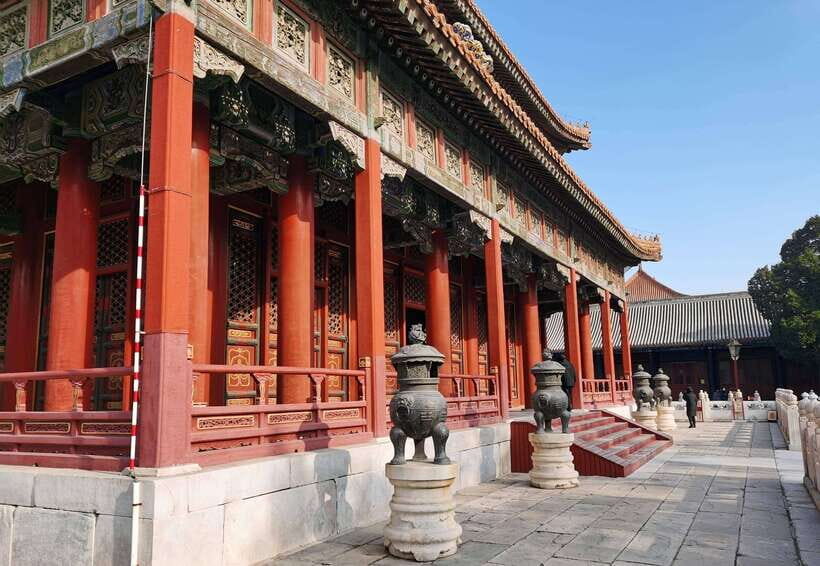
- Lama Temple’s layout is distinctive: three pagodas and five grand halls with Han, Manchu, and Mongolian architectural styles
- Main hall focus: the statue of the Three Buddhas (past, present, future)
- Confucius Temple is laid out on the central axis with symmetrical courtyards and yellow glazed-tile roofs
- A scholar-title monument tied to the imperial exams for extra historical context
Beijing Lama Temple and Confucius: Two Temples, One Smooth Day
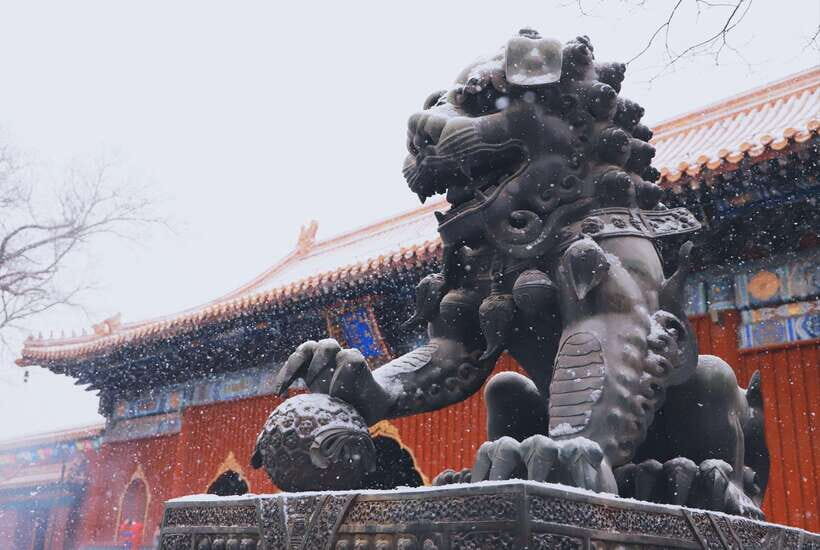
If you want a Beijing day that feels very “old China” without turning into a logistics headache, this ticket setup helps. Lama Temple gives you a major Buddhist stop with big architectural statements—pagodas, grand halls, and a clear sense of design. Confucius Temple then adds a different mood: learning, ritual space, and the long-running story behind China’s civil service exam tradition.
The best part is how the visit connects. After you finish at Lama Temple, you can walk out briefly and enter Confucius using another QR scan. That means you’re not bouncing across the city with new directions and tickets.
This is also flexible in timing. The experience duration shows a wide range (2 to 11 hours), which usually works well if you’re the type who takes time inside halls, pauses for photos, and doesn’t rush every courtyard.
A few more Beijing tours and experiences worth a look



How the Tickets Work: Passport Details and QR Code Entry
Before anything else, know the key admin step: you must provide passport information at booking. That includes your passport name, passport number, and date of birth. You also need to share your email address plus mobile number and WhatsApp number, because that’s where your QR codes get sent.
The local supplier sends your QR code directly to you. Then at the entrances, you scan the QR code you received in advance. In plain terms: this is designed to cut down on waiting and confusion at the gate.
If you forget this part, you may lose time. So I’d treat it like a checklist item:
- Double-check your passport details before booking
- Use contact info you actually have access to on travel day
- Keep the QR code accessible on your phone (screen brightness on, no Wi‑Fi stress if you can manage it)
Also note the included scope: the included ticket is for Lama Temple only. Your Confucius visit requires separate entry, even though the walk connection is easy once you’re done with Lama Temple.
Getting There: Subway Line 5 Exit F or Taxi to Lama Temple
You’ve got two straightforward approaches.
Option 1: Subway. Take subway line 5, then get off at exit “F” of the Lama Temple station. From there, it’s about a 5-minute walk to Lama Temple. This is a solid choice if you’re already using the subway and want predictable travel time.
Option 2: Taxi. You can also take a cab directly to Lama Temple. This is usually faster door-to-door if you’re carrying bags, traveling in colder months, or just prefer minimal walking before your visit begins.
Once you’re at Lama Temple, you enter by scanning the QR code. After you finish, you walk out for around 3 minutes and then scan another QR code at the entrance of Beijing Confucius to continue.
Inside Lama Temple: Three Pagodas, Five Halls, and the Three Buddhas
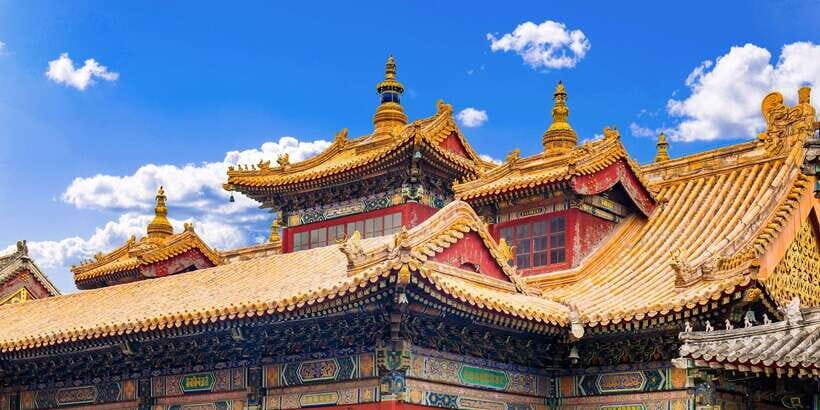
Lama Temple is the reason most people plan this day. It’s not just a pretty facade. The site has a complete architectural layout built to a specific system connected with Brahma Gyalan. What that means for you on the ground: the complex feels designed as a whole, not a random collection of buildings.
You’ll see:
- Three exquisite pagodas
- Five grand halls
The architecture is described as reflecting the styles of Han, Manchu, and Mongolian nationalities. That blend matters because it gives you a visual mix that feels larger than “one temple style.” Even if you don’t know the technical terms, your eyes will notice the variation across structures.
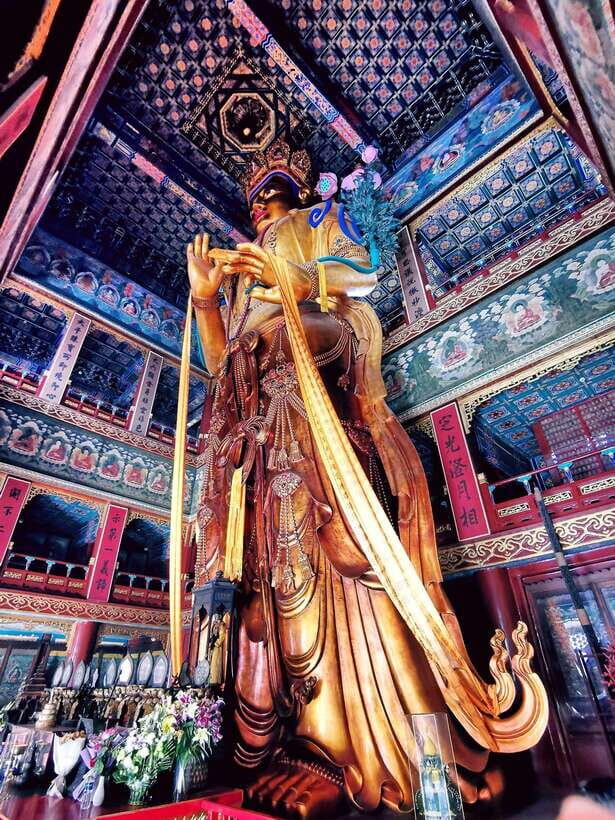
In the main hall, the focus is the Three Buddhas, representing the Buddha of the past, present, and future. That trio theme is the kind of detail that gives the visit meaning beyond sightseeing. When you’re standing in that space, it helps to remember you’re looking at a concept of time and continuity, not only an artwork display.
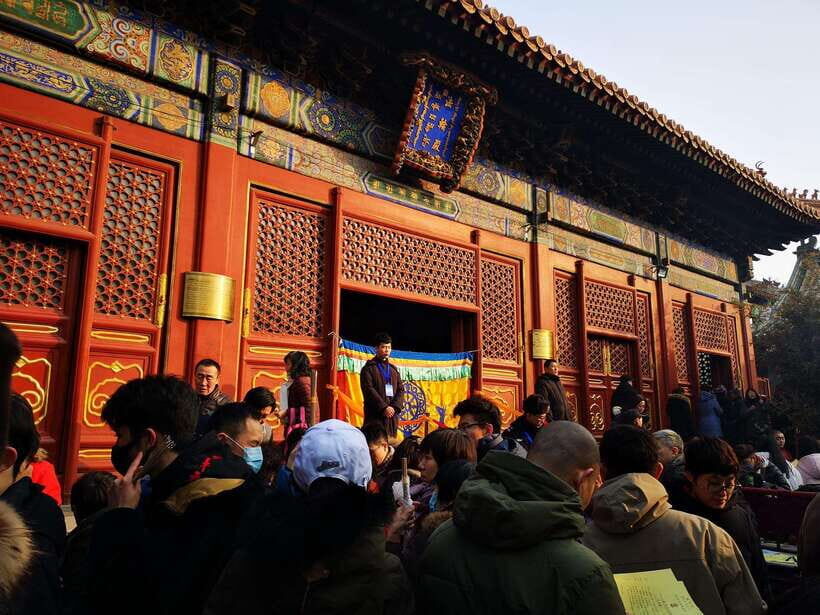
Practical tip: because this is a major temple, expect people in key areas. Booking in advance helps you avoid the worst crowd surges, especially around the entrances and popular viewing spots.
Walking Between Temples: The Easy Link to Beijing Confucius
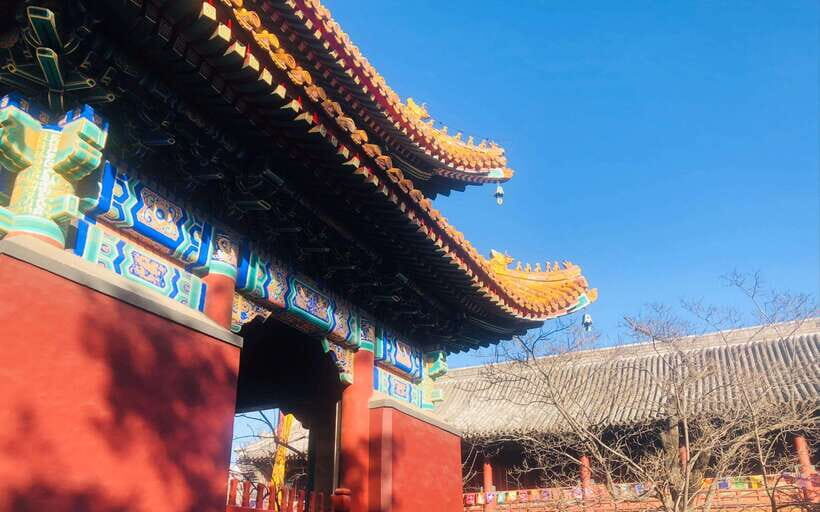
Here’s why this pairing works so well: the two sites are close enough to connect on foot without turning it into an all-day shuttle plan.
After your Lama Temple visit, you walk out for about 3 minutes. Then you go to the entrance of Beijing Confucius Temple and scan the QR code for that second entry.
That short walking link changes your day. Instead of spending time and energy figuring out transport, you can keep your momentum and save your energy for what matters—courtyards, halls, and the quiet rhythms inside temple and scholar spaces.
Also, keep in mind that the Lama Temple ticket included here covers only that part. If you’re aiming to do both temples in one day, plan on handling the Confucius Temple ticket portion as well.



Beijing Confucius Temple Layout: Courtyards, Yellow Glazed Tiles, and Scholar History
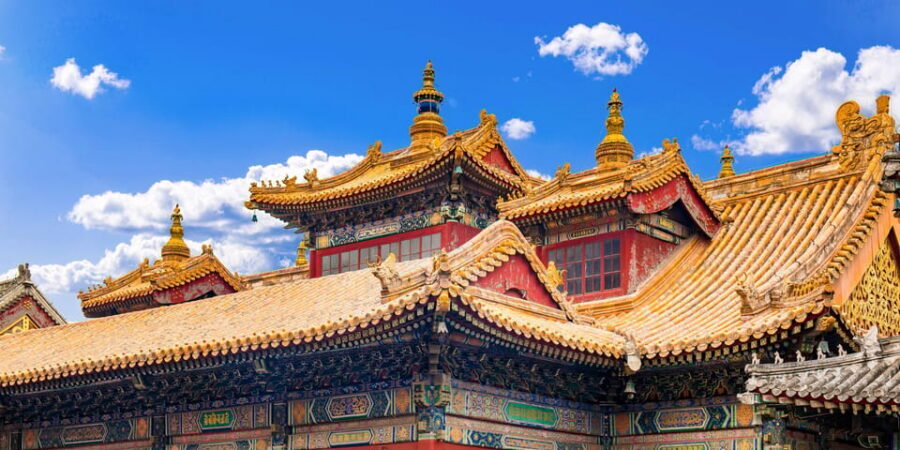
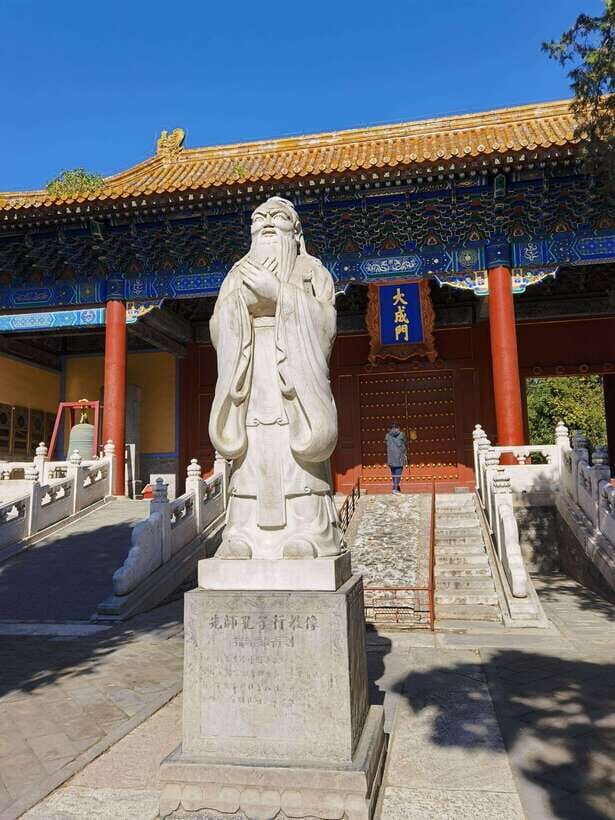
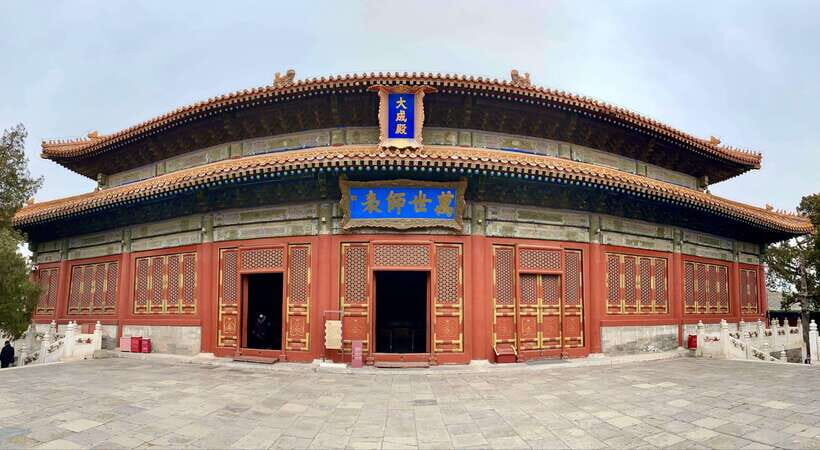
Beijing Confucius Temple has the classic feel of traditional Chinese design: the buildings follow a central axis, with symmetrical layouts on the left and right, and the overall plan uses three courtyards.
As you move from south to north along the central axis, you’ll see the main structures in order:
- Sifu Gate
- Dacheng Gate
- Dacheng Hall
- Chongsheng Gate
- Chongsheng Shrine
The roofs are described as covered with yellow glazed tiles. That detail is useful because you can use color and roof style to help you orient yourself as you walk deeper into the complex.
One especially meaningful element is the monument of the title of the scholar. It has important historical and cultural value and provides precious documentation for studying the imperial examination system in ancient China.
If you’re into the way education and status worked in imperial times, this is where you slow down. It’s also where a little pre-reading pays off, because you’ll understand what you’re looking at beyond the visuals.
Price and Value: What $16 Covers and What You’ll Still Need
At about $16 per person, the value is strong if your goal is specifically Lama Temple entry with less friction. The ticket includes the first entrance ticket charge, which is important because it reduces surprises at the gate.
But you should read the fine line on scope:
- Included: Lama Temple tickets only (plus booking service charge)
- Not included: Confucius Temple ticket, lunch, English-speaking guide, private car transfers, hotel transfers, tipping
So the “real” cost depends on your style:
- If you only want Lama Temple, this price is straightforward.
- If you want both Lama Temple and Confucius, you’ll need to add the Confucius entry cost separately.
- If you want more interpretation and less self-guided guessing, you’d consider an optional guided upgrade.
My practical advice: treat the $16 as your base for Lama Temple, then budget separately for Confucius if both are on your must-see list.
Optional Guided Trip Upgrades: When a Guide Is Worth the Extra
An optional guided version is offered, and the main reason you’d choose it is simple: interpretation.
The tour data says English-speaking guide is not included by default, so without an upgrade you’ll be relying on your own reading and general context. That can still work well if you’re comfortable walking through sacred and historical spaces without needing every explanation.
But if you prefer someone to help you connect what you see—architectural meaning, symbolism, and the imperial exam angle—then a guided upgrade can make the visit feel faster and more satisfying. You’ll likely spend less time wondering what something is and more time appreciating it.
If you’re going solo and you want to go in light, think of a guide as a shortcut to meaning.
Timing, What to Bring, and Small Rules That Matter
This experience asks for passport details. So bring your passport with you, not just for booking accuracy but also as a practical requirement for entry.
A few other notes that can affect your day:
- Not allowed: pets
- Not suitable for pregnant women
- Lunch is not included, so plan where you’ll eat before or after
- Souvenir photos are available for purchase, so if you hate upsells, decide in advance whether you’re skipping those
Also, tipping is listed as highly recommended. Even if you’re not thrilled by the idea, it’s better to plan for it so it doesn’t catch you off guard at the end.
Who This Works Best For (and Who Should Skip It)
This is a good fit if you:
- Want to see Lama Temple first and keep your day efficient
- Like architecture and symbolic details (like the Three Buddhas theme)
- Prefer QR-code entry that reduces gate-time friction
- Are comfortable visiting without an English-speaking guide, or you’ll upgrade if you want interpretation
It’s less ideal if:
- You’re traveling with a group that needs lots of help with logistics
- You’re hoping the package automatically includes Confucius Temple entry (it doesn’t cover that part)
- You fall into the not-suitable category (pregnancy is flagged)
If you’re the kind of visitor who reads signs slowly and wants context, a guided option can noticeably improve satisfaction. If you’re more of a “see it, feel it, move on” type, self-guided can still work great.
Should You Book? My Practical Recommendation
Book it if Lama Temple is your priority and you want ticket entry handled ahead of time. The combination of QR-code delivery and a clear scan-at-the-entrance process makes your day less stressful, especially in a city where lines can grow.
Don’t book it expecting Confucius Temple to be fully included. If you want both, you’ll need to plan for the Confucius entry separately, even though the walking link between the two is short.
If you’re on the fence, here’s the quick decision rule:
- Choosing this for Lama Temple only: yes, good value at $16
- Choosing this for two temples: yes, but confirm you’re also handling Confucius Temple tickets and time
FAQ
What does the ticket price include?
The included ticket covers Lama Temple tickets only (not Confucius Temple). It also includes a booking service charge.
Do I need to provide passport details at booking?
Yes. You need to provide your passport name, passport number, and date of birth when booking.
How do I get my tickets for entry?
The local supplier sends QR codes directly to your email address, mobile number, and WhatsApp number. You scan the QR code at the entrance.
How do I get to Lama Temple using public transit?
You can take subway line 5 and get off at exit “F” of the Lama Temple station, then walk about 5 minutes to the temple.
Can I combine Lama Temple and Confucius Temple in one visit?
Yes. After Lama Temple, you walk out for about 3 minutes, then scan another QR code at the entrance of Beijing Confucius Temple for the second visit.
Is an English-speaking guide included?
No. An English-speaking guide is listed as not included unless you choose an optional upgraded guided trip.
Is lunch included?
No. Lunch is not included.
Are pets allowed and is it suitable for pregnant women?
Pets are not allowed, and it is listed as not suitable for pregnant women.
If you tell me your travel month and whether you want both temples or just Lama Temple, I can help you plan a realistic timing window for the day.