REVIEW · BEIJING
Beijing:Drum and Bell Towers Entry Ticket- Cultural Treasure
Book on GetYourGuide →Operated by Hua Hua Explore China · Bookable on GetYourGuide
Two towers, one ancient clock. If you like Chinese architecture with a job to do, Beijing’s Drum and Bell Towers are a perfect stop. They served as the city’s timekeeping center from the Yuan through the Ming and Qing dynasties, and the layout is easy to follow: the Drum Tower sits just south of the Bell Tower on the central axis. I especially like the scale of the story you’re walking through—like the famed Yongle-era bell weighing 63 tons—and the practical e-ticket setup that helps you avoid unnecessary waiting.
The only real drawback is physical: there are steep, long stair runs, and this isn’t ideal if you have mobility limitations. Also, the $13 price can feel high if you’re the type who hates pre-booking and would rather buy on the spot.
In This Review
- Key things to notice (before you go)
- Drum and Bell Towers: Beijing’s old timekeeping center
- Steep stairs are the main obstacle, plan accordingly
- Skip the ticket line with e-tickets for both towers
- Your English textual and visual guide: how to get more from the visit
- Drum Tower vs Bell Tower: what each building does for the story
- Value for $13: paying for reserved entry and a useful guide
- Should you book this Drum and Bell Towers ticket?
- FAQ
- How long should I plan for the visit?
- What’s included with the ticket?
- Do I get a live tour guide or an audio guide?
- Can I use the e-tickets to enter both towers?
- What document should I bring on the day?
- Are the towers accessible if I have mobility issues?
Key things to notice (before you go)
- 63-ton Yongle bell at the Bell Tower, often described as the King of Ancient Bells
- Dusk drum, morning bell timekeeping concept you can visualize as you move between buildings
- E-tickets for both towers from Hua Hua Explore China, ready ahead of time
- English textual and visual guide that helps you make sense of what you’re seeing
- Time on foot is short (2 hours), but the towers can feel vertical and demanding
Drum and Bell Towers: Beijing’s old timekeeping center
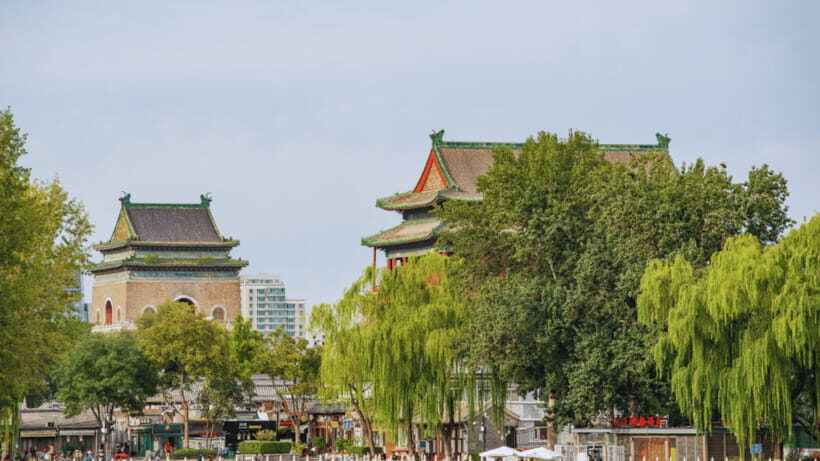
The Drum and Bell Towers aren’t just pretty monuments. They were Beijing’s official rhythm section—literally a citywide schedule in stone and metal. Built in the Yuan Dynasty (1206–1368), the system continued through the Ming (1368–1644) and Qing (1644–1911) eras, which means you’re seeing a complex that shaped daily life for centuries.
Here’s the mental picture that makes the visit click: time was told with a dusk drum and a morning bell. In the Drum Tower, there used to be 25 drums, so the tower wasn’t decorative—it was a whole timekeeping instrument room. Then, at day’s turning point, the Bell Tower took over with the famous bell cast during the Yongle era (1403–1424).
You’ll also notice the planning. These towers sit at the northern end of Beijing’s central axis, and the Bell Tower is slightly north of the Drum Tower. That small shift matters because the complex reads like a designed sequence, not a random pair of landmarks. The full historic complex covers 12,597 square meters and is under state-level protection, which is why the buildings and grounds feel intentionally preserved.
A few more Beijing tours and experiences worth a look



Steep stairs are the main obstacle, plan accordingly

This is the part I want you to take seriously. One of the strongest points people make about the experience is also a warning: the stairs are steep and fairly long. If you’re carrying a backpack, moving slowly, or your legs get tired fast, budget extra time and take breaks.
There’s no way to sugarcoat it—this site is vertical. So I suggest you wear shoes with good grip and keep your pace comfortable. If you’re traveling with someone who uses mobility aids, check your comfort level before you go, because the tower experience is built around climbing.
Skip the ticket line with e-tickets for both towers

The biggest practical win here is not the sightseeing—it’s the entry process. After you place the order, you provide passport name, passport number, and date of birth. Tickets are reserved 3 days prior to your visit, and once the reservation works, you receive e-tickets by email or WhatsApp.
What you do on site is straightforward: you can enter the Bell Tower and Drum Tower directly using the e-tickets you’re sent. This is especially useful during busy travel windows, because you’re not trying to sort tickets while the crowds are in motion.
One more detail worth noting: bring a passport or ID card. That’s the document check these tickets rely on, so don’t plan to travel with only photos on your phone.
Your English textual and visual guide: how to get more from the visit

You don’t get a live guide, and you don’t get an audio narration. Instead, you receive an English textual and visual guide for the Bell and Drum Towers. For me, that’s a smart trade if you like walking at your own speed and reading what you want when you want it.
The standout advantage is what that guide can help you notice beyond the towers themselves. With Hua Hua Explore China, I’ve seen the English brochure used as a planning tool, not just a souvenir page. It can connect the towers to nearby hutongs (the traditional alley neighborhoods next door) and even suggests places to eat locally—useful if you’re already planning to wander after your 2-hour visit.
That matters because the towers can otherwise feel like “see the building, take a photo, move on.” A good guide nudges you to look for the meaning: the timekeeping role, the layout between the two structures, and the idea that Beijing’s central axis wasn’t just for looks.
If you prefer a spoken guide with stories told to you in real time, you may miss that. But if you’re the type who enjoys reading while you stand in the right spot, this format is a solid fit.
Drum Tower vs Bell Tower: what each building does for the story
Plan to spend your time in a way that matches what the complex was built to do. Start by orienting yourself to the relationship between the two towers: Bell Tower slightly north, Drum Tower slightly south. That simple geography helps you understand the sequence—like moving from dusk signal to morning signal.
At the Drum Tower, your mental focus should be on instruments and rhythm. You’ll learn that there used to be 25 drums here, so the tower was built around sound and timing. Even if you’re not hearing drums during your visit, the structure makes the concept feel grounded. Look for how the building supports the idea of performance and repetition.
At the Bell Tower, the featured fact that grabs attention fast is the Yongle-era bell. The bell cast during that period is famous for its weight: 63 tons. It’s often referred to as the King of Ancient Bells, and that’s exactly the kind of detail that makes the tower feel larger than a photo. Standing in the Bell Tower’s space, you’re not just seeing a bell—you’re seeing why ancient Beijing needed something loud and reliable to mark time for a whole city.
Because your total time is 2 hours, I’d treat this like a focused circuit. Give each tower enough attention to catch the core idea, then leave space to walk around the complex. If you rush, the meaning gets lost.




Value for $13: paying for reserved entry and a useful guide

Let’s talk money without drama. At $13 per person, you’re paying for:
- a ticket into the Bell Tower
- a ticket into the Drum Tower
- an English textual and visual guide
- and the practical benefit of skipping the ticket line
That can be good value if you hate wasted time. If you’re visiting during a high-demand period, reserved entry can save you from standing in lines and negotiating the moment with tired feet. One review highlighted exactly that kind of payoff during Golden Week, with tickets sent in advance (including QR codes) and an English PDF brochure that helped shape the rest of the day with hutong ideas and local food suggestions.
Still, there’s a fairness note. One review felt the price was excessive compared with buying on site. That’s a real consideration if your top priority is the lowest possible cost and you don’t mind queues. In other words: you’re buying convenience and interpretation, not just access.
So here’s the decision rule I’d use: if you’re time-poor, visiting a busy season, or you want the English guide to point you toward nearby hutongs, pre-booking tends to make sense. If you’re flexible, comfortable with queues, and strictly budget-driven, you might compare options before locking in.
Should you book this Drum and Bell Towers ticket?
I’d book it if you want a compact, meaningful cultural stop that’s easy to manage. The two-tower setup gives you a clear storyline in a short timeframe, and the e-tickets remove the stress of day-of ticket hassles. The English guide also earns its keep by helping you connect the towers to the nearby hutong world, so your visit doesn’t end at the gate.
I’d skip or at least rethink it if you can’t handle steep stairs and long climbs. And if you’re only looking for a quick photo with zero reading, you might feel you’d get more value by choosing a different approach.
If you can walk a bit, read along, and appreciate architecture with a purpose, this is a strong use of 2 hours in Beijing.
FAQ
How long should I plan for the visit?
The total duration is listed as 2 hours.
What’s included with the ticket?
You get tickets for both the Bell Tower and the Drum Tower, plus an English textual and visual guide for the two towers.
Do I get a live tour guide or an audio guide?
No live tour guide is included, and an audio guide is not included. You’ll use the provided English textual and visual guide instead.
Can I use the e-tickets to enter both towers?
Yes. Visitors can enter the Bell Tower and Drum Tower directly with the e-tickets provided.
What document should I bring on the day?
Bring your passport or ID card.
Are the towers accessible if I have mobility issues?
The towers involve steep, long stair sections. Based on a review, they may not be suitable for reduced mobility.