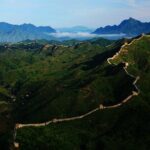
REVIEW · BEIJING
From Beijing: Small Group Hike at Jinshanling Great Wall
Book on GetYourGuide →Operated by Great Wall Hiking Adventure · Bookable on GetYourGuide
Wild stairs on the Great Wall beat the crowds.
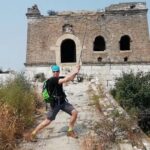
This day trip is interesting because you walk Jinshanling East where the Wall feels wild and original, then you also pass through the restored middle section for big-picture views and great variety. I like how the route delivers constant photo angles thanks to watchtowers stacked along the ridge. The small-group limit (up to 12) also means you can actually keep a steady pace and take breaks without feeling herded.
One consideration: the hike is steep with big steps, and there’s no toilet on the Wall, so you’ll need to plan your timing and carry toilet paper.
In This Review
- Key highlights to look for
- Why Jinshanling East is the Great Wall hike to choose
- Getting to Jinshanling: Dongzhimen pickup and the calm drive out
- The hike plan: from Jinshanling East to the main gate
- What makes the watchtowers so special (and how to photograph them)
- Restored middle section: when the Wall looks different
- Lunch after the climb: simple farmer’s food and when to expect it
- No toilet on the Wall: the detail that changes how you plan
- Pace, pace breaks, and why small-group helps
- What’s included (and what you should personally prepare)
- The winter reality: closed sections and shorter routes
- Price and value: is $52 fair for this kind of day?
- Who should book this hike, and who should skip it
- Should you book the Jinshanling East hike from Beijing?
- FAQ
- What time do I need to meet the group in Beijing?
- How long does the drive take each way?
- When does the hiking start, and how long is the hike?
- What group size should I expect?
- Is lunch included?
- Do I need an English guide?
- Are trekking poles provided?
- Is there a toilet on the Wall during the hike?
- Are cable cars included?
- What should I bring and what’s not allowed?
Key highlights to look for
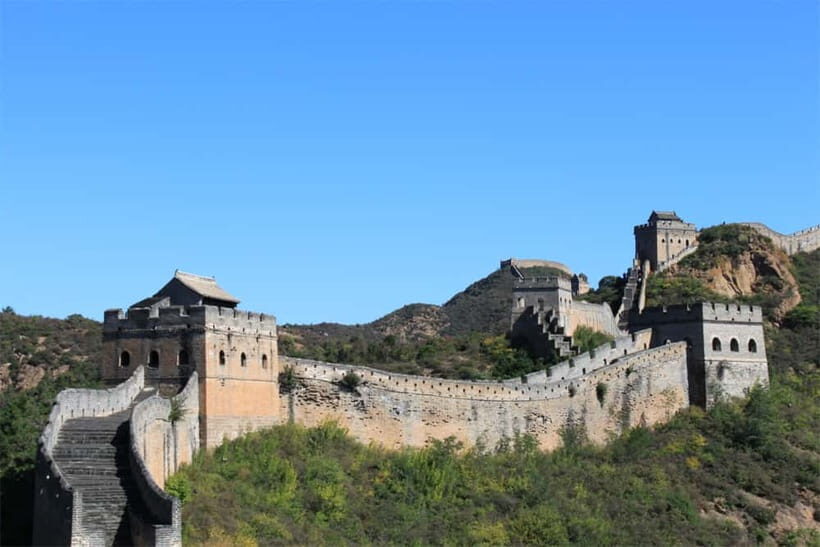
- Jinshanling East’s photogenic watchtowers: over 15 towers with different roof shapes and sizes
- A quieter Great Wall day: small group up to 12, often far fewer people than the headline sections
- Built-in hiking support: trekking poles, unlimited bottled water, and snacks on the Wall
- Two Wall “moods” in one hike: wild/ruined + restored sections on the same walk
- Local farmer lunch option: a simple meal after you finish the main stretch
Why Jinshanling East is the Great Wall hike to choose
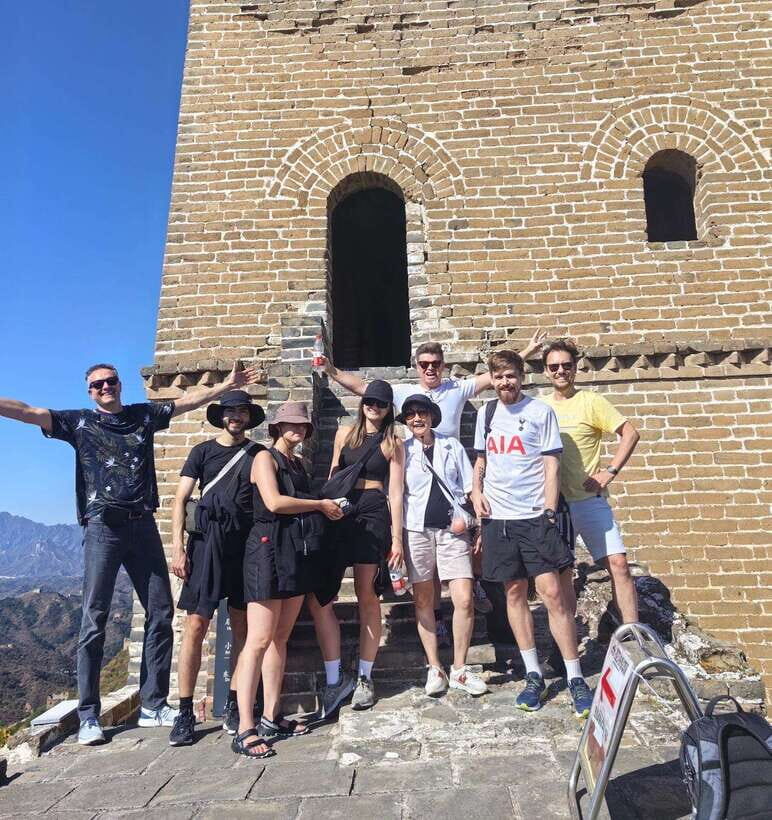
If you’re coming from Beijing, you could pick a famous section and call it a day. But Jinshanling East rewards you in a different way: it’s a hiking route where the Wall feels like part of the mountain, not a theme park.
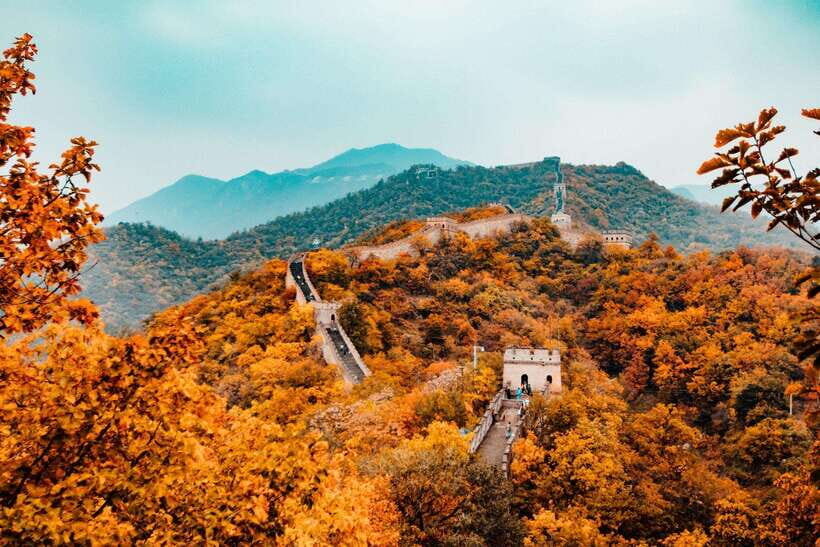
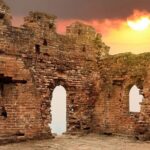
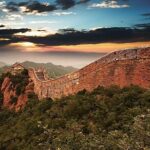
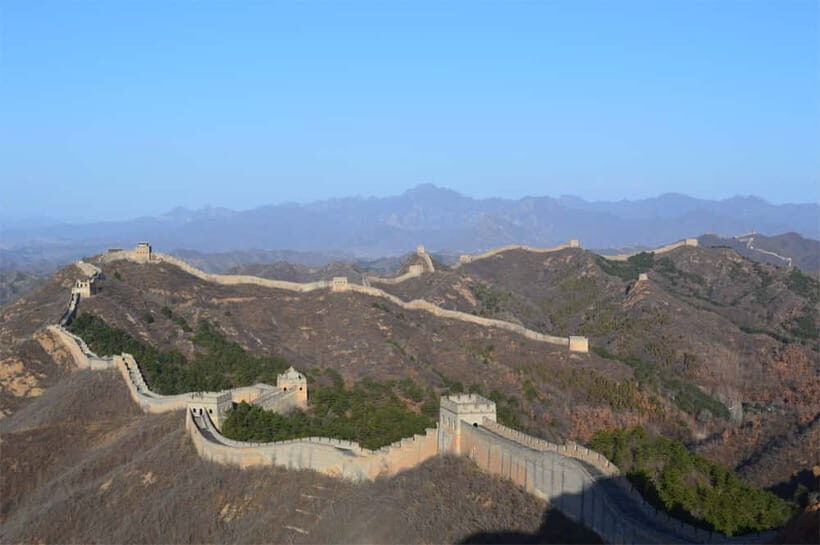
You get a mix of wild, ruined, preserved, and original stretches. That matters because it changes what you see with every turn—tower shapes, wall conditions, and the way the ridge rises and falls. On a clear day, the views are wide open and it’s hard not to stop for photos.
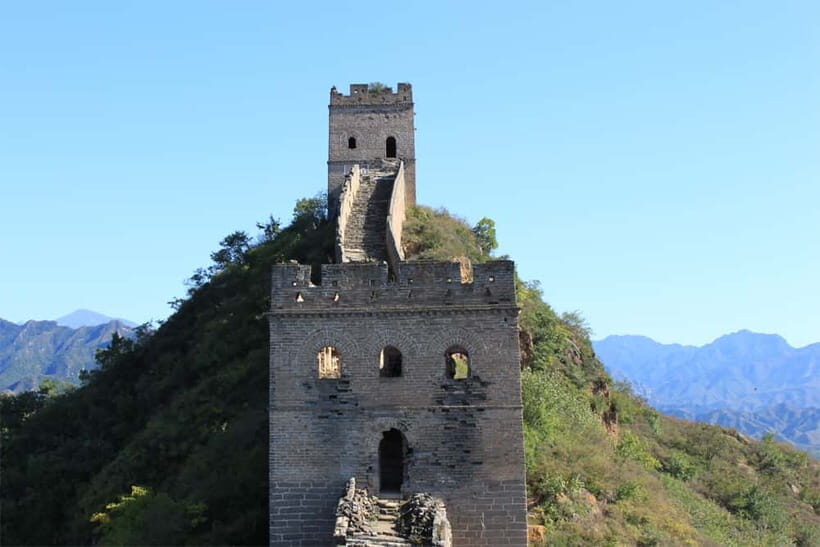
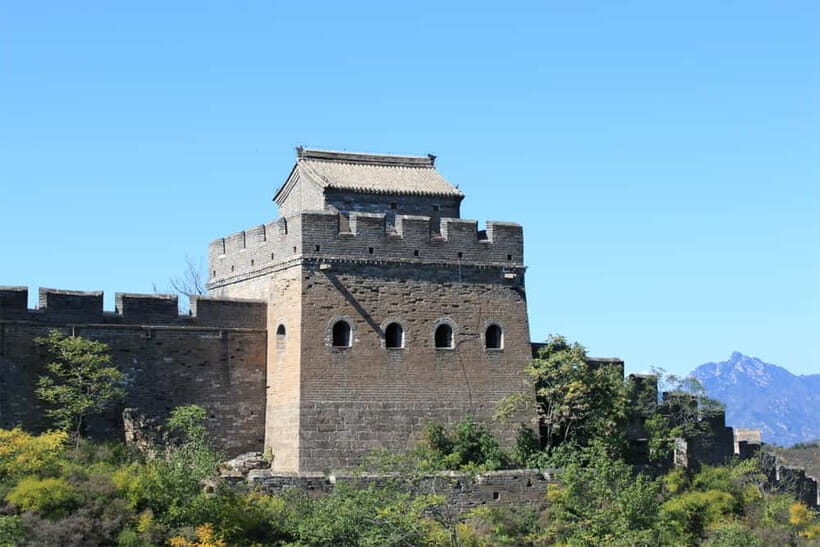
I also like the way the route offers variety in the watchtowers. You’ll spot more than 15 towers, and the differences aren’t subtle: some look two stories high, others three. Roof styles vary too, from flat tops to rounded caps to pitched roofs with upturned eaves. It’s the kind of detail that makes your pictures look richer than the usual “Wall line” shots.
You can also read our reviews of more hiking tours in Beijing
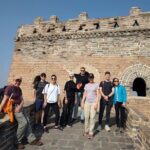
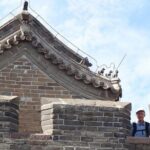
Getting to Jinshanling: Dongzhimen pickup and the calm drive out
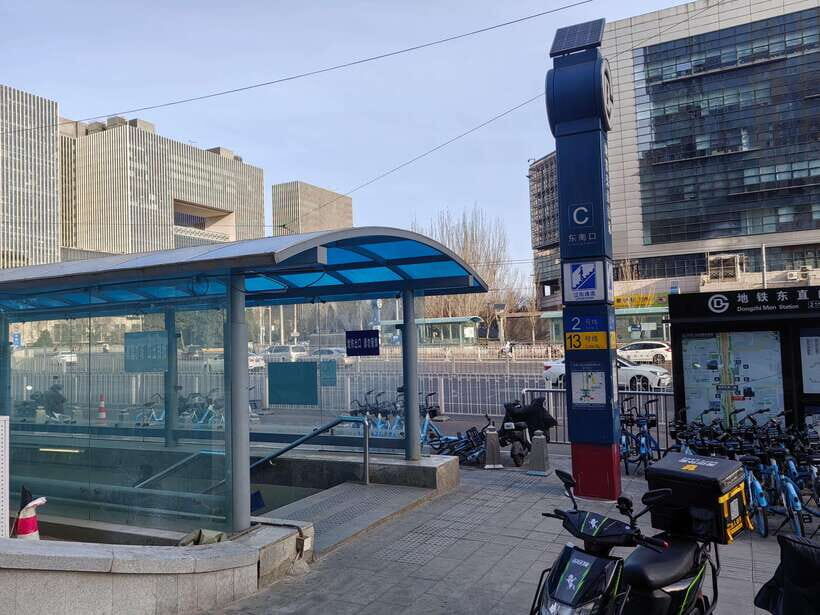
Your day starts early, with pickup at 8:00am at Exit C of Dongzhimen Station on Subway lines 2 & 13. If you’ve been to Beijing before, you’ll recognize Dongzhimen as one of those stations where getting oriented is easy once you’re on the right exit.
From there, you’ll ride in an air-conditioned vehicle with an experienced driver, and the drive is about 2.5 hours. This is more than just transit time. It’s when you’ll settle in, get your water strategy sorted, and get clear on where you’ll begin your walking later.
Many drivers are also used to helping people coordinate via simple messaging tools. You may see examples of drivers like Zhang Feng, Charlie, Li Jimbo, John, Cheney, Woody, and Denit using maps, clear instructions, and translation support so everyone can keep the day moving smoothly.
The hike plan: from Jinshanling East to the main gate
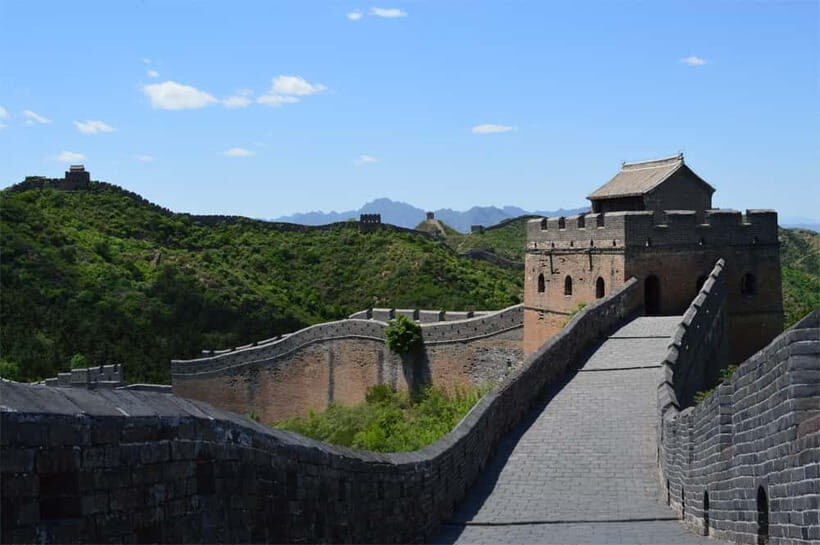
Hiking officially begins around 10:30am. The route is set up for a long, satisfying walk—about 3 hours from Jinshanling East toward the main gate, with stops built in.
You’ll also have some structure before the main climb. The day includes a photo stop and a guided tour/walk component en route, so you’re not just dropped into steep terrain with zero context. Once you start the ridge walk, the experience shifts into pure legs-and-views time.
Here’s what that means for you in real life:
- You’ll spend most of the morning moving along uneven stone steps and wall paths.
- You’ll earn the views because the route is steep in places.
- You’ll likely take frequent pauses for photos, because the perspective keeps changing.
In terms of timing, the plan says about 3 hours for the main stretch. In practice, if you slow down for towers, angles, and viewpoints, expect it to drift closer to 4 hours. That’s normal on a Wall hike where you actually want to see what’s in front of you.
What makes the watchtowers so special (and how to photograph them)
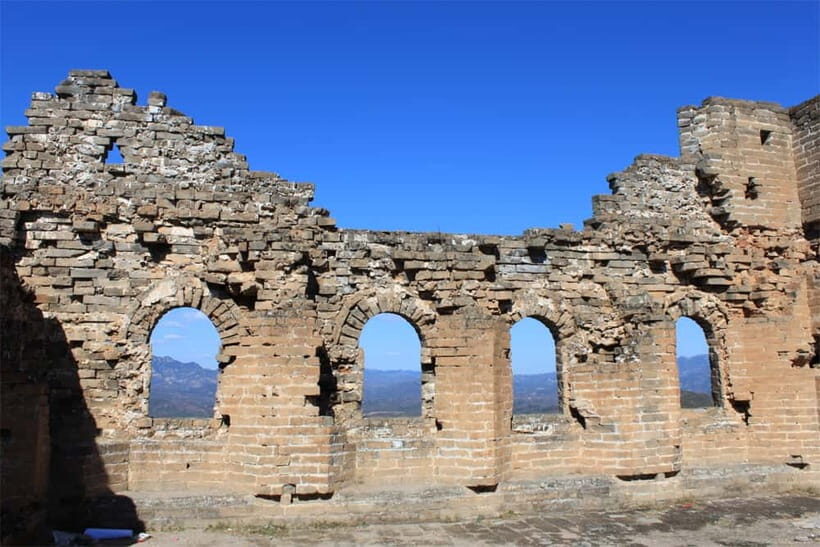
This is one of those hikes where your camera use doesn’t feel like a chore. It’s built into the walk.
You’ll see a dense cluster of watchtowers—over 15—and the route uses them like checkpoints for your attention. Some towers have two storeys, others three, and rooflines vary. When the Wall rises higher or curves around the ridge, those differences become obvious, and your images start looking more dimensional.
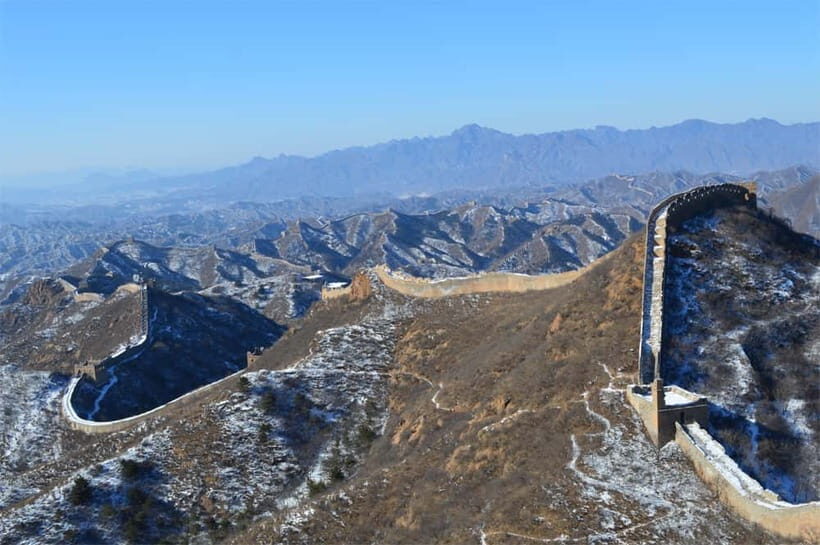
For photography, I’d think in sequences, not single shots. Each section gives you a different “layer” effect: towers in the foreground, wall lines curving mid-distance, and open sky or distant ridges behind. If the weather cooperates, the result is that your photos don’t all look the same.
Also, the steep gradients help. They force you to climb and then look back—so you naturally get multiple angles without needing to sprint between viewpoints. It’s hiking that doubles as composition practice.
Restored middle section: when the Wall looks different
A key part of why Jinshanling works is that you’re not stuck in only one condition. The hike crosses both restored and original/wild segments.
When the Wall is restored, you tend to notice cleaner lines, more consistent stonework, and a clearer sense of how the route was engineered for passage. When you hit the original and ruined parts, you’ll see more weathering, broken sections, and the “lived-in by nature” look that makes the Wall feel older and more rugged.
That contrast is valuable because it changes your understanding of the Wall. You can see how different sections were treated over time, and how restoration affects what it feels like to walk it. It’s also a practical benefit: you’re less likely to get bored because the scenery and Wall texture keep switching.




Lunch after the climb: simple farmer’s food and when to expect it
After you finish the walking stretch, you’ll head for lunch at a local farmer’s restaurant. It’s slotted at about 1 hour after the hike before you return toward Beijing.
A couple things to keep in mind:
- It’s not a fancy restaurant day; it’s a local meal day after serious stairs.
- If you ordered the lunch option, it’s organized for you as part of the schedule.
In cold months, this meal timing matters even more. You’re out walking, your legs are tired, and warm food helps you reset before the drive back. It’s also a decent place to refuel without turning your trip into a food hunt.
No toilet on the Wall: the detail that changes how you plan
This is the one “small” point that deserves big attention.
There’s no toilet on the Wall. Toilets exist at the entrances of Jinshanling and also at the entrance of Simatai West, so you’re not totally stuck—but during the hike, you’ll need to handle it yourself. Bring and carry toilet paper.
If you ignore this, the hike becomes stressful near the start and again during the middle stretch. If you plan for it, the day stays fun and you keep your pace.
Pace, pace breaks, and why small-group helps
This trip runs on a simple rhythm: drive out, hike with time for photos, lunch, then drive back.
The small group of max 12 makes a real difference. You don’t lose time constantly waiting for a large line, and your guide/driver can focus on your group’s needs instead of managing a crowd. In several cases, people found early hours felt calm and open, especially on weekdays and in winter when sections can be less crowded.
Another thing I appreciate is the “walk your own pace” vibe. Even when there’s guidance, the day doesn’t feel like a museum tour. You can pause when the view pulls you in, keep moving when your legs are ready, and generally avoid that tug-of-war feeling.
What’s included (and what you should personally prepare)
What’s included is built around the practical needs of a long hike:
- Air-conditioned vehicle and an experienced driver
- Great Wall entrance fees
- Unlimited bottled water plus snacks on the Wall
- Trekking poles
- An English-speaking hiking guide if you choose the guided option
- Lunch at a local farmer’s restaurant if you choose the lunch option
- A completion certificate for hiking
What you should prepare yourself:
- Passport or ID card
- Comfortable shoes (boots are a smart idea)
- Sunglasses and sun protection
- A cap, sun cream, lip balm
Also, bring a day pack. Water is stored in the vehicle, and you’ll want a place to carry it once you’re hiking.
The winter reality: closed sections and shorter routes
If you’re planning a winter visit, be ready for changes in what’s open. Some sections can close, and you may end up on a shorter loop rather than the full expected route. There are also indications that the east gate can be closed in winter.
This doesn’t make the day pointless. Winter can also bring crisp air, clear visibility, and fewer people on the Wall. Just don’t assume the exact same walking route happens every season. If you want maximum flexibility, ask your guide/driver what’s open the day you go and adjust your expectations.
Price and value: is $52 fair for this kind of day?
At $52 per person for a full 9-hour day, the value is mostly in the combo of logistics + support.
You’re paying for:
- transport from central Beijing (not a chaotic DIY trek),
- entrance fees,
- water and snacks,
- trekking poles,
- and a structured route with at least some guidance and photo stops.
If you choose the option with the English-speaking guide and the lunch included, the value jumps further, because you’re not spending extra time coordinating food or interpretation on your own.
Where the price is less “easy mode” is if you’re hoping for a relaxed, low-effort outing. This is an actual hike with steep steps. You get the scenery and the tower variety in exchange for the workout.
Who should book this hike, and who should skip it
This works best if you:
- want Great Wall hiking that feels wilder than the most crowded sections,
- like photo-heavy routes with constantly changing views,
- prefer a small group over a big bus-and-stampede day,
- can handle steep stair segments without drama.
It may not be a fit if you’re:
- pregnant, or
- dealing with heart problems,
because the route includes steep gradients and big steps.
If you’re the type who likes to explore at your own pace, this also has a good match. Some versions focus more on transfer and route guidance, while the guided option gives you more English interpretation along the way.
Should you book the Jinshanling East hike from Beijing?
I’d book it if your priority is a Great Wall day that feels real, scenic, and varied, without spending your effort on logistics. The combination of wild-and-restored sections, heavy watchtower detail, and the small-group size makes this a strong choice for people who want more than postcard shots.
Skip or rethink it if:
- you’re not comfortable with steep stairs,
- you hate hikes longer than a couple hours,
- or you’ll struggle with the no-toilet-on-the-Wall reality.
If you do book, pack like it’s a real hike: sturdy shoes, sun protection, a day pack, and toilet paper. Then show up ready to climb. Jinshanling East is one of those days where the work is visible in the views you bring home.
FAQ
What time do I need to meet the group in Beijing?
You meet at 8:00am at Exit C of Dongzhimen Station (Subway lines 2 & 13).
How long does the drive take each way?
The drive is about 2.5 hours each way.
When does the hiking start, and how long is the hike?
Hiking starts around 10:30am and the main hike from Jinshanling East to the main gate takes about 3 hours.
What group size should I expect?
This is a small group trip with a maximum of 12 people.
Is lunch included?
Lunch at a local farmer’s restaurant is included if you select the lunch option.
Do I need an English guide?
A personal English-speaking hiking guide is included if you choose the option that includes a guide. If you choose the transfer-only style, you’ll have support for the day, but English interpretation may be limited.
Are trekking poles provided?
Yes, trekking poles are included.
Is there a toilet on the Wall during the hike?
No. There are toilets at the entrances of Jinshanling and Simatai West, and you should carry toilet paper.
Are cable cars included?
No cable car is included.
What should I bring and what’s not allowed?
Bring your passport or ID, comfortable shoes, and sunglasses. Pets are not allowed, and smoking is not allowed.