REVIEW · GUANGZHOU
Guangzhou: Textile Hub and Garment Factory Half-day Tour
Book on GetYourGuide →Operated by Authentic Tour Asia · Bookable on GetYourGuide
Fabrics to finished clothes in 48 hours. That’s the headline, but the real pull is walking through Guangzhou’s Zhongda textile cluster and watching “China Speed” make sense in real production terms. You’re not just looking at products; you’re seeing the system behind fast turnarounds.
I especially love the small-group format (limited to 10), because it makes room for real questions instead of rushed sightseeing. And I really value the face-to-face access—you’ll talk directly with order takers and factory owners, not just admire displays.
One thing to plan for: this is lots of walking in a dense, fast-moving area with plenty of e-scooters, so comfortable shoes and a steady pace matter more than fancy gear. It also isn’t suitable for wheelchair users.
In This Review
- Key things that make this tour worth your time
- Why Guangzhou textile speed is more than a manufacturing buzzword
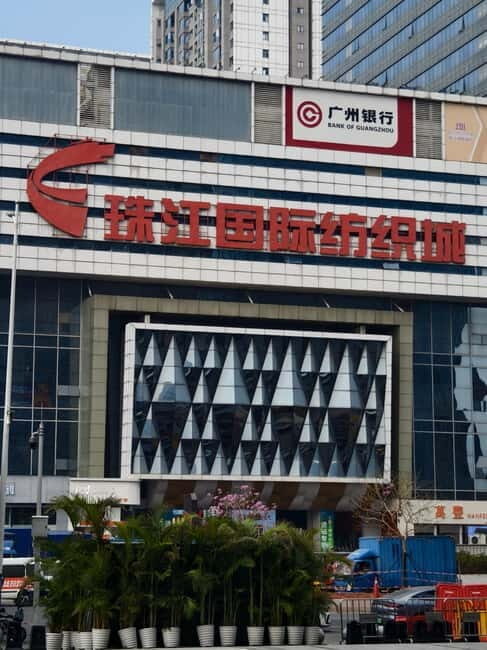
- Getting oriented at Zhujiang International Textile City (meeting point and first look)
- Stop 1: The textile cluster walkthrough where efficiency starts
- Stop 2: Urban village work-life and flexible labor in action
- Inside garment factories: from chosen fabric to finished pieces
- Talking with order takers and factory owners: how collaboration really works
- Who this is best for (and who might not get enough from it)
- Price and value: what $89 buys in a 2-hour small-group experience
- Practical tips to get the most out of your visit
- Quick wrap: should you book this Guangzhou textile hub tour?
- FAQ
- How long is the Guangzhou Textile Hub and Garment Factory tour?
- How much does the tour cost?
- How big is the group?
- Is the tour in English?
- Where is the meeting point?
- What if I’m coming by Didi?
- How do I get there by subway?
- What should I bring?
- Is smoking allowed, and is it wheelchair accessible?
- What are the cancellation and payment options?
Key things that make this tour worth your time
- China Speed explained through how orders actually flow (not just slogans)
- Zhongda Textile Hub with an industry expert, so you can read what you’re seeing
- Factory walkthroughs that show the full path from fabric choices to finished garments
- Urban village live-work and flexible labor, so you understand the human side of speed
- Direct conversations with order takers and factory owners, where you learn the collaboration model
- Small-group pacing, built for sourcing questions and practical takeaways
Why Guangzhou textile speed is more than a manufacturing buzzword
Guangzhou’s garment industry has a reputation for speed, but on this kind of tour, you can finally connect the dots between a fabric bolt and a boxed order. The point isn’t to memorize jargon. It’s to understand how a dense cluster of suppliers, small factories, and order managers can respond quickly when buyers change specs, quantities, or timelines.
The most useful part for you—if you’re in sourcing, retail buying, supply chain, or even just building a fashion business—is that you see speed as a process. You’ll hear how garments can be produced in about 48 hours, and you’ll see why that’s possible when the right people are nearby and when the handoffs are built into everyday operations.
A few more Guangzhou tours and experiences worth a look

Getting oriented at Zhujiang International Textile City (meeting point and first look)
You start at 珠江国际纺织城A区正门 (Zhujiang International Textile City, Area A). This matters because it puts you in the middle of the textile ecosystem right away, instead of easing into it like a museum.
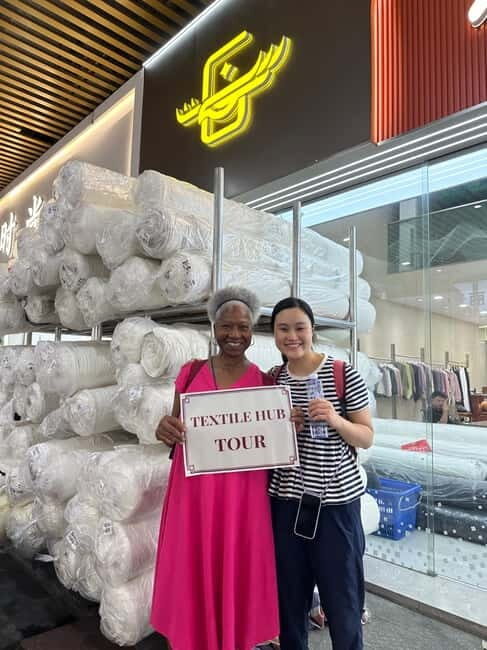
The meeting point is set at a traffic-light intersection, and the guide stands in front of a shop called 恒泰超泓, holding a sign that says Textile Hub Tour (Authentic Tour Asia). If you’re using Didi, enter 海珠合生新天地 as your destination, since that mall is across the street from the meeting spot.
If you’re taking the subway, use Line 11 to 逸景路站 (Yijing Lu Station). Exit C, then walk west about 10 minutes with your back to the morning sun (the opposite direction you’re facing when you exit). It’s detailed for a reason: this neighborhood is full of signage, scooter traffic, and side streets, so you’ll want a clear path to your start point.
Stop 1: The textile cluster walkthrough where efficiency starts
The first guided hour is built around the textile hub itself. Expect to move through dense areas with lots of stalls and product categories, while your industry expert helps you connect what you see to how sourcing decisions get made.
This is where you learn to look past “pretty merchandise” and start reading the supply chain. You’ll get a feel for how close-knit clusters drive efficiency: suppliers, fabric options, trims, and order workflows can sit near each other, so questions don’t take days to route.
What I like about this segment is the pace. In a place like Zhongda, it’s easy to get overwhelmed. Having a guide gives you a map in your head—what to ask, what details to notice, and how to understand why certain production choices speed things up.
A possible drawback: the area can feel chaotic. You’ll be dealing with lots of movement, dense foot traffic, and e-scooters weaving around. If you’re the type who hates crowds, plan to slow your own stride and focus on watching the flow instead of trying to “win the street.”
Stop 2: Urban village work-life and flexible labor in action
The second guided hour shifts from stalls to the realities behind the work. This is where the tour adds human context to the “48-hour” claim.
You’ll spend time in an area described as urban villages, where people work and live in close proximity. The big idea you’re meant to grasp is flexibility: labor can adapt to changing orders without everything having to wait for a single central control point.
For you as a buyer or entrepreneur, this is one of the most important takeaways. Manufacturing speed doesn’t only come from machines. It also comes from staffing models, the ability to adjust workflows, and the everyday infrastructure that keeps production running when demand shifts.
It also helps you ask smarter questions. Instead of asking only how fast someone can deliver, you can ask:
- How do you scale when order volumes rise?
- How do you handle changes after sampling?
- What kind of flexibility exists between different garment types?
Even if the exact answer varies by factory, the tour gives you the right starting questions.
Inside garment factories: from chosen fabric to finished pieces
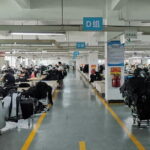
Then you move into the factory side of the story. This part is all about witnessing production firsthand—how fabric becomes garments through coordinated steps, and how small garment operations manage to deliver finished clothing orders efficiently.
In a strong factory visit, you can usually expect to see more than one stage. One highlight from the experience is seeing the end-to-end logic: fabrics selected for a particular product, garments cut and sewn in bulk, and finished items organized for shipment. In at least one case, the factory tour included the owner walking through the setup and taking guests into rooms where patterns are sent by designers and laid out on fabric.
If you’re into sewing as a hobby or you’re reviewing development processes for business, this is the kind of moment that clicks. You stop thinking of production as a black box. You start recognizing where choices matter—fabric compatibility, pattern accuracy, and the practical setup that keeps output moving.
A quick note for expectations: the tour is only 2 hours total, so you won’t see a full museum-style production chain from raw material to final shipment in every single step. But you will get enough factory context to understand how order-driven work can compress timelines.





Talking with order takers and factory owners: how collaboration really works
Here’s the part that makes this tour feel different from many “factory viewing” experiences: you get structured conversations with people who handle orders and production decisions.
The tour is designed for direct engagement. You’ll learn how self-driven collaboration can work without a single central command structure. In other words, speed comes from coordination among the right parties—those who take orders, those who produce, and those who source the materials needed to keep things moving.
If you’re a sourcing professional, this is gold. You’ll come away with a clearer picture of:
- How requirements travel between buyer and production
- Where bottlenecks can appear (and where they don’t)
- What “fast” really means operationally
And if you’re an entrepreneur testing new ideas, it helps you understand partner alignment. You’re not only looking for a factory; you’re learning how to work with the people who can respond when specs change.
One added advantage is the human tone in these conversations. In past sessions, guides have been highlighted for being warm and ready to share, including an English guide named Ceciliaye, who was described as knowledgeable in the process and happy to explain how garments are made for international markets.
Who this is best for (and who might not get enough from it)
This is aimed at people connected to fashion and production: sourcing professionals, supply chain managers, fashion entrepreneurs, and retail buyers. You’ll get the most if your brain naturally asks practical questions about how product moves from spec to output.
It’s also a good fit if you’re comparing sourcing options across regions or trying to understand why certain suppliers can turn around orders faster than others. The cluster model matters, and this tour helps you see the model, not just hear about it.
It may be less satisfying if you’re looking for slow, relaxed “tourist photography” time. This experience is purpose-built for industry understanding, and the pace reflects that.
Price and value: what $89 buys in a 2-hour small-group experience
The price is $89 per person for a 2-hour tour with an English live guide and a small group (up to 10 participants).
Is it a bargain or a splurge? For the right audience, it’s good value because you’re paying for three things that are hard to replicate on your own:
- Expert guidance in a dense textile environment
- Access to factory owners and order takers
- A focused route designed to show how fabric becomes garments quickly
If you try to do this independently, you may find stalls, but getting the right context—and the right conversations—takes time and local industry knowledge. Here, the structure compresses the learning curve into a short session.
Also, you’re not paying for transport or meals here, so plan your day accordingly. Comfortable shoes are your main “extra cost,” and they’re worth it.
Practical tips to get the most out of your visit
If you want this tour to land with real takeaways, show up ready to ask direct questions. This is the kind of experience where you’ll learn faster if you notice details and then follow up.
A few practical pointers:
- Wear comfortable shoes. You will walk a lot.
- Expect a fast, chaotic place with many e-scooters, and give yourself margin to move safely.
- Bring a notebook or notes app for sourcing questions and names of categories you see (fabric types, labels, and the general workflow terms your guide uses).
- If you smoke, skip it during the tour—smoking isn’t allowed.
If you’re the type who worries about “not knowing what to ask,” don’t stress. The tour format is built for hands-on industry learning, and the group size helps you keep the questions coming.
Quick wrap: should you book this Guangzhou textile hub tour?
Book this tour if you want practical insight into how Guangzhou’s textile cluster turns fabric into garments fast—especially if you’re sourcing, buying, managing supply chain work, or building a fashion brand and need to understand how speed actually happens.
Skip it (or consider a different style of visit) if you dislike crowded, fast-moving areas or need wheelchair accessibility. This tour isn’t set up for that.
If you want the kind of experience that helps you make better business decisions—because you’ve seen the people and processes behind the products—this one is a strong choice for a short, focused window in Guangzhou.
FAQ
How long is the Guangzhou Textile Hub and Garment Factory tour?
The tour runs for 2 hours.
How much does the tour cost?
It costs $89 per person.
How big is the group?
It’s a small group limited to 10 participants.
Is the tour in English?
Yes. The tour guide speaks English.
Where is the meeting point?
Meet at the main entrance of Zhujiang International Textile City Area A (珠江国际纺织城A区正门). Look for the shop called 恒泰超泓, where the guide will be standing holding a sign that says Textile Hub Tour with Authentic Tour Asia.
What if I’m coming by Didi?
Use 海珠合生新天地 as the destination, since it is directly across the street from the meeting point.
How do I get there by subway?
Take Line 11 to 逸景路站 (Yijing Lu Station). Use Exit C and walk west for about 10 minutes, with your back to the morning sun.
What should I bring?
Wear comfortable shoes, since there will be a lot of walking.
Is smoking allowed, and is it wheelchair accessible?
Smoking is not allowed. The tour is not suitable for wheelchair users.
What are the cancellation and payment options?
You can cancel up to 24 hours in advance for a full refund. You can also reserve now and pay later, so you don’t need to pay today.