REVIEW · GUANGZHOU
Private Guangzhou Business Tour to Visit Factory and Local Market
Book on Viator →Operated by Guangzhou Local Tours · Bookable on Viator
A wholesale day with a translator can save weeks. This private Guangzhou tour lines up specialized markets and a manufacturer factory area in one efficient stretch, so you can focus on comparing products instead of fighting directions and language. I especially like how the route can be customized for your supplier plans, plus you get hotel pickup/drop-off with an air-conditioned car and driver.
Two things I really like: you’re not stuck with generic sightseeing, you’re visiting focused wholesale hubs geared to trade. And the guide support is practical—English translation plus on-the-ground help with navigation and logistics—so you can ask questions without losing momentum.
One consideration: the schedule runs about 5–8 hours with short market windows (about one hour each), so if you need deep product sampling, you’ll want to come with clear targets. Also, if a supplier location is outside Guangzhou, there may be extra cost.
In This Review
- Key highlights at a glance
- A workday route that makes sense in Guangzhou
- Price and logistics: what $200 buys you
- How the guide helps you plan and tailor the route
- The 6 stops: what each market is good for
- Shahe Clothing Wholesale Market: apparel sourcing first
- Onelink International Plaza: toys, home décor, and souvenirs
- ZhongDa WuFeng ShangYeCheng: fabric and clothing accessories
- Zhanxi Road watch market: precision items and wholesale comparisons
- Taikang Residential District: jewelry and accessories
- Lingbian Industrial Zone: stepping into factory territory
- What to bring so the day actually helps your business
- Timing, comfort, and how to pace a 5–8 hour day
- Is the market route right for you?
- Should you book this private Guangzhou business tour?
- FAQ
- What is the duration of the private Guangzhou business tour?
- How much does the tour cost?
- Does the tour include hotel pickup and drop-off?
- Is lunch included?
- Are admission tickets included for the market stops?
- Is this tour private or shared with other groups?
- Can I cancel or change the booking?
Key highlights at a glance
- Private, group-only experience with flexible tailoring for your business goals
- English guide translation to help you communicate during visits
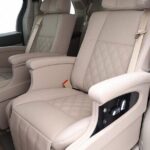
- Air-conditioned private transport with driver for smooth, efficient transfers
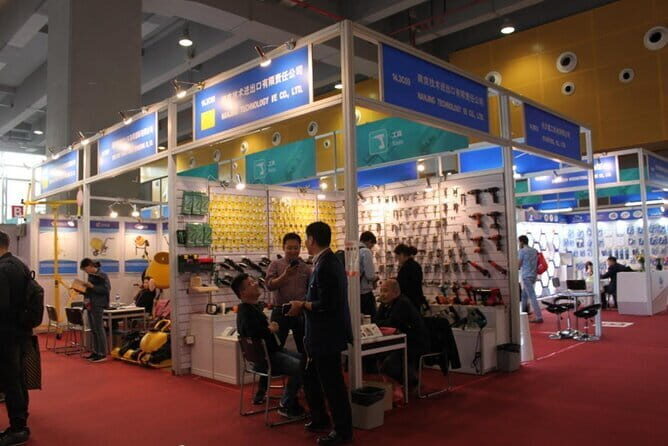
- Six specialized stops covering clothing, toys/home decor, fabric accessories, watches, jewelry, and a factory zone
- Free admission tickets for the listed markets
- Optional lunch you can skip if you’re trying to keep the day tight
A workday route that makes sense in Guangzhou
If your trip to Guangzhou has a job to do—finding suppliers, checking quality, comparing product lines—this kind of private market-and-factory tour is built for that reality. You’re not wandering. You’re moving from one trade area to another with someone who can help you translate and communicate on the spot.
The big win is efficiency. A market like this isn’t one stop you can quickly shop and be done; it’s a network of stalls, vendors, and specialties. By stacking the right categories into one itinerary, you can walk away with better notes and fewer wasted hours.
And since you’re traveling as a private group, you set the pace within reason. Want to spend a few extra minutes at one counter? The guide can help you adjust as long as the day still fits the route and timing.
You can also read our reviews of more private tours in Guangzhou
Price and logistics: what $200 buys you
At $200.00 per person for a private tour lasting about 5–8 hours, the value mostly comes from support, not just transportation. You’re paying for:
- a local English-speaking guide with full escort
- hotel pickup and drop-off
- a private air-conditioned vehicle plus professional driver
- help with translation, navigation, and transportation management
That matters because language and direction problems are what usually sink business trips. With a guide handling those parts, you can spend your energy on the real purpose: understanding what suppliers sell, how they operate, and whether a product line fits what you’re sourcing.
A small detail that also matters for the day’s flow: lunch isn’t included. It’s optional and skippable. If you’re trying to keep the schedule tight, you can move straight from market to market instead of building extra downtime around meals.
How the guide helps you plan and tailor the route
This is not a one-size itinerary. The tour is designed for business visitors who may already have supplier names—or may need help building a practical visitation plan while they’re in Guangzhou.
Here’s how that flexibility can work in real life:
- If you have targeted suppliers, you share their locations (office or factory).
- The guide can judge how far each place is and whether they’re going in the same direction.
- The day trip can be arranged around that geography to reduce backtracking.
If a supplier is outside Guangzhou, there can be additional cost, which is worth asking about early so there are no surprises.
From the reviews, the guide’s role isn’t just logistical. Candice came across as both professional and warm—helping plan the trip, acting as a great translator, and staying flexible to keep the experience comfortable. If you’re the type who wants a plan but also doesn’t want to feel rushed, that kind of on-the-ground responsiveness can make the day smoother.
The 6 stops: what each market is good for
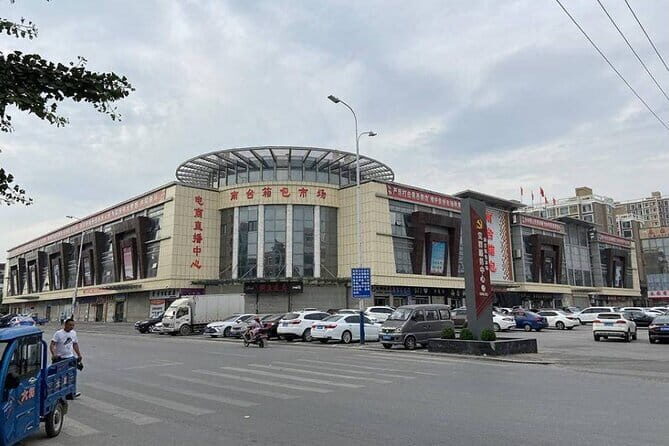
The tour’s structure is simple: you’ll visit multiple specialized markets, spending about one hour at each. Admission is listed as free for these stops, which is nice—especially when you’re trying to keep travel costs predictable.
Shahe Clothing Wholesale Market: apparel sourcing first
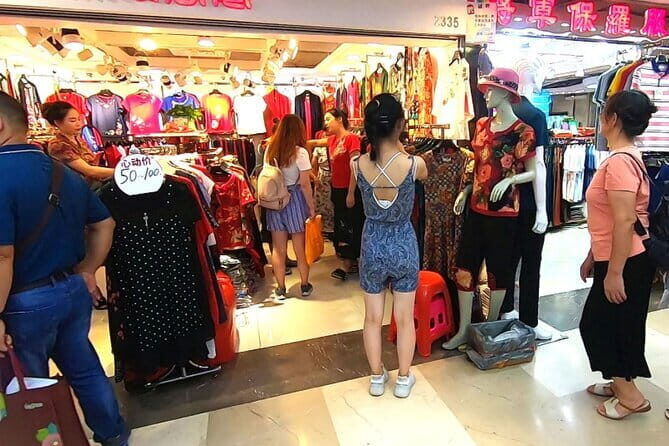
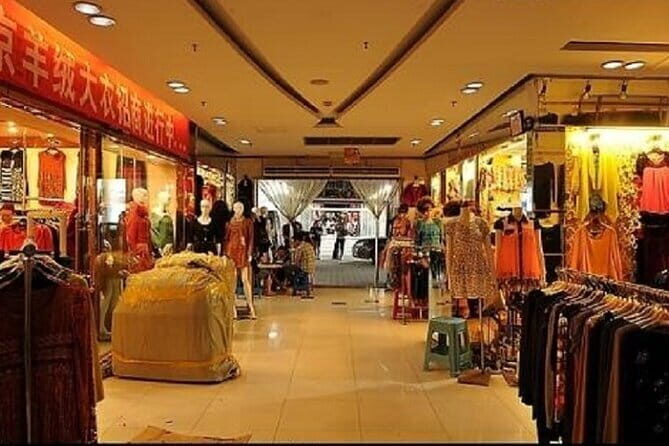
Your day starts at Shahe Clothing Wholesale Market, a garment-focused wholesale area. This is the place to look if your sourcing needs anything in the apparel lane—basic styles, seasonal lines, or accessory-adjacent clothing components.
What I like about starting with clothing: it sets a clear baseline for sizing, materials, and pricing style. When you then move into fabric and accessory markets later, you’ll know what you’re trying to match.
Possible downside: apparel sourcing can be visually intense. If you show up without clear categories in mind—men’s, women’s, kids, specific fabrics—you may end up with a lot of browsing and not much decision-making.
You can also read our reviews of more shopping tours in Guangzhou
Onelink International Plaza: toys, home décor, and souvenirs
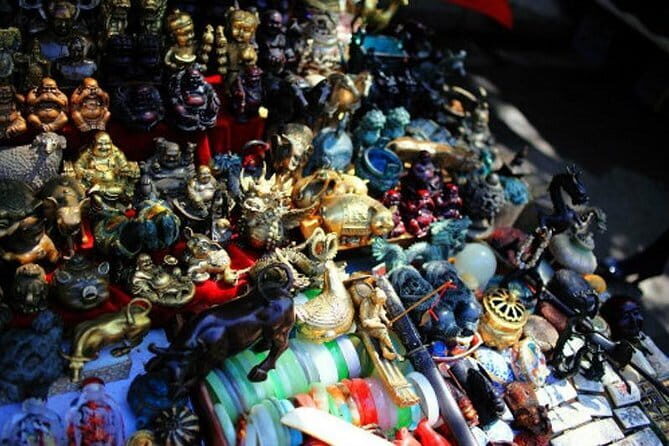
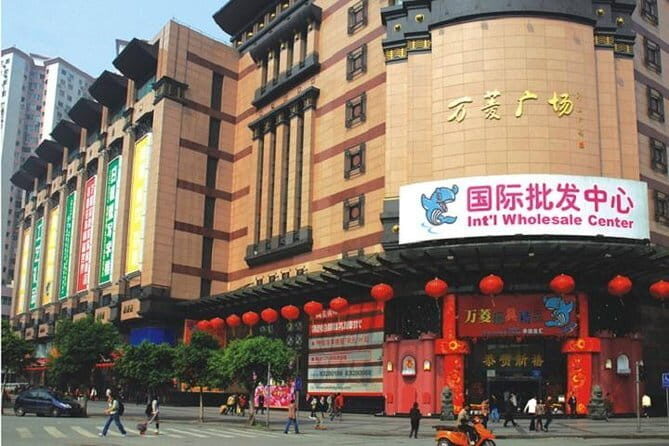
Next is Onelink International Plaza, which focuses on toys, home decoration, and souvenirs. If you import products in mixed categories (gift items, seasonal décor, or packaged consumer goods), this stop can help you see what’s commonly produced and how products are organized for wholesale sales.
I also think this stop is useful for spotting trends quickly. You can compare product variety in a single area and figure out whether a category is too broad for your needs—or worth deeper follow-up later.
A consideration here: different product categories attract different vendor types, so you’ll want to ask direct questions about sourcing, production, and consistency of what you see.
ZhongDa WuFeng ShangYeCheng: fabric and clothing accessories
Then you move to ZhongDa WuFeng ShangYeCheng, a market focused on fabric and clothing accessories. This is the stop that can turn a clothing idea into something workable for actual production.
If you’re sourcing apparel, accessories often matter as much as the garments themselves. Buttons, trims, linings, and fabric types can affect both quality and cost. Having a dedicated stop for accessories is a practical way to align your later buying decisions with real materials.
The trade-off: accessories and fabric can be technical. If you know exactly what you want (type, thickness, composition), you’ll get more value. If you don’t, plan to spend your time clarifying requirements through the guide’s translation.
Zhanxi Road watch market: precision items and wholesale comparisons
At Zhanxi Road, you’re in the watch market. Watches can be a very specific sourcing lane—brand vs. non-brand, style ranges, and different tiers of materials and mechanisms.
Why this stop is valuable in the overall route: it keeps your day from becoming random shopping. Instead, it becomes a structured comparison across categories, so you can log what you saw with less confusion.
A possible drawback: watches can vary a lot in technical details. If you don’t have any specs in mind, you may need to lean more on your guide to interpret what each seller is offering.
Taikang Residential District: jewelry and accessories
Next is Taikang Residential District, focusing on jewelry and accessories. This area works well for browsing product styles while getting a feel for wholesale presentation—how sellers package items, how they categorize designs, and how they discuss orders.
I like placing jewelry here after fabric/accessories. By then, you’ve already seen clothing-related materials and parts. So if your sourcing includes wearable items or fashion add-ons, the day’s categories start connecting.
Consideration: jewelry sourcing can be detail-heavy (finishes, metal type, stones or coatings). The best approach is to have a few product references in mind so you can ask targeted questions without getting overwhelmed.
Lingbian Industrial Zone: stepping into factory territory
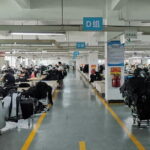
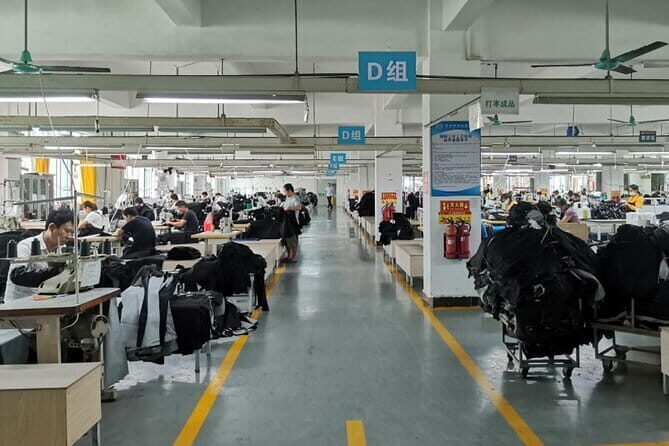
Finally, you visit Lingbian Industrial Zone, described as a manufacturer’s factory area. This is the stop that shifts your day from “market browsing” toward “factory context.”
Even if you’re not doing a full factory tour in the classic tourism sense, getting into a factory zone helps you understand how production-oriented suppliers fit into your sourcing strategy. It’s also a useful reality check for what kind of items may be feasible at scale.
One note to keep expectations grounded: this is still listed as about one hour. It’s best thought of as a factory-area visit paired with market research—not a long manufacturing walkthrough.
What to bring so the day actually helps your business
Even with translation and a driver doing the heavy lifting, your prep determines how useful the day becomes. Here’s what I’d bring:
- A clear list of product categories you’re considering (even if you’re flexible)
- Any supplier names or target locations you already have in Guangzhou
- Questions you want answered (lead times, order minimums, product variations—only if you already know you’ll ask)
- A simple way to take notes quickly between stops
Because the schedule is tight, you’ll be glad you can capture details fast while your impressions are fresh.
Timing, comfort, and how to pace a 5–8 hour day
The tour is designed for about 5–8 hours. That’s long enough to cover multiple categories but short enough that you need focus. The guide’s job includes navigating and keeping you comfortable in transit, which is where the private air-conditioned car helps.
A practical strategy:
- Spend your first minutes at each market confirming what’s sold there.
- Then narrow down fast: pick a few vendors to learn from deeply rather than trying to sample everything.
- If you’re unsure about a category, save questions for when you can compare with the next stop.
Also remember lunch isn’t included, and it’s optional and skippable. If you skip it, you may feel better keeping the day moving. If you need it, just plan for a short pause so you don’t lose the flow of the itinerary.
Is the market route right for you?
This tour fits best if you’re in Guangzhou for business and want a structured, translator-assisted day focused on sourcing. It’s also a good choice when you already know the categories you want, but you’d like help figuring out where to go and how to communicate with vendors.
It may not be the best match if:
- you want a long, leisurely shopping experience
- your priority is sightseeing landmarks rather than sourcing categories
- you need extensive technical evaluation that can’t fit into short market windows
If you’re trying to make progress quickly—compare options, clarify what suppliers offer, and identify where you may need follow-up—this kind of route can be a strong use of limited time.
Should you book this private Guangzhou business tour?
I’d book it if your trip includes wholesale sourcing and you want to reduce friction. The combination of private transport, hotel pickup/drop-off, and a local English-speaking guide makes the day feel designed for real business work, not just casual browsing.
I’d hesitate if you need a slow, detailed factory inspection or if your product goals are so broad that you’ll struggle to decide what to prioritize in one afternoon. In that case, you might spend the day collecting impressions without turning them into decisions.
If your goal is to leave Guangzhou with clear leads and better-informed sourcing options, this tour gives you a useful, concentrated start. And from what you’re getting—especially the guide support from Candice being flexible and strong as a translator—it’s the kind of service that can turn a confusing day into something you can actually use back home.
FAQ
What is the duration of the private Guangzhou business tour?
The tour runs about 5 to 8 hours, depending on your route and stops.
How much does the tour cost?
The price is listed as $200.00 per person.
Does the tour include hotel pickup and drop-off?
Yes. Hotel pickup and drop-off are included.
Is lunch included?
Lunch at a local restaurant or snacks are optional and skippable, so they are not included in the base tour.
Are admission tickets included for the market stops?
Admission tickets are listed as free for the market stops in the itinerary.
Is this tour private or shared with other groups?
This is a private tour/activity. Only your group will participate.
Can I cancel or change the booking?
The experience is non-refundable and cannot be changed for any reason. If you cancel or ask for an amendment, the amount paid will not be refunded.