REVIEW · XIAN
Half-Day Xi’an Biang Biang Noodles Cooking with a Market Visit
Book on Viator →Operated by Chilli Cool China · Bookable on Viator
Biang biang noodles sound tough, but this makes them doable. I like the mix of spice-market shopping and hands-on noodle technique, so you learn ingredients and method in the same half-day. One watch-out: this is a small-group class, so your experience may feel more like structured guidance than a totally free-form cooking lab.
I also like that the session is taught by friendly, clear instructors such as Fiona and Lily, who bring practical explanations about Chinese spices and noodle-making. You’ll taste what you make and enjoy drinks like tea, beer, and water without needing to plan anything extra.
The main drawback to consider is pacing. Even with a max group size of 15, you may not get as much one-on-one time as you’d hope if you want total control at every step—so keep your questions ready.
In This Review
- Key highlights worth planning around
- Why Xi’an biang biang noodles are a perfect “skill class”
- Meeting at Sajin Bridge and walking into the Muslim Quarter food world
- Spice market time: what “market challenges” really gives you
- Back to the chef’s home courtyard: where the noodle technique clicks
- What you eat: your noodles, plus tea, beer, and water
- Price and value: is $75 worth it for a half day?
- Group size, time slots, and what to expect from the vibe
- A note on hands-on vs demo: how to set expectations
- Who should book this class in Xi’an?
- Should you book this Xi’an biang biang noodle cooking class?
- FAQ
- How long is the cooking class?
- How much does it cost?
- Where do I meet for the tour?
- Is it a morning or afternoon class?
- How big is the group?
- What’s included in the price?
- Is there a vegetarian option?
- What should I wear?
- Does it run in bad weather?
Key highlights worth planning around
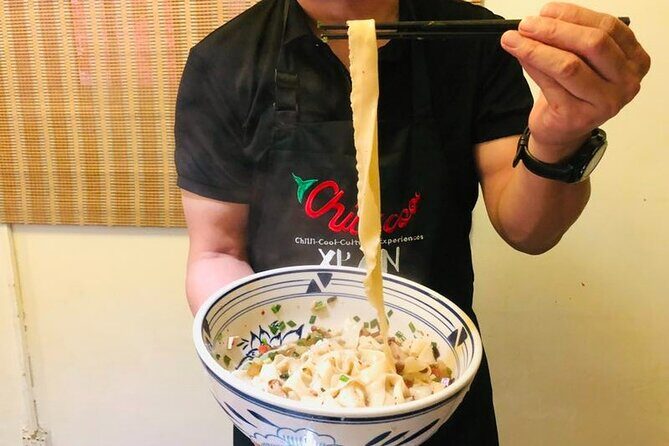
- Spice market game plan: You’ll explore and learn which Chinese spices and ingredients feed the noodle flavor later.
- A real small group: Maximum 15 people, which keeps it conversational instead of lecture-only.
- Chef’s home setting: Cooking happens in a traditional Chinese courtyard-style home kitchen, not a big commercial demo space.
- Everything included: Ingredients, recipes, tea/beer/water, and food tasting are part of the price.
- You choose your time slot: Morning or afternoon sessions let you fit it around other Xi’an sights.
Why Xi’an biang biang noodles are a perfect “skill class”
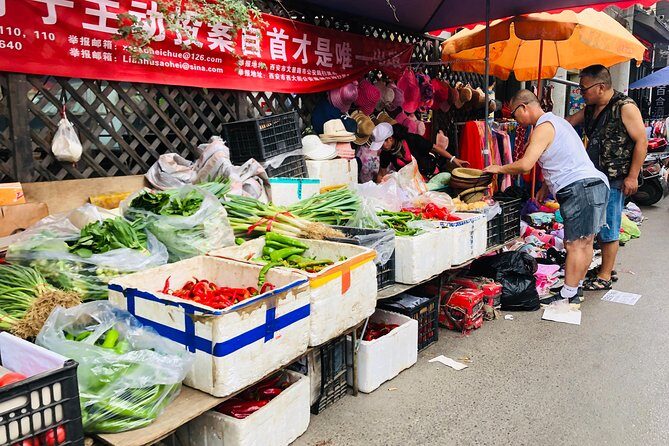
Biang biang noodles are one of those Xi’an dishes you’ve probably seen in photos. The real reason they work as a cooking class is simple: you’re learning a technique, not just a recipe. The class focuses on the steps that make the noodles chew right, not only on the sauce flavor.
And because this is tied to a market visit, you get the “why” behind the bowl. You’ll see common spices and ingredients you’ll use right after, which makes the cooking feel less like following instructions and more like building a system. That’s great value if you actually want to recreate it later at home.
You can also read our reviews of more shopping tours in Xian
- Mini Group Xian Day Tour to Terracotta Army, City Wall, Pagoda and Muslim Bazaar
★ 5.0 · 1,320 reviews

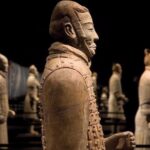
Meeting at Sajin Bridge and walking into the Muslim Quarter food world
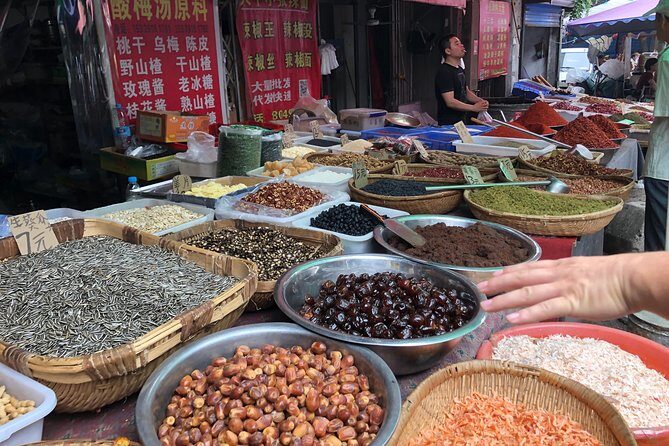
You start at Sajin Bridge (Sa Jin Qiao, Lian Hu Qu, Xi’an), and then the day shifts into the Muslim Quarter area for the market portion. That location matters. This neighborhood has a food-and-spice culture that’s visible and immediate, so you can connect what you see in stalls with what you’ll cook later.
The tour runs about 3 hours 30 minutes, and it’s paced for a real half-day. You’re not spending the morning learning theory and then getting rushed at the end. The schedule is short enough to fit into a sightseeing plan, but long enough to cover market time, a cooking session, and eating what you made.
Practical tip: wear comfortable walking shoes. Even if you’re not walking miles, you’ll be moving through market aisles and then back to the chef’s home.
Spice market time: what “market challenges” really gives you
The market portion isn’t just a stroll. You’ll be guided through an authentic spice market and given fun challenges to complete while you learn about different Chinese spice types and ingredients used in the cooking class.
Here’s why that matters for you: biang biang noodles depend on flavor layers, and those layers come from specific ingredients. When you learn them in the market, you start to recognize them later at a store—or when you try to reproduce the dish back home.
Another practical plus: the class includes food ingredients and food tasting as part of the experience. That means you’re not only collecting knowledge; you’re sampling along the way. Sampling beats guessing, especially with spices that smell similar but behave differently in cooking.
Back to the chef’s home courtyard: where the noodle technique clicks
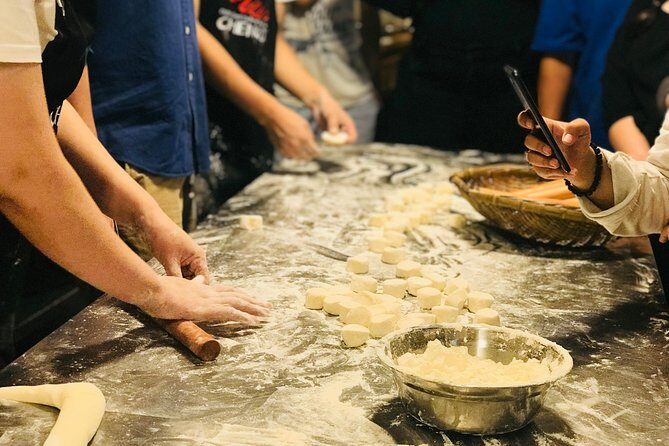
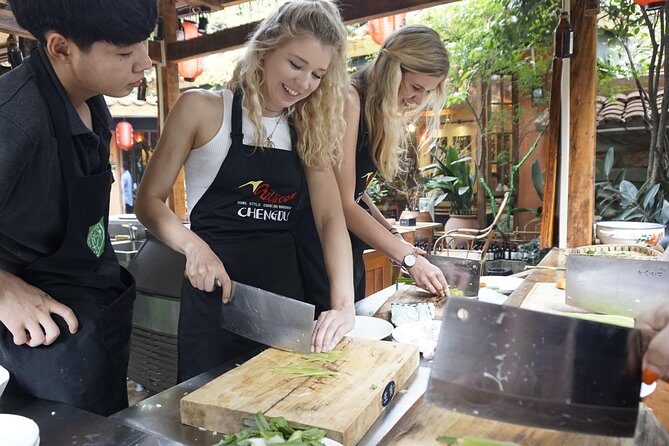
After the market, you head to a professional chef’s home for the cooking portion. The setting is described as a traditional Chinese home with a courtyard-style atmosphere, which is a big part of why the class feels authentic rather than staged.
This is where you’ll learn the process for making biang biang noodles itself. You’ll be guided step-by-step, and you’ll also get local tea during the session. Tea here isn’t just a beverage; it’s part of the hospitality rhythm. It makes the whole experience feel like you’re being treated as a friend, not a spectator.
What I like about this format is that it turns technique into a memory. The market shows you the ingredients, and then the chef’s guidance gives you repetition. Even if you don’t nail every step on the first try, you’ll leave with a clearer mental map of how the noodles come together.
In classes taught by instructors like Fiona and Lily, the instruction is described as easy to follow and heavy on spice-and-cuisine context. Another plus from past sessions: different instructors (including names like Michael and Bruce in some cases) mean teaching style can vary, but the common thread is explaining the “why” behind the spice choices and noodle steps.
What you eat: your noodles, plus tea, beer, and water
The class ends with a meal built around your work. You’ll enjoy the dishes you make, and beverages are included—tea, beer, and water are listed as part of the package.
Also, your food timing depends on your session: lunch or dinner is included based on whether you book the morning or afternoon option. That’s useful. You can plan your day around this class and not worry about grabbing food afterward.
One more detail that helps your day run smoothly: everything you need for ingredients and the recipe is included. So you don’t end up doing the annoying travel-class dance where you pay for a tour and then have to buy half the stuff yourself.
Vegetarian option is available—just advise at booking if that matters to you.




Price and value: is $75 worth it for a half day?
At $75 per person, you’re paying for more than a cooking lesson. You’re paying for a complete market-to-kitchen workflow:
- Market visit (spices and ingredient learning, with tasting)
- Professional chef instruction
- All ingredients included
- Recipes included so you can recreate it later
- Tea, beer, and water included
- Lunch or dinner depending on your session
If you’ve done city cooking classes before, you know the hidden costs add up quickly—ingredients, drinks, and often extra snacks. Here, the price is positioned like a full package. That makes it easier to decide, especially in Xi’an where you’ll likely be eating well anyway.
Is $75 cheap? It’s not a budget ticket. But it’s fair for a small-group cooking experience that includes shopping time, meals, and chef-led technique practice—especially with a maximum of 15 people keeping it more personal.
Group size, time slots, and what to expect from the vibe
This activity caps at 15 travelers, and that has a real effect on the day. You’re more likely to get questions answered, and you won’t feel like you’re stuck watching a single person do everything.
You can choose morning or afternoon sessions, which is a scheduling win. If you like early starts, morning can feel efficient. If you prefer a slower day, the afternoon slot helps you avoid rushing between sights.
Weather matters too. The experience operates in all weather conditions, but it also notes that cancellations can happen due to poor weather. The practical takeaway: check the forecast and wear layers. Market time plus cooking time means you’ll feel the temperature more than you think.
A note on hands-on vs demo: how to set expectations
One review raised a concern that the class felt more like a demonstration in an apartment than a fully station-based hands-on experience. That’s the one consideration I’d take seriously before booking.
Here’s how to protect yourself: when you arrive, pay attention to how the chef guides you through the steps. This is billed as a class where you make the noodles. But in any small home-kitchen setting, the chef controls the flow—so you may not get an entirely independent station like you’d see in some cooking schools.
If your main goal is technique and you want to actively participate, this class still fits well based on the overall format. Just go in with a practical mindset: you’ll learn and work through the process with guidance, but you’re not running a restaurant line.
Who should book this class in Xi’an?
This experience is a great match if you:
- Want a practical skill (biang biang noodle technique), not just a meal
- Enjoy learning through food markets and ingredient recognition
- Prefer small-group interaction with a real chef-led session
- Like the idea of ending with something you helped make, plus included drinks
You might want to think twice if you:
- Need maximum one-on-one coaching at every minute of cooking
- Expect a high-tech kitchen or a totally independent workstation setup
Should you book this Xi’an biang biang noodle cooking class?
Yes, I think it’s a strong booking for the right traveler. If you want the “market to noodles” connection, this class delivers it in one tight window. The market visit, small group size, and included food and recipes make it feel like good value rather than a pricey half-day snack.
If you’re the type who learns best by doing, you’ll likely appreciate the structure: market discovery first, then chef guidance in a traditional home setting. And if you care about voice clarity and spice explanations, instructors like Fiona and Lily have been praised for easy-to-understand teaching and strong spice knowledge.
Book it if you’re excited to learn a technique you can repeat. Just set expectations that it’s guidance-led in a home-kitchen format, not a full-on studio where you drive every step.
FAQ
How long is the cooking class?
It runs for about 3 hours 30 minutes (approx.).
How much does it cost?
The price is $75.00 per person.
Where do I meet for the tour?
The meeting point is Sajin Bridge (Sa Jin Qiao, Lian Hu Qu, Xi’an Shi, Shan Xi Sheng, China).
Is it a morning or afternoon class?
You can choose from morning or afternoon sessions.
How big is the group?
The tour has a maximum size of 15 people.
What’s included in the price?
Included are beverages (beer/tea/water), lunch or dinner based on your class schedule, food ingredients, food tasting, and recipes.
Is there a vegetarian option?
Yes, a vegetarian option is available. You should advise at booking if you require it.
What should I wear?
Wear comfortable walking shoes, since you’ll be moving around during the market visit and the cooking portion.
Does it run in bad weather?
It operates in all weather conditions, and it may be canceled due to poor weather with an option for a different date or a full refund.



More Markets in Xian
- Mini Group Xian Day Tour to Terracotta Army, City Wall, Pagoda and Muslim Bazaar
★ 5.0 · 1,320 reviews
More Shopping Tours in Xian
- Mini Group Xian Day Tour to Terracotta Army, City Wall, Pagoda and Muslim Bazaar
★ 5.0 · 1,320 reviews
More Tour Reviews in Xian
- Mini Group Xian Day Tour to Terracotta Army, City Wall, Pagoda and Muslim Bazaar
★ 5.0 · 1,320 reviews