REVIEW · HANGZHOU
Hangzhou Private Architecture Day Tour
Book on Viator →Operated by China Private Tours · Bookable on Viator
Jiangnan has a way of sticking with you. I like the way this day tour pairs Qing Dynasty Guo’s Villa with a tea stop in Meijiawu, so you get Hangzhou’s mood through both buildings and daily life. I also appreciate the private guide approach, where explanations land as you walk rather than after-the-fact. One thing to consider: there’s no included meal, so you’ll need to plan for lunch on your own.
The best part is the pacing. You’ll start at 9:00 am, get hotel or station pickup, and spend about 7 hours moving through key sites without the stress of arranging transport. Most entrances are included or free, so you can focus on seeing—not calculating.
Because it’s private, the day feels efficient but not rushed. You’ll finish with Hangzhou’s modern high-rise core, after a slow stroll through older lanes and garden walls.
In This Review
- Key Highlights You’ll Actually Feel During the Day
- Why Hangzhou’s Architecture Works as a Story (Not Just Photos)
- Price and Logistics: What You’re Paying For
- Starting at 9:00 am: How the Tour Keeps You Moving Without Stress
- Stop 1: Guo’s Villa (Sky in the Mirror and Living in Quietness)
- What makes it special
- What to watch for
- Stop 2: Meijiawu Tea Culture Village and Longjing Tea Fields
- Why this stop matters
- What you might see on arrival
- Small consideration
- Lunch Timing: Plan Your Break (Meals Aren’t Included)
- Stop 3: Hu Xueyan’s Former Residence (Merchant Power in Stone and Wood)
- What makes the residence so readable
- A practical tip for this stop
- Stop 4: Southern Song Imperial Street and the Phoenix Temple
- Why an old street can feel more modern than you expect
- Key anchor point
- The only drawback to know
- Stop 5: Hangzhou City Balcony (Qiantang River Views and Over-300-Meter Towers)
- Why it’s a smart ending
- What to do with this time
- What I Think You’ll Learn (Tea, Empire, and Merchant Life)
- Who This Tour Is Best For
- Should You Book It?
- FAQ
- FAQ
- How long is the Hangzhou Private Architecture Day Tour?
- What’s included in pickup and drop-off?
- Are entrance tickets included?
- Is lunch included?
- Can the tour accommodate vegetarian meals?
- What is the cancellation policy?
Key Highlights You’ll Actually Feel During the Day
- Door-to-door pickup and private air-conditioned car from your Hangzhou hotel or the train station
- Guo’s Villa layout in two contrasting parts: Sky in the Mirror (garden) and Living in Quietness (residential)
- Meijiawu Tea Culture Village with over 600 years of tea-growing and world-famous Longjing (Dragon Well) tea
- Hu Xueyan’s Former Residence with the kind of architecture that shows how merchant power worked in the Qing era
- Southern Song Imperial Street lengthwise history: 4,185 meters and more than 10,000 flagstones
- Hangzhou City Balcony for that modern skyline payoff, with towers over 300 meters
Why Hangzhou’s Architecture Works as a Story (Not Just Photos)
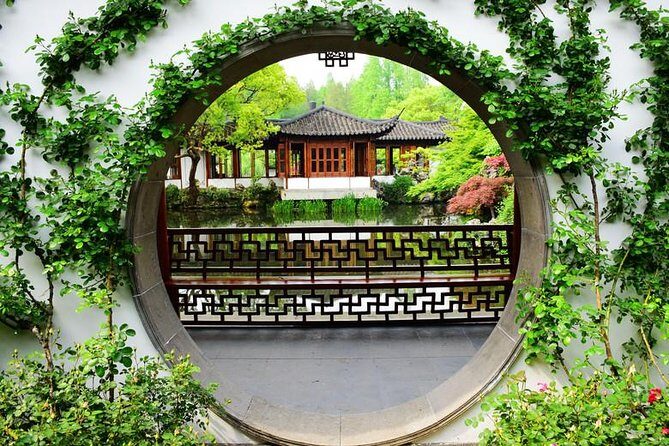
Hangzhou is famous for pretty views, but this tour goes for something more useful: how different eras shaped daily life. You’ll move from Qing garden aesthetics to tea-village rhythms, then into merchant wealth and imperial city planning. It’s a clear line through time, and it helps you understand why Hangzhou feels both classic and current.
I especially like the balance. You’re not only looking at big sights; you’re also getting a practical sense of how tea, commerce, and city design all tied together in the Jiangnan world.
And yes, you’ll get plenty of great photo angles—but the better win is knowing what you’re looking at while you look at it.
You can also read our reviews of more private tours in Hangzhou

Price and Logistics: What You’re Paying For
This tour costs $113.37 per person for about 7 hours. For that price, you’re not just buying entry tickets—you’re buying the structure that makes a day like this easy. You get:
- private, English-speaking guiding
- an air-conditioned private vehicle
- bottled water
- hotel/train pickup and drop-off
- a mobile ticket
Value tip: admission isn’t uniform across stops. Guo’s Villa and Hu Xueyan’s Former Residence include tickets, while the tea village and Southern Song street are free to enter. So you’re not paying separately for every single location, which keeps the day predictable.
If you’re traveling with friends, the listing notes group discounts too—worth asking when you book if pricing changes based on headcount.
Starting at 9:00 am: How the Tour Keeps You Moving Without Stress
Pickup is designed to be simple. If you’re starting from downtown, the guide meets you at your hotel. If you’re starting from Hangzhou Train Station, you’ll find welcome signage when you arrive.
From there, you’re in a private vehicle with A/C. That matters in Hangzhou because weather and walking can swing the comfort level fast. The tour is built around short, well-defined sightseeing blocks (often around an hour or less), which makes the day feel manageable even if you’re not used to long city walking.
Also, this is explicitly a private tour, meaning it’s just your group. That’s a big deal if you like asking questions, moving at your own pace, or needing extra time at one stop.
Stop 1: Guo’s Villa (Sky in the Mirror and Living in Quietness)
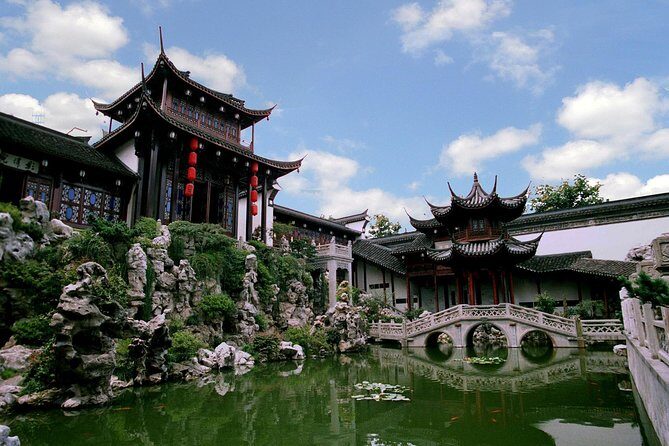
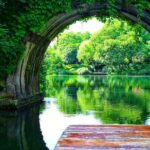
Guo’s Villa is the kind of place where the architecture does the storytelling for you. It dates back nearly 140 years to the Qing Dynasty and covers about 9,800 square meters. It’s named after Guo Shilin, and the layout is split into two major sections with different moods.
You’ll spend around 40 minutes here, and admission is included.
What makes it special
- Two-section design: the northern part is a garden area called Sky in the Mirror, while the southern part is the residential section called Living in Quietness.
- Pavilion-style home with a courtyard: that courtyard-centered planning helps you see how people valued privacy, airflow, and controlled views.

What to watch for
This is a garden-villa stop, so you’ll want comfortable shoes. Even when the walking seems light, courtyards, paths, and small transitions add up. If you’re sensitive to crowds, go in with patience—this is a popular type of sight in historic Hangzhou.
Stop 2: Meijiawu Tea Culture Village and Longjing Tea Fields
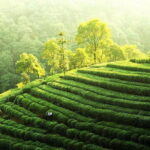
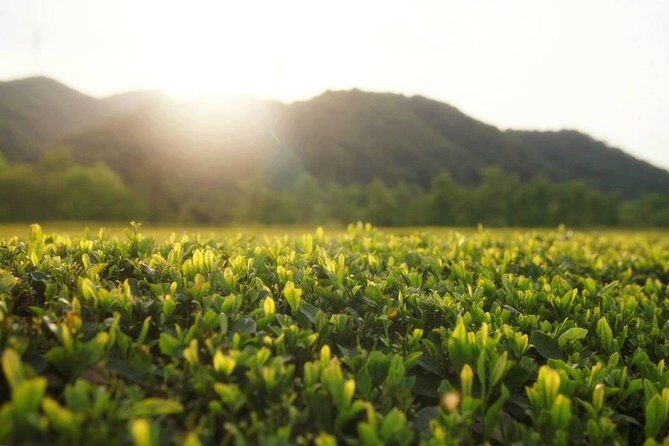
Next comes the real day-to-day Hangzhou. Meijiawu Tea Culture Village is west of the West Lake Scenic Area, and it has over 600 years of history. It’s also described as the biggest natural village where world-famous West Lake Dragon Well Tea is produced.
You’ll spend about 1 hour here, and admission is free.
Why this stop matters
If Guo’s Villa is about elite aesthetics and controlled quiet, Meijiawu is about work, tradition, and how tea culture shaped local life for centuries. You don’t just learn tea facts—you see the village structure and understand why the tea-growing identity stays strong even as the city expands nearby.
What you might see on arrival
The current Meijiawu village is made up of eight tourist sections, including:
- a tea culture tourist center
- a rural leisure tourist area
- a fishing village
You’re getting a feel for how the area presents its heritage without turning it into a single-thing museum.
Small consideration
Because this stop is more “village + tea culture” than “one landmark building,” your experience depends on how much you enjoy wandering and chatting with whoever runs things in the area. If you prefer only major monuments, you may find this stop calmer and less dramatic—but still very worthwhile for context.
Lunch Timing: Plan Your Break (Meals Aren’t Included)
After Meijiawu, the schedule moves you toward Hu Xueyan’s Former Residence after lunch. The good news is that your guide and vehicle keep transitions smooth.
The catch: meals are not included. So you’ll want to be ready with either:
- a plan for lunch near your next stop, or
- a willingness to grab something quickly during the break
If you booked a vegetarian option, advise the provider during booking and keep that in mind for lunch decisions.
Stop 3: Hu Xueyan’s Former Residence (Merchant Power in Stone and Wood)
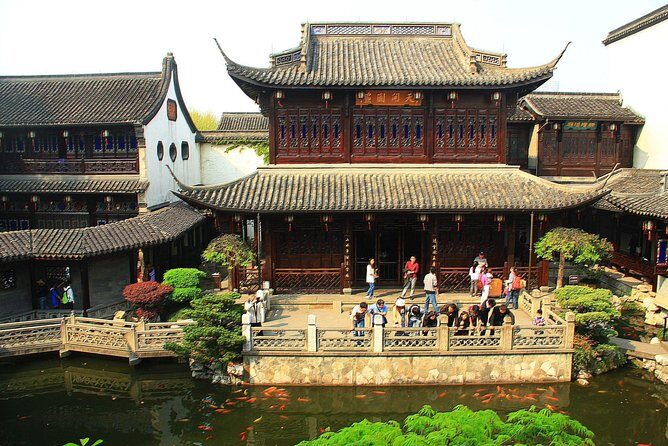
Hu Xueyan was a Hangzhou celebrity and one of the richest and most famous businessmen of the Qing Dynasty. His life dates are 1823 to 1885. His former residence sits in downtown Hangzhou, and it’s built to show how wealth could shape a whole world of courtyards, halls, and pathways.
You’ll have about 50 minutes here, and admission is included.
What makes the residence so readable
The site is described as a maze of towers, gardens, pavilions, terraces, arched bridges, palatial halls, and serene living quarters. That isn’t just decorative detail—it’s how you can sense the logic of private power: controlled movement, layered spaces, and a constant shift between public show and private calm.
You’ll also get the cultural flavor connected to architecture, philosophy, and folklore customs that are still alive around the site.
A practical tip for this stop
Expect a lot of visual framing—arches, bridges, and courtyards create repeated sightlines. If you’re the type who likes “find the pattern,” this place is fun. If you prefer straight-line sites with fewer turns, take your time and let the guide point out what’s important, not just what’s scenic.
Stop 4: Southern Song Imperial Street and the Phoenix Temple
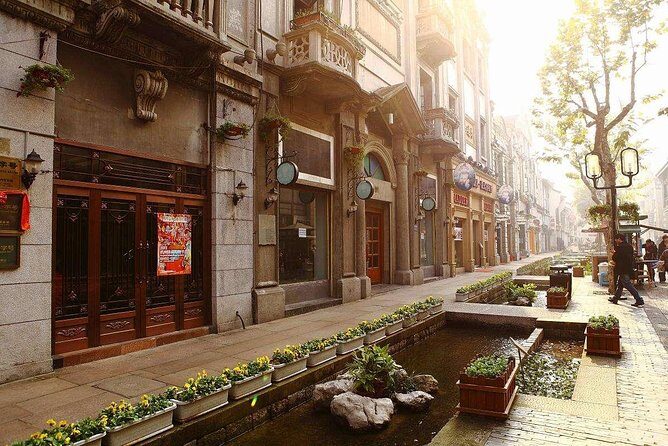
After lunch, you’ll move to Southern Song Imperial Street. This is presented as a main avenue paved in the Southern Song Dynasty, using more than 10,000 flagstones. The street once formed the central axis of Linan city in the Southern Song period, stretching 4,185 meters.
Admission is free, and you’ll spend about 1 hour here.
Why an old street can feel more modern than you expect
Streets are living infrastructure. They tell you where civic life went, how the city was structured, and how the rhythm of travel worked. Walking a historic avenue like this is a good way to understand Hangzhou not only as a scenic city, but as a planned political and commercial center.
Key anchor point
There are 13 historical and cultural relics and buildings along the street, and the Phoenix Temple is a key national cultural relic protection unit. If you want one landmark to keep in your head, keep the Phoenix Temple as your reference point while you walk.
The only drawback to know
This stop can be more about the long visual walk than about one single building. If you like “one big wow” photo moments, you might want your guide to highlight the most important sections so you don’t feel like you’re passing time.
Stop 5: Hangzhou City Balcony (Qiantang River Views and Over-300-Meter Towers)
To close the day, you’ll finish with a look at Hangzhou’s modern core, known as Hangzhou City Balcony. It’s described as the central business district of Hangzhou, and the view is meant to fuse historical Hangzhou character with the grandeur of the Qiantang River.
You’ll get about 30 minutes here, and admission is free.
Why it’s a smart ending
After gardens, tea culture, and merchant-era architecture, the skyline shift helps you reset your brain. This last stop makes the contrast feel intentional, not random. You can see how Hangzhou keeps its identity while building upward.
And yes, there’s a specific modern detail: the tallest towers measure over 300 meters.
What to do with this time
Use it to take perspective photos and simply watch how the river and city grid meet. If you’re tired, this is the stop where you can enjoy the view without needing to memorize facts. Your guide can still connect the dots, but the main value is the change of pace.
What I Think You’ll Learn (Tea, Empire, and Merchant Life)
This tour is really about three social engines:
- Elite garden culture through Guo’s Villa’s split design.
- Tea village identity through Meijiawu’s long history of Longjing production and village organization.
- Merchant and city power through Hu Xueyan’s residence and the civic planning of Southern Song Imperial Street.
If you enjoy travel where the architecture explains social systems, you’ll have fun. And if you’re more of a photo-and-walk person, the guide can still point you toward the most meaningful corners so the day doesn’t feel like random sightseeing.
One extra note: the guide experience can matter a lot on a tour like this. In the best cases, your guide will be able to explain why courtyards, bridges, street alignments, and temple anchors matter. With the English-speaking private format, you’re not stuck guessing.
Who This Tour Is Best For
I think this works especially well if you:
- want a single day that covers old Hangzhou and modern Hangzhou
- like architecture with context (not just taking pictures)
- enjoy tea culture and want to see the village setting tied to Longjing (Dragon Well) tea
- prefer private guiding so questions don’t get lost
It might be less ideal if you:
- hate walking between multiple stops even when each stop is short
- want a guaranteed sit-down lunch experience (meals are not included)
- only care about one category of sights, like temples only or skyscrapers only
Should You Book It?
Yes, I’d book this if you want a clean, well-timed Hangzhou day that connects the dots. The mix of Guo’s Villa, Meijiawu, Hu Xueyan’s residence, and Southern Song Imperial Street gives you a practical sense of how the region worked—tea, wealth, and city planning all in one route.
It’s also hard to beat the convenience of private pickup and drop-off plus an English-speaking guide. When the day is this structured, you spend less energy on logistics and more on the actual sights.
The only reason not to book is simple: if you’re counting on meals being included or you prefer a slower, single-site style of touring.
FAQ
FAQ
How long is the Hangzhou Private Architecture Day Tour?
It runs for about 7 hours.
What’s included in pickup and drop-off?
Hotel and railway station pickup and drop-off in Hangzhou downtown are included, with pickup arranged at your hotel or with welcome signage at the station.
Are entrance tickets included?
Admission is included for Guo’s Villa and Hu Xueyan’s Former Residence. Admission for Meijiawu Tea Culture Village, Southern Song Imperial Street, and Hangzhou City Balcony is listed as free.
Is lunch included?
No. Meals are not included in the tour.
Can the tour accommodate vegetarian meals?
A vegetarian option is available. You’ll need to advise at booking time if you require it, along with any other dietary requirements.
What is the cancellation policy?
Free cancellation is available if you cancel up to 24 hours in advance of the experience start time for a full refund. Changes less than 24 hours before the start time aren’t accepted.