REVIEW · BEIJING
Private 4-Day Tour: Beijing, Xi’an, Chengdu & Shanghai
Book on Viator →Bookable on Viator
Four cities in four days is a lot.
What makes this tour feel doable is the pre-planned rhythm: private guides in Beijing, Xi’an, and Chengdu plus private air-conditioned transport so you spend less time figuring things out and more time seeing the big sights. I especially like how the itinerary pairs must-sees (Forbidden City, Terracotta Warriors, pandas) with smart timing choices like cable-car access at Mutianyu and a calm start at the panda center.
The trade-off is intensity. You fly and ride high-speed trains between cities, and the pace is built for efficiency, not lingering. Also, Forbidden City closure on Mondays means your day-2 plan can shift to Summer Palace or Lama temple, so it helps to stay flexible.
In This Review
- Key highlights at a glance
- A smart, private way to cover Beijing, Xi’an, Chengdu, and Shanghai
- Beijing Day 1: Mutianyu Great Wall and Summer Palace with real breathing room
- Mutianyu Great Wall (with cable car rides)
- Summer Palace (Yiheyuan)
- Beijing Day 2: Tiananmen, Forbidden City (or a backup plan), then Temple of Heaven
- Tiananmen Square
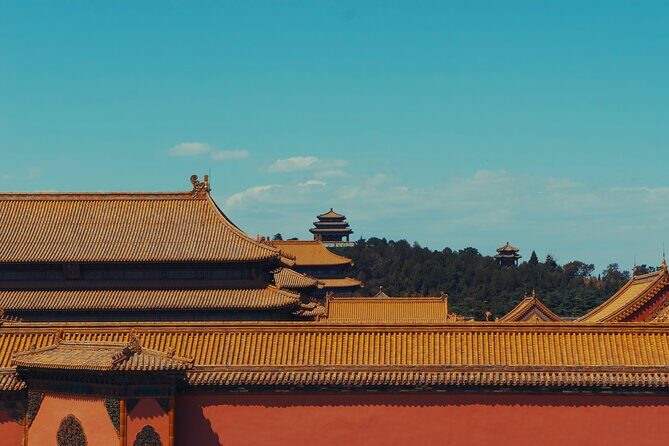
- Forbidden City entrance and what your guide helps you see
- Temple of Heaven
- Xi’an Day 3 (mostly): City Wall and the Terracotta Warriors without the guesswork
- Xi’an City Wall
- Terracotta Warriors and Horses
- High-speed train to Chengdu
- Chengdu Day 3 evening and Day 4 morning: Wenshu Temple, Sichuan hot pot, then pandas
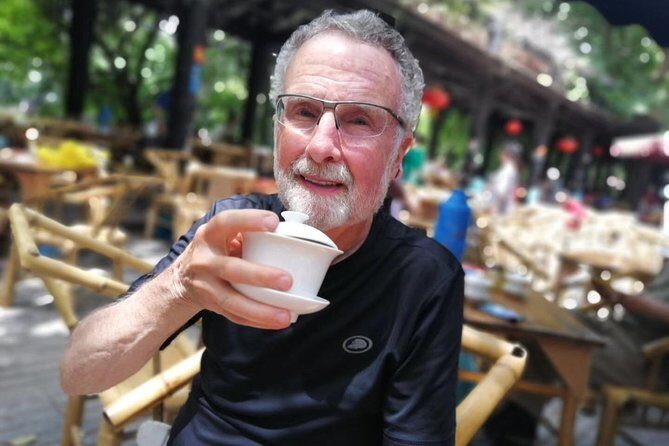
- Wenshu Temple tea tasting
- Sichuan hot pot dinner (with spice options)
- Giant Panda Breeding Research Base (early visit)
- Finishing in Shanghai: flight connection and your transfer plan
- Price and value: what $2,180 buys you in real terms
- Who this tour is best for (and who should think twice)
- Quick stop-by-stop reality check (so you know what to expect)
- Should you book it?
- FAQ
- What time does the tour start?
- Is this a private tour?
- What’s included for transport between cities?
- Are hotel stays included?
- Are entrance fees included?
- What happens if Forbidden City is closed?
- What information do I need to book the trains and flights?
Key highlights at a glance
- Mutianyu Great Wall by cable car in a less crowded, scenic section of the Wall
- Expert pacing for Forbidden City plus the Temple of Heaven with guided context
- Xi’an City Wall + Terracotta Warriors in one efficient day
- Chengdu tea at Wenshu Temple before Sichuan hot pot
- Giant pandas early at the breeding research base, then fly to Shanghai
- End in Shanghai with an airport-to-your-hotel or station transfer
A smart, private way to cover Beijing, Xi’an, Chengdu, and Shanghai
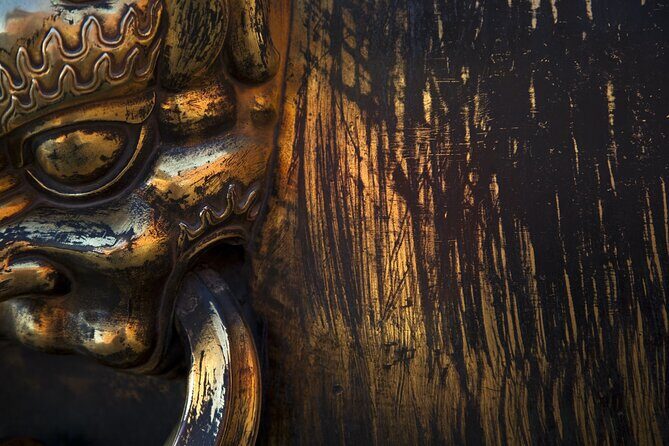
If you want the classic China highlights but you do not have the time (or patience) to stitch tickets, drivers, and translation together, this kind of private route makes sense. In four days, you hit four heavy-hitters: the Great Wall near Beijing, the Forbidden City and Temple of Heaven, the Terracotta Warriors, and giant pandas in Chengdu—then you finish in Shanghai with your transport handled.
Here’s what you’re paying for, beyond the sightseeing list:
- Time-saving logistics. Your flights and high-speed trains are already built into the flow, and each city has its own private driver.
- Human help. You’re not just riding around; you’re learning what you’re looking at with a professional English-speaking guide in Beijing, Xi’an, and Chengdu.
- Fewer decision points. Your included meals and pre-arranged hotel stays reduce the everyday choices that slow a trip down.
One extra practical plus: the tour includes entrance fees for the listed sights, which helps you avoid the “ticket hunt” feeling when you land in a new place. You still have discretion for tips, but the big items are covered.
A note on the guide team: in the feedback I saw, people specifically called out guides by name such as Owen in Xi’an, and guides in Beijing including Julia, Vicky, and Mollie. That kind of continuity matters when you’re moving so fast—your guide is the translator, the context, and the calm presence.
You can also read our reviews of more private tours in Beijing
Beijing Day 1: Mutianyu Great Wall and Summer Palace with real breathing room
Mutianyu Great Wall (with cable car rides)
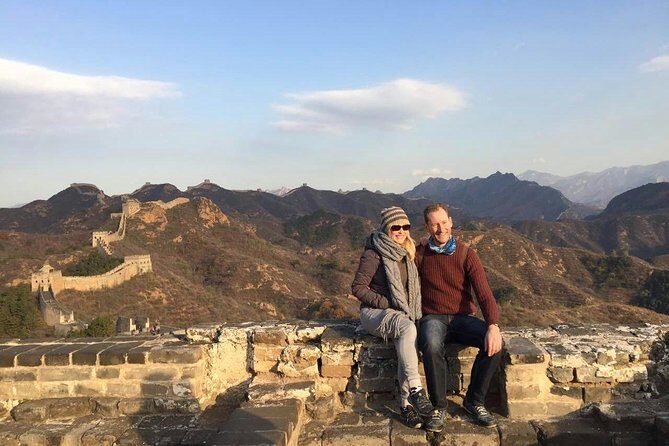
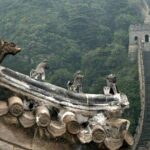
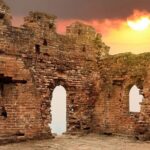
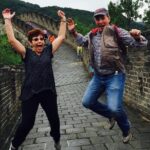
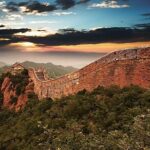
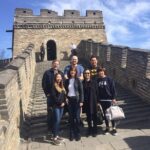
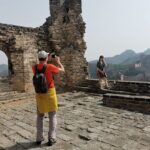
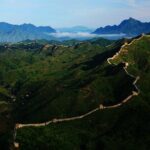
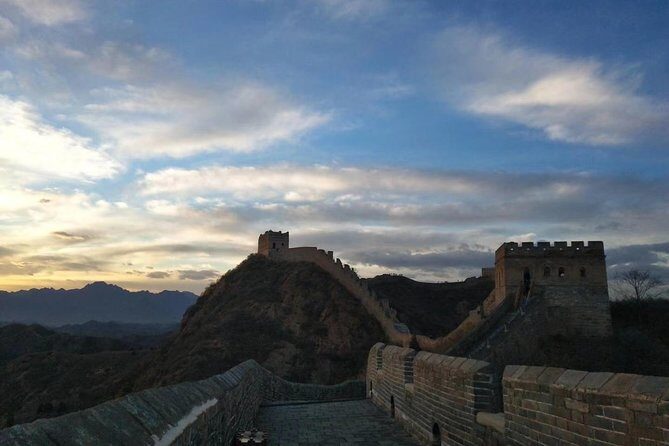
The day starts at 8:00 am with pickup from your hotel in downtown Beijing. Your first target is Mutianyu Great Wall, one of the best-preserved and visually striking sections near the city, and the tour’s pitch is that it’s typically less crowded than other parts.
You’ll also get round-trip cable car rides. That matters because it changes the experience. Instead of saving your energy for steep steps right away, you can spend more time walking the Wall at a pace that fits your group. It’s still the Great Wall—meaning you’ll be outside and moving—but the cable car takes the edge off the arrival climb.
What I like about this setup is that it makes the Wall feel more like a visit than a workout challenge. If you’re traveling with older relatives, you still get the Wall without everyone turning into a hero on stairs.
After the Great Wall, you go to a popular local restaurant for lunch. The lunch stop is included and you do not have to chase down where to eat right after a big morning.
Good to know: this day includes about 3 hours for Mutianyu, with admission included. If you’re the type who wants time for photos at every turn, you may want to keep your walking pace steady so you do not feel rushed.
Summer Palace (Yiheyuan)
Next up is Summer Palace, described as the largest and best-preserved royal park in China. You get around 2 hours here, which is enough to see the core areas without turning it into a checklist race.
Summer Palace is also a great pairing with the Great Wall because it flips the tone. You go from fortification and height to gardens, pavilions, and the sense of royal leisure. With a guide, you’ll understand what you’re seeing—how the park’s design connects to the cultural ideas behind it—rather than just wandering between bridges and halls.
When you finish, you drive back to your Beijing hotel.
Potential drawback to consider: Day 1 is packed with top attractions, but it is still a manageable flow because the schedule is built around included meals and transportation. The bigger risk later is fatigue from the whole tour’s “four cities, nonstop planning” nature.
Beijing Day 2: Tiananmen, Forbidden City (or a backup plan), then Temple of Heaven
A few more Beijing tours and experiences worth a look

Tiananmen Square
Day 2 starts with Tiananmen Square, about 30 minutes, and admission is free. Even if you only spend a short time here, it gives you the essential setting for everything that comes next. The square is closely tied to the history around the imperial center of Beijing.
This portion is short on purpose: you don’t want to waste time where you’re mostly standing and taking photos. The guide timing helps you get the orientation and then move on.
Forbidden City entrance and what your guide helps you see
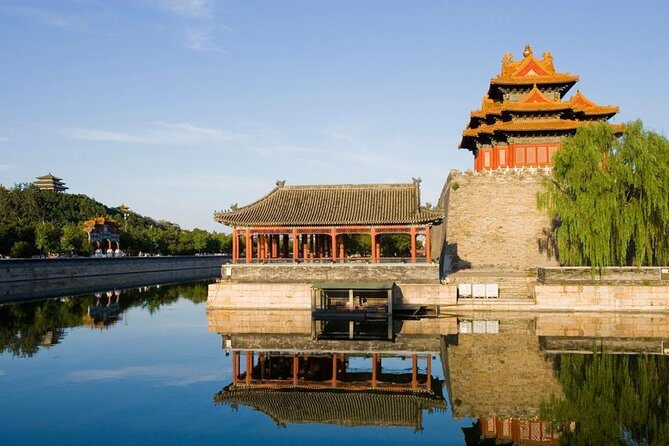
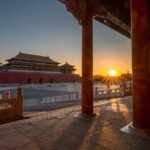
Next is Forbidden City (The Palace Museum). You enter through Tiananmen Gate, and the visit runs about 3 hours with admission included.
The scale here is real: over 8,400 rooms is not a number you can hold in your head as you walk. That’s where a guide becomes more valuable than you might expect. Your guide can help you focus on what matters—how the palace layout separates spaces for the emperor’s public work from the private life areas.
Important flexibility: Forbidden City is closed on Mondays. If your tour date lands on a Monday, the plan is replaced with Summer Palace or Lama temple. That’s not a consolation prize; it’s a built-in reroute so you still get a major palace/temple experience.
After Forbidden City, you lunch at a restaurant in an old courtyard, and the tour specifically notes Peking roast duck as a signature dish here.
Temple of Heaven
Then you head to Temple of Heaven, another UNESCO World Heritage Site. This is one of the most visually satisfying places in central Beijing because it’s designed for a ritual that connects architecture, symmetry, and ceremony. The park around it is also where locals practice Tai Chi and other cultural activities, even if you’re there only for a short visit.
You’ll get the Temple of Heaven experience before leaving Beijing for your flight to Xi’an later in the day. Admission is included, and the stop has time built in after lunch.
Logistics reality check: This is the day where you’ll shift from sightseeing mode to travel mode. The itinerary includes time to drive to Beijing International Airport for the flight to Xi’an, so build your energy accordingly.
Xi’an Day 3 (mostly): City Wall and the Terracotta Warriors without the guesswork
Xi’an City Wall
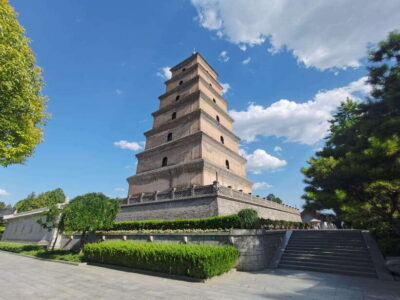
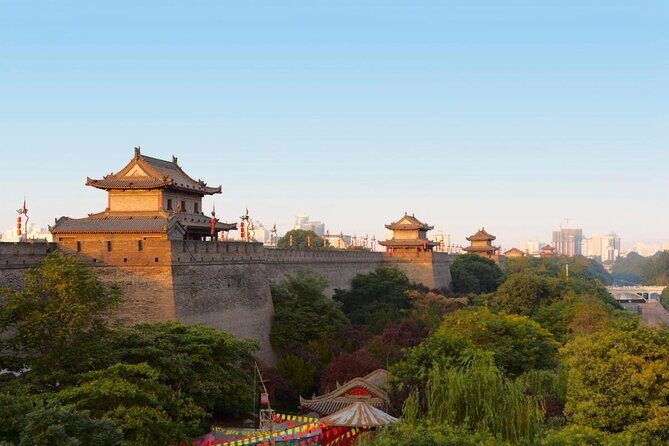
Your morning in Xi’an begins with Xi’an City Wall (Chengqiang). It’s about a 1-hour visit, and admission is included. The Wall dates back to the beginning of the Ming Dynasty and is known for being one of the best-preserved and longest city walls in China.
Even if you do not walk the entire length, the value is in seeing how a defensive wall functions as an urban structure. Your guide’s framing helps you understand it as transportation and protection at the same time, not only a relic.
Terracotta Warriors and Horses
Then comes the core event: Terracotta Warriors Museum, with admission included and about 3 hours on site.
You’re looking at more than 8,000 life-sized terracotta figures from three burial pits. The tour provides a key story you should keep in mind while you walk: these warriors were made to guard the first Chinese emperor in the afterlife. It’s also tied to the modern discovery story—how a local farmer found the underground army in 1974 while digging.
If you’ve seen pictures, you might think you know what the site looks like. You don’t. The real impact is scale, plus the way the pits create an enclosed sense of discovery. A guide helps here by preventing your brain from glazing over at the sheer number of figures.
Practical note: museums can feel long when you’re moving quickly between major sights. Three hours is a good compromise. It lets you see the highlights without feeling like you sprinted through history.
High-speed train to Chengdu
After Xi’an, you take the bullet train to Chengdu (about 4 hours). The route is described as passing through the Qinling mountain range, so if you like a view from your seat, this is one of the nicer travel stretches.
When you arrive, a local guide and driver meet you at the station exit. Then you drive to the Wenshu Temple area for a tea tasting.
Chengdu Day 3 evening and Day 4 morning: Wenshu Temple, Sichuan hot pot, then pandas
Wenshu Temple tea tasting
Chengdu has a reputation for being slower and food-focused, and Wenshu Temple fits that mood. The tour takes you to Wenshu Yuan Monastery, described as the oldest temple in Chengdu, dating back roughly 1,400 years to the Sui Dynasty.
Instead of a rush through incense and courtyards, you get a traditional Chinese tea tasting here. This is the kind of stop that helps you change pace after the intensity of Beijing and Xi’an.
If you’ve only experienced tea in restaurants, this is the moment where you understand tea as culture, not just a drink.
Sichuan hot pot dinner (with spice options)
Dinner is at a popular local restaurant for Sichuan hot pot. The tour notes you can choose a non-spicy hot pot if you do not eat spicy food.
This is a smart inclusion because hot pot is one of those meals that feels social and local, even if it’s not your usual food style. Plus, when meals are included, you do not lose time searching for a place that matches your spice tolerance.
Giant Panda Breeding Research Base (early visit)
Day 4 opens with the Giant Panda Breeding Research Base (Xiongmao Jidi). You go early morning because pandas are typically more active then, and you’ll have chances to see them eating bamboo breakfast and playing.
The tour says the center is home to over 60 pandas, including younger pandas. If you care about real animal observation, this early timing is a big deal. Later in the day, animals often look like they’re running a group nap schedule.
This is also a photo-friendly stop, and it’s the one day where the schedule actually feels emotionally worth it. You’re not just checking a box; you’re meeting a living highlight.
Finishing in Shanghai: flight connection and your transfer plan
After the panda visit, you drive to Chengdu airport and fly to Shanghai. Once you land at Pudong International Airport, your dedicated local driver meets you and handles transfer to your destination—your booked Shanghai hotel, train station, or port on the last day.
This matters because Shanghai is a city where travel times can surprise you. By handling arrival transfer, the tour protects the most fragile part of any trip: day-one confusion in a big city.
One caution: the tour asks you to provide your own booked hotel information in Beijing and Shanghai so they can arrange pickup and drop-off on day 1 and the last day. If you haven’t booked those yet, plan to do it before you finalize the trip.
Price and value: what $2,180 buys you in real terms
At $2,180 per person, you’re paying for more than attractions. You’re buying a structure: private guides, private transport, hotel stays in Xi’an and Chengdu, and the multi-city transportation that most independent travelers struggle to coordinate smoothly.
Here’s how the included items translate into value:
- Hotels: you get one night 5-star hotel in Xi’an and one night 4-star hotel in Chengdu (the tour overview also mentions five-star, but the included details specify 4-star for Chengdu).
- Transport across cities: bullet trains between Beijing–Xi’an and Xi’an–Chengdu, plus a flight from Chengdu to Shanghai.
- Private vehicles in each city: an air-conditioned vehicle and professional driver in Beijing, Xi’an, Chengdu, and Shanghai for the transfer portion.
- Guides: English-speaking professional guide service in Beijing, Xi’an, and Chengdu.
- Meals: 4 lunches and 1 dinner plus breakfast buffet at the hotels.
What’s not included is the last-mile soft cost: gratuities to your guide and driver are optional.
Also, one hard rule to remember: the experience is non-refundable and cannot be changed once you cancel. That’s not a problem if your dates are firm, but it’s a real consideration if you’re booking early and might need to adjust.
Who this tour is best for (and who should think twice)
This is a great fit if:
- you want big sights without self-planning
- you like being guided at complex places like Forbidden City
- you prefer the safety and ease of having transport and tickets arranged
- you can handle a schedule that moves quickly across four cities
It may be less ideal if:
- you hate tight timelines and mid-day airport changes
- you want lots of free time to wander without structure
- you’re uncomfortable with early starts and a compressed itinerary built around trains and flights
Quick stop-by-stop reality check (so you know what to expect)
- Mutianyu Great Wall: cable car helps you conserve energy; less crowded section is a plus; plan for time outside.
- Summer Palace: royal garden atmosphere; enough time for key areas, not enough for total wandering.
- Tiananmen Square: short orientation stop; don’t expect a full deep dive.
- Forbidden City: the guide helps you manage scale; Mondays require a swap to Summer Palace or Lama temple.
- Temple of Heaven: ritual-focused architecture and surrounding park; pairs well with Forbidden City.
- Xi’an City Wall: strong urban-history view; good as a “cool-down” before the Terracotta Warriors.
- Terracotta Warriors: the main event; 3 hours is a practical length.
- Wenshu Temple tea tasting: pace shift toward culture and calm.
- Sichuan hot pot: included, with non-spicy option noted.
- Panda breeding base: early timing gives you the best chance to see active behavior.
- Shanghai arrival: driver transfer saves you from transport stress at landing.
Should you book it?
I’d book this if you want the classic China highlights in a short time and you value being handled—private guides, transport, ticketing, and entrances all tied together. The route also makes good sense geographically: you’re not zigzagging randomly across the country.
I’d pause if you want slow travel, deep independent exploration, or lots of flexibility on dates. The schedule includes flights and high-speed trains, and the plan is strict enough that it’s hard to change after booking.
If your dates are fixed and you want a smooth, guided sprint through four legendary cities, this private tour is a strong way to do it without turning your trip into a logistics project.
FAQ
What time does the tour start?
The meeting start time is 8:00 am.
Is this a private tour?
Yes. It is a private tour/activity, and only your group participates.
What’s included for transport between cities?
Bullet trains are included from Beijing to Xi’an and from Xi’an to Chengdu, and a flight is included from Chengdu to Shanghai. Private air-conditioned vehicles with professional drivers are provided in Beijing, Xi’an, Chengdu, and for the Shanghai airport transfer.
Are hotel stays included?
Yes. You get one night in Xi’an in a 5-star hotel with breakfast buffet, and one night in Chengdu in a 4-star hotel with breakfast buffet.
Are entrance fees included?
Yes. Entrance fees for the listed sightseeing places are included.
What happens if Forbidden City is closed?
Forbidden City is closed every Monday. On Mondays, it is replaced with Summer Palace or Lama temple.
What information do I need to book the trains and flights?
You’ll need to provide passport full name, number, expiry, and country for all participants, since this information is required to book the bullet train, flight, and hotel accommodation.