REVIEW · XIAMEN
Private Day Tour Tianluokeng Tulou Cluster And Taxia Village From Xiamen
Book on Viator →Operated by China Memory Trip · Bookable on Viator
Circular earth forts from Fujian are unforgettable. This private day tour takes you into the Hakka world around Zhangzhou, with standout visits to the Tianluokeng tulou cluster and the famous five-story Yuchanglou leaning building. You also get a slower, low-stress walk in Taxia Village along the stream.
I like that the drive is private and flexible, so you can match your morning to your energy level, not to a bus schedule. I also like the way you get viewpoints and context, not just photos—first from the mountain platform, then through the cluster area.
The main drawback is simple: it’s a full day with a long car ride and some walking on uneven ground, so comfortable shoes matter. Also, the experience depends on good weather, so plan for the day to be adjusted if conditions are poor.
In This Review
- Key highlights worth caring about
- Private Tianluokeng Tulou and Taxia Village: What you’re really signing up for
- Xiamen pickup and the long, scenic route to Zhangzhou
- Tianluokeng Tulou Cluster: the mountain-top overview that makes it make sense
- Yuchanglou: the leaning tulou you’ll remember for the corridor detail
- Lunch near tea gardens: plan for local flavor, and consider vegetarian early
- Taxia Village: riverside walking and the Zhang clan ancestral hall
- Timing and pacing: an 8-hour day that doesn’t feel random
- Price and value: what $177.67 gets you (and what it doesn’t)
- Who this tour suits best (and who might want a different day)
- Practical checklist so your day runs smoothly
- Should you book this private Tianluokeng, Yuchanglou, and Taxia day tour?
- FAQ
- How long is the private day tour?
- Where does pickup happen?
- Is the tour private or shared?
- What are the main stops?
- Are admission tickets included?
- Is lunch included in the price?
- Is vegetarian food available?
- What should I wear?
- Do I need a passport?
- What happens if the weather is bad?
Key highlights worth caring about

- Private door-to-door pickup in downtown Xiamen, so you start and end with less hassle
- Tianluokeng viewpoint first to understand how the four round houses and one rectangular house form the cluster
- Yuchanglou’s leaning story tied to a corridor wood pillar that slopes toward about 15 degrees
- Home-cooked lunch potential in a local setting near tea gardens (lunch not included, but you’ll have options)
- Taxia riverside pacing with a visit to the Zhang clan ancestral hall, protected as a national cultural relic
Private Tianluokeng Tulou and Taxia Village: What you’re really signing up for
This isn’t just a sightseeing loop. It’s a structured day that teaches you how Hakka communities built for survival, family life, and social order—then lets you breathe in a small riverside village afterward.
You’ll start with two of the best-known tulou experiences in the Zhangzhou region: the Tianluokeng tulou cluster (known for its well-preserved communal layout) and Yuchanglou (famous for a leaning effect). Then you shift gears to Taxia Village, where the pace is calmer and the details are more human: clan connections, everyday architecture, and a stream-side setting.
What you gain from the private format is not just comfort. It’s control: you can set a smooth rhythm across the day, and your guide can tailor the explanations to what you care about—history, architecture, or daily life inside the tulou compounds.
And yes, ticket admissions are included, which helps the value math.
You can also read our reviews of more private tours in Xiamen


Xiamen pickup and the long, scenic route to Zhangzhou
You’ll be picked up from a downtown Xiamen hotel. The idea here is straightforward: you avoid the stress of transfers and you can spend the morning focusing on the trip itself.
The drive is about 2 hours each way to the Zhangzhou area, so this is a day where your schedule should be treated like a real road trip. I’d plan for a steady, comfortable rhythm: water, a light snack if you like, and an attitude that says you’re okay being “in transit” for part of the day.
The tour also mentions flexible morning departure times. That’s useful because it lets you avoid the worst timing for traffic and match your energy. If you’re the type who hates rushing, a slightly later morning can feel like a win.
One practical note: the day includes outdoor areas and walking around earthen buildings and village paths. Even if you don’t walk far, the ground can be uneven. Comfortable shoes are a must.
Tianluokeng Tulou Cluster: the mountain-top overview that makes it make sense
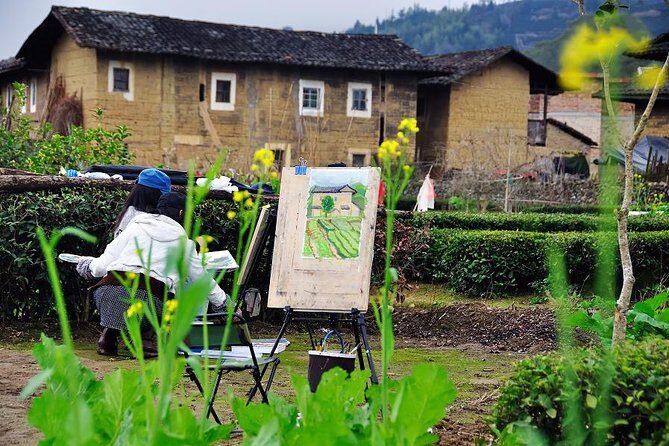
The Tianluokeng tulou cluster is your first major stop, in Shuyang Town’s Zhangzhou Tianluokeng Village area. Your day begins with an overview at the top of the mountain from a view platform. That timing is smart. From up there, you can grasp the cluster’s shape and the way the buildings relate to each other.
This cluster is described as four round houses plus one rectangular earthen house, and it’s also known as 4 dishes and 1 soup—an eye-catching name that hints at how people imagined the compound as a complete system, not random construction.
From the viewpoint, you’ll be better prepared for what comes next. Without that “map” moment, it’s easy to treat tulou as individual buildings. With it, you start seeing the compound as a designed community space.
After the overview, you roam around the Tianluokeng Hakka cluster area to get a feel for day-to-day life historically. This is where the tour becomes more than a photo stop. You can slow down, watch how corridors and openings shape movement, and pay attention to how the compound layout supports community living.
A nice bonus: this is one of the most magnificent and well-preserved Hakka houses in the area, so you’re not working with ruins and guesswork. You get clearer structures to study, which matters if you enjoy architecture.
Time on this stop is about 2 hours, and that feels right. Enough time to learn without feeling trapped.
Yuchanglou: the leaning tulou you’ll remember for the corridor detail
Next comes a short drive to Xiaban Village for Yuchanglou. This is where the story turns from “grand compound” to “engineering curiosity with a personality.”
Yuchanglou is commonly called the Leaning Tulou. It’s also described as the oldest among existing tulou in Fujian Province, and that detail gives the building extra weight even before you get close.
Here’s the specific feature that makes it famous: after completion, a wood pillar in the corridor above the second floor started to slope to both sides, reaching an angle limit of 15 degrees. That’s why the building looks like it’s falling over—yet it remains standing.
What I like about this stop is that the tour gives you a concrete reference point. Instead of a vague “it’s leaning,” you get the corridor location and the approximate degree of the tilt. That makes your viewing more precise. You’re not just staring at a silhouette; you’re trying to locate the structural detail that caused the lean.
You also get around an hour at this stop, with time for sightseeing and the transition to lunch. That hour is usually just enough to walk the key areas, take in the overall shape, and let the leaning story settle in.
If you enjoy explanations that connect the building’s design to communal life, you’ll probably appreciate how a good guide makes the structure feel logical rather than mysterious. One English-speaking guide named Jane—Hakka, according to one account—was praised for being informative and able to explain how this kind of communal living worked. Even if you don’t get Jane specifically, the general style you want is an explanation that stays clear and practical.
Lunch near tea gardens: plan for local flavor, and consider vegetarian early
Lunch is described as home-cooked local food at a restaurant in the countryside among beautiful tea gardens. Lunch is not included in the tour price, but it’s built into the day flow, so you won’t have to hunt for food on your own.
This part matters for two reasons:
First, tulou and villages are slow food experiences. Having lunch in the area keeps the day from turning into a rush back to Xiamen.
Second, you can request vegetarian options at booking. If you need it, do it early so the restaurant can prepare appropriately.
If you have a sensitive stomach, you might want to stick to familiar choices. The tour doesn’t provide detailed menu specifics, so think of lunch as local, flavorful, and likely to be meat-heavy unless you requested otherwise.
Taxia Village: riverside walking and the Zhang clan ancestral hall
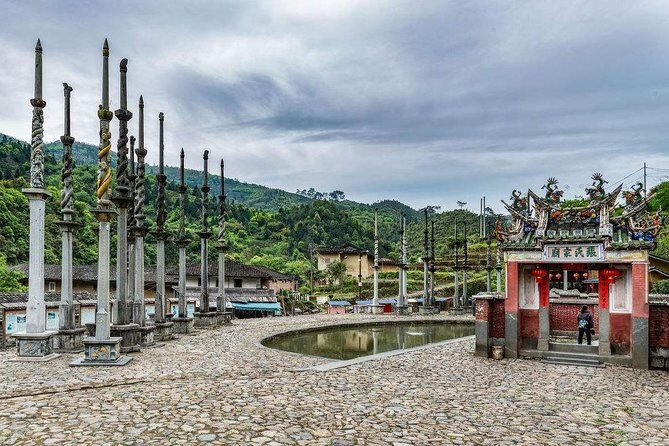
After lunch and the Yuchanglou visit, the day shifts to Ta’xia Village (Taxia Village). This is one of those stops that changes the tempo. Instead of focusing on earthen fortifications, you focus on stream life, village layout, and family structures.
Taxia is described as a village built along a stream and considered a beautiful water village. You’ll roam around and explore the riverside atmosphere at a relaxed pace, which is a welcome contrast to the tulou compounds.
A key cultural stop here is the Zhang’s clan ancestral hall. It’s listed among key culture relics protected at the national level. That matters because it signals preservation attention, and it usually means you’ll find the building’s features treated with care rather than left to time.
This is also the part where your guide’s role becomes practical. You’re not just looking at an old hall; you’re connecting it to why clans mattered—community identity, leadership, lineage, and how social bonds tied back into the wider Hakka setting you saw earlier.
Time at this stop is about 1 hour, and that feels right. Taxia isn’t trying to outcompete the tulou for attention. It’s there to round out the day with a calmer, more personal view of village life.
You’ll return to your Xiamen hotel around 6:00 pm, so this stays within a full-day window rather than becoming an endless tour day.
Timing and pacing: an 8-hour day that doesn’t feel random

The tour runs about 8 hours. That includes the driving time, sightseeing, and the transitions between stops.
The pacing is built around three learning moments:
- Orientation at Tianluokeng with the mountain platform overview
- Structural highlight at Yuchanglou with a specific leaning feature to look for
- Human setting in Taxia with a clan hall and riverside village atmosphere
This is why it doesn’t feel like a checklist. Even if you’re not a hardcore architecture person, the order makes sense. You see the community fortress first, then the iconic leaning building, then the village culture that explains the broader social world.
Bring a bit of patience for the road. You’re paying for private logistics, and in exchange, you spend more time in the car between stops.
Price and value: what $177.67 gets you (and what it doesn’t)
The price listed is $177.67 per person for a private day tour. For many people, the value comes from three things happening at once:
1) Private vehicle with a skilled driver
2) An experienced guide
3) Admission tickets included for the tulou and the ancestral hall stop(s) listed
That combination can save money versus trying to assemble transport plus tickets plus guide time on your own.
However, the tour does not include lunch, and tips for the driver and guide are also not included. So if you’re budgeting tightly, you’ll want to mentally add:
- Lunch cost (or whatever you choose nearby)
- Tips (based on your usual style)
Even so, the “included tickets” detail matters. Tulou admissions can add up quickly when you’re doing multiple stops.
If you’re traveling with just two people, the private format can be especially efficient because you’re not splitting costs across a large group. If you’re solo, it’s still often worth it if you want the flexible pickup and a guided explanation throughout.
Who this tour suits best (and who might want a different day)
This tour is a great fit if you:
- Like Chinese architecture that has a real-life purpose, not just aesthetics
- Want clear context on Hakka communal living and how it shaped daily life
- Prefer a private setup where the day flows without waiting around for others
- Enjoy countryside atmosphere and don’t mind a full day away from the city
It may be less ideal if you:
- Want a super relaxed day with minimal driving
- Hate walking over uneven surfaces (there is walking around compounds and village areas)
- Need strict short windows of time and hate “about” schedules
For families: children must be accompanied by an adult. The tour description also says most travelers can participate, which is reassuring if your group includes mixed ages.
Practical checklist so your day runs smoothly
A few basics will help you get more out of the time:
- Comfortable shoes for walking around tulou and village paths
- Plan for good weather, because the tour requires it
- If you want vegetarian lunch, request it at booking
- Bring your passport (a current valid passport is required on the day of travel)
- If you’re sensitive to heat, consider timing your outdoor strolling for earlier parts of the day
Also, since pickup is from downtown Xiamen hotels, confirm where you’ll meet so you don’t waste time hunting for the vehicle.
Should you book this private Tianluokeng, Yuchanglou, and Taxia day tour?
I’d book it if you want a well-paced day that turns tulou from random buildings into a connected story—then ends with a calm riverside village atmosphere. The private pickup, included admissions, and the chance to see both Tianluokeng’s cluster layout and Yuchanglou’s leaning corridor detail are the big reasons this works.
Skip it only if you’re trying to avoid a long car ride or you’re not interested in walking around earthen compounds. For everyone else, this is a solid value package for a focused, culturally grounded day outside Xiamen.
FAQ
How long is the private day tour?
It’s listed as about 8 hours.
Where does pickup happen?
You’ll be picked up from downtown Xiamen hotel lobbies and returned to your hotel after the tour.
Is the tour private or shared?
This is a private tour/activity, and only your group will participate.
What are the main stops?
You’ll visit the Tianluokeng tulou cluster, Yuchanglou, and Taxia Village, including the Zhang’s clan ancestral hall.
Are admission tickets included?
Yes. Admission tickets are included for the listed stops.
Is lunch included in the price?
No. Lunch is not included.
Is vegetarian food available?
Yes. A vegetarian option is available if you advise the provider at booking.
What should I wear?
Wear comfortable shoes, since you’ll do walking around tulou areas and the village.
Do I need a passport?
Yes. A current valid passport is required on the day of travel.
What happens if the weather is bad?
The experience requires good weather. If it’s canceled due to poor weather, you’ll be offered a different date or a full refund.