REVIEW · SHANGHAI
Shanghai 3-Hour Afternoon Tea Tasting and Dessert Tour
Book on GetYourGuide →Operated by Shanghai Foodie · Bookable on GetYourGuide
Dessert and tea in Shanghai, on foot. In three hours along Huaihai Road, you’ll bounce between local stops for moon-cake tasting and a real tea ceremony, then finish with chilled sweets. It’s a simple plan, but it’s fun because the flavors are tied to the season, not tourist menus.
What I like most is the Mid-Autumn focus: you try mooncakes from two local pastry shops, and they’re tied to reunion traditions people actually celebrate. I also like the tea choices—Hangzhou green tea and Fujian black tea—so you can taste how Chinese tea changes by region, not just by brand.
One drawback to consider: there’s no hotel pick-up, so you’ll need to arrive under your own steam at the meeting point. And if you’re not into sweet, icy desserts, the afternoon will lean pretty dessert-heavy.
In This Review
- Key Stops You’ll Really Care About
- Huaihai Road Afternoon Tea: The Best Kind of Shanghai Walk
- Mooncakes at Two Pastry Shops (and Why Mid-Autumn Matters)
- Tea Ceremony Time: Hangzhou Green and Fujian Black
- Cantonese Icy Desserts on Huaihai Road: Cool, Creamy, and Textured
- Your 2:00 PM Start: Meeting Point and Timing That Actually Works
- What You Get for $77: A Fair Price for Three Stops
- Guides and Communication: English, Chinese, Korean
- Who This Tour Is For (and Who Might Skip It)
- The Real Choice Point: Book for the Sequence, Not Just the Food
- Should You Book the Shanghai 3-Hour Tea and Dessert Tour?
- FAQ
- How long is the Shanghai 3-Hour Afternoon Tea Tasting and Dessert Tour?
- What time does the tour start?
- Where do I meet the guide?
- What’s included in the tour price?
- What kinds of tea and desserts should I expect?
- Is hotel pick-up included?
Key Stops You’ll Really Care About
- Mid-Autumn mooncakes from two local pastry shops, tied to family reunion traditions
- Tea ceremony at a Shanghai teahouse, with Hangzhou green and Fujian black tea
- Icy Cantonese-style desserts like milk pudding with purple sticky rice
- Fruit-based coolers and sago options, including mango puree and papaya
- Almond tofu as a standout texture option when desserts get samey
- Fast check-in with a separate entrance so you lose less time to waiting
Huaihai Road Afternoon Tea: The Best Kind of Shanghai Walk
This is the kind of Shanghai afternoon that feels like a “food neighborhood tour,” not a list of landmarks. You meet at 2:00 PM and spend about three hours moving at a relaxed pace, with tastings built into the schedule. That timing matters because tea houses and dessert places tend to feel calmer in the late afternoon, when you’re not competing with everyone’s lunch rush.
Huaihai Road itself is a good setting for this format. It’s the kind of area where you can watch daily life while still finding shops that sell the seasonal stuff people crave. You’re not just eating. You’re learning how local sweets are built: pastry first, then tea, then cold desserts to balance the flavors.
The value here is that you get multiple categories in one go—moon cakes, tea, and icy desserts—without having to plan three separate outings.
You can also read our reviews of more food & drink experiences in Shanghai
Mooncakes at Two Pastry Shops (and Why Mid-Autumn Matters)
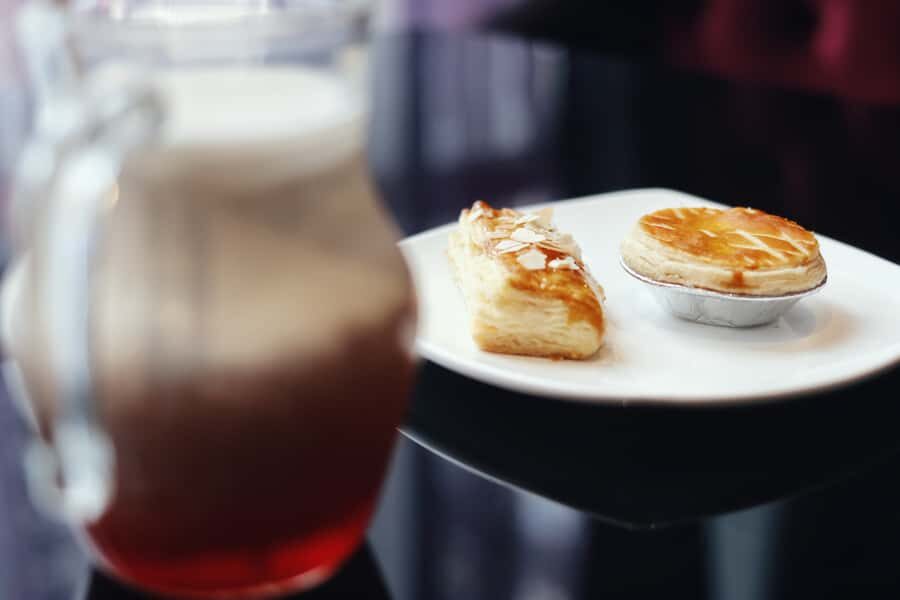
Mooncakes sound like a single thing. On this tour, they’re really the start of a story. You stop at two local pastry shops and taste a variety of mooncakes connected to the Mid-Autumn Festival. This festival is about reunion, which is why mooncakes are traditionally given as gifts when families get together.
Why I think this makes the tour more satisfying: you’re not just sampling sweets for fun. You’re tasting a cultural object with a job to do. Even the packaging and presentation tend to reflect that idea of gifting, so the mooncake experience becomes more than one bite.
What to expect at the pastry shops:
- You’ll taste several mooncakes rather than just a single “signature” flavor.
- The shops give you a feel for what’s currently popular locally, not only what sounds good in a guidebook.
A practical tip: mooncakes can vary a lot in texture and sweetness. Some are heavier, some lighter. If you’re sensitive to rich fillings, slow down between tastings so you can actually taste the differences.
Tea Ceremony Time: Hangzhou Green and Fujian Black
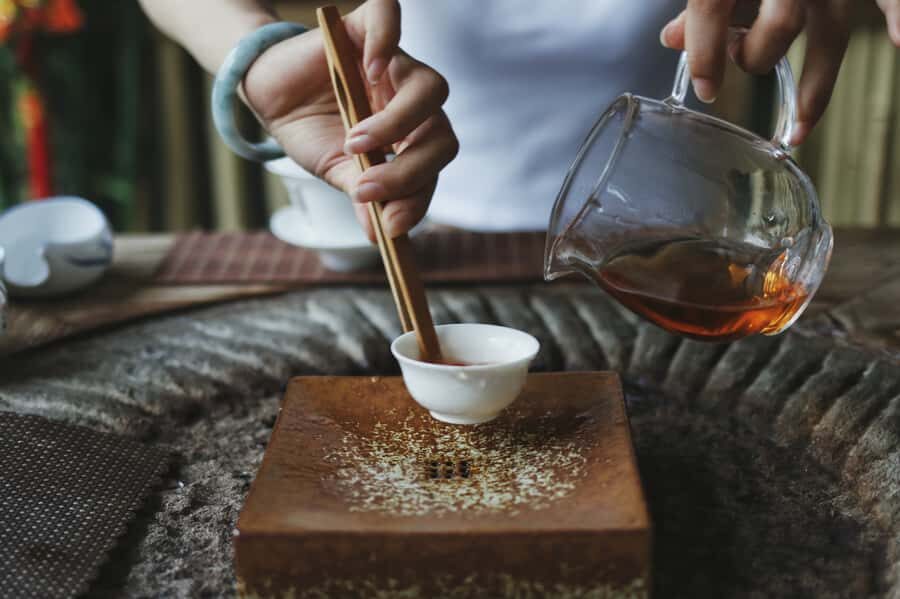
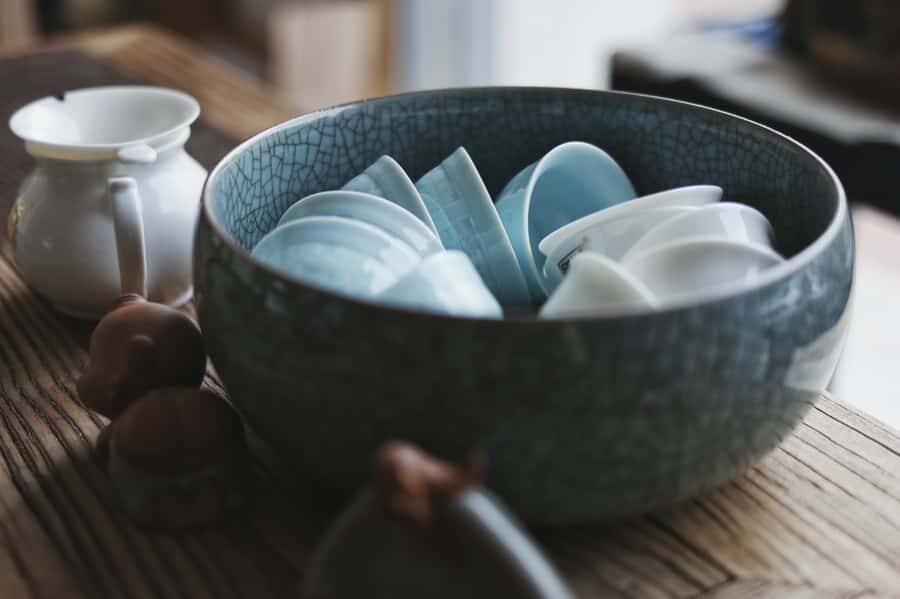
After the mooncake stops, you head to a teahouse for a traditional Chinese tea ceremony. This part is the breath between sweet courses. It also shows you something important: in China, tea isn’t just a drink. It’s a whole ritual, and it changes how you experience food.
Here’s the tea lineup you’ll taste:
- Green tea from Hangzhou
- Black tea from Fujian
That pairing is smart. Hangzhou green tea is typically more delicate and grassy, while Fujian black tea often brings a darker, fuller character. In a short tour window, that contrast helps you understand tea as “region, not mood.”
How the ceremony tends to feel in real life:
- Slower. More attention to aroma and temperature.
- A lot of time for questions, especially if your guide is the chatty type.
The guide also matters here. In guide experiences I saw in the feedback, people singled out how guides like Jade and Jim made the ceremony feel understandable, not stiff. If you enjoy asking why something is done a certain way, this is one of the best moments to do it.
Cantonese Icy Desserts on Huaihai Road: Cool, Creamy, and Textured
Then the tour turns colder—in the good way. You head to a Cantonese dessert restaurant for a range of sweet options, especially icy desserts. The menu focus isn’t just “ice cream.” It’s the broader Chinese dessert category: milk pudding, fruit purees, sago, and tofu-based sweets.
Specific dessert examples you should expect to taste include:
- Milk pudding with purple sticky rice
- Papaya, sago, and mango puree
- Almond tofu
Why I like this dessert structure: it gives you different textures in a short span. Purple sticky rice brings chew. Sago adds pearls and bounce. Mango puree leans fruity and smooth. Almond tofu brings a softer, custardy gel feel that’s different from Western desserts.
If you’re worried about too much sweetness, use the tea you just had as your palate reset. That tea break is the reason this order works: pastry and tea first, then cold dessert afterward.
One caution: icy desserts are meant to cool you down, but they can also feel filling. If you’re the type who wants to stop eating once you’re comfortable, you may want to pace your bites during the tastings.
Your 2:00 PM Start: Meeting Point and Timing That Actually Works
You meet at Metro Line 1: South Huangpi Road Station (Exit 2). Since there’s no hotel pick-up, this matters. Plan to arrive a few minutes early so the group doesn’t wait on metro navigation or last-second stalls.
Two timing details are worth keeping in your head:
- The tour starts at 2:00 PM
- It runs about three hours
That means you’ll be done before dinner turns into the evening crowd. It’s a nice slot if you want dessert today, not dessert plus exhaustion.
Also, there’s mention of skipping the line through a separate entrance. In practice, that usually means you’ll spend less time standing around waiting to get into a stop. On a short tour, that can be the difference between “enjoyed it” and “felt rushed.”
A few more Shanghai tours and experiences worth a look
What You Get for $77: A Fair Price for Three Stops
At $77 per person, this isn’t the cheapest way to eat dessert in Shanghai. But it also isn’t just a snack crawl. You’re paying for:
- A local guide
- A tea ceremony
- A structured set of desserts
- And a route that takes you through the neighborhood efficiently
Here’s how I’d judge value: if you had to line up the tea ceremony and dessert tastings on your own, you’d spend time figuring out where to go, how to order, and how to avoid menus that don’t match what you want. The guide removes friction, especially in a city where language barriers can slow you down.
The price also makes sense because this tour is only three hours. You’re getting multiple categories without turning it into a half-day event.
Guides and Communication: English, Chinese, Korean
The tour includes a live guide with English, Chinese, and Korean support. That’s a big deal for food experiences, because the meaning behind a flavor matters. If your guide can translate not just words but context—like why certain mooncakes are traditional or how to approach tea—you’ll enjoy the tastings more.
In the feedback, people consistently pointed to guides who were friendly and responsive. One guide named Jade was described as warm and welcoming, and another named Jim was praised for answering questions and helping guests navigate details when needed. If you’re the type who likes conversation while you eat, this sort of guide style tends to make the ceremony and food stops feel personal.
Also: small moments matter. If your guide asks preferences and adjusts how you sample, you’re more likely to get a mix that fits your tastes instead of eating through flavors you won’t like.
Who This Tour Is For (and Who Might Skip It)
This works best if you want a social, flavor-forward afternoon.
You’ll probably love it if:
- You enjoy tea and sweets together, not just one or the other
- You like walking and stopping often instead of sitting through a big show
- You’re visiting Shanghai for a short time and want high value per hour
- You want Mid-Autumn flavors explained in plain terms
You might want to think twice if:
- You prefer savory food over desserts
- You don’t handle very sweet, cold desserts well
- You hate planning around a specific meeting point (since there’s no hotel pick-up)
The Real Choice Point: Book for the Sequence, Not Just the Food
This tour sells mooncakes, tea, and dessert. The smarter reason to book is the order. Mooncakes connect you to a seasonal tradition. Tea cleans your palate and shifts your senses. Then icy Cantonese desserts give you texture variety and cooling relief.
If you’re planning your Shanghai days and you want an afternoon activity that doesn’t feel like a checklist, this is a solid pick. It’s also a good way to get oriented in the area around Huaihai Road without committing to a full-day sightseeing plan.
One last practical note: eat lightly earlier in the day. Not because you can’t handle it—because it lets you enjoy the tastings instead of just powering through them.
Should You Book the Shanghai 3-Hour Tea and Dessert Tour?
I’d book it if your idea of a great Shanghai afternoon includes Mid-Autumn mooncakes, a real tea ceremony, and a tasting of icy Cantonese desserts like mango sago, purple sticky rice milk pudding, and almond tofu. For a three-hour window at $77, it’s well balanced: food plus meaning, with a guide to translate the why.
Skip it if you’re mainly chasing major sights or you’re not a dessert person. Also, if getting yourself to South Huangpi Road (Exit 2) sounds like a hassle, look for a tour with pick-up—or plan your metro route in advance.
If you want an afternoon that feels local and well paced, this one is easy to justify.
FAQ
How long is the Shanghai 3-Hour Afternoon Tea Tasting and Dessert Tour?
The tour lasts 3 hours.
What time does the tour start?
You meet your guide at 2:00 PM.
Where do I meet the guide?
Meet at Metro Line 1: South Huangpi Road station, Exit 2.
What’s included in the tour price?
It includes a local guide, afternoon tea/tea ceremony, and desserts.
What kinds of tea and desserts should I expect?
You’ll taste green tea from Hangzhou and black tea from Fujian, plus a variety of moon cakes and icy Cantonese desserts such as milk pudding with purple sticky rice, papaya/sago/mango options, and almond tofu.
Is hotel pick-up included?
No. Hotel pick-up and drop off are not included.