REVIEW · SHANGHAI
Shanghai French Concession Walking Tour-Tip Based
Book on Viator →Operated by Bill's Fantastic Tour · Bookable on Viator
Shanghai’s French Quarter still has sway. The French Concession areas of Shanghai feel like a softened version of Paris, but with a distinctly local rhythm, and I love that you walk it with Bill, a lifelong Shanghainese storyteller who connects buildings to the city’s turning points. This is a tip-based tour, so the real value comes from the conversation and the way the route makes history feel walkable.
Two things I especially like: first, the route is built around standout landmarks without making you pay for entry fees at each stop, since the listed admissions are free. Second, Bill’s pacing works—there are moments to sit, catch your breath, and get good photo angles instead of a nonstop march.
One thing to think about: because it’s tip-based, the low booking price is just a reservation, and your final cost depends on how much you enjoy the walk (recommended tips are substantial). Also, like most outdoor strolling tours, it runs best in good weather.
In This Review
- Key highlights
- Why the French Concession still feels different in Shanghai
- Price and the tip-based model (what it really costs)
- Start at Okura Garden Hotel: former French Club energy
- Jinjiang Hotel: the kind of history you can point at
- 文化广场 and the former French racecourse
- Huaihaifang lanehouse compound: the quiet Shanghai side
- Sinan Mansions: art-deco style, modern venues, and street-level cool
- Xintiandi finish: from old lane houses to today’s social scene
- The pacing and what you’ll be doing during those 2.5 hours
- Who should book this French Concession walk
- Should you book this tour with Bill’s Fantastic Tour?
- FAQ
- Is this a fixed-price tour?
- Where does the tour start and end?
- How long is the walking tour?
- Do I need to pay admission fees at the stops?
- What’s included in the price?
- What if the weather is bad?
- Do I get a mobile ticket?
- How many people are in a group?
Key highlights
- Tip-based with clear guidance: recommended 150–300 yuan per person at the end, based on satisfaction
- Bill’s local perspective: a lifelong Shanghainese guide who gives context beyond the plaques
- Free admission stops: each featured location is listed as free to enter for the visit portion
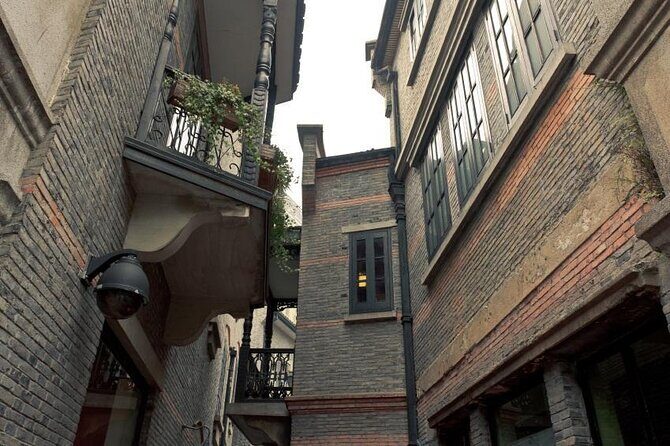
- Old lane houses to modern cool: you see how Shanghai reframes its past in places like Xintiandi
- Short breaks included: the pace gives time to rest and take photos
- Easy finish for getting around: the tour ends in Xintiandi near South Huangpi Road Subway
Why the French Concession still feels different in Shanghai
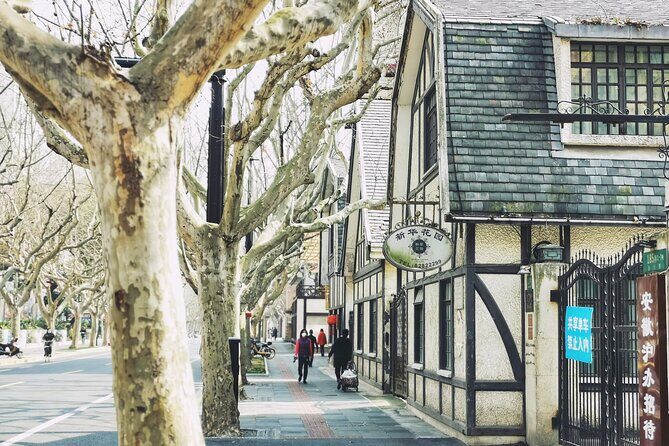
The French Concession wasn’t just a “pretty neighborhood.” From 1849 to 1943, it was the zone administered by the French government, and the architectural DNA still shows up in how streets look and how buildings sit behind gates. On this walk, you get that feeling fast: tree-lined avenues, old houses, and a lot of the wrought-iron details (fences and railings) that bring an unmistakable Paris vibe—just tuned to Shanghai’s own scale and energy.
What makes this tour work is that it treats the area like a living story, not a museum. You’re walking past locations that once hosted social life, business power, and international politics, then ending in a today-famous hangout zone. That shift—from formal and historical to café-and-boutique casual—is one of the most useful ways to understand Shanghai’s “past meets present” style.
You can also read our reviews of more walking tours in Shanghai


Price and the tip-based model (what it really costs)
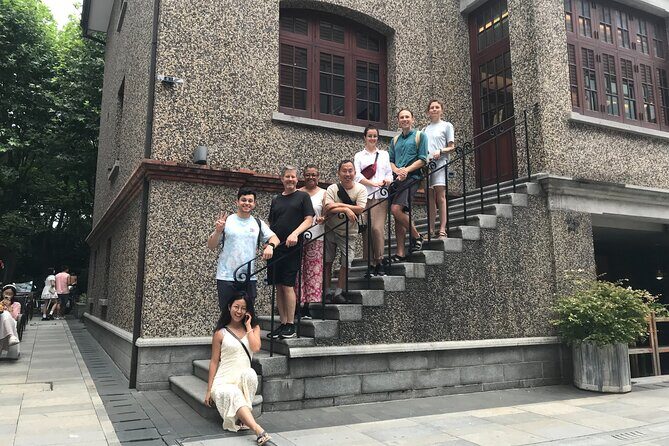
The booking price is $3.59 per person, and it’s essentially there to reserve your spot. The important part is the end-of-tour gratuity: the recommended tips are 150–300 yuan per person (about 20–40 USD/EUR), depending on how much you enjoyed the guide and the route.
Here’s how I’d think about value. You’re paying for a professional English-speaking guide and a structured route across multiple major landmarks. The stops are listed with free admission tickets, so you’re not stacking extra costs as you go. If you like story-driven walking tours and you want someone to connect details you’d miss on your own, this becomes a smart deal. If you prefer to wander silently with a map, you may feel the tip structure more than the savings from the low booking fee.
If you do book, plan your tip budget ahead of time so the end of the tour doesn’t turn into math anxiety. In a city like Shanghai, doing a little prep pays off.
Start at Okura Garden Hotel: former French Club energy
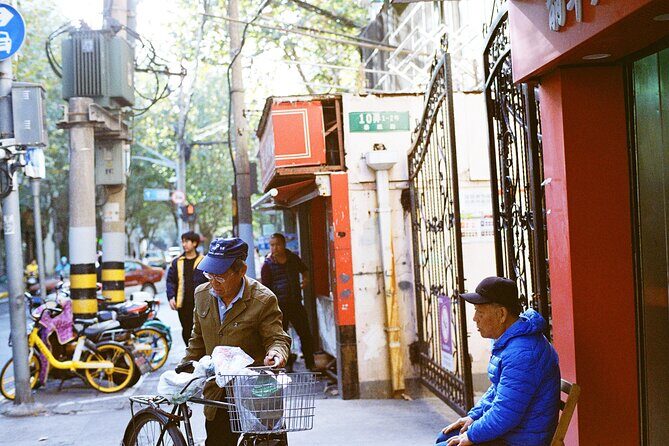
Your walk begins at Okura Garden Hotel Shanghai on Mao Ming Nan Lu. Even before you get deep into the “French Concession” core, that opening stop sets a tone: Shanghai’s old international life, now wrapped into modern hospitality.
From there, you step into the story of the former French Club. Bill’s angle here is useful if you want more than architecture. It’s the kind of context that helps you understand why places like this existed: social space for expatriates and power brokers, where identity, etiquette, and networks mattered. I like how quickly you get from “what building is this?” to “why did it matter?”
Practical note: this first section is a good on-ramp for your stamina. It’s not a sprint, and the overall tour pacing includes breaks so you can stay comfortable over the full 2 hours 30 minutes.
Jinjiang Hotel: the kind of history you can point at
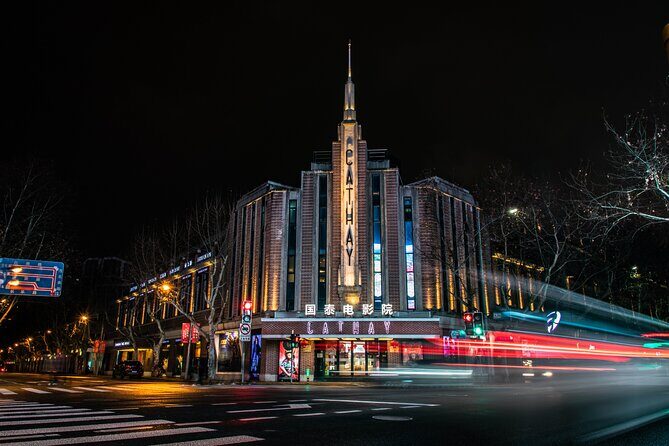
Next up is Jinjiang Hotel, described as the oldest “modern” hotel in China. This is one of those locations where the building’s age becomes a clue: Shanghai has long been a place where international contact shows up in institutions, not only in streets.
Bill also ties the hotel to a major diplomatic moment—the Sino-US joint declaration on normalizing relations was announced here. That detail matters because it reframes the area. The French Concession wasn’t only about French administration and Paris-style street scenes. It also became a stage for later global shifts, and the same city space kept being reused in new ways.
This stop is also a reminder to slow down with your eyes. Old hotels can look “just old” unless someone points you toward what to notice. You’ll likely catch more than you expect: gateways, proportions, and the way the surroundings support the building’s status.
文化广场 and the former French racecourse
Then you move into 文化广场, tied to the former French racecourse. This is a clever pivot in the tour because it’s not just elite buildings and polite façades. A racecourse signals leisure, crowds, rules, and a kind of imported lifestyle—something people did together at scale.
It’s also a way to broaden your understanding of the French influence. People often focus only on streets and ironwork, but places for gatherings show you how communities functioned. Bill’s storytelling here helps you see how public entertainment and social class can be built into city design.
Drawback to keep in mind: if you’re expecting a “museum-style” stop with long viewing time, this is more about orientation and interpretation in the space. You’re learning how to read the neighborhood while you walk.





Huaihaifang lanehouse compound: the quiet Shanghai side
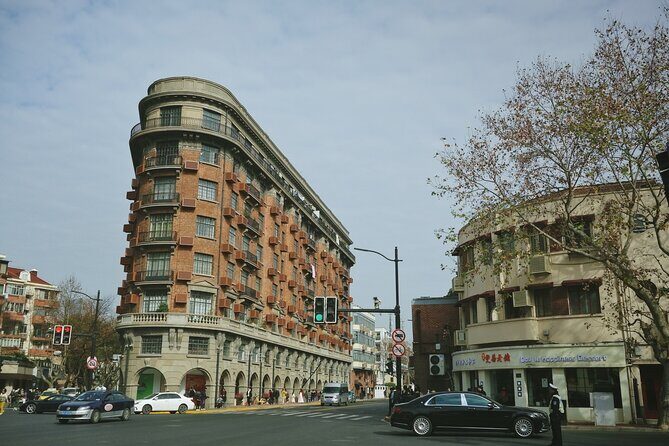
When the tour reaches Huaihaifang, you get the lanehouse compound experience. Lanehouses are essential to Shanghai’s identity, and this stop is where the walk starts to feel less like a European-themed set piece and more like a local neighborhood.
This part helps you understand a big theme of Shanghai: the city’s past often lives behind gates. You’re not only looking at buildings from the outside—you’re getting the idea of how household life and communal space were organized in these compounds.
What I like here is the contrast. Earlier stops lean toward international institutions. Huaihaifang gives you the scale of ordinary life and the sense that history can be tucked away in plain sight. If you want one reason to do this tour instead of just taking photos, this is it: the guide helps you see how daily living shaped the urban fabric.
Sinan Mansions: art-deco style, modern venues, and street-level cool
Next comes Sinan Mansions, described as a fashionable quarter that was remodeled from 51 art-deco style residential blocks into a compound of trendy venues.
This stop is fun because it demonstrates how Shanghai repurposes heritage without pretending it’s unchanged. You’re seeing architecture that carries old-world styling, then watching how people use it now—cafés, shops, and spaces that turn historic bones into present-day hangouts.
Bill’s value at Sinan is in making you notice the “why” behind the vibe. Art-deco style isn’t random decoration; it’s a visual language tied to a specific era and set of tastes. Once you understand that, the modern businesses make more sense, not less.
One consideration: this area can feel more visually stimulating than the quieter lanehouse sections. If you’re the type who likes slow, reflective viewing, pace yourself and take your time in smaller bursts between shots and storefront browsing.
Xintiandi finish: from old lane houses to today’s social scene
The walk ends in Xintiandi at 123 Madang Road, right around the South Huangpi Road Subway area. Xintiandi is described as a cool neighborhood made up of cafes, souvenir stores, and art galleries, remodeled from an older lanehouse area.
This ending is smart for two reasons. First, it’s an immediate payoff zone: after 2.5 hours of history and architecture, you get to relax, snack, browse, or keep exploring on your own terms. Second, Xintiandi is a visible example of the city’s “transformation economy”—how old urban forms are refashioned for modern visitors and residents.
If you’re planning dinner, this is convenient. If you’d rather keep moving, it’s also a practical place to catch transit. Either way, the tour doesn’t dump you in an awkward location. It hands you a lively neighborhood and a clean way onward.
The pacing and what you’ll be doing during those 2.5 hours
The advertised duration is about 2 hours 30 minutes, and based on how Bill runs the walk, it’s not constant pressure. There are breaks to sit down, which is a big deal if you’re doing sightseeing in a city that can feel tiring underfoot.
The group size can be up to 100 travelers, which sounds large on paper, but walking tours don’t always feel that way. The practical way to think about it: you’ll want to stay close enough to hear the guide’s English explanations and story beats, especially at the start and at each stop. If you’re hard of hearing or you prefer a tighter interaction style, arriving early and positioning yourself near the front helps.
Mobile ticketing is used, and the tour meets at Okura Garden Hotel Shanghai. From a logistics viewpoint, that’s convenient: you know exactly where you’re starting, and you finish in a place with a lot to do without needing extra planning.
Who should book this French Concession walk
I think this tour fits best if you want:
- A guided walk focused on Shanghai’s French Concession legacy and how it shows up in street and building details
- A local explanation of why the neighborhood looks the way it does, including the way international and local stories overlap
- A short, structured route with free admission stops so you don’t add ticket costs to your day
It may not be ideal if:
- You’d rather spend your time in Shanghai roaming without a guide’s story structure
- You strongly dislike tip-based models and want a fully fixed price
- You’re sensitive to weather, since the experience requires good weather (if it’s canceled due to weather, you’ll be offered another date or a full refund)
Should you book this tour with Bill’s Fantastic Tour?
Yes—if you’re the kind of person who likes your sightseeing connected to context. This is the sort of walk where the guide’s explanations make the streets easier to read. Starting at Okura Garden Hotel, stopping at landmarks tied to real institutional history, and ending in Xintiandi gives you a complete arc: past to present, international to local.
Go in with the right mindset about cost: the $3.59 fee isn’t the whole story. If you allocate 150–300 yuan for the guide when the tour ends, you’ll feel like you’re paying fairly for a guided, story-led experience rather than just buying a walking route.
If you want a practical, atmosphere-rich way to get your bearings in Shanghai’s French Concession, this is a solid choice.
FAQ
Is this a fixed-price tour?
It’s tip-based. The amount you pay when booking reserves your spot, and at the end of the tour each person gives the guide a gratuity amount they consider appropriate (recommended: 150–300 yuan per person).
Where does the tour start and end?
The tour starts at Okura Garden Hotel Shanghai (58 Mao Ming Nan Lu) and ends at Xintiandi (123 Madang Road), near the South Huangpi Road Subway station.
How long is the walking tour?
The duration is approximately 2 hours 30 minutes.
Do I need to pay admission fees at the stops?
The listed stops are marked with free admission tickets for the visit portions shown on the route.
What’s included in the price?
What’s included is a professional English-speaking guide.
What if the weather is bad?
This experience requires good weather. If it’s canceled due to poor weather, you’ll be offered a different date or a full refund.
Do I get a mobile ticket?
Yes. The tour uses a mobile ticket.
How many people are in a group?
The tour has a maximum of 100 travelers. Confirmation is received at the time of booking.