REVIEW · SHANGHAI
Tour of Jewish Shanghai led by a Jewish History Expert
Book on Viator →Operated by Tours of Jewish Shanghai · Bookable on Viator
Shanghai isn’t what you expect for Jewish history. This half-day route connects Bund views to the story of Baghdadi settlers and WWII refugees, with stops at the Ohel Moshe Synagogue museum and the Huoshan Park memorial. I love how the guide turns street corners into real lives, but it’s partly on the move through local lanes, so good shoes matter.
The best part is the expert-led pacing. You meet at the Peace Hotel on the Bund, then you head into Hongkou for museum time and outdoor memorial viewing, with help from an air-conditioned private vehicle when you’re not on foot.
At $96 for about four hours (and with museum admission handled for you), it’s solid value if you want one focused slice of Shanghai you can’t easily reconstruct by yourself. I also recommend the 9:30am morning departure if you’re trying to fit in photo time and comfortable daylight for Huoshan Park.
In This Review
- Key highlights worth your time
- Entering the story at the Bund and Peace Hotel
- Hongkou District: the Shanghai Ghetto as lived-in geography
- The Jewish Refugees Museum in the former Ohel Moshe Synagogue
- Huoshan Park: seeing the WWII memorial up close
- Timing, duration, and what 4 hours really feels like
- Price and value: why $96 works for the right traveler
- Who this Jewish Shanghai tour suits best
- Should you book it? My honest decision guide
- FAQ
- Where is the meeting point for the Jewish Shanghai tour?
- What time does the tour start?
- How long is the tour?
- What’s included in the price?
- Are food and drinks included?
- Will we spend time walking in Hongkou?
- Is the tour run in all weather?
- How big is the group?
- Is there free cancellation?
Key highlights worth your time
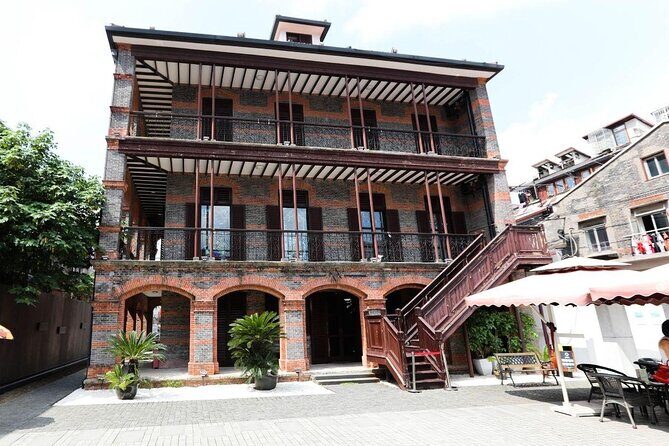
- Peace Hotel start on the Bund: learn how the Baghdadi-Jewish legacy shaped the city, starting with the Sassoon-built Cathay Hotel era
- Hongkou’s back lanes: get oriented in the Shanghai Ghetto district and see the kinds of cramped everyday spaces refugees faced
- A former Jewish home inside the district: you’ll visit a Chinese home where Jewish refugees once lived
- Jewish Refugees Museum in the former Ohel Moshe Synagogue: museum stop included, housed in the historic synagogue building
- Huoshan Park WWII memorial: see a monument meant to honor Jewish refugees of World War II
- Small-group feel with periodic rest: the tour’s size (up to 22) and the guide’s pacing keep it listenable, not exhausting
Entering the story at the Bund and Peace Hotel
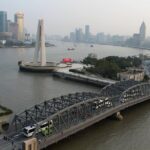
The tour begins where Shanghai’s big-picture story is impossible to ignore: the Bund riverfront. You’ll meet at the Peace Hotel, which used to be the Cathay Hotel, built by Sir Victor Sassoon. That detail isn’t trivia—it frames why Shanghai became a magnet for different Jewish communities in different eras.
From the riverfront, I like how the guide sets the scene with clear context before you head into Hongkou. You get city views first, then the narrative. That order matters because the Shanghai Ghetto story can feel like it drops out of nowhere if you don’t understand what Shanghai offered in the first place.
This is also where the Baghdadi-Jewish thread shows up. Expect the guide to talk about Baghdadi–Jewish ties to trade and business, including a Baghdadi–Jewish real estate developer connection. The point isn’t to memorize names. It’s to understand that Jewish presence in Shanghai didn’t start with World War II.
Practical tip: arrive a few minutes early at the Bund meeting area so you can get your bearings before the first facts start flying.
You can also read our reviews of more historical tours in Shanghai
Hongkou District: the Shanghai Ghetto as lived-in geography
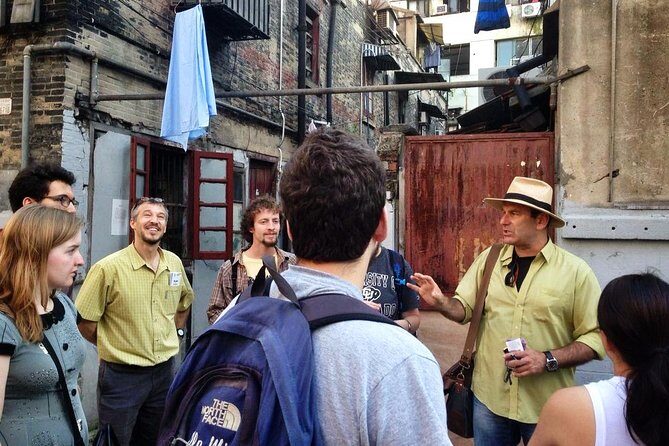
Once you’re moving toward Hongkou, the tour shifts from broad context to street-level reality. Hongkou is often labeled as the Shanghai Ghetto, but the experience here feels less like a museum diorama and more like a neighborhood with history layered on top of it.
You’ll explore the back lanes of the district, and you’ll also visit a Chinese home where Jewish refugees used to live. That’s one of the most effective parts of this tour because it turns a headline story into physical space. You can stand in a room and imagine daily routines, interruptions, crowded living, and the strain of displacement.
The guide also connects Shanghai’s wartime pressure to the people who arrived in waves. The tour covers different waves of Jewish immigration, which means you’ll hear how earlier Jewish settlement set the stage, and how WWII-era refugees arrived with very different circumstances.
I also appreciate that the tour isn’t just “Jewish story only.” It includes the intersection with Chinese migrant workers. That matters because it helps you understand Shanghai as a place where multiple groups were trying to survive, work, and find stability during difficult years.
One consideration: this part of the day includes walking through local lanes and stops in and out of places. Even if the tour uses a vehicle for transit, you still want comfortable shoes and a layer for changing weather.
The Jewish Refugees Museum in the former Ohel Moshe Synagogue
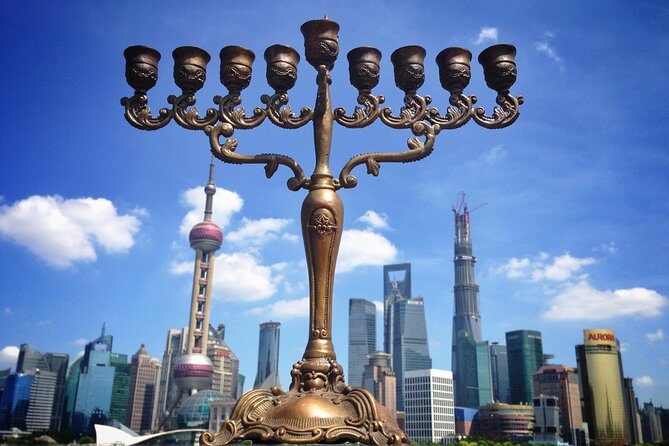
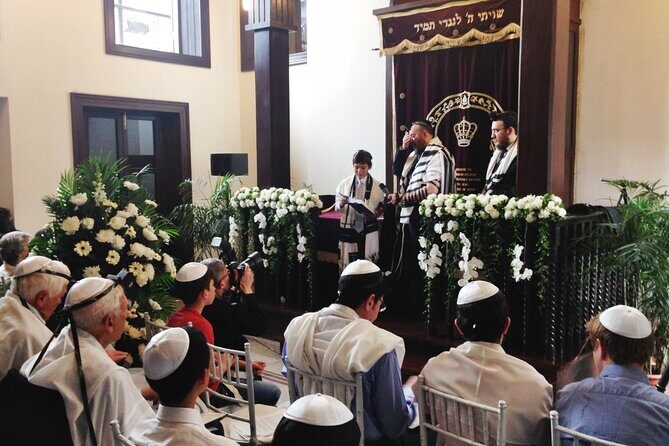
The museum stop is the anchor. You’ll visit the Shanghai Jewish Refugees Museum, housed in the former Ohel Moishe Synagogue (spelled Ohel Moshe in some materials). Admission is included, so you’re not juggling ticket questions while you’re trying to focus.
Inside, the experience is built around the story of Jewish refugees during World War II. The guide’s job here is to connect artifacts and exhibits to people, not just events. In plain terms: you’re learning what it meant to arrive, what changed, and what daily life could look like under extreme uncertainty.
What I like about this format is that it avoids a cold list of dates. The guide brings the narrative back to individual lives that intersected with Shanghai’s larger story, including the way refugees fit into local systems and how the community formed under pressure.
A few reviews also mention very specific detail—things like discussion of tombstones and where some were found. That kind of granular detail is a good sign if you prefer specifics over generalities. It’s also a reminder that Shanghai’s Jewish story left traces you can still track today, even when the world around it changed.
Practical note: museums usually have a bit of standing and reading. If you know you need breaks, this is the kind of tour where the guide typically keeps a good pace with chances to rest.
Huoshan Park: seeing the WWII memorial up close
After the museum, you head to Huoshan Park for a monument honoring Jewish refugees of WWII. This stop is powerful because it’s outdoors, public, and meant for remembrance in the open air, not behind glass.
I like how the guide gives you enough background to read the monument properly. A memorial plaque can be meaningful, but without context it becomes just another marker. Here, you’re being guided on what the monument represents and why it’s placed where it is.
Photo-wise, Huoshan Park is best in good light, which is why the morning departure is often the smarter choice. The tour recommends the morning option for daylight constraints, and that practical tip fits reality: you’re walking in the district and then spending time outside.
Weather check: the tour operates in all weather conditions. If it’s raining, you’ll want a light rain jacket or umbrella you can manage while walking.
Timing, duration, and what 4 hours really feels like
This is a half-day tour of about four hours, and it runs in both the morning and afternoon. The morning tour is recommended due to the length and daylight constraints, which makes sense because you’ll spend time in the Hongkou lanes and at Huoshan Park.
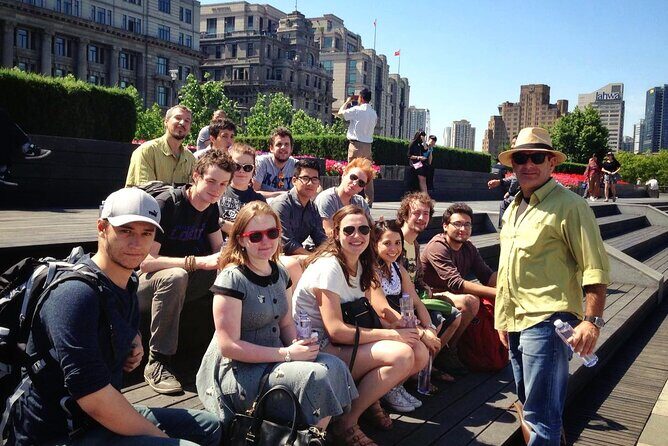
Group size is capped at 22, which keeps the day from becoming a noisy stampede. Multiple guides are known for good pacing and for making the experience feel listenable even when the route includes short walking segments.
Transportation is also part of the comfort picture. The tour includes private transportation and an air-conditioned vehicle, which is helpful in Shanghai’s heat or humidity when you’re hopping between stops. It means you’re not stuck relying entirely on walking from place to place.
What you should plan: no food or drinks are included. So either eat before you go or plan a meal right after. I’d also bring a small water bottle, because you’ll be out long enough to get thirsty.
Ticket-wise, you’ll use a mobile ticket. That’s convenient, but still plan to have your phone charged.


Price and value: why $96 works for the right traveler
$96 per person for a four-hour guided tour isn’t cheap in an absolute sense, but it can be a fair deal depending on how you like to travel.
Here’s why the value holds up:
- You’re paying for a historical expert guide, not just transit between sites.
- You get private, air-conditioned transportation.
- Museum admission is included.
If your goal is to understand Jewish Shanghai as a human story tied to real neighborhoods, the guide’s explanations are what you’re actually buying. Without that context, you might see a museum and a memorial and still miss how they connect to the waves of immigration and the Shanghai Ghetto geography.
If your goal is only to tick off a couple landmarks, you might decide it’s pricey. But if you want the reasoning behind what you’re seeing, this is the kind of tour where the price starts to feel reasonable.
Who this Jewish Shanghai tour suits best
This tour is a great fit if you want:
- Jewish history connected to Shanghai’s real streets and buildings
- World War II refugee context that’s anchored to specific locations
- A guide-led explanation that helps you make sense of immigration waves
It’s also strong for history-minded travelers who don’t want to guess their way through Hongkou. The district’s side streets can be lively and confusing, and the tour gives you a built-in route and narrative.
On the other hand, it may be less ideal if you:
- Hate walking through local lanes, even for short stretches
- Prefer self-guided museum time with no interpretive talk
Should you book it? My honest decision guide
Book this tour if you want one focused half-day that ties the Bund, Hongkou, and WWII remembrance into a story you can actually follow. The Peace Hotel start helps you understand why Shanghai mattered long before the ghetto label, and the museum plus Huoshan Park keeps the emotional weight grounded in place.
Skip it only if you’re looking for a purely sightseeing-driven day with minimal walking. Also, if you’re the type who needs very slow pacing or heavy downtime, you’ll want to pay attention to your own stamina—this route includes movement through neighborhood streets.
If you like guided history with specificity and respectful attention to sensitive topics, this is one of those Shanghai tours that can genuinely change how you see the city.
FAQ
Where is the meeting point for the Jewish Shanghai tour?
You meet at the Peace Hotel on the Bund riverfront area (the Peace Hotel is the former Cathay Hotel). The tour is also listed with a start point at Nanjing Road (E), and it ends back at the meeting point.
What time does the tour start?
The start time provided is 9:30am.
How long is the tour?
The duration is about 4 hours.
What’s included in the price?
The tour includes private transportation, an air-conditioned vehicle, and a historical expert guide. Admission is included for the Jewish Refugees Museum stop, and the tour uses a mobile ticket.
Are food and drinks included?
No. Food and drinks are not included.
Will we spend time walking in Hongkou?
Yes. The experience includes exploring back lanes in Hongkou and visiting sites in and around the district, plus outdoor time at Huoshan Park.
Is the tour run in all weather?
Yes. The tour operates in all weather conditions, so you should plan accordingly.
How big is the group?
The tour has a maximum of 22 travelers.
Is there free cancellation?
Yes. You can cancel up to 24 hours in advance for a full refund. If you cancel less than 24 hours before the start time, the amount you paid will not be refunded.