REVIEW · KASHGAR
Xinjiang Best Classic Silk Road Tour with Locals
Book on Viator →Operated by Silk Road Expeditions · Bookable on Viator
Silk Road travel feels bigger here. This private, locally guided route strings together Kashgar markets, Karakoram mountain gateways, and desert-to-oasis highlights in a way that feels practical, not rushed. You’re also covered for the stuff that usually slows people down: permits, entrance fees, and multilingual help across the whole trip.
I love the daily-life access built into the itinerary, especially the Kashgar livestock market and the Uyghur food stops that turn the Silk Road into something you can taste and see. I also like how the tour mixes major set-piece sites—like the caves—with human-scale details, from old city ruins to working craftsmen in Hotan.
One consideration: you’ll be on the move a lot, with long driving days and some higher-elevation spots like Karakul Lake (about 3600m). If you’re sensitive to long travel stretches, plan your comfort strategy early.
In This Review
- Key things to know before you go
- Price and logistics: what $3,524 buys (and what doesn’t)
- Kashgar: the Uyghur Silk Road core you’ll actually walk through
- Karakul Lake, Muztagata views, and Tashkurgan’s Tajik gateway
- Hotan: jade, silk, crafts, and night market energy
- Taklamakan Desert: the day the Silk Road turns dramatic
- Kuqa and the Kizil caves: Buddhist art with context
- Turpan Basin: Karez waterworks, caves, and old city ruins
- Jiaohe, Gaochang, then Urumqi: closing the loop with big geography
- Tianchi Lake and a final glide to the airport
- Who this tour is best for (and who should think twice)
- Should you book this Silk Road classic?
- FAQ
- Where does the tour start and end?
- How long is the tour?
- Is pickup included?
- What transportation is included?
- Are hotel stays included?
- Are attraction entrance fees included?
- Are permits included for travel on the Karakoram Highway?
- Are meals included besides breakfast?
- What is the cancellation and weather approach?
Key things to know before you go
- Kashgar start with living culture: livestock market, tomb complexes, mosque visits, and Uyghur meals.
- Karakoram Highway logistics handled: necessary permits are included for foreigners to reach Tashkurgan.
- Desert day with stops, not just driving: Taklamakan Desert highway plus a preserved relic tower.
- Sleeper train included: Kuqa to Turpan helps you break up the long overland transfers.
- Hotan focus on crafts and trade: jade, silk, carpets, pottery, plus markets at night.
- Turpan Basin highlights: Karez irrigation sites, cave art, Emin Minaret, and ancient city ruins.
Price and logistics: what $3,524 buys (and what doesn’t)
At $3,524 per person, this tour is priced like a true “do it for you” Silk Road package: hotels, a local guide, private transport, entrance fees, permits, and even a sleeper train are folded in. That matters here because the tricky part of Xinjiang travel is rarely the sightseeing—it’s permissions, timing, and how much planning you have to do between distant stops.
What’s not included is also clear. You’ll pay for your flights to Kashgar and out of Urumqi, plus lunches and dinners, and you’ll need to budget for tips. If you already have cheap flights and you like building your own days, this may feel expensive; if you want low-stress travel across big distances, it starts to look like good value.
You can also read our reviews of more tours and experiences in Kashgar.
Kashgar: the Uyghur Silk Road core you’ll actually walk through
Your trip begins in Kashgar, a city often described as one of the most preserved examples of a traditional Silk Road city in Central Asia, even as development continues. In practice, what you’ll feel is a place where everyday trade still mixes with historic sites—especially in the older parts of town.
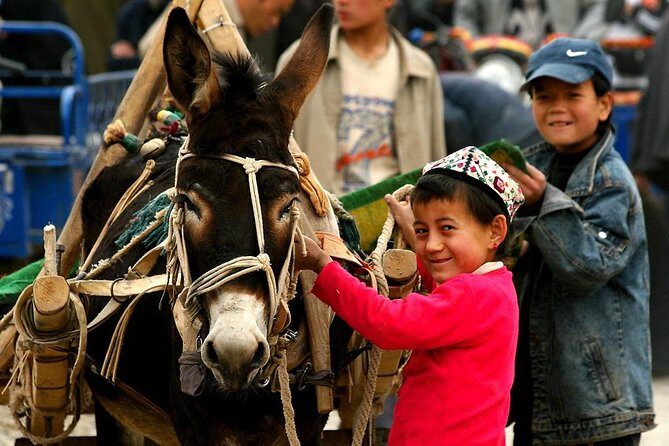
A big highlight is the Kashgar livestock market visit. You’re not just looking at a museum piece; you see how Uyghur farmers do business in real life, with animals brought in by locals and buyers negotiating face-to-face. If you enjoy markets, this stop sets the tone fast.
The itinerary then shifts to major Kashgar religious and heritage stops. You’ll visit Idkah Mosque, plus the Apak Hoja tomb and Abakh Hoja tomb, both noted for strong architecture and preservation. Abakh Hoja also includes a live show of Uyghur wedding and dance performance, which gives you culture in motion instead of only static monuments.
Practical note: Kashgar day can be vivid and crowded. Wear shoes you trust, and plan for weather changes—desert edge cities can feel different block to block.
Karakul Lake, Muztagata views, and Tashkurgan’s Tajik gateway
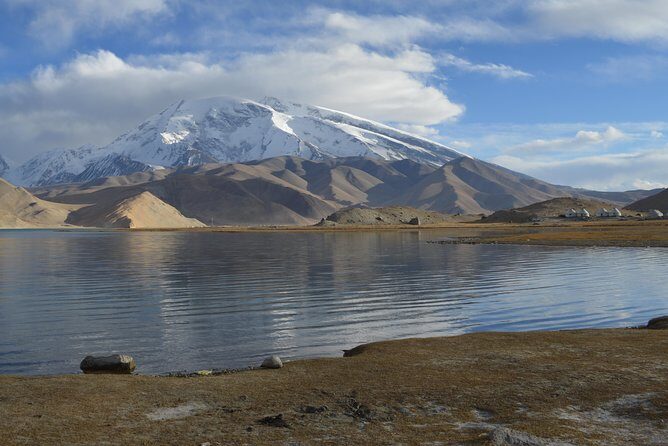
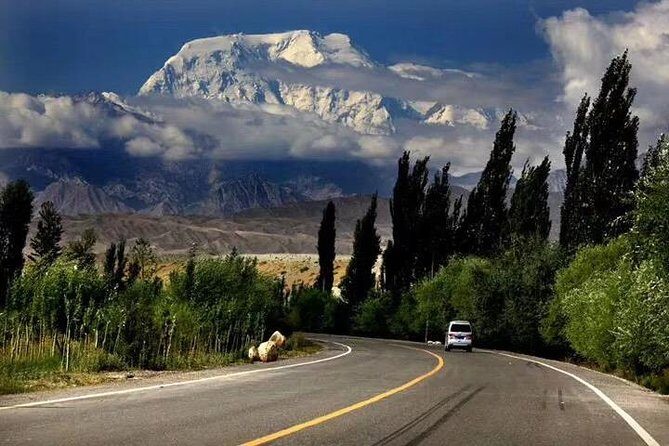
From Kashgar, the route moves toward the Karakoram Highway corridor, with Karakul Lake as your first major nature hit. This is a rare highland lake at about 3600m, surrounded by snowcapped peaks such as Muztagh Ata (7546m). There’s also time to hike around the lake if your schedule allows, which is one of those moments where the day’s distance pays off.
Then you reach Tashkurgan, the western edge gate for travel into western China. Here the itinerary leans into the cultural mix—Tajik people live in the surrounding area, and the town sits near the connections of several major mountain regions (Pamir, Karakoram, Hindukush). You’ll visit an Ethnic Tajik Museum, the Pamir grassland area often described as golden grassland, and ruins like a stone forte dating back to the 7th century.
Along the way you’ll also stop for views and quick scenic breaks: a look at Muztagata peak, and Bulunkou Lakes marsh (also called Baisha Lake), a small lake surrounded by sand mountains. The day rounds out with more stone-city ruins at Tashkurgan Fort and Shitou City Ruins.
Why this works: the tour doesn’t treat this region as only “pretty scenery.” It frames the geography as a human meeting point—roads, towns, and faith traditions tied to mountain access.
The main consideration here is altitude plus travel time. It’s not a marathon, but you’ll feel the elevation if you go too fast. Take your pace when you stop for photos.
Hotan: jade, silk, crafts, and night market energy
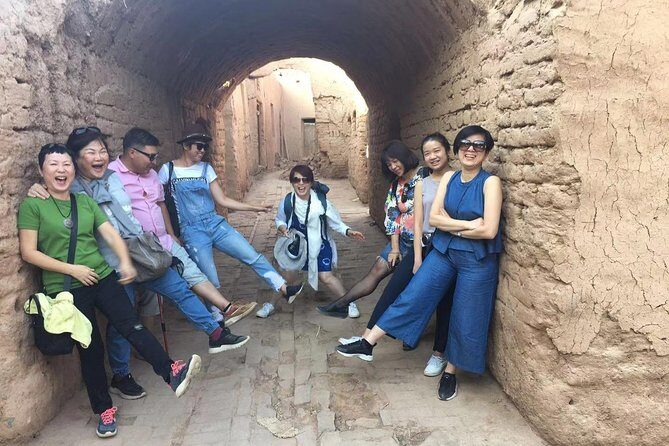
After Kashgar, you’ll head into the south Silk Road direction: Hotan. The drive is described as crossing oasis villages and towns, which is exactly the kind of change you want when you’ve been focused on mountain and desert edges.
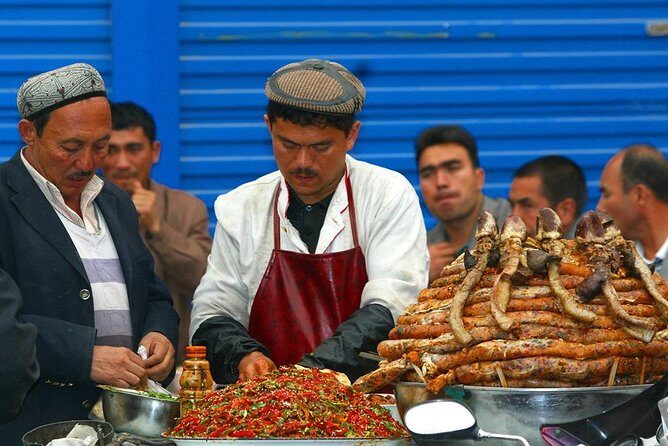
Hotan’s night market is built into the plan. It’s one of the largest food markets in Xinjiang, and the idea is simple: come hungry, walk, snack, and watch local food culture in motion. If you like eating as part of sightseeing, you’ll enjoy this stop more than a single sit-down restaurant day.
The next set of stops centers on Ye’erqianghan Mausoleum, Shache old town, and the Muqam World Heritage Center. This is where the itinerary connects heritage sites with living traditions. Even if you don’t catch every detail without translation, the guides’ explanations are key here.
Then comes the Hotan day that feels most “Silk Road trade in real life.” You’ll visit the Hotan Grand Market, a jade market, a silk factory, and a handcraft carpet factory where regular Hotan residents work. You’re also set up to see long-running traditions connected to Hotan’s past, including the city’s role as a trade bridge for Buddhist learning and later Islamization.
The tour also includes additional market and culture time, such as Hetian’s nightly market for dinner and the Hetian Museum featuring relics found in the Tarim Basin. Then you’ll visit Yuetegan Ruins and Malikewate Ancient City ruins.
The balanced way to think about it: Hotan can be intense—markets, workshops, and multiple sites in a single stretch. If you’re the type who gets overwhelmed by shopping crowds, focus on the craft factories and museum moments, and use markets as a short walk rather than an all-consuming browsing session.
Taklamakan Desert: the day the Silk Road turns dramatic
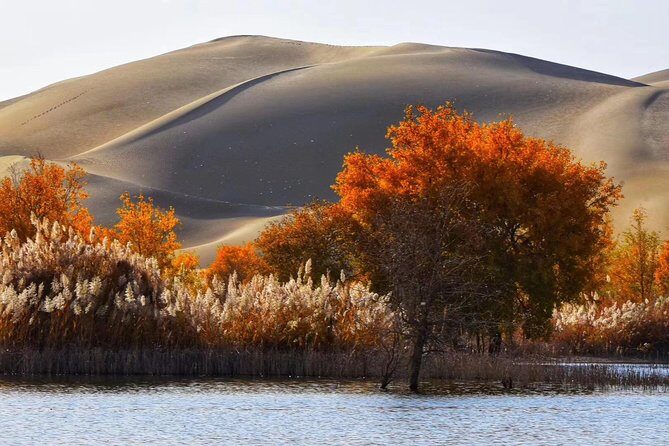
One of the tour’s most exciting days is the Taklamakan Desert crossing via the desert highway, traveling from south to north toward Kuqa. You’ll have a full day of driving, with planned photo stops and time to walk on sand dunes, plus lunch prepared in the morning.
If you’ve only seen desert footage online, this is where reality hits: the distances feel longer than you expect, and the light can change everything within minutes. The stop for the Rewake Fosi Relic Site adds a strong cultural layer—this is a preserved Buddha tower site from the 5th century, located in the desert area.
This is also one of those “weather matters” days. The experience is described as requiring good weather, and in a desert setting that’s not a minor point. If conditions are poor, expect route adjustments or changes in timing.
Kuqa and the Kizil caves: Buddhist art with context
After the desert, you arrive in Kuqa, described as a northern oasis city tied to Middle Silk Road history. The day’s structure gives you both art and scenery.
First, you’ll visit the Kizil Buddha caves (Kezi’er Qian Fo Dong) for about 3–4 hours. This is one of the best preserved examples of ancient Buddhist art in China, and the plan is to have a guide explain the cave paintings in detail while you move through the caves.
Then you’ll shift to Tianshan Mysterious Grand Canyon, where the itinerary allows time to enjoy views and walk the area for about 2 hours. After that, you return to Kuqa for Subash ancient city ruins, the Kuqa king palace, and the Kucha grand mosque.
How the sleeper train fits in: the tour package includes a sleeper train ticket from Kuqa to Turpan. That’s smart here because it saves you from adding yet another long overland day, and it helps keep your schedule workable.
Turpan Basin: Karez waterworks, caves, and old city ruins
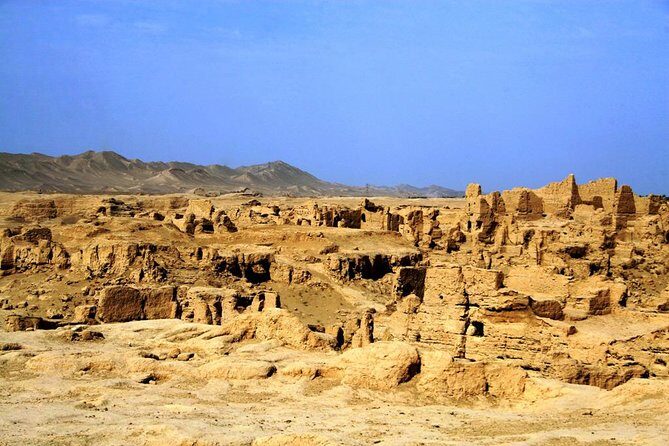
Turpan is where the Silk Road story shifts again—from desert crossing to irrigation genius, religious change, and centuries of settlement. The itinerary starts with an active day of sites after breakfast.
You’ll visit Karez wells, Tuyuq valley, and multiple ancient sites including Bezeklik Thousand Buddha Caves and Gaochang ancient city (Kharakhoja). There’s also the Emin Minaret (Su Gong Ta), described as the only minaret mosque on the China Silk Road. Turpan’s museum is included too, featuring items including Tarim mummies.
Tuyuqouxiang (Tuyugouxiang) is a practical cultural add-on: it’s presented as a traditional old village and an easy way to slow down after the big monuments.
A key reason this part is worth your time: Turpan’s water system (the Karez underground irrigation tradition) explains how people turned a dry basin into a lived-in place. It’s not just a “cool photo spot.” It’s the reason agriculture and settlements survived here.
Jiaohe, Gaochang, then Urumqi: closing the loop with big geography
Day 9 continues in Turpan before you move on to Urumqi. You’ll spend time at major sites such as Emin Minaret, Karez well Museum, Bezeklik caves, and Jiaohe ancient city (Yarkhoto). Gaochang also comes back into the plan.
Then you head to Urumqi and stop at the international grand bazaar (Dabazha). There’s also a walking tour in the bazaar area on another day, so you get a chance to see it from more than one angle.
Why Urumqi belongs at the end: the itinerary includes the change in scenery and relief of moving from basin heat to Tianshan-region views. You’ll be driving through the Tianshan mountain range area and passing thousands of wind power plants on the way in.
Tianchi Lake and a final glide to the airport
On the Urumqi day, you’ll visit Mt. Tianshan and Tianchi Lake Scenic Resort with time to hike around the lake for a few hours. It’s one of the tour’s more “reset your brain” moments, especially after days of desert roads and cave time.
The final day is simple: you’ll be taken to Ürümqi Diwopu International Airport to end the tour. It’s a good finish if you like your last day to be stress-free rather than another marathon of sightseeing.
Who this tour is best for (and who should think twice)
This tour fits best if you want a structured Silk Road route without planning headaches. It’s also a strong match if you care about culture that’s tied to daily life—markets, local cuisine, and working crafts—alongside the big historic sites.
It may be less ideal if you dislike long days of driving. The itinerary includes full-day drives (like the Taklamakan crossing) plus other long site days in mountain and desert regions. If you want maximum downtime or minimal movement, look for something shorter or more local in one region.
Finally, if caves and religious heritage are your thing, the balance here is good. You get Buddhist cave sites in multiple locations, plus Islamic and local heritage sites in Kashgar and other towns.
Should you book this Silk Road classic?
I’d book it if you’re looking for a single, well-organized route that covers both north and south Silk Road highlights, and you’d rather pay for permits, entrance fees, and multilingual guidance than manage all that yourself. The inclusion of Karakoram Highway permits, sleeper train Kuqa to Turpan, and the mix of markets plus major monuments is the core value.
I’d think twice if you’re very flight-dependent (because your airfare into Kashgar and out of Urumqi is not included) or if you know you struggle with long travel days. If that’s you, ask your operator about pacing options before committing.
If you’re flexible and want the full Xinjiang Silk Road sweep with comfort, this one is built for that.
FAQ
Where does the tour start and end?
It starts in Kashgar, with an 8:30 am start time, and it ends with airport drop-off at Ürümqi Diwopu International Airport.
How long is the tour?
The duration is listed as about 11 days.
Is pickup included?
Pickup is offered, and the package includes airport-to-train-station pickup and drop-off, plus transfer support tied to the itinerary.
What transportation is included?
You’ll travel in an air-conditioned vehicle, and the tour also includes a sleeper train ticket from Kuqa to Turpan.
Are hotel stays included?
Yes. You stay in 3- and 4-star hotels with breakfast included.
Are attraction entrance fees included?
Yes. The price includes all entrance fees for the attractions and historical sites listed in the itinerary.
Are permits included for travel on the Karakoram Highway?
Yes. Necessary permits for foreigners traveling on the Karakoram Highway to Tashkurgan are included.
Are meals included besides breakfast?
Breakfast is included. Lunches and dinners are not included.
What is the cancellation and weather approach?
There’s free cancellation up to 24 hours in advance for a full refund. The experience requires good weather, and if it’s canceled due to poor weather, you’ll be offered a different date or a full refund.