REVIEW · KASHGAR
Best of Kashgar tour with Karakoram Highway
Book on Viator →Operated by Silk Road Expeditions · Bookable on Viator
That first stretch of highway is why people book this trip. This 5-day loop gives you Karakoram Highway drama plus the Silk Road soul of Kashgar, without needing to plan permits and timing yourself. The one catch: you’re trading comfort for altitude and long road hours, and good weather matters.
What I like most is how the days balance big scenery with real people. You get classic Kashgar sites like the Abakh Hoja Tomb and Id Kah Mosque, then you’re out on the road toward Tashkurgan for mountain lakes that sit around 3,200–3,600m. The other big plus is the logistics: private vehicle, English-speaking guide, and permits for the Karakoram Highway route to Tashkurgan are included.
If you’re sensitive to altitude or prefer a slower pace, plan for lots of driving and chilly mornings near the high passes. And because lunches and dinners aren’t included, you’ll want to budget extra for food each day.
In This Review
- Key highlights you should care about
- Why Kashgar + the Karakoram Highway works as one trip
- Day 1: Landing in Kashgar and easing into the night food market
- Day 2: Sunday livestock trading, then Abakh Hoja and Id Kah Mosque
- Kashgar Livestock Market (especially if you travel on Sunday)
- Abakh Hoja Tomb: Uyghur design with scale
- Id Kah Mosque and Kashgar’s old town walking time
- Day 3: The long road to Tashkurgan with lakes and grasslands
- Opal Village, Taheman grassland, and sand-lake scenery
- Karakul Lake (around 3,600m): short hike, big views
- Upal Village and the road-photo stops
- Tashiku’erganzhen and pamir grassland
- Bulunkule (White Sand Mountain Lake)
- Day 4: Tashkurgan Fort area, then the panlong zigzag road back
- Day 5: Saying goodbye in Kashgar
- What you’re really paying for (and if it’s good value)
- Comfort, altitude, and weather: the part you shouldn’t ignore
- Who this tour suits best
- Should you book the Best of Kashgar with Karakoram Highway?
- FAQ
- What is the duration of the tour?
- Where does the tour start and end?
- Is pickup included?
- What is included in the price?
- Are lunch and dinner included?
- What kind of hotel rooms are provided?
- Do I need permits for the highway route?
- Is there a Sunday market stop?
- Is the tour private?
- What happens if weather is bad?
Key highlights you should care about
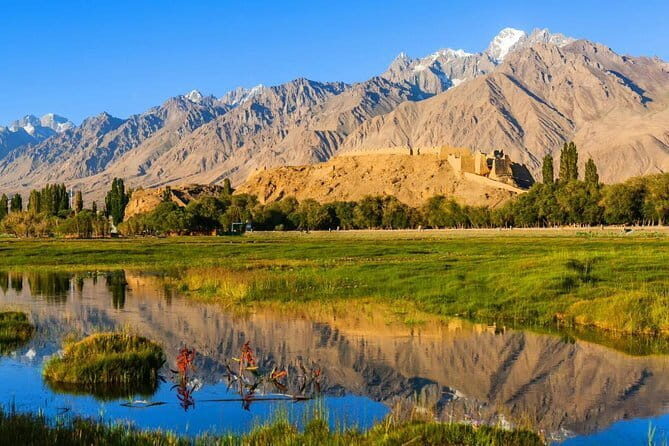
- Karakoram Highway views, with permits handled: you travel the high paved road route from Kashgar to Tashkurgan.
- Sunday-only Kashgar Livestock Market: animals, traders, and local business rhythms are the show.
- Uyghur architecture close-up: Abakh Hoja Tomb and Id Kah Mosque are built to impress.
- Mountain lakes at high elevation: Karakul Lake around 3,600m and Bulunkul/White Sand style stops.
- Panlong zigzag road moments: the drive has photo-worthy “dragon” views from above.
- Old town pacing that lets you wander: tea-house streets, old residential lanes, and local lunch options.
Why Kashgar + the Karakoram Highway works as one trip
This tour is built around a simple idea: Kashgar isn’t just a gateway to the mountains, it’s part of the story. You start with the city’s Silk Road edge—old lanes, big mosques, and food markets—then you head onto the Karakoram Highway, one of the most impressive road trips on earth.
The payoff is variety. In a few days you go from busy Uyghur markets to high-mountain grasslands, then back to Kashgar for heritage sights. It’s not a “museum-only” trip, and it’s not a hike-every-day trek either. It’s road trip travel with meaningful stops.
And yes, it’s remote enough that your guide matters. When you’re dealing with permits for the highway route and tight timing for viewpoints, having an English-speaking guide and driver is the difference between seeing things and just getting stuck.
You can also read our reviews of more tours and experiences in Kashgar.
Day 1: Landing in Kashgar and easing into the night food market
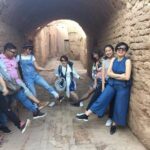
After you arrive, your guide and driver pick you up at the train station or airport and transfer you to your hotel for checking in. Then you head out for Kashgar’s night food market.
That’s a good first day choice. You don’t burn daylight on checklists. You get dinner energy right away, and the market is a low-pressure way to get your bearings in a city that feels instantly different from the rest of China.
A practical note: the tour lists the night market time at about 2 hours and keeps admissions free. Still, you’ll want cash/card ready for snacks, drinks, and whatever looks good in the moment (dinners aren’t included).
Day 2: Sunday livestock trading, then Abakh Hoja and Id Kah Mosque
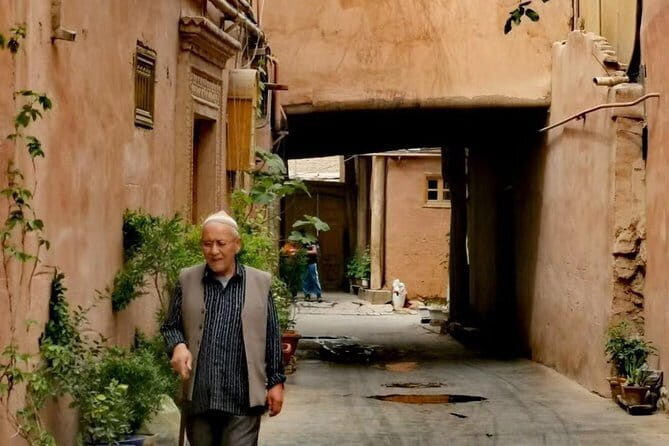
This is the day that shows you Kashgar’s “real economy,” not just its monuments.
Kashgar Livestock Market (especially if you travel on Sunday)
You’ll visit the Kashgar Livestock Market, an open-field agricultural market that only runs on Sundays. If your dates line up, you’ll see an energetic, very local scene: sheep, yaks, goats, donkeys, cows, camels, and horses.
Even if animals aren’t your thing, this stop teaches you how trading works in these regions. It’s less about polished shopping and more about business—people meeting, bargaining, and making sure animals change hands.
If your trip doesn’t include Sunday, the tour notes there won’t be the market. So the day feels slightly different depending on your calendar.
Abakh Hoja Tomb: Uyghur design with scale
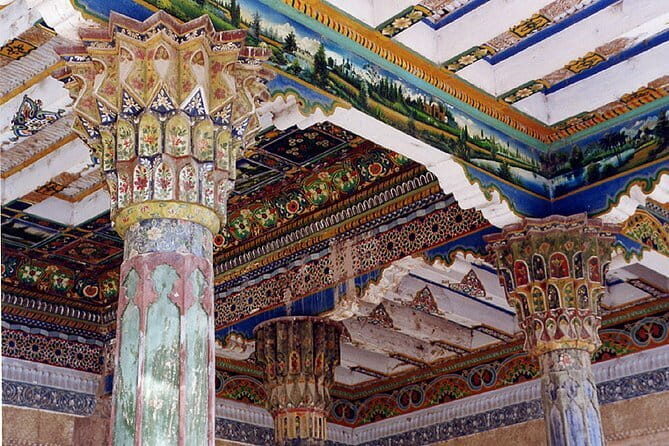
Next up is Abakh Hoja Tomb (Mausoleum). This is one of the finest examples of Uyghur architecture in China. Look for the big central dome—about 17 meters—and the four corner minarets with arabesque floral patterns.
It started in 1640, and the tomb contains the remains of a powerful religious and political leader’s family line across five generations. For me, the value here is that you’re not just looking at a building. You’re seeing how architecture communicates status and faith in a very specific regional style.
Id Kah Mosque and Kashgar’s old town walking time
After the tomb, you visit Id Kah Mosque, listed as the largest mosque in China and among the world’s largest. It’s known for being best-preserved in Uyghur architectural style, and it can hold thousands during prayer times.
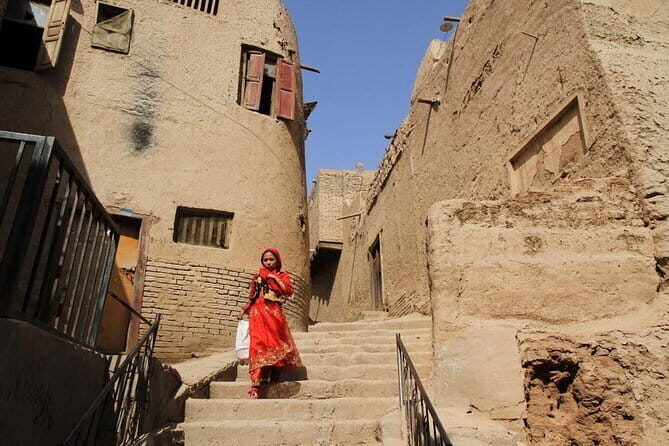
Then you head into the Kashgar old town area. The tour describes it as a well-preserved residential district that’s been settled for about 1,100 years, with old tea houses and Silk Road streets. This is where the day becomes less about “stops” and more about wandering with purpose.
One more practical point: the tour includes admissions for these major sights, but it does not include lunches or dinners. If you want that local-food experience in the old quarter (the tour specifically frames old-area family-style lunch as a highlight), plan to pay for it yourself.
Day 3: The long road to Tashkurgan with lakes and grasslands
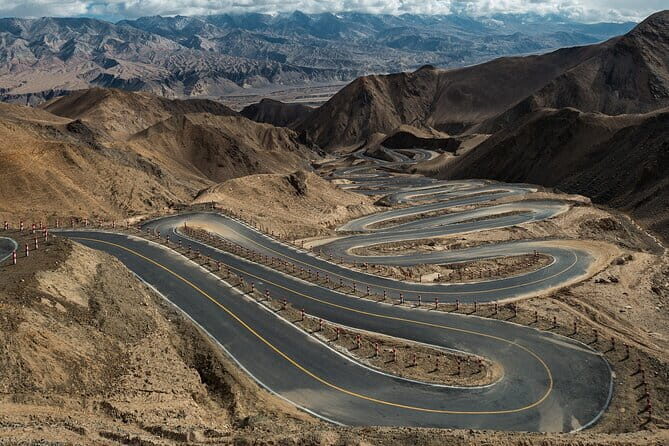
This is the core day for most people. You leave Kashgar and drive the Karakoram Highway south-west toward Tashkurgan, stopping along the way for scenery, nomadic pasture glimpses, and highland lakes.
The drive covers about 430 km on the China side, and the mountain setting is a big part of why this route is so famous. You’re surrounded by glaciers and major peaks such as Muztagh Ata (7,546m) and Konggur (7,719m). Even when you don’t get close to the summits, the scale hits you fast.
Opal Village, Taheman grassland, and sand-lake scenery
Along the way you stop by Opal Village, Bulunkul sand mountain lake, and Taheman grassland. These stops tend to work well because they don’t try to force you into long walks at altitude. You get to step out, look around, take photos, and then continue.
Karakul Lake (around 3,600m): short hike, big views
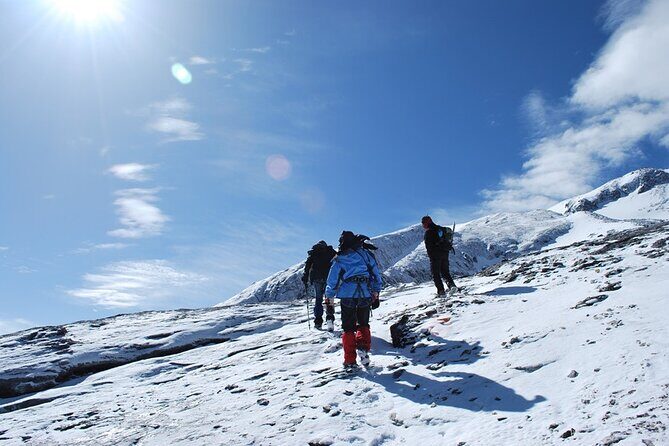
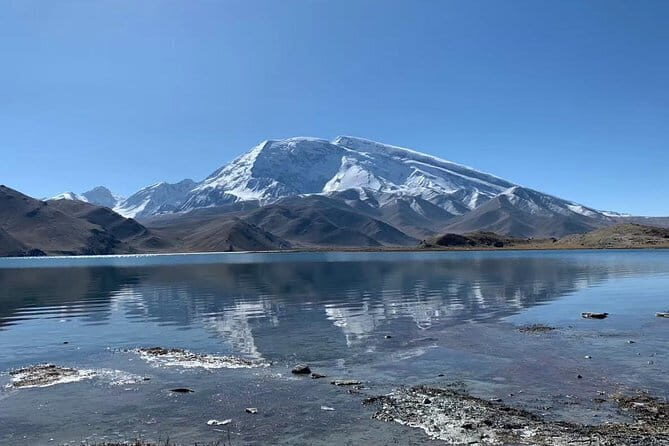
At Karakul Lake (about 3,600m), you get a chance to hike around for roughly 2 hours if time allows. The lake is described as a rare highland lake, framed by snowcapped mountains including Mt Muztagh Ata and Konggur.
Why this stop matters: it turns the highway from “scenery through a windshield” into “scenery you can stand in.” The air can feel thin up there, so keep your pace easy and give yourself time to breathe.
Upal Village and the road-photo stops
You also stop at Upal Village (about an hour), then make time to pause for photography connected to the peaks area, including Muztagh Ata and Kongur/Konggur viewpoints.
These are brief but useful. You’re not trying to “do” the mountains in one day. You’re capturing the way the peaks sit over the road—useful for turning your memories into something you can recall later.
Tashiku’erganzhen and pamir grassland
You’ll visit Stone forte and pamir grassland (about 1 hour). This gives you a different texture than the lakes—more open land, more horizon, and more sense of how people move across this region.
Bulunkule (White Sand Mountain Lake)
On the way to Tashkurgan, you stop at Bulunkule, also called White Sand Mountain Lake at about 3,200m. You get to enjoy the lake, sand, and snow peaks around you. It’s another “quick wow” moment.
That mix is the key to the day: you keep moving, but the stops prevent it from feeling monotonous.
Day 4: Tashkurgan Fort area, then the panlong zigzag road back
The morning starts with a shorter, heritage-leaning set: you visit Tashkurgan Fort and also spend time in the Tashkurgan downtown area and pamir grassland.
Even though the day is mostly about returning to Kashgar, the timing works because you get a bit of morning grounding after the long road day before.
Then you drive back toward Kashgar and get the panlong ancient route, described as a famous zigzag road sometimes called the panlong/draong (dragon) ancient route. You’ll have a chance to view it from above—great for photos, and also a reminder that engineering can be part of the travel story here.
This is a day where you should expect a “sit, look, shoot photos, repeat” rhythm. If that’s not your style, the good news is you still get stops designed to break the monotony.
Day 5: Saying goodbye in Kashgar
After breakfast in the hotel, you’re back to Kashgar for the final send-off. Your guide and driver take you to the airport or train station, ending the tour.
The value of finishing with Kashgar is that you’re not left stranded in a remote transfer zone. You return to the main city where connections are easier.
What you’re really paying for (and if it’s good value)

At $925 per person for about 5 days, the headline price can look high if you compare it to DIY travel. But this tour is doing several expensive, time-consuming things for you:
- Hotel included: 3–4 with rooms shared by two people.
- Private vehicle with driver for the full route.
- English-speaking guide throughout.
- Permits for traveling on the Karakoram Highway to Tashkurgan are included.
- Admission fees for the listed attractions are included.
- Breakfast is included for 4 mornings.
What’s not included is also clear: lunches, dinners, and tips/personal expenses. So the real cost depends on how you eat and how often you buy snacks during stops.
My take: it’s good value if you want the highway and the key Kashgar sights without the hassle of arranging permits, managing long drives, and matching your schedule to market days like the Sunday livestock market.
Comfort, altitude, and weather: the part you shouldn’t ignore
This area is not “walking shoes only” travel. You’re dealing with high elevations—Karakul Lake around 3,600m and Bulunkul/Bulunkule around 3,200m—plus cold mornings that come with altitude regions.
The tour also requires good weather. If weather shuts things down, you’ll be offered a different date or a full refund, so don’t plan a tight connection right after the tour ends.
Practical advice for you:
- Keep your pace easy on the high stops.
- Pack layers for temperature swings, even if the weather looks fine at lower elevations.
- Expect that road time is part of the experience. The scenery is why you’re there, but you’re still sitting for long stretches.
Who this tour suits best
This works best for:
- You want a road trip version of the Pamir/Karakoram area without needing climbing permits or long treks.
- You care about Kashgar beyond selfies: old-town streets, mosques, and an authentic market day.
- You like a structured plan with enough freedom to look around at each stop.
It may not be ideal for you if:
- You dislike long driving days or you’re very altitude-sensitive.
- You want all meals included. Here, only breakfast is covered.
Should you book the Best of Kashgar with Karakoram Highway?
I’d book it if you want a strong first experience of Xinjiang’s mountain side, with Kashgar culture and Karakoram Highway viewpoints in one tight loop. The included permits, private vehicle, admissions, and an English-speaking guide make it feel like someone planned the hard parts for you.
Skip it or ask more questions before booking if you’re worried about weather windows or altitude comfort. Also note that the Kashgar livestock market is Sunday-only, so your exact dates can shift one of the day’s biggest “local flavor” stops.
If you’re the type who enjoys markets, big mosques, and dramatic roads more than luxury add-ons, this tour fits your style.
FAQ
What is the duration of the tour?
The tour runs for about 5 days.
Where does the tour start and end?
It begins in Kashgar and ends in Kashgar.
Is pickup included?
Yes. Pickup is offered at the train station or airport in Kashgar.
What is included in the price?
Hotel accommodations (3–4), a private tourist vehicle with driver, admission fees to the listed attractions, permits for traveling on the Karakoram Highway to Tashkurgan, an English-speaking guide, and breakfast (4).
Are lunch and dinner included?
No. Lunches, dinners, and tips are not included.
What kind of hotel rooms are provided?
Hotels are 3–4 with rooms shared by two people.
Do I need permits for the highway route?
Permits for traveling on the Karakoram Highway to Tashkurgan are included.
Is there a Sunday market stop?
Yes. The Kashgar Livestock Market is only held every Sunday, so it may not operate on other weekdays.
Is the tour private?
Yes. It’s described as private, meaning only your group participates.
What happens if weather is bad?
The experience requires good weather. If it’s canceled due to poor weather, you’ll be offered a different date or a full refund.