REVIEW · BEIJING
2-Hour “Ancient & Modern” Beijing Sidecar Tour (Day /Night)
Book on Viator →Operated by Beijing Sidecar Tours · Bookable on Viator
Sidecar rides make Beijing feel close. This Ancient & Modern route threads through hutongs and the CBD fast enough to keep your legs fresh, with lots of stops for photos and small moments like drinks along the way. I especially like the contrast: you go from landmark, history-heavy spots on Beijing’s central axis to big modern icons without spending the whole day in transit. I also like the practical extras—helmets, rain gear, bottled water, and snacks—so you can focus on the ride. One drawback to plan around: the tour depends on good weather, so cloudy/rainy conditions can mean a reschedule or refund.
I like that this is built for real street-level seeing, not just snapping one quick viewpoint and moving on. You’ll roll past major landmarks and also slip into the small alleyways where daily life happens—where the city feels lived-in, not staged. And yes, the ride is short: about two hours total, so if you want long, ticketed wandering time, you’ll likely want to pair this with a bigger attraction later.
If you’re visiting Beijing for the first time, you’ll probably feel like you’re getting your bearings quickly. It’s also a nice match for couples or friends who want an easy win on day one—especially if you’re curious about both old architecture and modern city design. Just be ready for a moving schedule with frequent photo stops, not a slow, linger-everywhere walk.
In This Review
- Key highlights worth knowing
- A Two-Hour Sidecar Circuit From Old Beijing To CBD
- Meeting Point, Pickup, and How the Ride Actually Works
- Bell and Drum Towers: A Photo Stop That Sets Your Bearings
- Shichahai and Houhai Lakes: Drinks With Real Lake Views
- Forbidden City North Gate: Moat and Watching-Tower Views
- Beijing Workers’ Stadium: A Straight Shot at Modern Beijing Sports Culture
- CCTV New Mansion: CBD Icons on a Quick Photo Stop
- Ming City Wall Park: Where the Ancient Footprint Still Exists
- Day or Night: How to Pick the Best Time to Go
- Price and Value: Why $89 Can Make Sense
- Who This Sidecar Tour Fits Best (And Who Might Skip It)
- Should You Book Beijing Sidecar Tours?
- FAQ
- How long is the Ancient & Modern Beijing Sidecar Tour?
- What is included in the tour price?
- Where does the tour start and end?
- Is pickup available?
- Is this tour private?
- What happens if the weather is poor?
Key highlights worth knowing
- A tight 2-hour circuit covering classic landmarks and modern Beijing without a full-day grind
- Sidecar seating flexibility, with two passengers and a chance to switch positions halfway
- Hutong alley time plus lake views near Houhai, with included drinks
- Big-photo landmarks like Bell and Drum Towers and the Forbidden City north gate area
- Included gear and comfort items: helmets, raincoat, bottled water, and a phone charging cable
- Private for your group (plus group discounts if you’re booking with others)
A Two-Hour Sidecar Circuit From Old Beijing To CBD
Beijing can feel enormous on day one. This tour is designed to solve that problem: in about two hours, you cover a classic slice of the city and a modern one, with frequent stops so you actually get to see things up close.
The “ancient & modern” part isn’t marketing fluff. You start in the historic core zone, where the Bell and Drum Towers sit on Beijing’s central axis, then shift toward the CBD area with the kinds of buildings that dominate skylines today. Between those two poles you get the hutong alley feel—tight streets, everyday rhythms, and corners that make photos look more like a real day in Beijing.
And because it’s a sidecar, you get a different angle on the city than you’d get from a bus window. You’ll be at street height, moving with the flow, not standing still while cars blur past.
You can also read our reviews of more evening experiences in Beijing


Meeting Point, Pickup, and How the Ride Actually Works
Most people meet at the National Art Museum of China (1 Wu Si Da Jie, Dong Cheng Qu, Beijing 100875). The tour ends back at that same meeting spot, which keeps logistics simple after your last photo stop.
Pickup is offered, which matters if you’re staying somewhere inconvenient for the meeting point. One review detail that stood out: a guide named John is described as punctual and also flexible about where you’re dropped off at the end. That’s a big deal when you’re trying to keep the rest of your day on track.
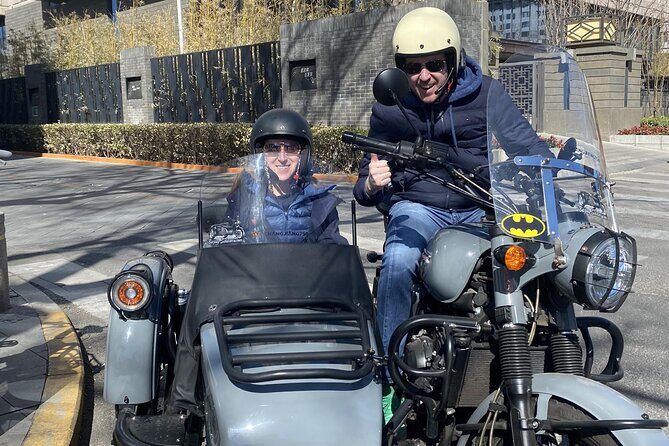
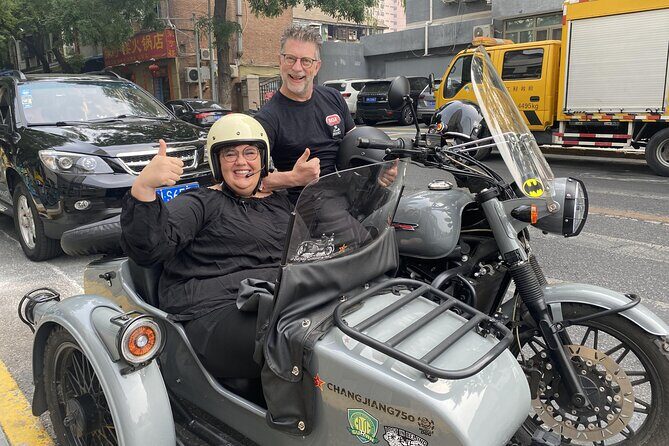
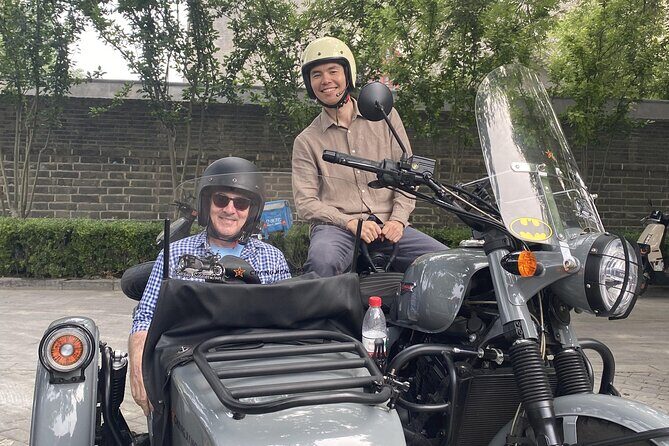
On the ride itself, the tour uses sidecars with two passengers: one in the sidecar and one sitting behind the driver. There’s also a note that you can switch positions halfway, which is a thoughtful touch if one side of the route has better photo angles or if you just want a fresh view.
Included basics mean you don’t have to shop first. You get helmets, bottled water, a raincoat, and even a phone charge cable. And for the brain, that matters too: you can keep your phone topped up while still capturing photos without constantly checking power.
Bell and Drum Towers: A Photo Stop That Sets Your Bearings
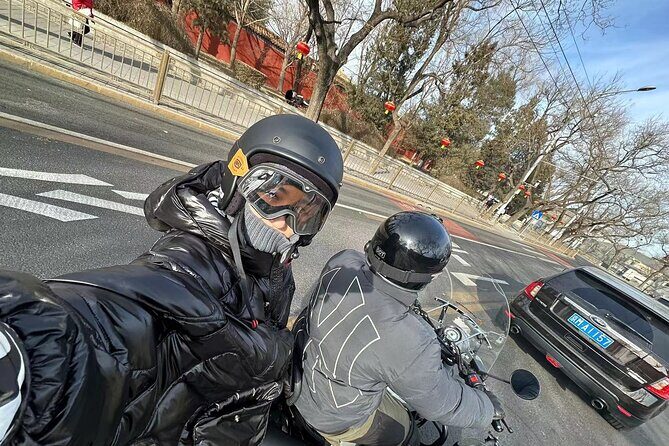
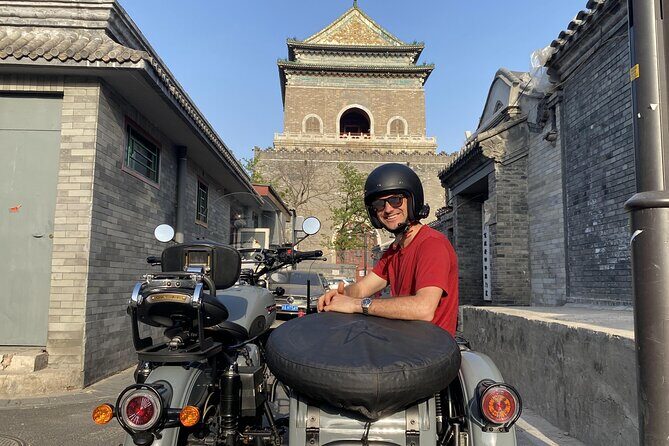
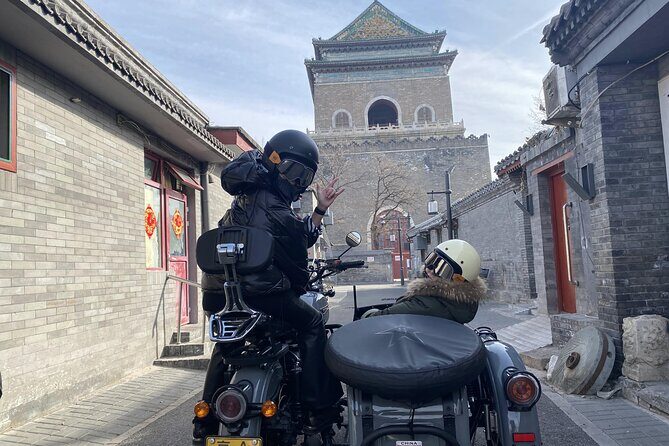
The ride begins with a stop at the Bell and Drum Towers. These are two important landmarks right on Beijing’s historic central axis, and they’re also known as an internet-famous check-in place—so expect that people shoot photos here.
What I like about this stop is that it acts like a map shortcut. Even if you don’t remember every detail about the city’s layout, seeing these towers gives you a strong sense of the straight-line “spine” that shapes central Beijing. It’s also quick—about 5 minutes—so you’re not stuck waiting around while the group reforms.
There’s no admission ticket cost listed for this stop, which is another quiet value win. It’s one of those places where you get an iconic look without turning the tour into a pay-for-everything day.
Small consideration: because it’s a famous photo spot, you may find the area busier at peak times. If you care about getting your shots without sharing frame space, be ready to move promptly when your guide signals it’s your turn.
Shichahai and Houhai Lakes: Drinks With Real Lake Views
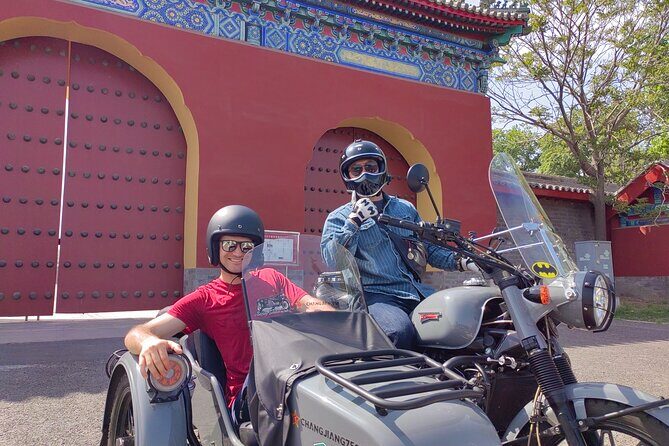
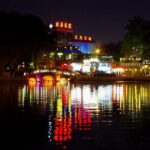
Next comes Shichahai Scenic Resort, and specifically a ride along Houhai lakes. This is the softer, scenic break in the middle of a tour that otherwise jumps between “big landmark” hits.
The plan here is simple: you get a ride by the lake views and you’ll have drinks included. The stop is about 15 minutes, and it’s long enough to take a breath, grab photos, and enjoy the change in scenery from stone-and-straightway landmarks.
This is also where the sidecar format shines. The lake edges feel like they wrap the city in a different mood. Even if you’ve only ever seen photos of Houhai, being in motion and looking across the water gives you a better sense of scale.
Why it’s good value: many city tours will sell you “scenery” but won’t provide anything to make the pause enjoyable. Here, the included drink and the time window make it feel like more than just another roadside stop.
Forbidden City North Gate: Moat and Watching-Tower Views
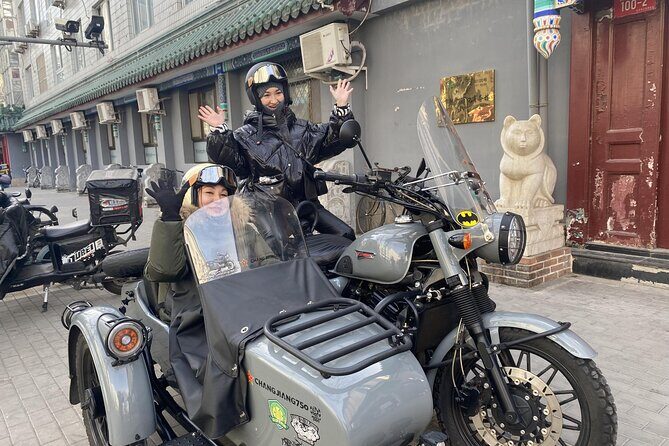
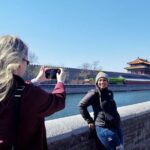
You’ll then pass by the north gate of the Forbidden City, including a route through the moat and the watching tower area. This is a classic “you are here” kind of moment: the name is famous, but seeing the surrounding structure gives context for how heavily fortified the palace area was.
Your stop here is more about views from the ride and photo opportunities than long indoor time. That’s consistent with the tour’s overall pace—this isn’t trying to replace a full Forbidden City visit. Instead, it gives you a meaningful taste of the scale and layout, which can make a later ticketed day feel more anchored.
Admission costs aren’t listed as required for this segment within the tour structure, which keeps your day from turning into a series of add-on ticket decisions.
Practical consideration: you’ll want to plan your photos quickly here. The schedule is tight, and you’ll be on a moving route overall.
A few more Beijing tours and experiences worth a look

Beijing Workers’ Stadium: A Straight Shot at Modern Beijing Sports Culture
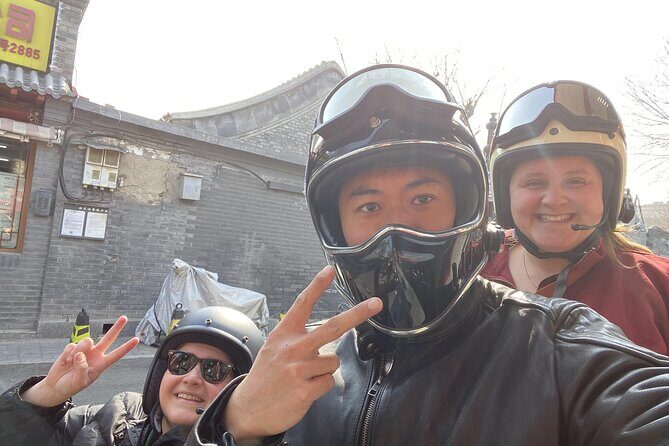
After the Forbidden City area, you hit Beijing Workers’ Stadium. The stop time is about 5 minutes, and it’s described as a famous landmark tied to the Beijing football team, with the stadium noted as brand new.
This segment works because it adds another kind of city identity beyond monuments: modern public life. It’s a reminder that Beijing isn’t just imperial architecture and museum walls—it’s also sports, crowds, and everyday national culture.
There’s no ticket admission listed for this stop either. So you get a notable exterior look without slowing down the tour.
If you love modern architecture and big-scale design, this is a nice contrast point after older landmarks. Even if you aren’t a football fan, the stadium’s presence helps the “ancient & modern” theme feel real.
CCTV New Mansion: CBD Icons on a Quick Photo Stop
Then you move into the CBD vibe with the CCTV New Mansion. This is where Beijing goes full skyline mode. You’ll ride in the Central Business District area and see the CCTV building, plus the note about the tallest building in Beijing in the same area.
The stop is again around 5 minutes. It’s not meant to be a long viewing experience; it’s a quick “see it, understand the scale, grab a photo” moment, then back into motion.
I like this because it prevents the classic mistake first-time visitors make. People often spend their whole visit staring at old walls, then miss how dramatic Beijing’s newer architecture looks when you line it up with what you already saw in the historic core. This stop gives you that balance in one short slice.
Photo tip: since this is a fast stop, get your framing ready fast—phone in one hand, camera position decided before you hop off. The best shots here come from being ready when your guide gives you the brief window.
Ming City Wall Park: Where the Ancient Footprint Still Exists
The final listed stop is at the Site of Ming City Wall Park. This is described as the only existing section of the original Beijing inter-city, so it’s a literal physical reminder of the city’s older defensive lines.
You’ll spend about 15 minutes here, which is longer than several of the earlier stops. That’s smart: wall sections benefit from a little time, even on a moving tour. You need a minute to look at proportions and notice details.
This stop is the “blend” point the tour promises—ancient structure impressions in the middle of a modern city environment. It helps tie the whole day together: old Beijing wasn’t just a story in books; parts of it still sit in the urban fabric.
Small consideration: since it’s the last stop, you may want to pace yourself earlier. If you save energy and phone battery for this moment, you’ll get better results.
Day or Night: How to Pick the Best Time to Go
The tour is offered as a Day/Night experience, and that choice affects what you enjoy most.
- If you go in daylight, you’ll get clearer views of stone structures, lake edges, and skyline shapes. It’s also generally easier for photos without fiddling with low-light settings.
- If you go in night mode, the modern buildings in the CBD area tend to feel more dramatic, and the route can feel more like a moving city highlight reel.
One thing stays consistent: you’ll ride a planned set of stops for photos and drinks. So the “best” time really depends on whether you prioritize architectural clarity or nighttime mood.
If weather looks iffy, plan to be flexible. The experience explicitly requires good weather, and if it’s canceled due to poor conditions, you’ll be offered another date or a full refund.
Price and Value: Why $89 Can Make Sense
At $89 per person for about two hours, this is not the cheapest way to see Beijing. But it also includes a lot that many do-it-yourself options don’t.
Here’s the value logic I see:
- You’re paying for access and time efficiency. You cover the historic core, lake area, and CBD in one compact circuit.
- Key costs are built in: helmets, raincoat, bottled water, snacks, and drinks. There’s also a phone charging cable, which is one of those tiny inclusions you appreciate immediately when you’re out taking photos.
- The guide/driver package matters. You’re not just riding—you have someone running the route and stopping at meaningful points.
There’s also a scheduling value. The average booking is about 30 days in advance, so spots can go. If you want to do it early in your stay, lock it sooner rather than later.
And the tour is listed as private for your group, plus there are group discounts if you’re traveling with others. That can bring the per-person cost down in a practical way.
If you’re trying to start your Beijing trip with an easy orientation, this price can feel like a reasonable “pay to get oriented fast” deal.
Who This Sidecar Tour Fits Best (And Who Might Skip It)
This is a great fit if you want:
- A fast orientation on day one
- A mix of hutongs + major landmarks + modern skyline
- Plenty of photo stops without planning transportation between them
- Included snacks and drinks, plus practical gear like helmets and raincoats
It’s also a solid pick for people who don’t want to spend the day in heavy indoor sites and lines. You’re out there seeing the city from street level, and the pauses are structured.
You might consider skipping or pairing differently if you want long museum-style time in one place. This tour is built around motion and quick stops, not extended wandering. Treat it like a high-impact introduction, then add larger attractions separately.
Should You Book Beijing Sidecar Tours?
I’d book it if you’re the type who likes your first day in a new city to give you momentum. The route hits the right balance: central landmarks, lake atmosphere, and modern Beijing icons, all in a short window with included drinks and snacks. If you can get a slot, it’s a smart way to get your bearings fast—especially with a guide like John called out for being punctual and flexible.
I’d think twice if weather is unreliable or if you hate the idea of tight stop windows. Since it depends on good weather, you want a buffer day in your plan.
Overall, this is one of those experiences that doesn’t just show you Beijing—it helps you place it. Old axes, lake views, and CBD glass all start to make sense when you see them in one flowing circuit.
FAQ
How long is the Ancient & Modern Beijing Sidecar Tour?
It’s about 2 hours.
What is included in the tour price?
Helmets, bottled water, a raincoat, a phone charge cable, a professional driver/guide, Beijing special snacks, and drinks (hot coffee/tea in winter or cold soda/beer in summer). Two passengers ride in one sidecar, and there’s a switch half way possible.
Where does the tour start and end?
It starts and ends at the National Art Museum of China area (1 Wu Si Da Jie, Dong Cheng Qu, Beijing 100875).
Is pickup available?
Pickup is offered.
Is this tour private?
Yes. It’s private for your group.
What happens if the weather is poor?
The tour requires good weather. If it’s canceled due to poor weather, you’ll be offered a different date or a full refund.