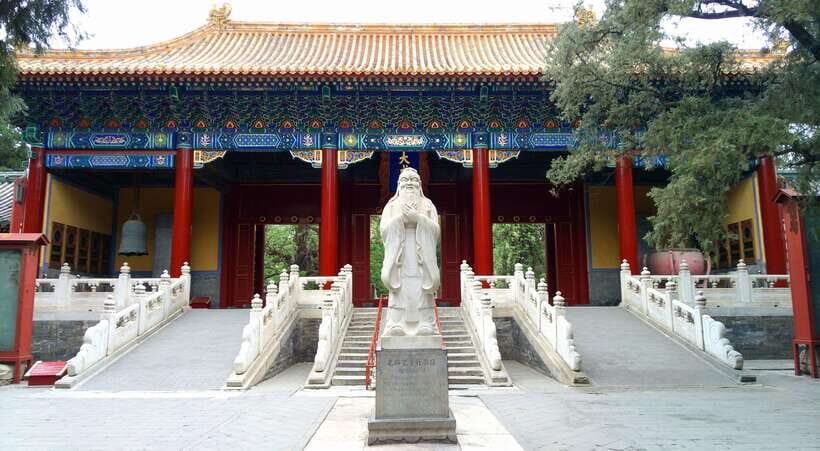
REVIEW · BEIJING
Beijing Hutongs Walking Tour
Book on Viator →Operated by Roy Li Tours Beijing · Bookable on Viator
That gray lane ahead is the real Beijing. This small-group hutong walking tour helps you read the city beyond the big monuments, with a guide who keeps things relaxed and story-led.
I especially like the small group size (max 15), because it makes it easier to ask questions as you walk, not just listen while squeezing past other people. And the route focuses on everyday spaces—courtyard homes, narrow lanes, and the water-area vibe near Qianhai and Houhai—so you get a grounded feel for how Beijing works.
One thing to plan for: you’re walking around a maze of lanes, so comfortable shoes matter. Also, any admission tickets are not included, so if you decide to go into a paid spot, budget extra.
In This Review
- Key things to know before you go
- Why a Hutong Walk Beats the Usual Beijing Checklist
- Starting Smoothly at Nanluoguxiang (South Luogu Lane area)
- Bell and Drum Towers: More Than a Photo Stop
- Nanluoguxiang Lanes: Courtyard Homes From a Far-Off Era
- Mao’er Hutong: The Stories That Stick to the Narrow Turns
- Empress Wanrong’s Mansion: A Strong Photo Moment With Real Context
- Qianhai and Houhai: Narrow Channels and a Different Kind of Beijing
- Price, Pace, and Group Size: Is It Good Value at $30?
- Who This Hutong Walk Suits Best (and Who Should Consider Another Option)
- Practical Tips So Your Day Stays Easy
- Should You Book the Beijing Hutongs Walking Tour?
- FAQ
- How long is the Beijing Hutongs Walking Tour?
- What does the tour cost?
- Where do I meet the guide?
- What time does the tour start?
- Where does the tour end?
- Is the ticket mobile?
- Is the guide provided in English?
- Are admission tickets included?
- How big is the group?
- Can I get a refund if I cancel?
Key things to know before you go

- Small group feel (15 max): more back-and-forth with the guide, not a lecture
- English-speaking guide: the stories come through clearly, not in fragments
- Courtyard-housing focus: see the architecture where people lived, not just where rulers posed
- Empress Wanrong photo stop: a memorable connection to the last Qing/early Republic era
- Time-keeping theme near the towers: the guide ties local history to what you see
- Walk through Nanluoguxiang and Mao’er Hutong: classic lanes with character and context
Why a Hutong Walk Beats the Usual Beijing Checklist
If your Beijing plan is mostly palaces and museums, you’ll miss the city’s everyday physics. Hutongs are Beijing’s street logic—narrow lanes, turning courtyards, and old trees doing most of the talking. This tour leans into that, with an easy pace and a guide who helps you connect what you’re seeing to how people once lived.
I like that it’s not trying to sprint through a dozen sites. You’re given time to look closely: the grey vernacular courtyard houses, the trees, the layout of the lanes, and the way stories stick to specific corners. The result is a walk that feels like orientation plus atmosphere, not just a highlight reel.
There’s also a clever theme running through the tour: history doesn’t sit only in buildings. It shows up in street names, in the idea of time and order, and in the fate of famous people whose lives played out in these spaces.
You can also read our reviews of more walking tours in Beijing



Starting Smoothly at Nanluoguxiang (South Luogu Lane area)
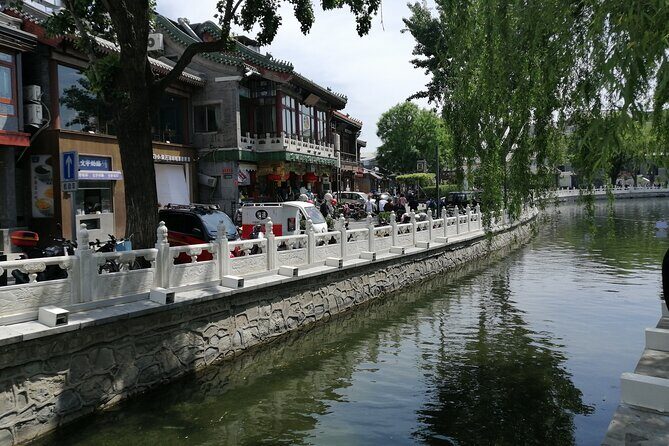
You meet at South Luogu Lane, Nan Luo Gu Xiang (Dongcheng District). The common meetup point is Nanluoguxiang metro station exit E, with access via Line 6 or Line 8. Start time is 10:00 am, and your guide meets you there with the group.
This matters because Nanluoguxiang can be busy and easy to misread if you’re arriving on your own. A fixed metro exit gives you a clean target. If you like getting your day off on the right foot, aim to arrive a little early, scan the area once, and then wait—don’t hover too long trying to interpret the streets yourself.
The tour uses a mobile ticket, which cuts one common headache: you’re less likely to lose a paper voucher in a crowd. Still, keep your phone charged. Beijing walks add up fast, and you don’t want to rely on a low-battery scramble at the start.
Bell and Drum Towers: More Than a Photo Stop

The walk begins in the general orbit of the Bell and Drum Towers. Even if you don’t go inside any paid areas, the towers still work as a history anchor. The guide connects them to Chinese time-keeping, which changes how you interpret what you see.
That timing piece is more useful than it sounds. A lot of visitors see old architecture as static. Here, you learn the practical idea that time in old Beijing wasn’t just clocks on walls—it was something tied to public rhythm and the city’s systems. It’s the kind of context that turns a landmark into a living concept.
There’s also a practical upside. Starting near the towers gives you a sense of direction as you head through hutongs and toward the water area later. You’re less likely to feel like you’ve wandered into a random labyrinth.
Potential drawback: because the tour is designed to move through lanes, you may not get long, slow viewing time at any single spot. If you’re the type who wants extended interior time and quiet contemplation, you might feel a bit rushed. The trade-off is that you’ll see more of the lane texture overall.
Nanluoguxiang Lanes: Courtyard Homes From a Far-Off Era
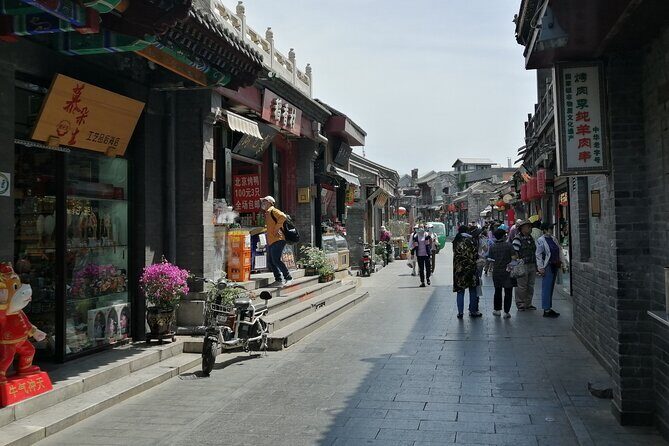
Once you’re walking, the tour leans hard into the hutong core: Nanluoguxiang and its surrounding traditional lane feel. This is where the city’s architecture starts telling its story.
One highlight is the look of the vernacular courtyard houses, often grey in tone, paired with older trees. Those two details—color and canopy—make the lane atmosphere feel instantly different from modern Beijing streets. You’ll notice how the houses turn inward, and how the lane is the shared public edge while family life sits behind walls.
The guide brings extra meaning here by tying the area back to the Yuan Dynasty era. That won’t make the stones any newer, but it gives you a mental timeline while you walk. It’s easier to track history when it’s anchored to a specific direction and street character.
A tip that helps: keep an eye out for the way lanes narrow and shift. When a lane bends, it often signals how neighborhoods were planned around courtyards and access points. Even without a formal lecture, you start to read the street shape like a map.
Mao’er Hutong: The Stories That Stick to the Narrow Turns
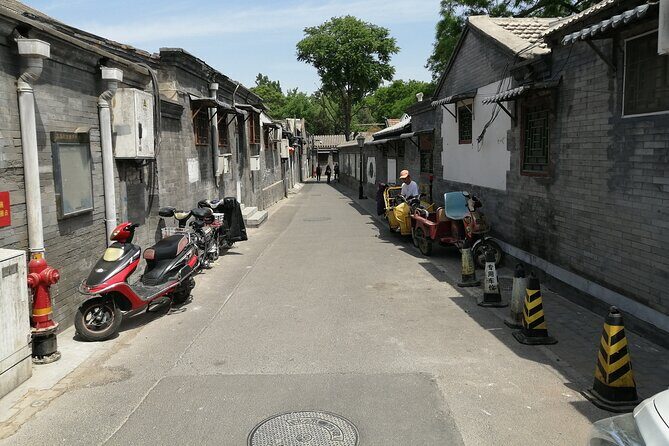
After the Nanluoguxiang stretch, you continue along Mao’er Hutong. This is where the tour gets especially human. The lane isn’t just pretty or old—it’s linked to recognizable narratives, and the guide points out what makes the place more than scenery.
The tour emphasizes that Mao’er Hutong has famous buildings and character stories, and that idea is exactly how you should think about hutongs. Courtyard houses can look similar from a distance. It’s the specific names and events tied to individual locations that make the streets come alive.
The pace stays relaxed, which is the right choice here. Hutongs reward walking slowly enough to notice doorways, walls, and the way people move through a corridor of buildings. When you rush, you miss the best part: the street scale.






Empress Wanrong’s Mansion: A Strong Photo Moment With Real Context
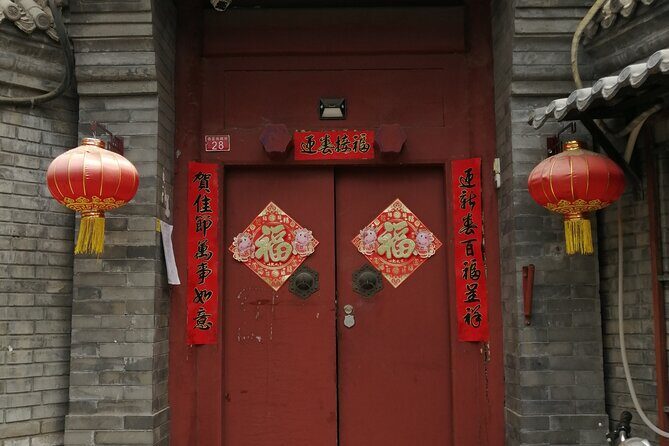
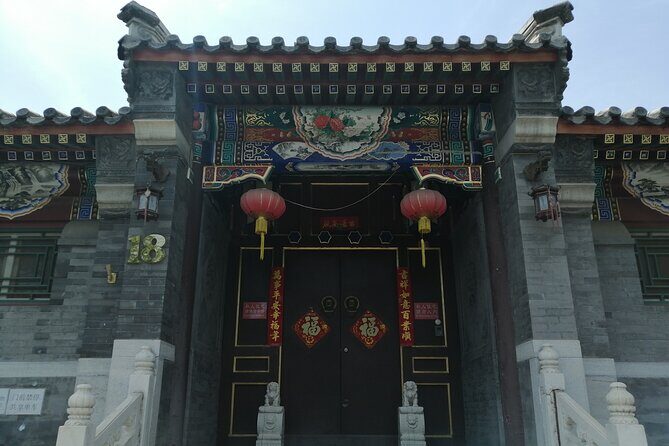
One of the most memorable stops is the Empress’s Mansion, also described as the former residence connected to Puyi’s empress, Wanrong. This is the tour’s sharpest link to the last emperor of China.
I like this stop because it gives you a modern-history thread without turning the tour into a lecture. You get a clear storyline—who Wanrong was, and why Puyi’s era still echoes through Beijing’s real places. That connection works especially well if you’ve seen photos or read basics about Puyi and want to ground it in geography.
It’s also a practical break. You’ll have a moment for photos and to reset before continuing deeper through the lane network. If you’re traveling with your camera (phone included), this is a spot to slow down and frame carefully, because the architecture’s layout can easily turn your photo into a cluttered wall—aim for a view that shows the entrance or the courtyard edge rather than trying to capture everything at once.
Qianhai and Houhai: Narrow Channels and a Different Kind of Beijing
Later, you move toward a narrow channel joining Qianhai Lake and Houhai Lake. This part of the walk shifts the feel from lane-tight to open-air. Even the sound changes: less tight corridor echo, more water-adjacent air.
The guide’s storytelling here helps you understand that the lakes aren’t just scenery. They’re part of the city’s structure—where old Beijing’s geography shaped daily life and neighborhood identity. That’s a big value add if you’ve mostly been in big central attractions and want a calmer counterpoint.
This ending zone is also a good way to end a hutong walk. The lanes can feel like a puzzle while you’re inside them. A water-area finish gives you relief and makes the day feel complete, like you returned to the city’s broader shape.
Price, Pace, and Group Size: Is It Good Value at $30?
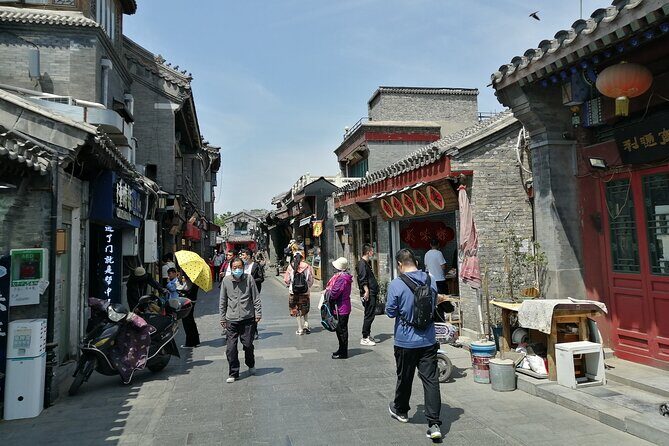
At $30 per person, this tour is priced for accessibility without feeling like a rushed budget hack. The big reason it can feel like good value is that you’re paying for three things at once:
- an English-speaking guide
- a route designed for interpretation (not random wandering)
- small-group attention (max 15)
Time matters too. The tour runs about 1 hour 30 minutes to 2 hours. That’s short enough to fit into a packed Beijing day, especially your first full day when everything is overwhelming. And it’s long enough that you’re not just touching hutongs for a quick taste—you get real street rhythm.
Also, a mobile ticket and nearby public transportation help keep friction low. Those details don’t sound exciting, but they prevent the most common travel frustration: spending your morning stuck figuring out where to stand.
If you’re the kind of traveler who likes self-guided walking, you can still do hutongs on your own. But you’ll likely miss the connections the guide makes—time-keeping, named spots, and the specific historical thread tied to places like the Empress’s Mansion.
Who This Hutong Walk Suits Best (and Who Should Consider Another Option)
This tour fits you if:
- you want history in everyday spaces, not just in grand buildings
- you appreciate an English-speaking guide who explains as you go
- you like a relaxed pace with time to look and ask questions
- you’re starting Beijing and want a guided way to get oriented
It might feel less perfect if:
- you want a long, in-depth museum-style visit
- you’re trying to pack in heavy sightseeing right after, with zero buffer for walking
- you strongly prefer interior entry at multiple paid attractions (since admission tickets are noted as not included)
The sweet spot is travelers who want an authentic slice of downtown Beijing—lanes, courtyard edges, and local story context—without spending your whole day lost.
Practical Tips So Your Day Stays Easy
These are small choices that make a big difference on hutong days.
Wear comfortable shoes. Hutongs are narrow and uneven in places, and you’ll be walking more than it looks like from a map.
Go to the meetup with a little buffer. The tour depends on finding each other near the Nanluoguxiang metro exit E area. Being a few minutes early beats stress.
Charge your phone. Mobile ticket means your battery is part of your logistics.
Bring a water bottle and light layers. You’re outdoors for a good chunk of time, and the weather can shift during a morning walk.
And one more mindset tip: treat the tour like orientation. Even after it ends, you’ll recognize lanes and street patterns better, so your future self-guided wandering feels less random.
Should You Book the Beijing Hutongs Walking Tour?
I’d book it if you’re looking for a first-day or mid-trip reset—an easy, story-led walk through hutong architecture and street history that doesn’t require detective-level navigation. The guide format, the small-group size, and the focus on courtyard homes and named locations make it a strong way to understand Beijing as a lived-in city, not only a postcard capital.
Just be realistic: you’re walking lanes, not doing a long indoor crawl. If you’re okay with that trade-off, this is a smart value buy at $30—especially because the tour is built around making you see what’s in front of you, not just moving you from landmark to landmark.
FAQ
How long is the Beijing Hutongs Walking Tour?
It runs about 1 hour 30 minutes to 2 hours.
What does the tour cost?
The price is $30.00 per person.
Where do I meet the guide?
You meet near Nanluoguxiang metro station exit E, with options using metro Line 8 or Line 6.
What time does the tour start?
The start time is 10:00 am.
Where does the tour end?
The tour finishes in the Drum Tower area near Houhai (Xicheng District).
Is the ticket mobile?
Yes, it uses a mobile ticket.
Is the guide provided in English?
Yes, the tour includes an English-speaking guide.
Are admission tickets included?
No. Admission tickets are not included.
How big is the group?
The group size has a maximum of 15 travelers.
Can I get a refund if I cancel?
Yes, cancellation is free if you cancel up to 24 hours in advance for a full refund.