REVIEW · BEIJING
Beijing Private Hutong Food Walking Tour
Book on Viator →Operated by Discover Beijing Tours · Bookable on Viator
Food in hutong lanes beats normal sightseeing. On this Beijing Private Hutong Food Walking Tour, you get a guided walk through older neighborhoods where daily life still drives the rhythm of the streets. The focus stays on real local eating, plus the courtyard-and-lane feel that most first-time visits miss.
What I like most is the sheer variety: expect 20+ tastings across small eateries and markets. I also like that you’re not just eating in random spots. You actually get to meet local shop owners and learn how people approach Chinese eating customs from inside the neighborhood.
One heads-up: you will encounter adventurous bites. If offal or unusual textures turn you off, tell your guide upfront so they can steer you to a safer mix.
In This Review
- Key Highlights to Know Before You Go
- Where the Tour Really Takes You: Hutongs Instead of the Usual Loop
- Stop 1: Dongsi Hutong and the Joy of Slower Streets
- Stop 2: LongFuSi Jie, Markets, Bakeries, and the 20+ Tastings
- What You’ll Actually Taste (And How Adventurous It Can Get)
- How the Private Guide Changes Everything
- Price and Value: Why $82 Can Make Sense Here
- Timing, Getting Ready, and How to Make It Enjoyable
- Who Should Book This Hutong Food Tour
- The Short Version: Should You Book It?
- FAQ
- How long is the Beijing Private Hutong Food Walking Tour?
- What is the price per person?
- How much food will I sample?
- Is a vegetarian option available?
- Is pickup or transfer included?
- Can I get a full refund if I cancel?
Key Highlights to Know Before You Go
- Dongsi Hutong street time for older-beijing architecture and everyday alley life (not just a photo stop)
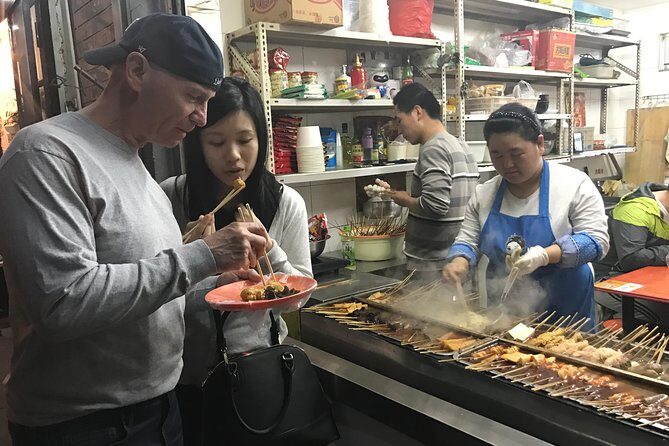
- LongFuSi Jie food run with a mix of markets, shops, bakeries, and restaurants
- 20+ tastings so you can sample lots of flavors without ordering a full meal each time
- Private guiding with real flexibility for walking pace and dietary needs
- Meet-the-owner moments that turn snacks into local context
- Come hungry energy because you’ll likely leave very full
Where the Tour Really Takes You: Hutongs Instead of the Usual Loop
Beijing’s hutongs are the city’s old-world neighborhoods: narrow lanes, courtyard homes, and small businesses that serve the people who live right there. This tour is designed to get you into that daily flow. You’re not stuck on the most crowded, easiest-to-reach walking routes.
The biggest win is pacing. You’re walking between food stops, so the neighborhood isn’t just scenery. It’s part of the experience. In the middle of the lanes, you get a better sense of how people live alongside the food economy: who sells what, when shops are busy, and why certain snacks are treated like regulars’ favorites.
You’ll also get historic context. The tour connects what you see in the hutong streets to what you’re eating and how locals think about flavor, portioning, and sharing.
You can also read our reviews of more walking tours in Beijing

Stop 1: Dongsi Hutong and the Joy of Slower Streets
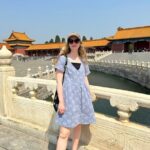
You start in Dongsi Hutong, and that matters. This is where the hutong style feels most “you’re walking in a real neighborhood,” not “you’re being delivered to a list of attractions.” The streets here are built for foot traffic, not bus tours, and the slower pace lets you notice details you’d normally miss.
This stop is about setting the stage. You’ll learn how the area fits into Beijing’s older architecture and how neighborhood life shapes what ends up on tables nearby. It’s not only visual either. The guide ties in food customs as you move through the lanes, so the tour starts thinking like a local: where food comes from, what it’s for, and how you’re meant to eat it.
A practical tip I picked up from how guides run this: don’t expect everything to be in English. Some menus and ordering situations are unfamiliar on purpose. That’s exactly why having your guide matters—especially when you want the right dish without guesswork.
Stop 2: LongFuSi Jie, Markets, Bakeries, and the 20+ Tastings
Then you shift to LongFuSi Jie, where the food volume increases fast. This is the portion built around sampling: more than 20 different tastings at small spots like markets, shops, bakeries, and restaurants.
What makes this stop special is the variety of settings. You might eat something at a stall-like counter, then step into a bakery environment, then sit down for a dish served like a neighborhood meal. The mix keeps you from getting stuck in one style of food or one cooking method.
You’ll also get chances to meet people behind the counters. That owner interaction is one of the most memorable parts of this tour type. It turns your tasting from a checklist into a story: why that item is popular, what locals associate it with, and how Chinese culinary habits show up in everyday life.
And yes, you’ll walk. A lot. The tour is built around moving between tastings so you can keep your appetite and your curiosity going.
What You’ll Actually Taste (And How Adventurous It Can Get)
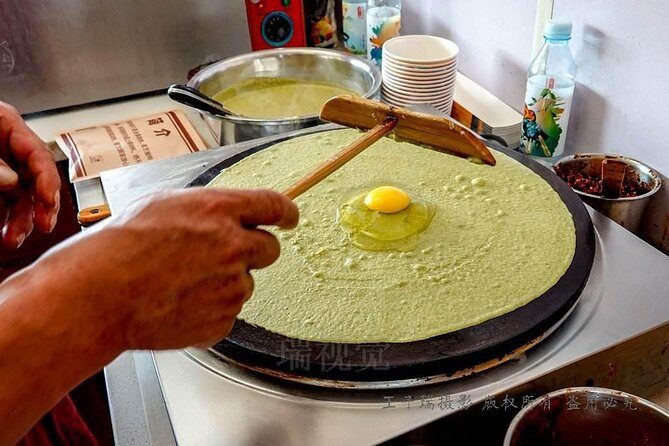
This isn’t a tour where you politely sip tea and nibble one sweet snack. You’re set up for a true sampler.
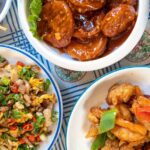
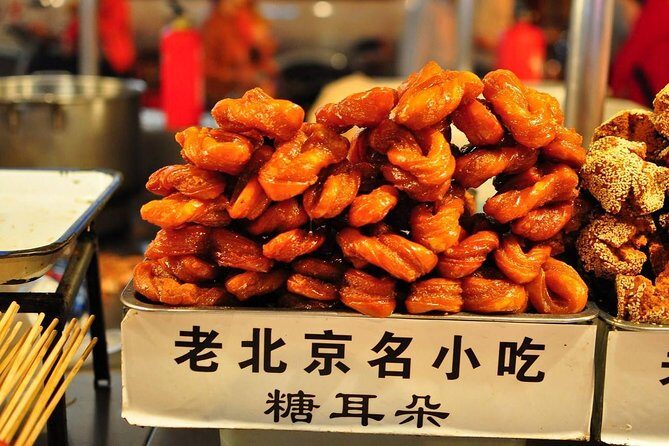
From the dishes and styles I saw guides route people toward, you can expect some of these types of foods:
- Jian bing (the classic savory street crepe)
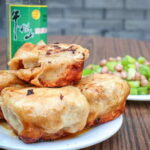
- dumplings and wonton-style bites
- DIY hot soup bowl moments where you assemble or customize as part of the experience
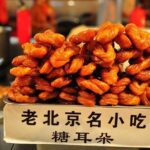
- sweet sesame treats
- crepe-style sandwiches that feel like a street-food fusion
- Douzhi (a quintessential Beijing item mentioned as a must-try)
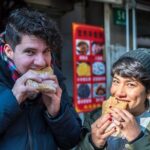
- donkey burgers (often described as a handheld, street snack)
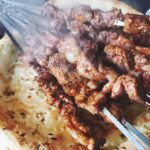
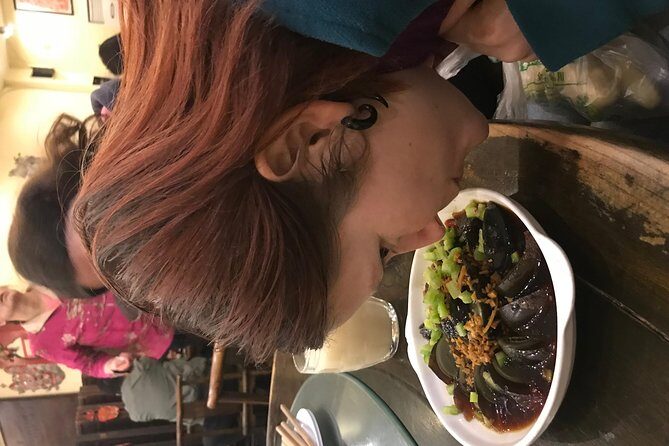
- and yes, more adventurous items like pig intestine can show up
The key detail: your guide can adapt. People talk about guides checking preferences on the fly and using a plan B if you’d rather skip certain textures or ingredients. If you have restrictions—like diabetes-related needs, vegetarian preferences, or allergies—tell the guide before you start. The tour explicitly supports vegetarian options when requested.
How the Private Guide Changes Everything
This tour is private, meaning your group moves at your pace. That sounds like marketing until you see how it affects the whole experience.
First, pacing. One of the most repeated themes with guides is adjusting the walking pace and slowing down when needed. That matters because the tour lasts about 4 hours and you’ll be eating constantly. If you’re a slower walker, the experience can still feel comfortable instead of frantic.
Second, customization for food needs. Vegetarian options are available if you ask ahead. People also mention guides paying close attention to diabetic restrictions and improvising when something wasn’t communicated correctly. Translation: the tour’s real value is that it’s responsive, not rigid.
Third, practical help beyond food. Some guides are also helpful with logistics so you don’t feel stranded in the city. Examples include helping with ride-share setup and showing how to handle subway navigation for smoother movement later.
Guides I saw named include Allen, Jay, Miko, Mike, May, Lucy, Anson, Kassie, Kevin, and Cassie. You can’t count on a specific person, but it’s a good sign that the tour attracts guides who can handle both food talk and the small travel details.
You can also read our reviews of more food & drink experiences in Beijing

Price and Value: Why $82 Can Make Sense Here
At $82 per person for a roughly 4-hour private tour, you’re paying for three things at once:
1) a guide who knows which places work well for tastings,
2) the food itself (the tour includes bottled water and 20+ tastings), and
3) time in areas that are harder to explore efficiently on your own.
The value improves because the tour isn’t just “eat at one restaurant and leave.” It’s designed around multiple stops and a broad sampling. If you were to recreate this day solo, you’d spend time figuring out what’s good, what’s safe for your preferences, and where you can reliably order something without language headaches.
Also note: the tour includes private transfer only if you choose that option. If you skip transfer, you’ll handle transportation costs yourself. For many people, the tour’s total convenience still makes it a strong first-day activity in Beijing—especially if you want an eating plan while you’re getting your bearings.
Timing, Getting Ready, and How to Make It Enjoyable
Because you’re on your feet for about 4 hours with constant tasting, you should plan like this is your main food activity. The best strategy is simple: don’t show up stuffed from a big meal. Leave room for savory, sweet, and “okay I didn’t expect that” flavors.
Wear comfortable shoes. The hutong lanes are walkable, but they’re narrow and not built for speed. Bring a light layer too; your comfort matters when you’re out for hours.
If you’re sensitive to unfamiliar ingredients, treat this as a conversation, not a gamble. Tell your guide what you want to avoid and ask what they recommend instead. The tour is set up for that kind of control, especially with vegetarian requests and dietary restrictions.
Who Should Book This Hutong Food Tour
This is a great fit if you:
- want a first-day Beijing activity that teaches you where the local flavors live
- love food variety and don’t mind tasting things you wouldn’t order alone
- want neighborhood context, not just landmark photos
- appreciate a private guide who can adjust pacing and choices
It may be a less ideal fit if you:
- dislike offal or unusual textures and don’t feel comfortable speaking up in advance
- need a very strict diet where even small cross-contact risks are a concern (still discuss it, but plan carefully)
The Short Version: Should You Book It?
I think you should book this if your priority is a real Beijing food day inside hutong neighborhoods—with enough variety that you can discover what you want to seek out later on your trip. The $82 price lands as fair value because you’re not just buying a guide. You’re getting 20+ tastings, bottled water, and a street-level view of how people actually eat.
If you’re unsure about adventurous items, book it with one simple rule: message your dietary preferences early, then let your guide steer the menu. Done right, you’ll come away full, informed, and with a much clearer sense of how Beijing tastes beyond the tourist stops.
FAQ
How long is the Beijing Private Hutong Food Walking Tour?
It’s about 4 hours.
What is the price per person?
The price is $82.00 per person.
How much food will I sample?
The tour includes 20+ different food tastings, plus bottled water.
Is a vegetarian option available?
Yes. A vegetarian option is available, and you should request it when booking.
Is pickup or transfer included?
Pickup is offered. A private transfer is included only if you select that option.
Can I get a full refund if I cancel?
Free cancellation is available up to 24 hours in advance for a full refund. If you cancel within 24 hours, the amount paid is not refunded.