REVIEW · CHONGQING
Chongqing: Guided City Tour with Lunch & Entry Tickets
Book on GetYourGuide →Operated by Chongqing jinyue international agency · Bookable on GetYourGuide
Chongqing is built vertically, so your day moves fast. This guided tour strings together classic sights and modern city life, from the Qing-era Kuixing Tower skybridge to the Liziba Light Rail Station that runs through everyday buildings. I like how the route balances history with practical, on-the-ground scenes you can’t easily recreate on your own, and I also like that you get an English guide who can steer you through the details. One thing to keep in mind: it’s a walking day with public transit, so comfortable shoes really matter.
What makes this experience worth your time is that you see the city from multiple angles. You’ll start at Jiefangbei, then shift from river panoramas and temples to a century-old riverside street, and finally end in a futuristic landmark area with sweeping night views. The Kuixing Tower skybridge views over the Jialing River and the Liziba station’s unusual daily commute are the kind of contrast that turns photos into real memories.
The only likely downside is pacing. Even with rest stops built into the day, expect a steady mix of walking and short rides, plus some areas involve stairs and uneven urban terrain. If you’re not into long days on your feet, plan for slower movement and bring water and a light layer.
In This Review
- Key takeaways before you go
- Entering the day at Jiefangbei: your Chongqing orientation
- Kuixing Tower and the suspended skybridge over the Jialing River
- Liziba Light Rail Station: when daily commuting becomes the attraction
- Guanyue Temple at Fotuguan Park: Ming-era Taoist calm
- Huguang Guild Hall and the story of filling Sichuan
- Longmenhao in Xiahaoli: a riverside walk with Bayu stilt houses
- Raffles Place Crystal Corridor and the 270-degree night view
- What the $88 covers and where the day’s value comes from
- Comfort, walking pace, and practical tips that make it better
- Should you book this Chongqing guided tour?
- FAQ
- FAQ
- Where is the meeting point?
- Does the tour include lunch?
- What does the $88 per person price include?
- Is an English guide available?
- Do I need to pay for Huguang Guild Hall?
- What kind of transportation does the tour use?
- How much walking is involved?
- What sights are the highlights during the day?
- Can I bring alcohol?
- Can I keep my plans flexible with booking?
Key takeaways before you go
- Jiefangbei to Raffles Place flow: a smart arc that links old-and-new Chongqing in one day
- Kuixing Tower skybridge: 22-story suspended views over the Jialing River
- Liziba Light Rail Station: a working commuter scene that feels like city theatre
- Guanyue Temple in Fotuguan Park: Ming-era Taoist atmosphere tied to Guan Yu and Yue Fei
- Huguang Guild Hall: the largest extant ancient guild hall complex plus detailed theatre carvings
Entering the day at Jiefangbei: your Chongqing orientation
Your tour starts at People’s Monument of Jiefangbei, where the guide meets you and brings the marker. This matters because Chongqing can feel confusing at first: hills, river bends, and layered neighborhoods. Starting at a central reference point helps you get your bearings fast, so the rest of the day feels organized rather than chaotic.
From there, you’ll be moving on foot, with public transport used as needed based on timing and traffic. You’re also not just sightseeing—you’re getting placed into the city’s logic: rivers on one side, steep slopes on the other, and streets that keep changing elevation like they’re improvising.
A nice perk is that the tour is designed for practical learning, not just picture-taking. In guide feedback, people specifically praised how Cheryl adapted the walk to preferences and helped with photo locations—exactly the kind of help that’s hard to replicate if you’re solo.
A few more Chongqing tours and experiences worth a look
Kuixing Tower and the suspended skybridge over the Jialing River
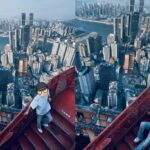
The Kuixing Tower is built during the Qing Dynasty, and it’s the first big “wow” moment for many people. What you’re really going for is the 22-story suspended skybridge spanning two high-rise buildings. It’s not a museum stop where you read plaques for an hour. It’s a live viewpoint.
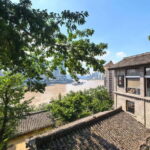
From the bridge, you get views of the Jialing River plus the city streetscape winding around it. In Chongqing, the river isn’t just scenery—it’s part of how the city breathes. Seeing the river from above helps you understand why so many neighborhoods feel stacked and why the same city can look completely different from different levels.
Practical tip: if you’re serious about photos, arrive ready to pause and reposition. On a bridge, small steps change your angle, and the best light shifts quickly. Also note that bridges and higher viewing points can feel warm and exposed in the daytime, so bring a hat or something to block sun if you travel in hot months.
Liziba Light Rail Station: when daily commuting becomes the attraction
Next comes Liziba Light Rail Station, famous for a simple reason: trains run through the urban block in a way that surprises you even after you’ve seen photos. The station operates like a normal commuter stop, with trains shuttling between residential buildings every day, but it looks almost staged because of how close everything sits to the track.
This stop is one of the best examples of what makes Chongqing feel like an “8D” city. The depth comes from context: you’re not just watching architecture. You’re watching how people live with infrastructure. The station turns a routine ride into a city sculpture—except it moves, continuously.
If you’re photo-inclined, this is the moment where having an English-speaking guide helps. A good guide can tell you what to watch for and when trains typically pass so you’re not just standing there guessing. Based on feedback about photo planning and timing, this is a tour strength.
Guanyue Temple at Fotuguan Park: Ming-era Taoist calm
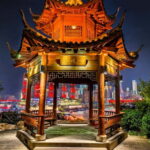
After the rail excitement, the tour shifts toward quieter and more spiritual space at Guanyue Temple, located within Fotuguan Park. This is a Taoist shrine built during the Ming Dynasty, dedicated to Guan Yu and Yue Fei. Those names matter because they connect Chongqing’s religious sites to wider Chinese cultural history, not just local geography.
What you’ll notice once you’re inside is the solemn layout and the decorative detail. The temple has exquisite colored sculptures and ancient trees that make the whole place feel older than the surrounding city. It’s the kind of stop where you can slow down—good if you’ve been walking and want to reset your pace.
This is also a good reminder of how “modern Chongqing” and “traditional Chongqing” aren’t separate chapters. They sit side by side. One street you’re watching a train glide past windows; the next, you’re standing under old trees with carved detail.
What to watch for: allow a bit of time to look up and around. Temple architecture rewards paying attention to more than one direction, especially when you’re navigating around courtyards and trees.
Huguang Guild Hall and the story of filling Sichuan
The tour then heads to Huguang Guild Hall, described as the largest extant ancient guild hall complex. Its bright yellow exterior walls built against the mountain create a dramatic backdrop, especially under daylight when the surfaces look crisp and the setting rises behind it.
Inside, don’t rush the theatre spaces. The Yuwang Palace Theater is known for intricate carvings, and this is the kind of craftsmanship that reads better when you’re not sprinting from one stop to the next. The guide context helps here, because the carvings and layout start making sense when you understand what the complex represented.
Another meaningful stop within this area is the connection to the immigration story: the Immigration Museum explains the history of “filling Sichuan.” That phrase matters because it frames why Chongqing and Sichuan developed the way they did—how people moved in, how communities formed, and how guild halls functioned as civic and cultural anchors.
Value note: Huguang Guild Hall tickets are included, which saves you the small hassle of figuring out entry details on the day. Combined with an English guide and the built-in context, this part is one of the best “bang for your time.”
You can also read our reviews of more guided tours in Chongqing
Longmenhao in Xiahaoli: a riverside walk with Bayu stilt houses
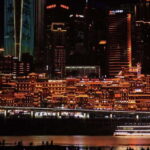
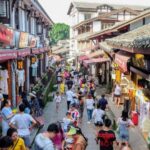
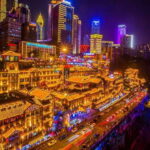
Next you stroll along Longmenhao in Xiahaoli, a century-old street along the south bank of the river. This is one of those Chongqing areas where the city’s layers show up visibly.
You’ll see bluestone steps connecting Bayu stilt houses with older European-style houses. This blend isn’t just aesthetic—it’s part of Chongqing’s story as an interface city shaped by waves of history and foreign influence. The street also includes art spaces and cafes, which makes it a nice decompression stop after more structured temple and heritage sites.
If you enjoy legends and signage that links to places you’re standing on, don’t miss the Longmen Haoyue Stone Carving. It tells the legend of the Twelve Scenic Spots of Bayu. Even if you only catch the gist, it gives the street a mythic map feel—like you’re walking through a story tied to a specific river bend.
A final detail in this section is the Dongshuimen Bridge, where old and new times feel poetically intertwined. It’s the kind of moment where the city’s geometry does the storytelling without needing extra explanation.
Raffles Place Crystal Corridor and the 270-degree night view
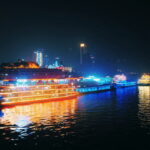
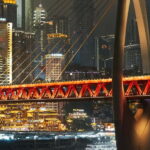
The day ends around Raffles Place, described as a landmark designed by the same designer as Marina Bay Sands in Singapore. The signature feature here is the Crystal Corridor, a 250-meter-high structure that blends shopping, sightseeing, and hotels. It can feel like you’re moving from a traditional riverside street into a ship-like futuristic terminal.
Then you have the viewing deck option: the Discovery Pod Observation Deck offers a 270-degree view of the two rivers and four banks. That’s a big deal in Chongqing because the “two rivers and four banks” idea is basically the city’s visual signature. From up high, the river curves and the stacked neighborhoods click into place.
Night light shows are part of the experience too, and the building’s controversial past has softened over time as it became a recognizable new landmark on the Yuzhong Peninsula. If you’re staying for evening, this is a natural place to do it because you’ll already be positioned near a major concentration of lights and activity.
If you want options after the tour, the plan notes that you can continue with activities like a Raffles High-Altitude Discovery Pod or even a cruise. Since you’re disbanding at Raffles Place, you’re not stuck with one ending.
What the $88 covers and where the day’s value comes from
At $88 per person, this tour prices itself as a day package rather than a single-site ticket. Here’s what’s included:
- Public transportation costs
- One lunch (meal standard depends on the number of people)
- Huguang Guild Hall tickets
- English tour guide service
This is where the value sits. Chongqing is not flat, and it’s easy to lose time figuring out transit and site connections. By bundling public transport and a guide, you spend less energy on logistics and more on moving efficiently between sights.
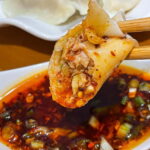
Lunch gets a special mention in guide feedback. One person described the arranged meal as a fantastic local hot pot experience, which is a strong selling point if you like food that’s tied to the region rather than generic set meals.
What’s not included:
- Personal expenses
- Additional meals and drinks
- Entrance fees for attractions not specifically mentioned
So you’ll likely spend some extra money on snacks, water, or any add-on entry fees once you’re in the Raffles area.
Comfort, walking pace, and practical tips that make it better
This tour is mostly designed as a walking day, plus short rides on public transportation when needed. That means you’ll want comfortable shoes you can wear for uneven urban surfaces and stairs.
A few other practical notes based on the tour info:
- The itinerary may be adjusted for weather and other factors.
- English is supported, and Chinese is also available.
- Alcohol and drugs are not allowed.
Based on feedback about Cheryl’s style, I’d also expect a humane pace. People praised her for letting them rest, adapting the day to preferences, and even giving suggestions for what to do after the tour. If you’re traveling with kids, that same feedback also flagged that the experience can work well with adolescents, as long as they’re comfortable with walking.
Should you book this Chongqing guided tour?
Book it if you want a single day that makes Chongqing feel like one coherent story: river views from above, a working rail surprise, Taoist architecture with Ming-era cues, and a guild hall tied to how Sichuan was populated—then ending at a modern landmark with major night views.
Skip or rethink it if you dislike walking and stairs, or if you want a totally flexible schedule with no structured stops. The tour’s strengths come from its planned order, and that means you’ll follow the day’s flow even when you spot a tempting side street.
FAQ
FAQ
Where is the meeting point?
You meet at the People’s Monument of Jiefangbei. The guide will bring the marker.
Does the tour include lunch?
Yes. One lunch is included, and the meal standard depends on the number of people.
What does the $88 per person price include?
It includes transportation costs (public transportation), one lunch, Huguang Guild Hall tickets, and an English tour guide service.
Is an English guide available?
Yes. The tour includes an English tour guide service, and the tour languages are Chinese and English.
Do I need to pay for Huguang Guild Hall?
No. Huguang Guild Hall tickets are included.
What kind of transportation does the tour use?
The tour uses public transportation, along with walking between sites.
How much walking is involved?
This tour requires walking, so comfortable shoes are strongly recommended.
What sights are the highlights during the day?
Key highlights include Jiefangbei, Kuixing Tower and its suspended skybridge, Liziba Light Rail Station, Guanyue Temple, Huguang Guild Hall, the Longmenhao riverside street, and Raffles Place.
Can I bring alcohol?
No. Alcohol and drugs are not allowed on the tour.
Can I keep my plans flexible with booking?
The tour offers reserve and pay later, and you can cancel up to 24 hours in advance for a full refund.