REVIEW · BEIJING
Discover Old Beijing: Hutong Walking Tour & Calligraphy
Book on GetYourGuide →Operated by AUTHENTIC TRAVEL CHINA · Bookable on GetYourGuide
Beijing’s backstreets tell the loudest stories. This 3.5-hour walk strings together Hutongs and downtown sights on foot, with local context that helps it all click. I especially like that you get both famous landmarks and the daily-life lanes that most people only pass through on a bus.
Two things I really like: the chance to visit an authentic courtyard in a still-living neighborhood, and the calligraphy session where you make artwork you can take home. The group also has time for street snacks, plus guide talk that connects old Beijing to what’s changing now.
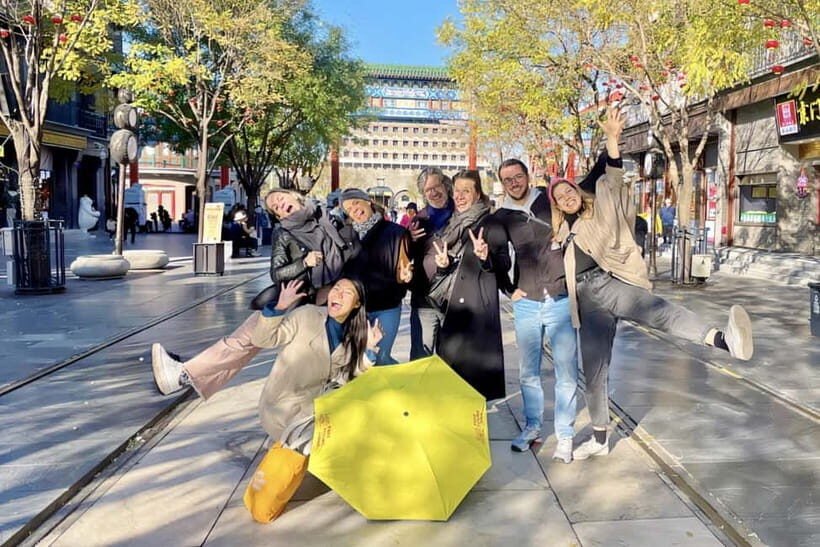
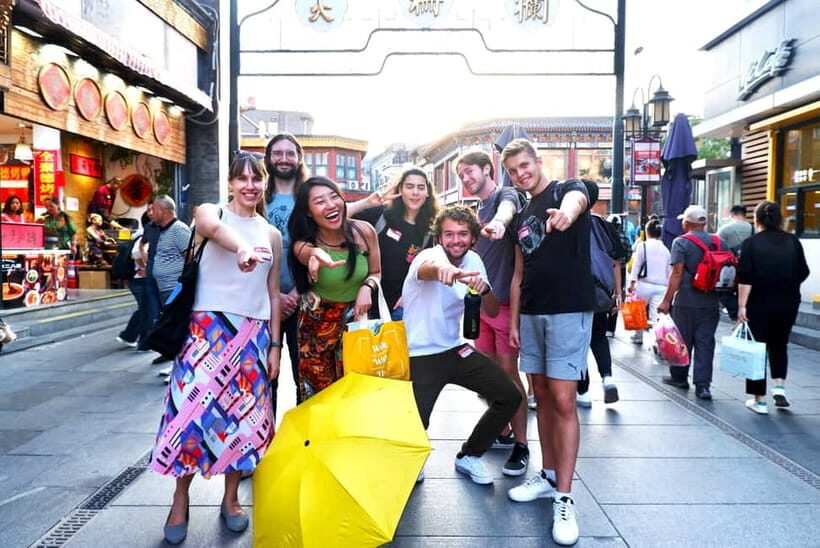
One consideration: the route includes multiple stops and some walking, so you’ll want to be ready for an active afternoon. Also, the meeting point is easiest if you arrive on time and spot the yellow umbrella, since the guide can wait only a bit.
In This Review
- Key things to know before you go
- From Opera Halls to Hutong Lanes: Why This Walk Makes Sense
- Starting at Beijing Huguang Guild Opera Theatre (and finding the group fast)
- Huguang Guild Opera Theatre: a quick cultural warm-up
- Beijing Hutongs: the neighborhood “survival stories” that make it real
- A quiet secret stop and an authentic courtyard visit
- Yangmeizhu Byway: old streets, shops, and how the city markets itself
- Daguanlou Cinema: a birthplace-of-cinema stop with context
- Dashilan residential areas and Qianmen: from lanes to big-street Beijing
- Snack break strategy: how street food keeps the tour friendly
- Calligraphy studio: turning a story into something you can take home
- Price and logistics: is $25 worth it for a 3.5-hour walk?
- Who this tour is best for (and who might skip it)
- Should you book this Hutong walking tour?
- FAQ
- FAQ
- How long is the Discover Old Beijing Hutong Walking Tour?
- What does the tour cost?
- Where is the meeting point?
- How do I get to the meeting point by taxi?
- Is the tour guide English-speaking?
- What happens at the calligraphy stop?
- Can I cancel and get a refund?
- What time should I arrive?
Key things to know before you go
- Real courtyard time: you don’t just look at Hutongs; you visit an actual traditional courtyard space
- Calligraphy you keep: you create Chinese calligraphy artwork and take it home
- Story-first guiding: the walking format mixes landmark facts with local neighborhood tales
- Street-food snack breaks: you’ll stop for local snacks and drinks along the way
- Downtown + backstreet mix: you connect areas like Qianmen and Tiananmen views to the Hutongs
From Opera Halls to Hutong Lanes: Why This Walk Makes Sense
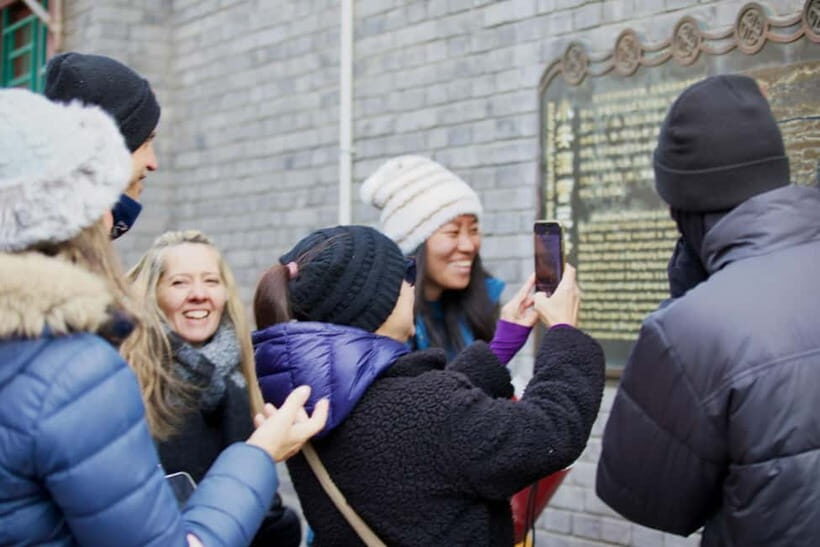
Beijing can feel like two cities at once: grand squares and ceremonial gates on one side, and tight lanes where life still moves at human speed on the other. This tour does a smart job of stitching those worlds together in just 3.5 hours.
I like that it’s not only about checking boxes. The guide’s stories aim to show how people lived in old neighborhoods, including the pressures and changes those areas have faced. If you’re the kind of traveler who likes understanding the why behind the what, you’ll get more out of it.
You’ll also get a steady rhythm: a walk, a stop, a local explanation, and then the next scene. That pacing helps you stay oriented, especially in a huge city where street layouts can surprise you.
You can also read our reviews of more walking tours in Beijing



Starting at Beijing Huguang Guild Opera Theatre (and finding the group fast)
You begin at 北京湖广会馆, a fitting starting point because it connects the neighborhood feel of older Beijing with the city’s cultural layers. Before you move into Hutong streets, you get a guided introduction that sets the stage for what you’re about to see.
For logistics, I’d treat the meeting point instructions as your main map. This tour specifically notes that Google Maps can be unreliable in China, and it gives a written approach that’s usually the safest. Plan to arrive 5–10 minutes early—the station area can be busy, and Metro navigation takes time.
Your key visual cue is the yellow umbrella at the green space near Hufangqiao Metro Station (Line 7), Exit D (South-West Exit). If you follow the written direction—walk to the main road, turn right, then head about 60 meters toward the green space at the intersection—you should find the group without stress.
Huguang Guild Opera Theatre: a quick cultural warm-up
The tour’s first guided stop is at the Huguang Guild Opera Theatre. You’ll get about 30 minutes here, which is long enough to give context without turning your afternoon into a museum visit.
Why it matters: opera houses and guild sites are more than pretty architecture. They reflect how communities organized culture and social life. Starting here helps you understand the later Hutong stories with less guessing.
If you like cultural details, this is where the tour plants useful background. If you’re mainly after the streets and photos, think of this as the orientation moment that makes the rest of the walk more meaningful.
Beijing Hutongs: the neighborhood “survival stories” that make it real
Next comes the heart of the experience: Beijing Hutongs with guiding that focuses on local perspective. Expect another 30-minute walk-and-explain segment, where you’ll hear how people once lived here, what daily life looked like, and how the area has changed over time.
This is the part I’d call the value driver. A Hutong tour can easily become a photo parade. Here, the guide’s stories aim to show what it was like to live through neighborhood transitions—so the lanes stop being just scenery and start feeling like a place with lived-in logic.
Also, you’ll likely see variety in the Hutong texture: narrow lanes, turning corners, street-level activity, and the contrast between quiet residential stretches and nearby commerce.
A quiet secret stop and an authentic courtyard visit
After the first Hutong section, you’ll have a secret stop for about 20 minutes. Then comes a special visit to an authentic Hutong courtyard—the kind of place many visitors only see from the outside.
This courtyard time is one of the most praised parts of the tour’s concept, because it changes the experience from observation to access. A courtyard is where family life and neighborhood relationships played out, and you get to see that layout firsthand.
What to watch for: courtyards can feel surprisingly intimate once you’re inside them. You’ll probably want to slow down for photos, but also listen—courtyard explanations often reveal how space shaped daily routines.





Yangmeizhu Byway: old streets, shops, and how the city markets itself
The walk then heads toward Yangmeizhu Byway, another 30-minute guided segment. You’ll also hear about an antique shopping street along the way, which fits the theme of older commercial patterns.
This is a good stop for two reasons:
1) It helps you understand how street life and commerce work at the human scale.
2) It gives you something active to do while you’re listening—browse a little, notice details, and compare what you see to the earlier courtyard life.
If you like street design—signs, doorways, and the way vendors set up—this is the segment where you’ll start seeing Beijing as a system, not just a skyline.
Daguanlou Cinema: a birthplace-of-cinema stop with context
Then you’ll reach Daguanlou Cinema for about 20 minutes. The tour frames this as connected to the birthplace of Chinese cinema, which turns a simple building stop into a story about culture and media.
Why cinema fits the Hutong theme: entertainment spreads ideas faster than neighborhood gossip. So when you connect a historic cinema site to residential lanes, you get a more complete picture of how culture moved through Beijing.
This is also a short stop, which is helpful. By the time you reach it, you’ve already been walking and learning—so a brief, focused explanation keeps your energy up.
Dashilan residential areas and Qianmen: from lanes to big-street Beijing
Next you’ll spend about 30 minutes in the Dashilan residential district. This part helps balance the day: earlier you were in lanes that feel close and local; now you see a broader neighborhood pattern with more street activity and variety.
Then you’ll transition to Qianmen Street with about 40 minutes of guided time. Qianmen is one of those areas where Beijing starts shouting its identity: big pedestrian stretch, lots happening, and major connections to the city’s older central core.
The tour also includes sights connected to city defenses and gates, such as Zhengyang Gate and the Arrow Tower, plus a view from outside of Tiananmen Square. You won’t be “inside” the big ceremony zones for long, but you’ll understand where they fit and how the old city’s power center relates to what you’re seeing in the Hutongs.
Practical tip: if you want photos, Qianmen and the gate-view areas are your best bet for wide shots. For close-up textures, the Hutongs and courtyard segments win.
Snack break strategy: how street food keeps the tour friendly
I like that the tour builds in snack breaks with local street food and drinks. You’re out walking for 3.5 hours, so food stops aren’t just tasty—they help you stay relaxed and attentive.
Even if you don’t know what you’ll eat, the structure makes it easier. Your guide handles timing so the tour doesn’t drag, and you’re not searching while everyone else moves on.
Also, you’ll get welcome gifts and a China survival guide. The details aren’t listed here, but the idea is clear: practical help that makes your Beijing time smoother.
Calligraphy studio: turning a story into something you can take home
The calligraphy experience is the standout “do something with your hands” moment. You create your own Chinese calligraphy artwork and take it home for free, which makes this tour feel less like a lecture and more like a personal souvenir.
If you’ve ever bought a postcard because you ran out of time to do something meaningful, you’ll appreciate this. Writing characters forces you to slow down and notice stroke order and rhythm, even if you’re not an expert.
This is also a great segment for group energy. It gives everyone a shared activity, and that makes it easier to meet fellow travelers and talk while you work.
Price and logistics: is $25 worth it for a 3.5-hour walk?
At $25 per person for about 3.5 hours, the math is mostly about value-per-hour and whether the tour style matches your expectations.
One review noted a mismatch for someone who felt the experience should have been tip-based like a free walking tour. That’s the one caution I’d share: if you hate paying a fixed platform price for what feels like a guide-led tip culture, double-check the cost setup before you book.
That said, the tour has clear components that justify paying something:
- a local English-speaking guide throughout
- multiple guided stops around central Beijing and Hutongs
- a courtyard access experience
- a calligraphy keepsake
- snack breaks
- welcome gifts and a survival guide
If you’re choosing between “only landmarks” and “landmarks plus real neighborhood life plus an activity,” this option usually wins for first-timers who want an efficient day.
Who this tour is best for (and who might skip it)
This is a great fit if:
- you want Old Beijing without needing to arrange access yourself
- you like history told by locals, not just dates on plaques
- you want to mix Hutongs with big-city sights in one afternoon
- you value a hands-on souvenir like calligraphy
You might consider another option if:
- you expect a more theatrical, high-energy show-style tour
- you’re sensitive to the idea of paying for what you believe should be tips-only
Either way, arriving on time matters. The tour guide can wait up to 20 minutes at the meeting point for the opening, but late arrivals can break your day.
Should you book this Hutong walking tour?
If you want a Beijing day that feels human—lanes, courtyard space, street snacks, and a calligraphy keepsake—this tour is an easy yes. It’s also a strong choice for first-time visitors because it connects famous sights (like Qianmen and a Tiananmen Square exterior view) to the neighborhoods that shaped daily Beijing life.
I’d book it if you enjoy learning from story-driven local guidance and want a walk that ends with something you made yourself. If you’re only interested in skipping straight to the biggest monuments with minimal walking, you’ll probably find this tour more rewarding than you expected—or too much, depending on your pace.
FAQ
FAQ
How long is the Discover Old Beijing Hutong Walking Tour?
It lasts about 3.5 hours.
What does the tour cost?
The price is listed as $25 per person.
Where is the meeting point?
The meeting point is Hufangqiao Metro Station (Line 7), Exit D, at the green space by the intersection. The instructions also mention looking for the yellow umbrella.
How do I get to the meeting point by taxi?
The provided taxi address is the corner of Hufang Road and Luomashi Avenue, at Huguang Guild Opera Theatre.
Is the tour guide English-speaking?
Yes. The tour is listed as an English live tour guide.
What happens at the calligraphy stop?
You’ll visit a calligraphy studio, create your own Chinese calligraphy artwork, and take it home as a keepsake.
Can I cancel and get a refund?
Yes. Free cancellation is available up to 24 hours in advance for a full refund.
What time should I arrive?
Plan to arrive 5–10 minutes early, since the guide can wait up to 20 minutes at the meeting point but can’t delay the tour for late arrivals.