REVIEW · HONG KONG SAR
Hong Kong Geopark Kayaking Adventure
Book on Viator →Operated by Rory Mackay · Bookable on Viator
Sea caves, without the crowds.
This day kayaking trip sends you from Hang Hau out to Hong Kong Global Geopark, where you paddle past sea arches and caves from the calm, sandy start at Pak Lap Wan Beach. I love how it’s run as a true small-group outing (the trip is limited to 15) and I love that you get a professional guide who keeps the route feeling safe and fun, with past groups praising guides like Geoffrey as particularly engaging.
The main consideration is simple: it’s weather-led. It runs in most conditions, but if conditions are poor you may switch dates or get a refund, and you’ll want to dress for a long, wet-on-the-water day.
In This Review
- Key Takeaways Before You Go
- Why Kayak the Hong Kong Global Geopark From Pak Lap Wan Beach
- Getting to Sai Kung Country Park Is Straightforward (Hang Hau → Water)
- From White Sand to Sea Level: What Your Kayak Start Feels Like
- Paddling Through Sea Arches and Caves (The Geopark Part You Came For)
- Long Ke Wan Beach Break: A Real Pause in the Middle of Kayaking
- Group Size, Pace, and Who This Trip Suits Best
- Price and Value: Why $142 Makes Sense for a Full-Day Geopark Paddle
- Weather Rules You Can Actually Plan Around (And What to Wear)
- What the Guide Adds (It’s Not Just a Route Map)
- FAQ
- What’s the meeting point for the kayaking trip?
- How long is the Hong Kong Global Geopark kayaking experience?
- What’s included in the price?
- Is food included?
- Do I need to be a strong swimmer?
- What happens if the weather is poor?
- Should You Book This Hong Kong Geopark Kayaking Adventure?
Key Takeaways Before You Go
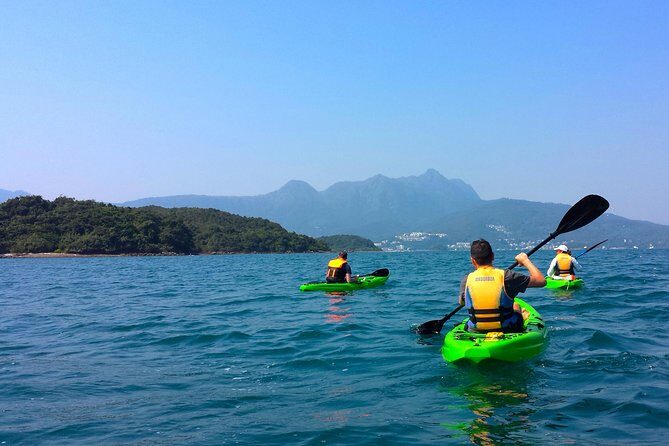
- Pak Lap Wan Beach launch: You start right on white sand, with your kayak and life jacket waiting for you.
- Geopark scenery by paddle: Expect dramatic sea arches and caves from the Sai Kung Volcanic Rock Region.
- Long Ke Wan Beach break: A mid-day pause on one of Hong Kong’s best-known beaches.
- Small-group feel: Limited to 15 people for an attentive, not-chaotic experience.
- Transfers included: Round-trip shared transport takes you from Hang Hau to the Sai Kung area and back.
Why Kayak the Hong Kong Global Geopark From Pak Lap Wan Beach
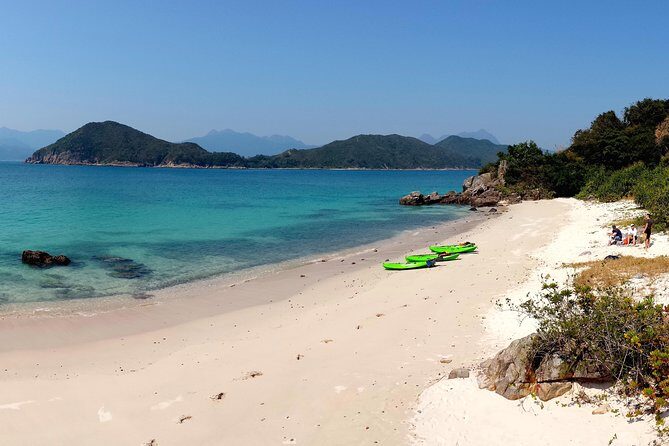
If you’ve ever wished Hong Kong scenery came with a paddle stroke and a seat right on the water, this is the fix. The Hong Kong Global Geopark is made up of the Sai Kung Volcanic Rock Region, and that matters because the coast is shaped into rock features you can actually reach up close while you’re moving at kayak speed.
I like that the route focuses on rock formations you’d miss from land. Instead of looking up at cliffs from a viewpoint, you’re at water level, threading through the same kinds of sea passages the coastline formed. The trip starts at Pak Lap Wan Beach, so your day begins with an easy, sandy rhythm: gear on, life jacket fitted, then out you go.
Also, it’s a good day to escape the heat and traffic energy of central areas. You meet at Hang Hau MTR Station around 9am, then the day shifts toward sea air and open water. The whole structure is built for a “small adventure” day without the logistical stress.
One more plus: you’re not just “on a boat.” You’re actively kayaking. That changes the vibe. You can slow down when the guide points out a sea cave opening or a rock arch, and you can reposition your kayak to get a closer look as long as conditions and the group allow.
You can also read our reviews of more tours and experiences in Hong Kong SAR.

Getting to Sai Kung Country Park Is Straightforward (Hang Hau → Water)
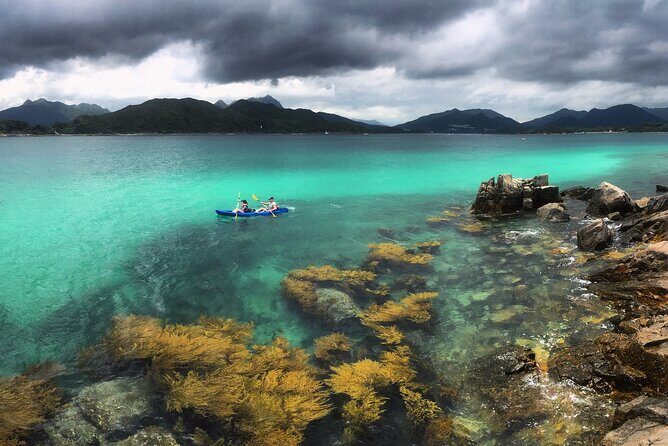
The meeting point is Hang Hau MTR Station (Tseung Kwan O), starting around 9:00am. From there, you follow the group and guide to the next stage of the trip: a short ride toward Sai Kung, then a transfer that gets you into the country-park area near the beaches.
In practice, this saves you a lot of planning. You don’t need to figure out how to get a kayak-friendly route on public transport. The tour includes round-trip shared transfer, and that’s a key part of the value for a full-day activity like this.
You’ll move from Hang Hau to the Sai Kung side by ferry pier connection, then take about a 20-minute ride onward by minibus or taxi to Sai Kung Country Park. It’s not a long slog. The plan is to get you to Pak Lap Wan Beach early enough to start paddling comfortably and still have time for the mid-day beach break.
The day ends back at the meeting point, so you’re not hunting for your own way home after you’ve worked up a sweat and maybe gotten damp.
From White Sand to Sea Level: What Your Kayak Start Feels Like
Once you reach Pak Lap Wan Beach, your kayak and equipment are ready. This is one of those details that sounds small, but it affects the whole mood. There’s no scramble to find gear or figure out how the launch area works. You get your life jacket, get the basics of kayaking instruction from your guide, and then you start paddling out from the sand.
Expect a guided route right from the start. Your guide leads you through the geopark waters, and the instruction tone matters here. A previous group praised guide Geoffrey for being engaging and for keeping the day fun even when weather shifted with summer showers. That kind of leadership is exactly what helps kayaking feel smooth for a first-timer or anyone who’s returning after a long break.
You’ll also feel the transition quickly. The beach is calm and controlled; then you’re out on open water where you need to steer, hold a steady pace, and keep an eye on rock shapes ahead. The good news is you’re not thrown into solo navigation. The group stays together, and the guide handles the “where do we go next” part so you can focus on paddling.
One practical note: food isn’t included. That doesn’t mean the day is exhausting, but it does mean you should plan for your own snacks or lunch. The tour provides the sea time and the scenery; you’re responsible for your energy between paddling blocks.
Paddling Through Sea Arches and Caves (The Geopark Part You Came For)
This is the heart of the experience: paddling through a coastline shaped by volcanic rock. The Hong Kong Global Geopark section you’ll work through is known for dramatic formations, and you’ll see them close up while you maneuver around and through the areas the guide brings you to.
Expect sea arches and caves as part of the kayaking route. The guide leads you through the waters in a way that balances viewing with safe movement. If conditions are right and the group has the ability for certain stretches, you may cover different areas of the park.
That “depending on weather and group ability” line is important. It’s not a marketing gimmick. Sea caves and arches are very tied to water conditions, wind, and visibility. So think of the route as “geopark-focused,” not as a rigid checklist of exact cave numbers.
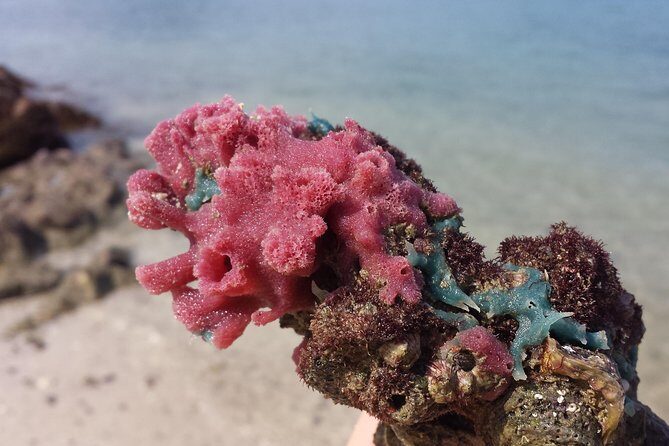
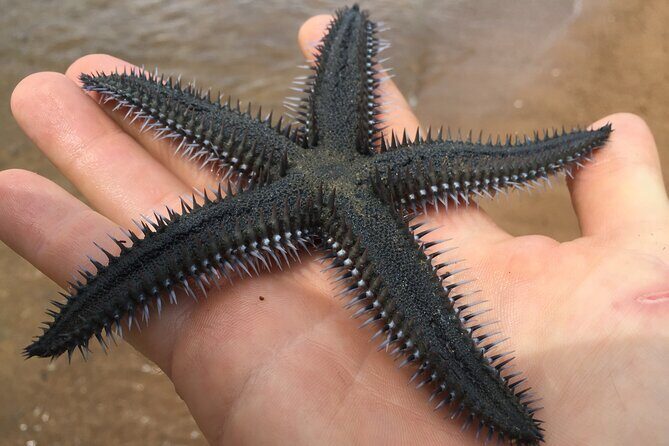
What you might spot along the way is part of the appeal too. The route description mentions coral beds and sea life. Even if you don’t go full wildlife-watching mode, you’ll still notice the water feeling more alive than you expect once you’re close to the rock faces and shallow areas.
If you’re the type of traveler who likes your sightseeing with motion, this is for you. You’re not standing still taking photos. You’re working for perspective, and that tends to make the scenery feel more personal.
Long Ke Wan Beach Break: A Real Pause in the Middle of Kayaking
After paddling for a while, the group takes a break on Long Ke Wan Beach. This matters because a long kayaking day can start to feel repetitive if you never get your bearings. A mid-day beach pause gives you a chance to stretch, reset, and look at the coastline from a different angle.
Long Ke Wan Beach is described as one of the most beautiful beaches of Hong Kong. That phrase can mean a lot of things, but in this context it likely means a softer, more open stretch where you can rest without the constant steering focus that kayaking demands.
This is also where the day becomes more balanced. You go out for the formations and caves, then you come back to a calmer beach moment. If you’re bringing cameras, this is often when people get their best shots, since you can stand still and review what you’ve seen.
How long you break isn’t specified, but the overall trip runs about 8 hours, so the timing is built around a full-day flow: transport, launch, paddling segments, beach rest, then a return through the same general meeting-and-transfer pattern.


Group Size, Pace, and Who This Trip Suits Best
The trip is designed as a small-group outing limited to 15 people, which I think is a big deal for kayaking. Fewer people means the guide can look after spacing and safety more easily, and it also keeps the atmosphere from feeling like a warehouse tour.
One detail to keep in mind: there’s also a stated maximum of 40 travelers for the activity overall. In real life, that usually means you may be grouped with others only in a shared transfer or similar shared sections, while the actual kayaking time stays much more intimate. Still, if you want the “always small” feel, this is the trip to book early and treat it as a small-group experience, not a huge crowd event.
Fitness-wise, the tour calls for moderate physical fitness. You don’t need to be an athlete, but kayaking does require some arm and core endurance. If you’re comfortable with light cardio and steady paddling for stretches, you’ll likely be fine.
It’s also not written for total beginners who want zero physical effort. You can expect instruction, but you still have to do the work of moving your kayak.
Kids must be accompanied by an adult. So if you’re traveling as a family, plan the day with that in mind, and be ready for the fact that food isn’t included.
Price and Value: Why $142 Makes Sense for a Full-Day Geopark Paddle
At $142.01 per person for roughly an 8-hour day, this isn’t a cheap activity, but it also isn’t overpriced for what you get. The value equation here is that you’re buying four big pieces at once:
- A professional guide for navigation and instruction
- Your kayak and paddling gear, plus a life jacket
- Round-trip shared transfer from the Hang Hau area
- A full day of access to the geopark waters
You’re not paying separately for transport, equipment rental, and a guide. For a destination like Sai Kung, that bundled structure matters. Kayak rentals and guided excursions often add up quickly, especially once you factor in getting the group to the right coastline.
What you’re not paying for is food and drinks. That’s not a dealbreaker, but it can quietly change the total day cost. If you budget a simple lunch or snacks, the overall value holds up well.
Also, booking tends to happen around 15 days in advance on average. If you can, book early. Small-group tours fill, and kayaking days are limited by weather windows.
Weather Rules You Can Actually Plan Around (And What to Wear)
This is an all-weather operation in the sense that it runs in all weather conditions. But it also explicitly says the tour requires favorable conditions, and if it’s canceled due to poor weather you’ll get a choice: an alternative tour/date or a full refund.
So you should plan like this is a “weather day,” not a “guaranteed perfect day at sea” day. The route can vary because exact areas explored depend on the conditions, and that’s a good thing. Safer and better-feeling water beats checking boxes.
What to wear is also covered in broad terms: dress appropriately. Since you’re kayaking near beaches and sea caves, expect to get damp. Wear something you can move in and that’s comfortable if you get splashed.
If you’ve been nervous about bringing the wrong outfit, don’t overthink it—bring practical clothing for a wet day and focus on mobility. The guide will handle the route and safety decisions, and you’ll just need to be ready to paddle comfortably.
What the Guide Adds (It’s Not Just a Route Map)
A kayaking tour can go two ways. It can either feel like a transportation service to a beach, or it can feel like a guided experience that helps you notice the right things at the right time.
In this case, the guide role is highlighted clearly: you get instructions, follow the guide through the geopark waters, and maneuver the route together. In a past outing, guide Geoffrey stood out for being engaging, and for helping the group enjoy the day even with summer showers popping up to cool things down.
That kind of attitude matters. Weather changes can make people grumpy. A good guide turns it into part of the experience: cool air, a different light on the water, and a reminder that you’re not controlling the sea—you’re cooperating with it.
You don’t need to be an expert to get value here. Your guide helps you stay oriented and keeps the day from feeling like random paddling.
FAQ
What’s the meeting point for the kayaking trip?
You meet at Hang Hau MTR Station (Tseung Kwan O, Hong Kong) around 9:00am.
How long is the Hong Kong Global Geopark kayaking experience?
The tour runs for about 8 hours.
What’s included in the price?
Included are the kayak, paddle, and life jacket, a professional guide, and round-trip shared transfer.
Is food included?
No. Food and drinks are not included.
Do I need to be a strong swimmer?
The tour is listed as requiring moderate physical fitness. It also provides life jackets, but the information doesn’t say anything specific about swimming skill, so plan for a moderate physical effort and follow your guide’s safety guidance.
What happens if the weather is poor?
If it’s canceled due to poor weather, you’ll be offered an alternative tour/date or a full refund. Separately, the experience itself is non-refundable and cannot be changed for any reason, so don’t gamble on changing your mind after booking.
Should You Book This Hong Kong Geopark Kayaking Adventure?
I’d book it if you want a Hong Kong day that feels active and specific: Pak Lap Wan Beach launch, then sea arches and caves that you can only really appreciate from the water. The small-group size and guided route make it a solid choice if you like nature scenery but don’t want a DIY setup.
Skip it if you’re looking for a relaxed, mostly sitting sightseeing day, or if you hate the idea that weather can affect exactly where you paddle. Also, because food isn’t included, budget for your own lunch or snacks so you don’t end up hungry during the long day.
If you’re comfortable with moderate physical activity and you’re excited by the idea of kayaking through volcanic-rock sea formations, this is the kind of Hong Kong experience that stays with you long after you’re back in town.