REVIEW · HONG KONG SAR
Dark Side of Hong Kong – Kowloon Caged Homes Walking Tour
Book on Viator →Operated by Hong Kong Free Tours · Bookable on Viator
Hong Kong hides a harsh housing map. On the Dark Side of Hong Kong – Kowloon Caged Homes Walking Tour, you follow a tight route through Kowloon and learn how the city’s housing pressure reshapes everyday life, from Cedar Street to rooftop viewpoints in Sham Shui Po.
I like this tour because it’s built around street-level context and real neighborhood landmarks, not vague hand-waving. I also love that the guide conversation is active, with people like Alice and Isaac earning praise for clear explanations and thoughtful answers to tough questions.
One thing to consider: you’re not guaranteed a private, lived-in unit tour. Even though you step into a subdivided-flat-style setup, some of what you see may feel like a staged display, and the walk includes a lot of explanation time.
In This Review
- Key points before you go
- A reality-check route from Prince Edward to Sham Shui Po
- Price and timing: a short walk with heavy context
- Cedar Street: the subdivision that shrinks a life
- Stop 3: stepping into a 100 sq ft subdivided-flat setup
- Ki Lung Street and Lui Seng Chun: why the crisis happened
- Yee Kuk Street and Hai Tan Street: wealth disparity you can see
- Rooftops at Pei Ho Street and solutions via SoCo on Kweilin Street
- Guides make the difference: what the best ones do well
- What to watch out for before you choose
- Who this tour suits best
- Should you book this Kowloon caged homes walking tour?
- FAQ
- How long is the Dark Side of Hong Kong – Kowloon Caged Homes Walking Tour?
- Where does the tour start and end?
- How much does it cost?
- Is hotel pickup included?
- Is the tour suitable for people with limited mobility?
- Do you actually enter a subdivided flat or cage home?
Key points before you go
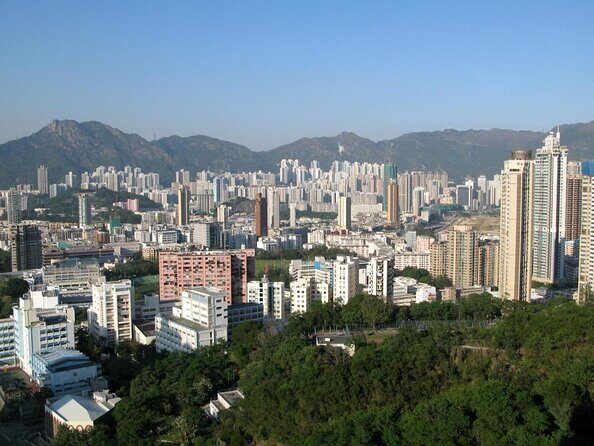
- A focused route in about 2 hours from Prince Edward toward Sham Shui Po, with a small group cap
- The housing math, including how a roughly 500 sq ft apartment can get split into five tiny 100 sq ft units
- A look inside a 100 sq ft subdivided-flat layout plus a caged-home style arrangement
- Straight talk on the drivers of the crisis: post-war growth, land scarcity, and a low-tax economic model
- Rooftop sightlines over Sham Shui Po, showing the parts tourists don’t usually notice
- SoCo (50 years working with the marginalized) ties the facts to real-world ideas for solutions
A reality-check route from Prince Edward to Sham Shui Po
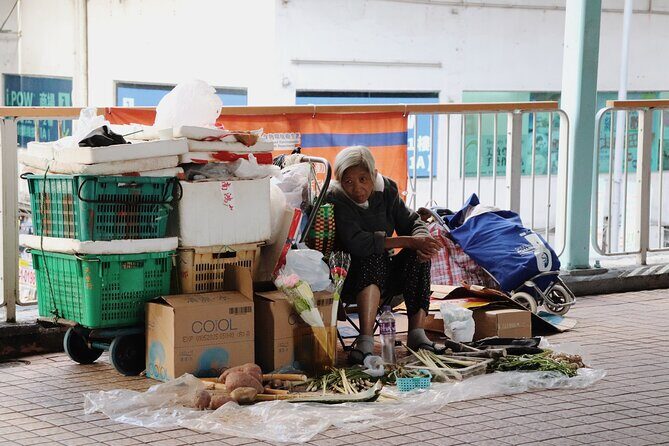
Hong Kong’s skyline does a great job of selling a story. This tour is for the moment you want the other story, the one written into alley widths, staircase landings, rooftop structures, and the split-second decisions people make about where they can afford to live.
The walk starts around Prince Edward (with the meeting area near Nathan Road), then heads toward Sham Shui Po, ending near the Sham Shui Po MTR area. Expect a compact, guided route rather than a long sightseeing marathon. The tour is designed for people who enjoy urban planning, economics, and human-scale reality—though be ready: this is not a light day.
You can also read our reviews of more walking tours in Hong Kong SAR

Price and timing: a short walk with heavy context
At about $32.82 per person for roughly 2 hours, the value comes from how much ground the guide covers with each stop. You’re paying for a local interpreter of the city: someone who can connect the visual details—subdivided spaces, rooftop structures, cramped backstreets—to the bigger forces that caused them.
This is also where the “worth it” factor becomes personal. If you want architecture facts, housing policy context, and street-by-street explanations, this time window works well. If you’re expecting a cheerful neighborhood tour with lots of photo ops and shopping time, the mood may feel mismatched.
You’ll want to plan for comfort. The tour includes walking, and you should have a moderate physical fitness level. On hotter days, the good news is that a review notes that many of the stops are in air-conditioned spaces, but you’ll still spend time outdoors moving between them. Bring water, wear comfortable shoes, and dress like you might stand in sun and shade.
Cedar Street: the subdivision that shrinks a life
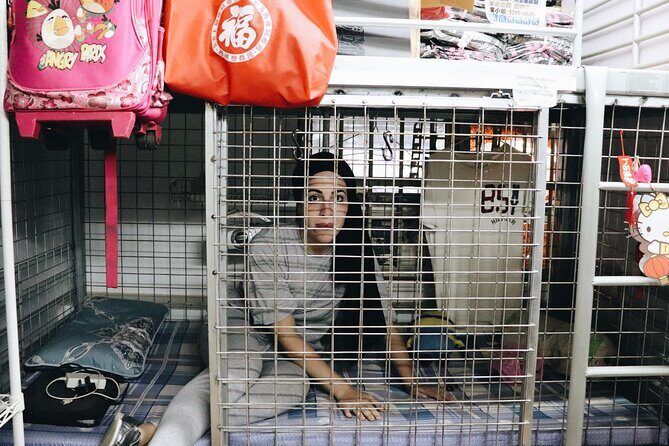
The tour begins with Cedar Street, because it sets the central idea fast: Hong Kong isn’t only expensive—it’s reorganized around scarcity. You’ll learn why Hong Kong is ranked among the world’s least affordable cities, then look at a practical example: how a typical 500 sq ft apartment can be subdivided into five units of about 100 sq ft each.
That number sounds abstract until it’s paired with a physical layout. This is where I think the tour does its best work: it translates headlines into geometry. You’re not just told people are squeezed—you’re shown how a space can be rearranged so tightly that the line between kitchen, bed, and living area becomes thinner than you’d ever want for your own life.
Stop 3: stepping into a 100 sq ft subdivided-flat setup
Still on the Cedar Street theme, the tour includes a chance to step inside a 100 sq ft subdivided flat. The script is clear: you’ll see how a minimum-wage family might use the kitchen, bed, and living space in such a layout, and you’ll also encounter a caged-home style arrangement designed for a single resident.
This is the moment many people feel the tour’s emotional weight most strongly. Even if the exact setup isn’t your daily experience, it’s hard to look away once you’re standing in a space that forces tradeoffs. You’ll probably understand why the housing crisis is also a time crisis, a dignity crisis, and a health-and-safety issue—not just a rent issue.
One review did call out an expectation mismatch: the subdivided-flat portion was described as a staged display unit rather than a real lived-in apartment. If that matters to you, treat the tour as a guided education plus a model-like look at the conditions, not a meet-and-greet with a private household.
Ki Lung Street and Lui Seng Chun: why the crisis happened
After Cedar Street, the tour moves to Ki Lung Street and explains the “perfect storm” behind Hong Kong’s housing crisis. The factors are specific: post-war population growth, a low-tax capitalistic economic model, and a scarce land supply. That combination turns housing into a competition where wages and supply struggle to keep up.
I like this approach because it avoids a single-blame story. You get a chain of causes, and it helps you see why the city can look wealthy on the outside while many people remain stuck on the inside of the housing squeeze.
Then the tour shifts to Lui Seng Chun, where you hear a guide’s firsthand account of navigating housing in one of the world’s toughest property markets. This is also where question time becomes meaningful. The guides who earn the highest praise—people like Grace Wu, Wind, and Summer in different review notes—are praised for answering everything from basic curiosity to more philosophical questions. Expect the guide to connect policy logic to real-life constraints.




Yee Kuk Street and Hai Tan Street: wealth disparity you can see
On Yee Kuk Street, the tour asks you to notice the backstreets of Sham Shui Po, and it doesn’t sugarcoat what can happen when housing instability and poverty intersect with survival economies. You’ll hear about the illicit ties between the drug and sex trades.
This part can be uncomfortable, and that’s the point. The tour isn’t trying to sensationalize. It frames the conversation around how poverty can create openings for exploitation, risk, and crime. If you prefer sanitized sightseeing, you may want to skip this tour. If you want to understand how social systems strain under pressure, you’ll likely find this section sobering in a useful way.
Then comes Hai Tan Street, which delivers the sharpest visual contrast: you’ll see new USD $1.5 million apartments sitting side-by-side with dense clusters of subdivided units and cage homes. The city becomes a diagram of unequal outcomes in a small geographic space.
That contrast is one reason this tour scores so well. Many people say they leave with a “fresh perspective” on Hong Kong. Not because they learned trivia, but because they gained a mental map of where inequality shows up and how it can exist right next to luxury.
Rooftops at Pei Ho Street and solutions via SoCo on Kweilin Street
The tour climbs to a rooftop on Pei Ho Street. This is a clever move, because height changes what you can understand. From up top, you can see how hidden slums and extra structures form part of the urban fabric. You get a reality check that you simply can’t get from street level or from a quick MTR ride.
One of the most practical tips here is also simple: if you like street photography, this is the kind of stop that rewards slow looking. Reviews mention that guides point out details and tell stories hidden in scenes people walk past. Even if you’re not taking photos, you’ll likely notice patterns—where people expand upward, how roofs become another layer of housing life, and how the city uses space when space is scarce.
Finally, the tour wraps at Kweilin Street with a visit to SoCo, a charity with 50 years of history advocating for marginalized people. This is where the tone can shift from explanation to possibility. You’ll discuss solutions for the city’s future, and it helps prevent the tour from feeling like only a problem lecture.
To me, that charity stop is important. Without it, the information can feel heavy with no exit. With it, you’re reminded that real-world support and policy thinking exist alongside the crisis narrative.
Guides make the difference: what the best ones do well
The tour’s quality seems to hinge on the guide’s skill at two things: facts and conversation. Multiple reviews highlight guides such as Alice, Isaac, Grace Wu, Wind, Summer, and others, praising a mix of smart pacing, factual grounding, and willingness to answer questions.
If you’re the type who enjoys learning in public—asking why something exists, how it got that way, and what could change—you’ll probably get a lot out of this format. The guides sound especially strong at balancing emotion with context, so you leave understanding the housing system instead of only feeling shock.
Do note the content expectation issue. One review said the tour content didn’t fully meet expectations because the subdivided-flat portion felt staged, and the rest of the time involved walking around the neighborhood plus tea. The company’s broader framing, based on what’s described, is that the goal is education through housing conditions and urban planning—not treating poverty as an attraction. If you come with curiosity, this tends to land well. If you come chasing a specific fantasy of visiting a real private home, you may feel let down.
What to watch out for before you choose
This is a hard-edged tour. You’ll learn about housing pressure, see housing-style setups, and hear about darker street realities in Sham Shui Po. That doesn’t mean it’s unfair or sensational. It does mean you should emotionally prepare for discomfort.
Also, manage expectations about access:
- You will see a subdivided-flat-style layout and a caged-home designed arrangement, but it may not be the same as touring someone’s private home.
- Some of the experience may feel like model-plus-walking rather than a long sequence of actual lived-in interiors.
Weather matters too. The experience requires good weather, and there’s the possibility of rescheduling or a refund if it’s canceled due to poor weather. So if you’re booking during a rainy stretch, keep some flexibility in your Hong Kong schedule.
Who this tour suits best
This tour fits you if you want:
- Hong Kong’s housing crisis explained with numbers and spatial logic, not just slogans
- a route that connects wealth disparity to specific neighborhoods
- a guided conversation where you can ask direct questions
- an experience that feels more like urban studies than postcard tourism
It may not be your best match if you want upbeat sightseeing, shopping stops, or a relaxed walking tour where the hardest topics are glossed over. Also, if you’re strictly hoping for a real door-to-door visit inside someone’s private unit, you might prefer a different type of experience.
Should you book this Kowloon caged homes walking tour?
I’d book it if you’re in Hong Kong and you want to understand what sits under the city’s polished surfaces. The best part is how quickly the tour turns abstract “housing crisis” talk into something you can visualize—especially with the Cedar Street subdivision example and the step-into layout.
But I’d pause and think if your top goal is seeing raw, private, lived-in conditions in a home visited firsthand. Based on the structure described, it’s a guided education with a physical model-like stop, not an unrestricted access pass.
If you want a short, guided, street-level education that changes how you see Hong Kong, this is one of the stronger values in its category—small group size, local guidance, and a route that stays focused on the housing system from Prince Edward to Sham Shui Po.
FAQ
How long is the Dark Side of Hong Kong – Kowloon Caged Homes Walking Tour?
It runs for about 2 hours.
Where does the tour start and end?
It starts near Nathan Rd / Prince Edward, with the listed start area tied to Prince Edward station, and it ends in the Sham Shui Po area near Sham Shui Po MTR Station.
How much does it cost?
The price is listed at $32.82 per person.
Is hotel pickup included?
No, hotel pickup and drop-off are not included.
Is the tour suitable for people with limited mobility?
The tour information says it requires moderate physical fitness, so plan on some walking.
Do you actually enter a subdivided flat or cage home?
The tour description says you step inside a 100 sq ft subdivided-flat setup and see a caged home designed for a single resident. One review noted the subdivided-flat portion felt like a staged display rather than a real lived-in unit, so it’s best to think of it as a structured visit rather than unrestricted private access.