REVIEW · HONG KONG SAR
Small-Group Hong Kong Island Food Tour
Book on Viator →Operated by Hello Hong Kong · Bookable on Viator
Food carts guide your way through Hong Kong Island. This small-group tour puts Cantonese classics next to British-era comfort foods, with a guide helping you read menus and order without the stress. You’ll start in Sheung Wan and end in Wan Chai, sampling classic bites as you walk through real neighborhoods, not tourist-only streets.
I love how the food moves in a smart order: trolley yum cha to kick things off, then wonton noodle soup, then Hong Kong milk tea, roasted BBQ pork dishes, and finally a dan tat egg tart finish. I also like the people side—guides such as Andy and Ivy get praised for keeping the group full and for giving the kind of practical street guidance that makes you feel confident in places you’d skip on your own.
One consideration: this is not a light snack crawl. Go in hungry, and if you’re vegetarian, gluten-free, or have seafood allergies, this tour won’t suit you.
In This Review
- Key highlights worth planning around
- Why Sheung Wan makes the perfect opening act
- What you’ll eat: the five-course feel, without the ceremony
- Stop-by-stop: from dried seafood lanes to tea candies
- Stop 1: Sheung Wan and the trolley yum cha start
- Stop 2: Seafood Street and the texture of dried ingredients
- Stop 3: Kai Fat Tea for fruit sweets and preserved candy vibes
- Stop 4: Graham Street Market for real neighborhood food life
- Stop 5 onward: Western District, markets-in-the-walk, and street character
- Mid-Levels Escalator and Tai Kwun: the city story under your feet
- Riding the Ding Ding tram: British-era fun, Cantonese-era comfort
- Wan Chai’s char siu fan and the egg tart finale
- How the small-group format changes the whole experience
- Price and value: is $115.52 actually fair?
- Who should book, and who should skip
- Practical tips so you get the best day
- Should you book this small-group Hong Kong Island food tour?
- FAQ
- How long is the Small-Group Hong Kong Island Food Tour?
- Where does the tour start and where does it end?
- What time does the tour begin?
- What’s included in the tour price?
- Is the tour suitable for vegetarians or gluten-free diets?
- Is the tour okay for young children?
- What language is the tour conducted in?
- How big is the group?
- Is hotel pickup and drop-off included?
- Can I get a full refund if I cancel?
Key highlights worth planning around
- Up to 9 people means you actually get help ordering and you’re not stuck behind a crowd.
- Yum cha by trolley at an old-school tea house sets the tone fast.
- Michelin Guide-recommended eateries show up along the route for won ton noodles and roasted meats.
- Hong Kong milk tea is treated like a core cultural item, not a random drink stop.
- Ding Ding tram ride connects the food story to British-era Hong Kong in a fun way.
- Dan tat egg tart lands at the end, when you’ll be ready for something rich and custardy.
Why Sheung Wan makes the perfect opening act
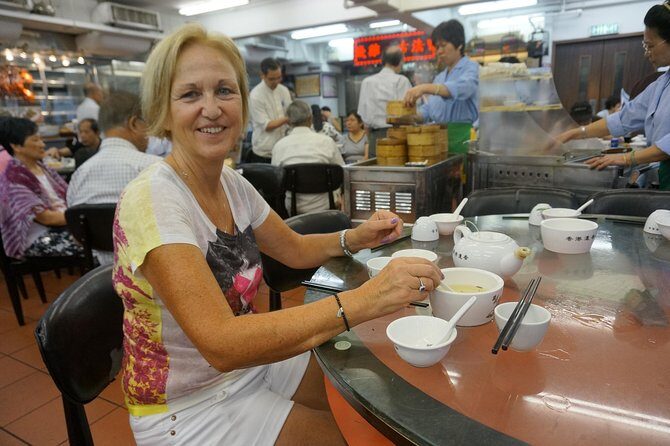
Sheung Wan is the kind of district that helps Hong Kong feel like Hong Kong. The streets here mix old trade routes, tea-house culture, and everyday shopping—so your first bite doesn’t feel like a “tour start.” Meeting at 28号 Des Voeux Rd W also makes it easy to orient yourself, since you’re near public transport from the jump.
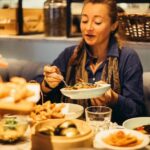
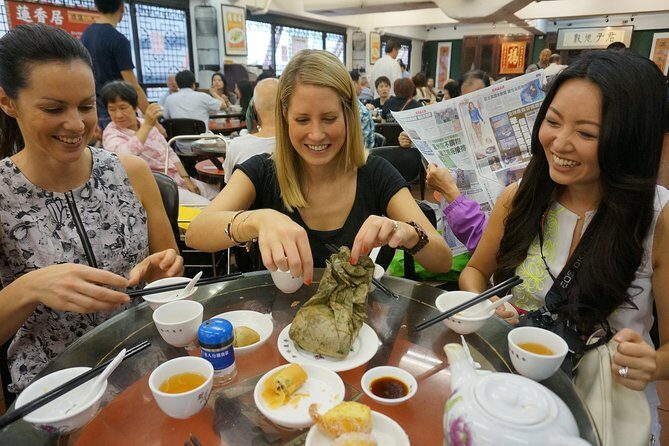
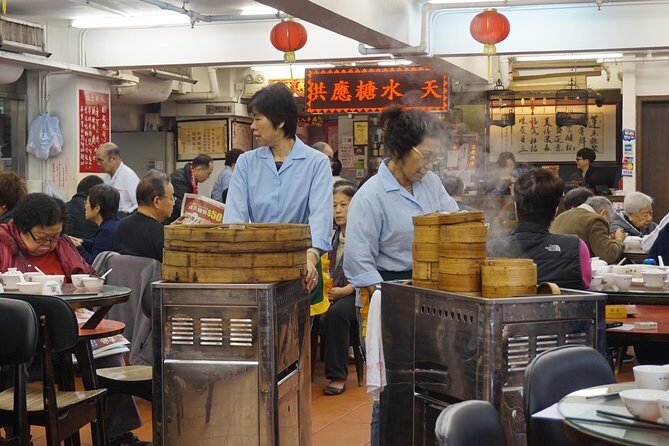
The tour begins with a proper breakfast-style yum cha (dim sum) experience in an old tea house, including dim sum served by trolley. That trolley detail matters. It’s not just a serving method—it’s part of the rhythm of Hong Kong tea-house life, where you browse, order, and watch carts circle through the room.
Expect it to feel busy and lived-in. The tour guidance specifically suggests you arrive hungry and skips breakfast beforehand, and that’s smart here: the group eats early and then keeps going.
You can also read our reviews of more food & drink experiences in Hong Kong SAR
What you’ll eat: the five-course feel, without the ceremony
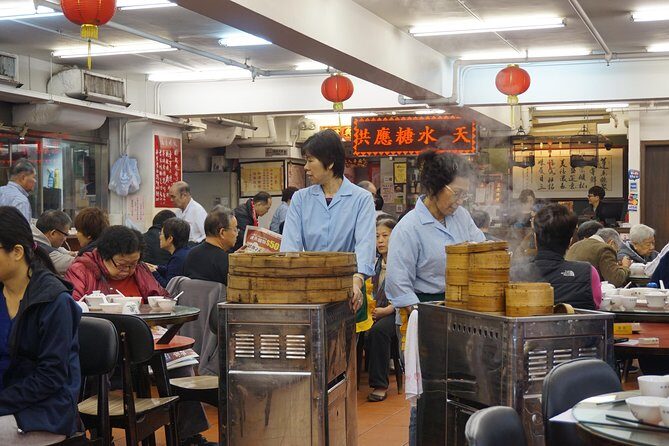
This tour is built around four core food tastings plus milk tea and an egg tart, but the day feels fuller than “just samples.” That’s because the stops are timed so you taste hot dishes (like wonton noodle soup), then move into drinks and sweets, and end with roasted meat and dan tat.
Here’s the lineup in plain terms:
- Dim sum / yum cha to start, served by trolley at a long-running tea house
- Wonton noodle soup, a Hong Kong specialty that’s simple on paper but hard to master
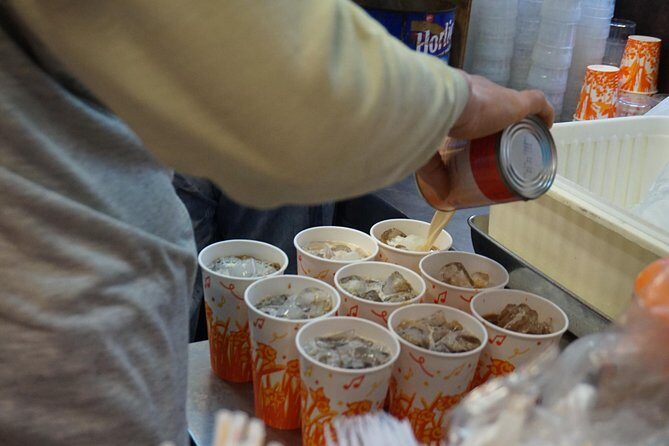
- Hong Kong milk tea, a British-era influence you can still taste today
- Char siu / roast BBQ pork, served with rice and homemade sauces at family-run spots
- Dan tat (egg tart) to close, including an old bakery with about a 60-year story behind it
- Plus preserved fruit sweets and other small candy-style bites at a tea shop stop
What I like is how the menu matches the city’s identity. Cantonese food is the backbone, but the tour also frames milk tea and egg tart as the result of Western contact and local adaptation. You don’t just taste; you get the reason the taste exists.
Stop-by-stop: from dried seafood lanes to tea candies
The route isn’t random. It threads together food ingredients, cooking culture, and daily life—so you understand why certain flavors show up in Hong Kong kitchens.
Stop 1: Sheung Wan and the trolley yum cha start
You begin in Sheung Wan, then head to an old tea house for dim sum yum cha. The tour description calls out an atmosphere that’s been around almost 100 years, which is exactly the kind of setting that makes dim sum feel like an actual meal tradition. You’re not asked to “try one bite and move on.” You’ll eat enough that you won’t be starving by the time you reach the next stop.
Practical tip: if you’re picky, tell your guide early. Since the tour is small (max 9), you have a real chance of getting sensible choices instead of getting stuck with whatever’s left.
Stop 2: Seafood Street and the texture of dried ingredients
Next you pass through Seafood Street—a cluster around Des Voeux Road West known for dried seafood. Dried seafood isn’t a gimmick in Chinese cooking; it’s a pantry staple and a traditional tonics ingredient. This stop helps you understand why some broths and sauces taste the way they do.
You likely won’t be sampling the dried seafood here in the same way you sample a dish in a restaurant. The value is in seeing what locals buy, and learning how those ingredients connect to soups and other flavors you’ll taste later.
A few more Hong Kong SAR tours and experiences worth a look
Stop 3: Kai Fat Tea for fruit sweets and preserved candy vibes
At Kai Fat Tea, the focus is on tea and assorted sweets—especially fruit-based candies and preserved-style treats. This is where you get a break from hot food and shift into Hong Kong’s sweet side.
If you like tea-and-snack culture, this stop is a win. If you don’t, it’s still useful because it rounds out the “food history” story: Hong Kong street sweets aren’t just desserts; they’re part of how people manage flavors over time.
Stop 4: Graham Street Market for real neighborhood food life
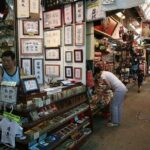
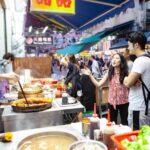
Then comes Graham Street Market, a sloped market area with more than a century of history. The market is described as flanked by food stalls selling everything from fresh vegetables to live seafood, and it’s also noted as Hong Kong’s oldest wet market.
Even if you don’t buy anything, you’ll see how fresh-food shopping is handled at street level. That matters because Hong Kong cooking often depends on frequent, practical sourcing—especially for seafood, greens, and what’s in season that day.
Stop 5 onward: Western District, markets-in-the-walk, and street character
After Graham Street Market, the tour route moves through the Central and Western area, including Western District streets and the colonial-era blend of neighborhoods. You’ll also pass through Gough Street area, which the tour notes as being on the cusp of European and Chinese communities.
This part isn’t only scenic. It’s a palate cleanser between food stops, and it helps explain why Hong Kong food ended up as a mix rather than a single tradition.
Mid-Levels Escalator and Tai Kwun: the city story under your feet
Food tours get better when they also help you understand where you’re standing. Here, that job is handled by two big “walk-and-ride” elements.
First is the Mid-Levels Escalator—described as the world’s longest outdoor escalator at 800 meters, lifting 135 meters. Even if you’re just riding along for a short time, it gives you a quick, visual sense of Hong Kong’s hill layout and how people move through steep neighborhoods.
Then you reach Tai Kwun, a restored Central Police Station compound. The point here is the contrast: while you’re still thinking about food, you’re also seeing how Hong Kong preserves and repurposes older buildings. It’s a reminder that food history in Hong Kong often comes from the same story engine as architecture—new layers on old structures.
Riding the Ding Ding tram: British-era fun, Cantonese-era comfort
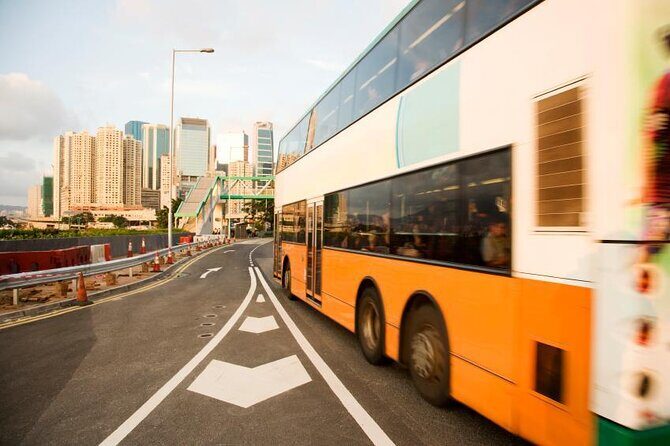
The Ding Ding (Hong Kong Tramways) ride is one of the most fun parts of the day, and it also fits the food narrative. The tram system dates back to 1904 under British rule, and the tram is described as having the world’s largest operational double-decker tram.
Why this matters on a food tour: you’re tasting British-influenced dishes through a Hong Kong lens, and then you physically ride one of the city’s British-era transport icons. That connection makes the story feel real instead of like a lecture.
If you’re worried about time, don’t be. You get the tram ride as part of the guided flow, and then you move on to your final tastings without the day dragging.
Wan Chai’s char siu fan and the egg tart finale
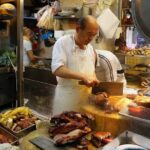
By the time you reach Wan Chai, you’re deep into the “eat your way across Hong Kong Island” phase of the tour. You’ll stop at a family-run restaurant that’s described as recommended by the Michelin Guide and known for Char Siu Fan—roast BBQ pork rice.
This stop is important because it’s not the most complicated thing on the menu. It’s classic. And when the guide guides you into an older, local place, you often taste the difference in technique and sauce—things you’d miss if you ordered the first version you found.
Then you end near Hong Kong Hennessy Road at a well-established bakery for dan tat (egg tart). This place is described as having about a 60-year history and being a favorite of a former Hong Kong governor. That’s the kind of detail that signals: this isn’t just a trendy pastry stop.
Finally, the tour extends to Southorn Playground area. Think of it as a practical “wrap-up” spot where you can regroup after all that walking and eating.
How the small-group format changes the whole experience
This tour caps at a maximum of 9 people per booking, and it really shows in how smooth your meal choices are. With a bigger group, it’s easy to lose time, order the wrong things, or feel pushed through. With this size, you can get help navigating menu language and you’re more likely to get served efficiently.
It’s also one reason guides like Andy, Ivy, Mel, Alex, Sinclair, and Jane show up in so many positive write-ups. The common thread is not just that they know what to eat—it’s that they manage the day so you get enough food and enough context without feeling rushed.
A small practical note from the same feedback pattern: guides often make practical stops easier, including help for basics like where to find restrooms. That kind of “I thought of this for you” attention makes a four-hour walking tour feel less stressful.
Price and value: is $115.52 actually fair?
At $115.52 per person, this isn’t the cheapest thing you can do in Hong Kong. But it’s also not priced like a single meal or a photo walk.
Here’s what you’re paying for, based on what’s included:
- A professional guide in English
- Multiple food stops that add up to a real meal
- Dim sum / yum cha plus wonton noodle soup
- Hong Kong milk tea
- Roasted BBQ pork (char siu) with rice and sauce
- Dan tat egg tart
- Small sweet stops for traditional dried fruit sweets
- A guided cultural route through old neighborhoods
- The Ding Ding tram ride
When you compare that to doing it on your own, the biggest cost isn’t just the food—it’s finding the right places and knowing what to order so you don’t waste time in the wrong spot. This tour removes those guesswork friction points and lets you focus on tasting.
If you like food tours that feel like a guided local route rather than a buffet of random bites, the price starts to look reasonable fast.
Who should book, and who should skip
This tour is best for people who want Cantonese-centered food plus a clear story about how Hong Kong absorbed British-era influences.
You’ll likely enjoy it if:
- You want classic dishes like yum cha, wonton noodle soup, milk tea, char siu, and dan tat
- You prefer small groups and a guide who can handle ordering and pacing
- You enjoy walking through neighborhoods like Sheung Wan and Wan Chai rather than staying inside one area
You should skip or choose a different option if:
- You’re vegetarian (the food stops include items like meat and likely seafood-related ingredients)
- You need gluten-free options (no gluten-free accommodation is stated)
- You have seafood allergies (the route includes dried seafood shopping and market areas)
- You’re traveling with kids age 5 or below (this tour isn’t suitable at that age; private food tour is suggested instead)
Also, if you hate walking: remember this is about four hours and you’ll move through multiple districts plus a tram and escalator element.
Practical tips so you get the best day
- Arrive hungry. The tour specifically recommends you do not eat breakfast beforehand, and the meal plan assumes you’ll be ready.
- Bring a camera. You’ll pass through classic street scenes and ride the tram and escalator.
- Use the guide’s ordering help. It’s part of the value, especially in places where menus or signage are not designed for visitors.
- Wear comfortable shoes. The route involves walking between several neighborhoods before and after the tram ride.
Should you book this small-group Hong Kong Island food tour?
I think it’s a strong choice if you’re doing Hong Kong Island for a short time and you want a guided path to the foods people actually associate with the city. The best part isn’t any single dish—it’s the way the day strings together yum cha, wonton noodles, milk tea, roasted BBQ pork, and dan tat while also showing you markets, old trade streets, and Hong Kong’s transport and architecture.
Book it if you’re ready to eat, walk, and learn a little while you chew. Skip it if you’re vegetarian, gluten-free, have seafood allergies, or you’d rather not plan around a food-heavy schedule.
FAQ
How long is the Small-Group Hong Kong Island Food Tour?
It runs for about 4 hours.
Where does the tour start and where does it end?
It starts in Sheung Wan at 28号 Des Voeux Rd W, Hong Kong, and it ends in Wan Chai.
What time does the tour begin?
The start time is 9:30 am.
What’s included in the tour price?
The tour includes a professional guide, dim sum/yum cha, wonton noodle soup, Hong Kong milk tea, egg tart, traditional dried fruit sweets, a Ding Ding (tram) ride, and char siu (BBQ pork).
Is the tour suitable for vegetarians or gluten-free diets?
No. The tour is not suitable for vegetarians, gluten-free travelers, or people with seafood allergies.
Is the tour okay for young children?
The tour is not suitable for ages 5 and below. The data suggests booking a private food tour instead.
What language is the tour conducted in?
The tour is conducted in English.
How big is the group?
There’s a maximum of 9 travelers per booking.
Is hotel pickup and drop-off included?
No. Hotel pickup and drop-off is not included.
Can I get a full refund if I cancel?
Yes. You can cancel up to 24 hours in advance for a full refund. If you cancel less than 24 hours before the start time, you won’t get a refund.