REVIEW · HONG KONG SAR
Hong Kong Street Food Tour with Locals – Dim Sum, Wonton & more
Book on Viator →Operated by Hong Kong Free Tours · Bookable on Viator
Eat your way through old Hong Kong. This street food tasting tour in Central lets you skip the guesswork and focus on the food, while a local guide explains what you’re eating. You also get history you can taste, tied to Cantonese classics and Hong Kong’s changing economy.
I especially liked how the guide keeps things clear for non-Cantonese speakers, with translation and stories that connect dishes to real places. One drawback: it’s not vegetarian-friendly, and halal isn’t provided, so it’s not the best fit if you avoid pork, seafood, or both.
In This Review
- Key things that make this tour worth your time
- Why Central feels easy when someone else plans the route
- Wing Lok Street: dim sum baskets and the dried seafood reality check
- Sheung Wan’s cooked food centre: cha chaan teng comfort food
- Bonham Strand West and Possession Point: how trade shocks changed the menu
- Egg tart and Five Flowers tea: sweet pastry and herbal ritual
- Queen’s Road Central: wonton noodles with shrimp-forward broth
- Tea house pu-erh cakes and Central Market egg waffles
- What you’ll eat (and how to time it)
- Price and value: $52.51 for guided tastings in a tourist-proof pocket of the city
- Who this tour is best for (and who should skip it)
- Practical tips that make a big difference
- Should you book the Hong Kong Street Food Tour with Locals?
- FAQ
- How long is the Hong Kong Street Food Tour with Locals?
- What’s included in the tour price?
- Is hotel pickup or drop-off included?
- Where do I meet the guide?
- What time does the tour start?
- Is the tour suitable for vegetarians?
- Is halal food provided?
- What happens if poor weather cancels the tour?
Key things that make this tour worth your time
- Central Hong Kong on foot, with no map stress
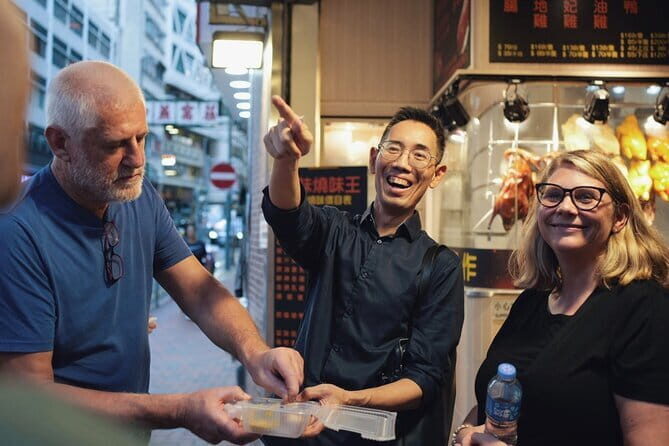
- A guided tasting run through dim sum, char siu, wonton noodles, and egg tart
- Tea stops with both herbal brews and pu-erh tea cakes
- Small group feel (max 20) and guide-led pacing
- British-era and trade-shock history woven into food stops
- Not for vegetarians or halal needs
Why Central feels easy when someone else plans the route
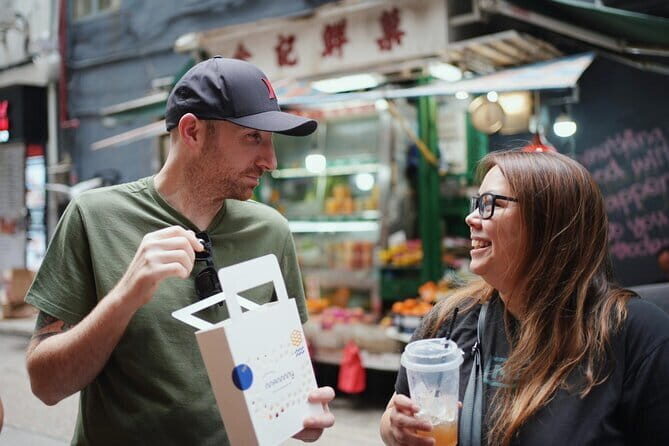
Hong Kong food can be a maze. This tour starts in Central/Sheung Wan at the Grand Millennium Plaza Garden, then ends at Central Market on Queen’s Road Central. The route is built for wandering: you’ll move between classic food streets and working eateries without having to constantly check your phone.
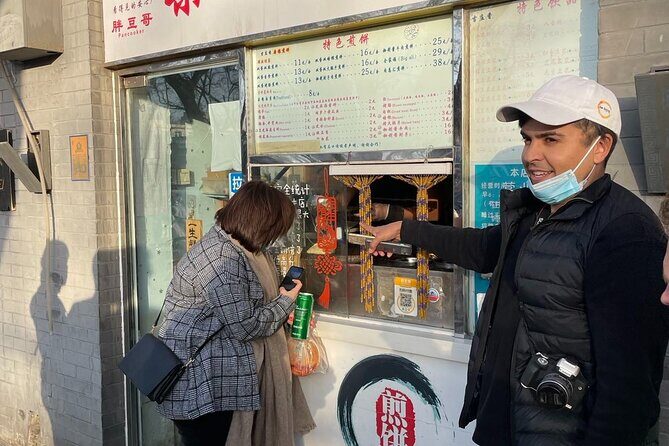
The tour also runs like a tight little afternoon program. Expect about 3 hours of walking with multiple stops, and you’ll have a guide who handles the ordering and translation. That matters in Hong Kong, where menu English can be hit-or-miss and where some places are narrow, busy, and not set up for tourists to “figure it out” quickly.
Group size stays small (up to 20), so you’re not stuck behind a wall of people. In past tours with guides like Summer, Jasmine, Wind, Stephen, and Andy, the vibe tends to stay friendly, with the group staying together while the guide keeps the pace manageable.
You can also read our reviews of more food & drink experiences in Hong Kong SAR
Wing Lok Street: dim sum baskets and the dried seafood reality check
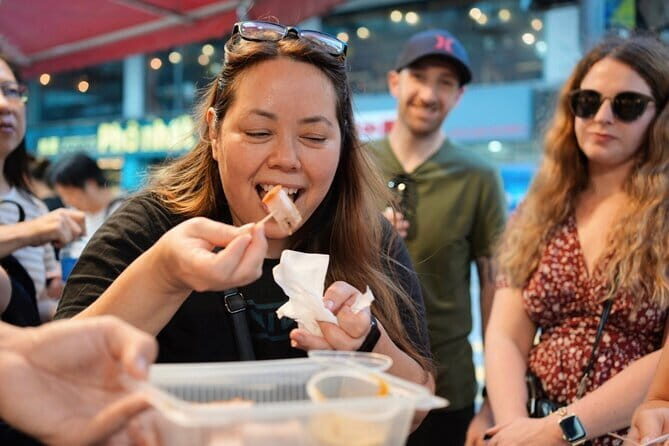
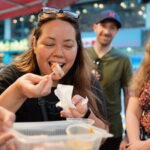
The first stretch is pure Cantonese comfort: dim sum made for eating right there. At Wing Lok Street, you’ll start with har gow—silky shrimp dumplings steamed in bamboo baskets. The guide’s story usually goes beyond ingredients and into how dim sum developed over time, connecting older trade routes and Hong Kong’s modern snack habits. It’s the kind of intro that makes the food easier to understand once you see how the dumplings look and how they’re eaten.
Then you’ll shift gears to the dried seafood market side of Wing Lok Street. This is where Hong Kong’s pantry traditions show up in full force. You’ll hear about prized ingredients—things like shark fin, bird’s nest, and cordyceps—and why they became symbols of prosperity and Cantonese culinary heritage.
Important consideration: this stop can be intense if you dislike seafood flavors or prefer a more familiar, mild menu. The tour isn’t trying to water down Hong Kong’s real eating culture. If you’re squeamish about the idea of dried delicacies, this is the moment to decide whether you want to stay curious or sit this part out.
Sheung Wan’s cooked food centre: cha chaan teng comfort food
Next comes Sheung Wan Market and the Cooked Food Centre, where Hong Kong’s postwar twist on Western-style comfort food becomes the star. You’ll taste classics from cha chaan teng—those cafés that locals use like living rooms.
One highlight here is milk tea—smooth, sweet, and usually brewed stronger than you’d expect. You may also try something like peanut butter French toast, the kind of Hong Kong invention that makes you wonder why every city doesn’t do this already. It’s not just dessert dressed up as a snack; it’s a real local style: crispy outside, soft inside, and made for grabbing between errands.
If you’re thinking the tour will be only dumplings and BBQ, this stop is the reminder that Hong Kong has a sweet tooth and a snack culture built for the street.
Bonham Strand West and Possession Point: how trade shocks changed the menu
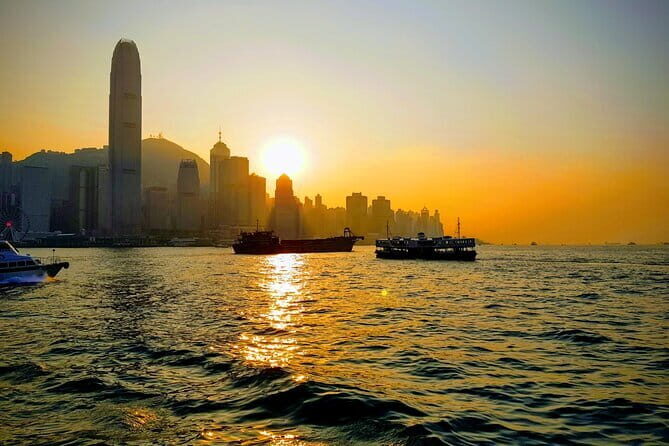
Then the tour gets more story-heavy. At Bonham Strand West, you’ll hear how a trade embargo connected to the Korean War era damaged Hong Kong’s economy and pushed merchants toward new identities, including finance. It’s a reminder that food culture doesn’t grow in a vacuum—when money and trade change, so do what people can buy, what cooks can sell, and how neighborhoods evolve.
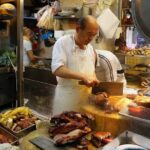
From there, you’ll head toward Possession Point, which ties food to colonial-era Hong Kong. This is where you’ll watch Cantonese BBQ masters work on char siu, with the skin turning glass-like and crisp as it roasts. You’re watching a process, not just getting a finished dish. That’s a nice change from tours where everything feels like a tasting counter and no one explains technique.
If you’re a first-timer, these history stops help you understand why Hong Kong food has its distinct mix: Cantonese roots plus outside influences plus the constant pressure to reinvent.
Egg tart and Five Flowers tea: sweet pastry and herbal ritual
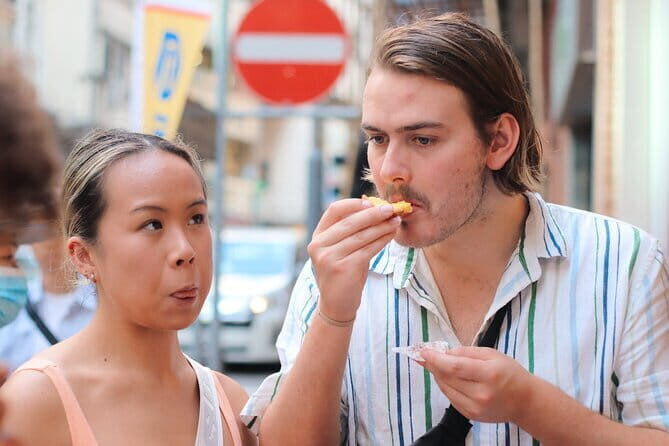
Possession Street brings you one of Hong Kong’s signature desserts: egg tart. You’ll hear how the tart style came from earlier lard-pastry approaches used by Cantonese chefs, and how it’s different from Portuguese custard cousins. The practical takeaway is this: if you’ve only had egg tarts abroad, Hong Kong versions usually hit differently. More depth, more pastry character, and a less syrupy sweetness.
After that, you’ll taste traditional herbal tea described as a “toxin-clearing” brew—Five Flowers tea. The idea behind it is linked to traditional Chinese medicine principles and balance in response to Hong Kong’s climate. Even if you don’t treat it as medicine, it functions like a palate reset: warm, herbal, and clarifying after sweets and rich meats.
One tip: if you love tea, this tour makes you notice tea as part of Hong Kong’s social life, not just a beverage you drink with dessert.
A few more Hong Kong SAR tours and experiences worth a look
Queen’s Road Central: wonton noodles with shrimp-forward broth
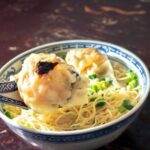
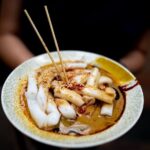
Wonton noodles are next, and you’ll hear how wonton culture evolved from small snack portions into hearty bowls. You’ll be served something built around shrimp and dumplings, in an amber monkfish broth.
This is the stop where the tour shifts from “treats” to “full meal energy.” The dumplings give you texture and bite, and the broth adds depth so you’re not just tasting separate items—you’re building a coherent flavor arc.
If you’re avoiding seafood, this is another major checkpoint. The tour is heavily Cantonese, and Cantonese cuisine in Hong Kong often means shrimp, fish stock, or seafood elements in the background. It’s not a tour designed for strict dietary avoidance.
Tea house pu-erh cakes and Central Market egg waffles
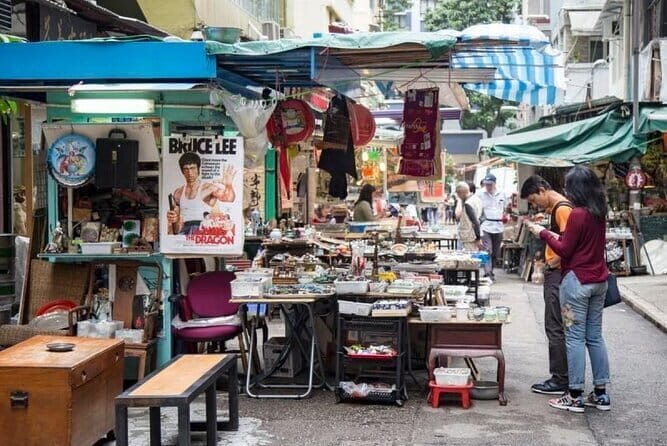
Near the end, you’ll visit a Chinese tea house and get a closer look at aged pu-erh tea cakes. The guide will walk you through ritual brewing in unglazed clay pots and how the flavor layers develop over multiple infusions. It’s one of those experiences where the point isn’t just drinking tea. It’s watching the process and learning why locals treat time as part of flavor.
Then you’ll finish at Central Market with Hong Kong egg waffle. This is the crisp lattice shell with a creamy center. You’ll learn how egg waffles trace back to mid-century ingenuity—using leftover lard and cracked eggs—and why the waffle style became such a street-food icon.
If you come hungry, the egg waffle ending makes sense: crisp texture, sweet comfort, and a final bite that’s easy to remember.
What you’ll eat (and how to time it)
This tour is built around variety: dumplings, BBQ pork, noodles, egg tart, egg waffles, plus drinks in the tea family. Since street food portions can add up fast, I’d plan for a serious afternoon.
Use this rule of thumb: don’t eat a full meal right before you meet. Many guides tell you this for a reason, and the tour is designed so you leave full, not tasting a single bite and wandering off.
Also expect carbs. Between dim sum, toast-style items, egg tart, and egg waffles, you’re getting a lot of dough and sweet. That’s fun, but if you’re trying to keep it light or you’re very snack-sensitive, consider how you’ll handle that sugar-and-starch load.
Price and value: $52.51 for guided tastings in a tourist-proof pocket of the city
At $52.51 per person for around 3 hours, this isn’t just a “walk and hope” situation. You’re paying for a guide, translation help, and a set of street-food tastings across multiple local stop types.
In many cities, a single dim sum meal, a dessert, and one good drink can already start eating up that budget—especially when you’re eating where locals go instead of where menus are pre-translated for tourists. Here, the value comes from combining:
- multiple bite types (savory, sweet, tea)
- multiple neighborhoods/streets without navigation work
- a guide who connects food to place and time
Small group size (max 20) also helps you feel more like you’re on a planned outing than in a conveyor belt tour.
Who this tour is best for (and who should skip it)
This tour works best for you if:
- you want street food instead of restaurant dining
- you like Cantonese classics like dim sum, char siu, wonton noodles, and egg tart
- you enjoy history, especially when it’s tied to food and neighborhoods
- you don’t mind a moderate amount of walking
You might want to skip or choose another option if:
- you’re vegetarian (the tour is not suitable for vegetarians)
- you need halal food (halal food will not be provided)
- you avoid seafood or fish-based ingredients, since the tour includes dried seafood concepts and shrimp-forward noodles
- you want zero sweets or a very light meal
Weather matters too. The tour depends on favorable conditions, so if Hong Kong is being Hong Kong (rain, heat, sudden storms), have a flexible mindset.
Practical tips that make a big difference
Here’s how I’d set yourself up:
- Bring a small bottle of water. The tour doesn’t advertise water as part of the tastings, and hot afternoons happen.
- Wear shoes you can trust. You’ll be walking between Central/Sheung Wan spots for about 3 hours.
- Come with an appetite. If you already had lunch, you’ll feel the sweet and carb weight more than you need to.
- If you have allergies, ask clearly before ordering. One of the best things about guided food tours is that the guide can help communicate needs on the spot.
Guides on this route vary by day, but the names you might see include Summer, Jasmine, Wind, Michael, Andy, Stephen, and Alice, and they’re all part of the same approach: food-first, with enough context to make the bites feel meaningful.
Should you book the Hong Kong Street Food Tour with Locals?
Book it if you want a well-paced, local-feeling afternoon in Central Hong Kong, with tastings that cover the classics instead of repeating one or two dishes. It’s especially strong for first-timers who want a guide to translate menus and connect food to real history like British rule and trade shifts.
Consider skipping if your diet is strict (vegetarian or halal needs), or if you avoid seafood-related flavors. Also think twice if you want a light, simple snack tour. This is a “leave full” style outing, with sweets and tea playing a big role.
If your goal is to experience Hong Kong through its street food streets and tea rituals, this tour is an efficient way to do it in a single afternoon.
FAQ
How long is the Hong Kong Street Food Tour with Locals?
It runs for about 3 hours.
What’s included in the tour price?
You get a professional local guide and street food tastings.
Is hotel pickup or drop-off included?
No, hotel pickup and drop-off are not included.
Where do I meet the guide?
The start point is Grand Millennium Plaza Garden, Grand Millennium Plaza, Queen’s Road Central, Sheung Wan, Hong Kong (between Queens Road and Cochrane Street).
What time does the tour start?
The start time is 3:00 pm.
Is the tour suitable for vegetarians?
No, it is not suitable for vegetarian travelers.
Is halal food provided?
Halal food will not be provided.
What happens if poor weather cancels the tour?
If it’s canceled due to poor weather, you’ll be offered an alternative date or a full refund.