REVIEW · HONG KONG SAR
Big Bus Hong Kong Open Top Hop-On Hop-Off Sightseeing Tour
Book on Viator →Operated by Big Bus Hong Kong · Bookable on Viator
Hong Kong has a way of confusing your feet fast. This hop-on hop-off bus turns the city into three manageable routes, with audio you can actually follow and time you control. You’re not stuck with one “watch it then move on” plan.
I especially like the flexibility of a 24- or 48-hour pass and the fact that you can truly pace your day. The audio commentary (available in 9 languages) adds context you’d miss if you’re just bouncing between stops. The ride also covers lots of ground without making you sweat your way between distant neighborhoods.
One drawback to plan around: buses don’t show up like a subway every few minutes. On several routes, you may wait around before the next bus, so a tight schedule can feel a bit stressful.
In This Review
- Key things I’d anchor on before you ride
- Why a hop-on hop-off bus makes sense in Hong Kong
- Route colors: what you’re actually buying with Red, Green, Blue
- Central Ferry Pier No. 7 and Mid-Levels: the smart starting energy
- Man Mo Temple and Tai Kwun: old traditions and repurposed spaces
- Causeway Bay and Park Lane Hotel: practical stops between sightseeing bursts
- The Peak Tram combo: plan this like a highlight, not a quick stop
- Stanley and the Green Route: when Hong Kong slows down
- Aberdeen and the water feel: a great contrast day
- Kowloon’s Blue Route: from Bruce Lee to Temple Street
- M+ and the Hong Kong Palace Museum: modern culture with serious collections
- West Kowloon Station: a practical ending point for your second day
- Price and value: what $53 buys you in Hong Kong time
- Timing and the hop-on hop-off reality check
- Stops, audio, and that first-day stress
- Who should book this bus, and who should skip it
- Should you book Big Bus Hong Kong?
- FAQ
- What pass options are available?
- How long is the tour?
- Which routes can I choose?
- What attractions are included with the ticket?
- Is the Peak Tram included?
- What’s included with the 48-hour ticket?
- Do I need hotel pickup?
- Are audio guides available?
- Do I need to use the pass on consecutive days?
Key things I’d anchor on before you ride
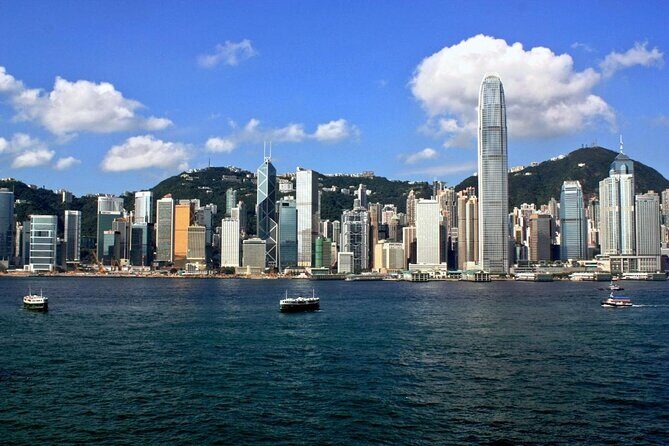
- Three route choices (Hong Kong Island/Red, Stanley/Green, Kowloon/Blue) so you don’t waste time backtracking
- Star Ferry included, which helps connect Central with Kowloon and saves you a ticket hunt
- Peak Tram Special Combo is included, so you can budget for the city’s best-known viewpoint without extra planning
- 48-hour option adds water access (Hong Kong Water Taxi or Sampan Houseboat, if you choose that add-on)
- Free WiFi and 9-language audio make it easier to navigate and understand what you’re seeing
- Expect some stop-to-stop waiting, especially if you’re relying on a quick hop every hour
Why a hop-on hop-off bus makes sense in Hong Kong
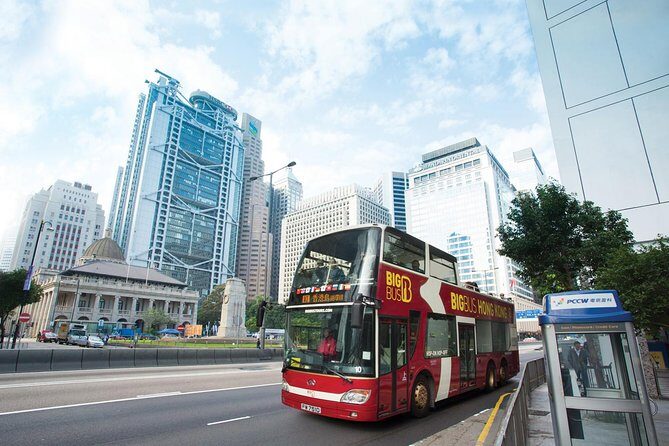
Hong Kong is dramatic, but not in a calm, linear way. You’ve got steep hills, busy roads, and neighborhoods that feel like separate worlds. An open-top bus helps you get your bearings fast while staying comfortably seated during long stretches.
The real value here is choice. Instead of committing to one guided script, you can hop off, see what grabs you, then get back on later. With a 24- or 48-hour ticket and multiple routes, you can shape your day around your interests rather than the other way around.
And yes, the narration matters. The audio commentary gives you quick context for major landmarks—temples, cultural sites, and the viewpoint at the Peak—so the city stops feeling random.
You can also read our reviews of more tours and experiences in Hong Kong SAR.
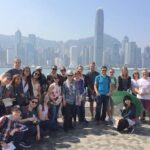
Route colors: what you’re actually buying with Red, Green, Blue
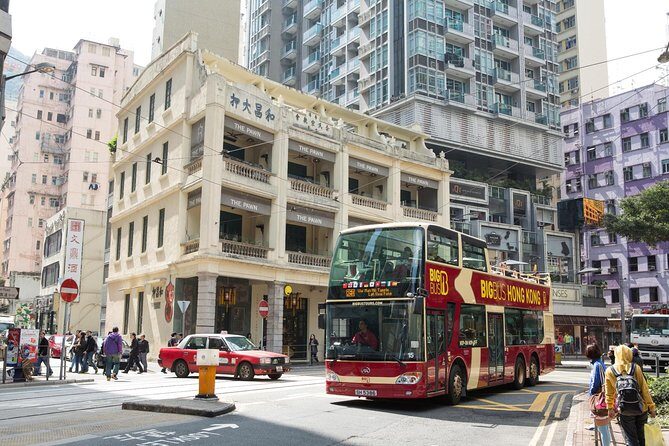
Think of the three routes as three ways to “read” Hong Kong.
Red Route (Hong Kong Island) is your best “first time here” plan. It covers Central and nearby areas, includes a stop at Mid-Levels Escalator, and reaches the Peak Tram area. If you want the classic skyline viewpoint and Central-to-peak progression, this is your backbone.
Green Route (Stanley) is the side trip that changes the whole mood. It swings toward the southern part of Hong Kong Island, including Stanley, plus places along the waterfront such as Repulse Bay and Aberdeen on the wider route flow. If Central and Kowloon feel too dense, this is where you get sea air and a different rhythm.
Blue Route (Kowloon) is where you shift from islands and viewpoints to street-level Hong Kong. You’ll pass major cultural stops like M+ and the Hong Kong Palace Museum, and you also hit classic Kowloon energy with Temple Street.
If you only ride one color, you’ll still come away with a coherent day. If you ride two or three, the city starts to click.
Central Ferry Pier No. 7 and Mid-Levels: the smart starting energy
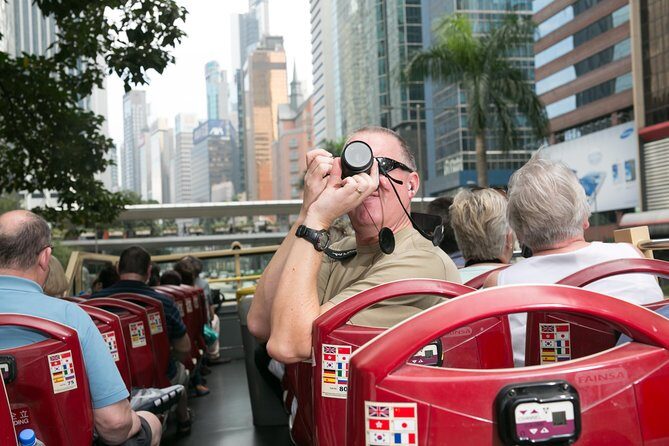
Most days begin at Central Ferry Pier No. 7 (Star Ferry Pier). This is a practical choice because Star Ferry is a key piece of the included experience, and it anchors you near the center of the action. If you’re arriving by transit, you’ll likely find this area is easier to orient than bus stops scattered deeper in neighborhoods.
Right after that, you’re at Mid-Levels Escalator, which is both useful and symbolic. It’s a Hong Kong shortcut for people moving between different elevation zones, and it gives you an immediate sense of how vertical this city really is.
From here, you can decide how aggressive you want to be. If you want “see and move,” stay on board and let the narration guide you. If you want “stop and wander,” hop off at the temple and cultural stops that sit close to the route.
Man Mo Temple and Tai Kwun: old traditions and repurposed spaces
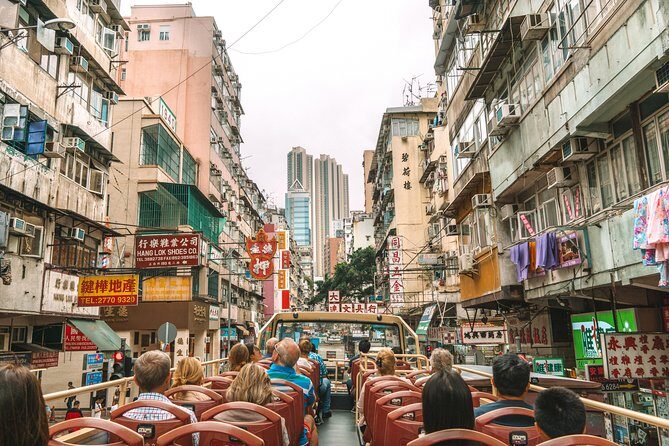
Two of the best “get a feel for Hong Kong” stops sit early on the Red route.
At Man Mo Temple, you get a living religious space tied to the city’s long history. It’s one of those places where walking in feels like stepping into a quieter layer of the city—something you really notice after open-road riding.
Next is Tai Kwun. This is where Hong Kong’s past gets reshaped into a modern cultural setting. Even if you don’t go inside every venue, the area helps you understand how the city holds onto heritage while still evolving.
This pairing works well because you’re not just ticking attractions—you’re seeing how tradition and modern use coexist in the same part of town.
Causeway Bay and Park Lane Hotel: practical stops between sightseeing bursts
On the route you’ll hit Causeway Bay, including a stop near Sogo. This is a useful location even if you’re not shopping. It’s a strong hub for breaks: snacks, restrooms, and that “I can regroup here” feeling that matters when you’re riding on a schedule.
Then there’s Park Lane Hong Kong (Autograph Collection), another Central-to-Causeway Bay anchor. The big reason I like stops like this is simple: they’re easy to find again. After you hop off, you need to know you can return to the route without stress.
In hot weather, these midpoints are your friend. You can step into air conditioning, take a breath, then go back out when you’re ready.

The Peak Tram combo: plan this like a highlight, not a quick stop
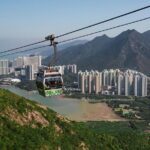
One of the most talked-about moments on the route is the Peak Tram area. The tour includes a Peak Tram Special Combo (with the 24-hour or 48-hour ticket, depending on how you choose the overall package details).
Here’s the practical advice: treat it as an intentional part of your itinerary. Even with a bus stop, you’re still dealing with walking, crowds, and viewpoint timing. If you rush it, you’ll spend more time moving than looking.
If you’re doing multiple routes, it helps to schedule the Peak when you can enjoy the view without feeling guilty about missing the next bus. I’d rather see it well once than bounce past it while you’re tired.
Stanley and the Green Route: when Hong Kong slows down

The Green Route is why many people feel like they learned something new about the city even if they’ve been to Hong Kong before. The route’s logic is that the south side of the island feels different—more waterfront, more open sky, less “downtown everywhere.”
You’ll hit Stanley directly, which is a major reason to pick this color. Stanley also gives you a built-in option for strolling, photos, and lingering. If you like markets and seaside atmosphere, this is a strong place to get off and actually spend time.
Along the way, you’ll also pass through stops that feed that “coastline day” vibe, including Repulse Bay, plus other waterfront-adjacent areas like Ocean Park and Kwun Hoi Path (depending on the loop structure). Even if you don’t do attractions inside those areas, the bus view from the road is part of the payoff.
One tip that keeps showing up in real life: use the Big Bus app/live tracking if you can. GPS tracking isn’t perfect, but it reduces the guesswork—especially on stops where buses may pass without much time to linger.
Aberdeen and the water feel: a great contrast day
Aberdeen is a standout stop on the broader route flow. This is one of those places where you sense Hong Kong’s maritime identity quickly. You’re not just looking at buildings—you’re looking at water-facing life.
If your day has been mostly hills, dense streets, and indoor attractions, Aberdeen adds contrast. It’s a good place to hop off, take photos, and enjoy the change in scenery before you head back into the city grid.
If you’re also choosing the 48-hour add-on options (like the Hong Kong Water Taxi or Sampan Houseboat), the water theme becomes even stronger. You don’t need both, but pairing them can make your itinerary feel more “Hong Kong” and less like a series of stops.
Kowloon’s Blue Route: from Bruce Lee to Temple Street
If the island routes are about viewpoint and coastline, the Blue Route is about street Hong Kong plus modern culture.
You’ll see a Bruce Lee Statue on the Avenue of Stars area—an easy, fun stop if you like pop culture or just want a recognizable landmark. It’s also a handy “reset point” because the Avenue of Stars area gives you a sense of place quickly before you move into the busier street scenes.
Then comes Temple Street. This is classic Kowloon night-market energy, and it’s a great destination for an evening hop-off. The bus gives you an easy way to connect here without hunting down transit routes across districts.
Also on the blue route flow you’ll see Wholesale Fruit Market as a stop, which adds a more functional slice of Kowloon life—less postcard, more real.
M+ and the Hong Kong Palace Museum: modern culture with serious collections
One of the best things about this bus setup is that it doesn’t only do old Hong Kong or only do city views. On the Kowloon side, you’ll reach M+ Museum and Hong Kong Palace Museum.
These are big enough that they often become the main event of a day. Even if you don’t spend hours inside, the route positioning makes them easier to plan. You can hop off, check your timing, then either go deeper or return to the bus without losing your whole schedule.
If you’re visiting for a shorter trip, museums can be your highest “learning per hour” option. These two stops help you get that without needing to line up separate transport plans.
West Kowloon Station: a practical ending point for your second day
Another late-route anchor is Hong Kong West Kowloon Station. This matters because it’s a predictable place to regroup if you’re doing multiple routes across consecutive days.
With a 24-hour or 48-hour pass, you can build a second day around museum time, street time, or your favorite color route again. If you’re tired, you can also use the bus to move between areas instead of walking longer distances in summer humidity.
Just note one real-world rhythm: waiting for the next bus can happen, so the closer you are to bigger hubs, the easier it feels to adapt.
Price and value: what $53 buys you in Hong Kong time
At about $53.14 per person, the bus feels like a splurge—until you compare it to the cost of doing everything individually.
First, you’re not just buying bus seats. Your ticket includes Star Ferry, plus a Peak Tram Special Combo option. With the 48-hour ticket, you also get a choice that can include Hong Kong Water Taxi or a Sampan Houseboat experience. That alone can turn the pass into a bundle rather than a single attraction.
Second, you’re buying time and stamina. Hong Kong’s walking can be harder than it looks on a map. An open-top ride can reduce the “how do I get there” stress and let you see more areas with less effort.
Third, the 9-language audio commentary adds value if you like understanding what you’re looking at. If you only want scenery and don’t care about narration, it still helps you recognize stop-by-stop context.
My takeaway: this is best value when you actually use the full pass window and pick more than one route.
Timing and the hop-on hop-off reality check
The tour is listed around 2 hours for the full circuit experience, but the pass is really about repeated use over 24 or 48 hours. In other words: think loops plus breaks, not nonstop sightseeing.
Here’s what to watch: bus frequency. In practice, you may see buses arrive about every 45 to 60 minutes on certain routes. If you build your day around quick hops, that timing can feel long. If you build your day around “hop off, spend time, then return,” it feels normal.
Also, the pass must be used over consecutive days. That rule matters if your travel schedule is fragile. If you can’t commit to two straight days, the 48-hour choice might not be the smart move.
One more practical note: the buses are easy to use once you locate stops, but some areas can be confusing at first. I’d rather spend your first 30 minutes getting oriented than trying to rush later.
Stops, audio, and that first-day stress
You get free WiFi, plus audio commentary in 9 languages, which is useful while you’re waiting or figuring out where you are. The included headphones/audio system is part of the experience, so if you depend on it, test it early when you board.
There can be hiccups. Some people report audio not working properly or commentary feeling less informative than they expected. That’s not something you can fully control as a passenger, but it is a reason to download maps on your phone and keep expectations realistic: you’re still riding a bus, not getting a custom guide.
On the logistics side, locating stops can take longer than you want at the start. If you’re arriving from a cruise port, give yourself extra time and don’t assume it will be as easy as other cities. The route is convenient once you’re in place, but getting set up can be the hard part.
Who should book this bus, and who should skip it
This tour is a strong fit if you’re:
- visiting for the first time and want an easy way to cover major areas
- short on energy or time and need seated transport between neighborhoods
- interested in a mix of cultural stops and classic Hong Kong street scenes
- planning to do two days so the 48-hour value can shine
It might be less ideal if:
- you hate waiting and need ultra-frequent service
- your schedule is extremely tight, like you land and immediately race toward one timed event
- you’re expecting a guided walk-through at every stop instead of hop-on time
Should you book Big Bus Hong Kong?
If your goal is maximum Hong Kong coverage with minimum planning, yes—this is a sensible purchase. The included Star Ferry and the Peak Tram combo help turn the ticket into a real bundle, not just a bus ride.
I’d especially book it if you can comfortably give yourself two consecutive days and plan to ride more than one color route. That’s when you stop seeing it as “a bus ticket” and start seeing it as an efficient way to experience different faces of Hong Kong.
If you only have a few hours, choose your focus carefully. Pick one route that matches your top priorities, because the value drops when you don’t have enough time to use the flexibility.
FAQ
What pass options are available?
You can choose a 24-hour or 48-hour hop-on hop-off pass. The pass gives you access to the routes included with the tour.
How long is the tour?
The experience is listed at about 2 hours (approx.).
Which routes can I choose?
You can ride on three routes: Hong Kong Island (Red), Stanley (Green), and Kowloon (Blue). A single ticket gives you access to all routes.
What attractions are included with the ticket?
In addition to the hop-on hop-off bus, the ticket includes a Star Ferry ticket and a Peak Tram Special Combo, with additional water options available on the 48-hour ticket.
Is the Peak Tram included?
Yes, the tour includes a Peak Tram Special Combo as part of the included offerings.
What’s included with the 48-hour ticket?
With the 48-hour ticket, you can choose among options that include Hong Kong Water Taxi or a Sampan Houseboat (as listed in the included details).
Do I need hotel pickup?
No. Hotel pickup and drop-off are not included.
Are audio guides available?
Yes. There is audio commentary in 9 languages, and the bus also offers free WiFi.
Do I need to use the pass on consecutive days?
Yes. The hop-on hop-off pass must be used over consecutive days.
—
If you want, tell me your hotel area (Hong Kong Island vs Kowloon) and whether you’re doing 1 or 2 days. I’ll suggest the best route order to reduce waiting and maximize the stops you care about most.